Women’s Six Nations Special: Jade Konkel
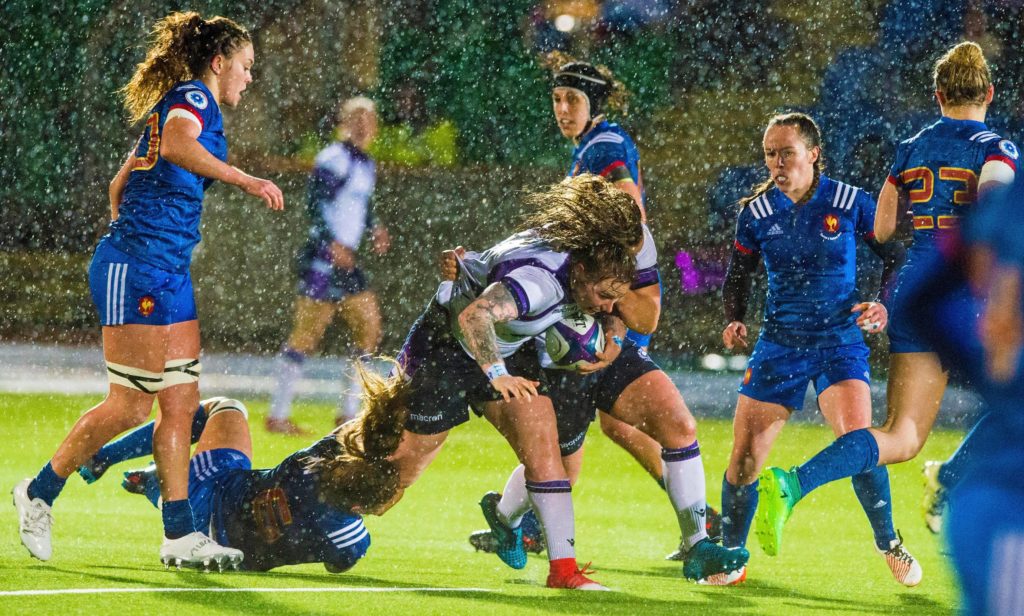
There are few better sights in rugby than seeing a forward charging at full pelt, ball in hand, bouncing off tackles left, right and centre.
The modern era of the game has been privileged to see some of the best exponents of this, from Sergio Parisse to Safi N’Diaye and Lawrence Dallaglio to Sarah Bern.
Another who certainly deserves to be mentioned in the same breath is Scotland’s Jade Konkel.
Since making her international debut in 2013, the caytoo athlete has developed a reputation as one of the finest back rowers in the game and been a significant driving force behind her country’s recent resurgence.
Konkel may be a very friendly individual off the pitch but on it she’s a warrior, with her intimidating physical presence in both defence and attack enough to worry the best opposition.
But a few years ago even making one appearance for her country seemed unobtainable for an individual who grew up doting on the game but had little opportunity to play in her hometown of Inverness in the Highlands.
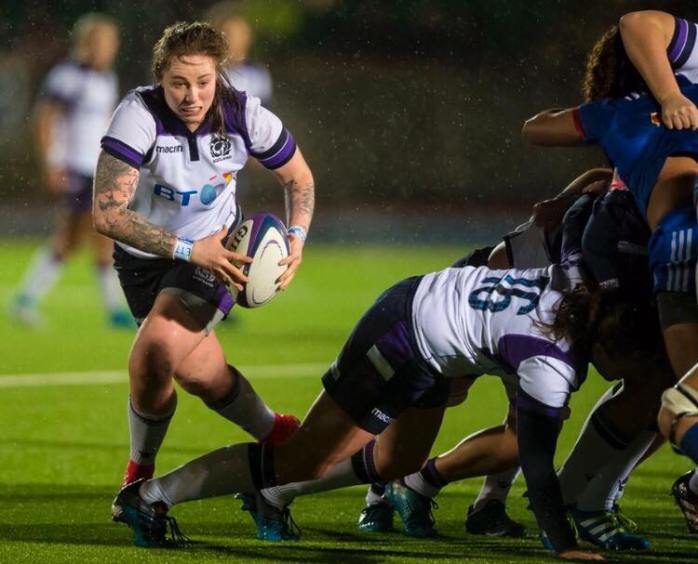
“I played for one year in a mini boys team when I was about nine but after that there was no rugby,” the 25-year-old recalled.
“I only played rugby maybe a few times a year for random teams around Scotland when I was growing up.
“I remember being at a camp once and they said put your hand up if you’re going to play for Scotland and I didn’t because I thought I don’t play rugby, I don’t really know anything about it and there’s no rugby where I’m from so I’m not going to put my hand up and something think about something when it’s never going to happen.
“Basketball was my main sport [she represented Highlands in the National League] until I was about 17, when I’d had enough of watching my brothers and my Dad play rugby – I wanted to play too.
“I was fed up with wrestling with my brothers in the garden or fighting off my sister trying to pluck my eyebrows. That’s when I decided I was going to make the long trips down to Glasgow and Edinburgh so I could play more.”
Fast forward a few years and not only is Konkel a key member of her international team, she also became Scotland’s first full-time professional female back in 2016.
Her love for the game has never diminished. If anything, it’s grown even stronger.
I’ll forever be in debt to rugby. Finding the words to express how much it means to me to play this sport and play this sport for my country is tough. This sport has given me confidence, discipline & motivation. It teaches us how to persevere and deal with adversity. #AsOne pic.twitter.com/TbXtbaLP9a
— Jade Konkel (@JadeKonkel) November 28, 2018
“Rugby is literally everything to me. I eat, sleep and breathe rugby. Everything I do goes towards rugby,” the former Lille Metropole Rugby Club Villeneuvois player stated.
“You can’t articulate how much it means to play for your country.
“Some people don’t get that opportunity so you have to take every single game you can and play your heart out for 80 minutes because you want to do everything you can for your country.”
Such is her love for the sport that Konkel even has one of her proudest memories adorning her arm in amongst an impressive array of artwork.
“It was my very first win in the Six Nations against Wales in 2017,” she explained.
“I got that picture tattooed because I’d been close to winning before, we’d progressed every year and it is a reminder that you stick through the hard times and if you make little improvements eventually big things will occur. That was a massive thing for me and that picture really got for me.
“My tattoos are me literally wearing my heart on my sleeve so I couldn’t not have something to do with that special moment.”
Away from her obvious talent, another of Konkel’s vast array of impressive qualities is how switched on she is away from the pitch.
She is very aware that rugby isn’t forever and that one day she will have to make a living in some other way.
At a time where the English Institute of Sport has launched it’s #More2Me campaign teaching athletes how to prepare for retirement by studying whilst training and exploring other interests, Konkel is already well ahead of the game.
A qualified personal trainer, she joined forces with fellow Harlequins player Holly Myers to create Apex Training & Performance, an online platform where they will educate people how to live healthy lifestyles by helping them create individual training and nutritional plans that are specifically catered to fit their individual lifestyle.
🙌 Jade Konkel and Holly Myers have started their own personal training business, Apex Training and Performance
💪 Game Changers on and off the field!
🃏 #COYQ | #TheGameChanger https://t.co/8uo4H4rvH3
— Harlequins Ladies 🃏 (@HarlequinsWomen) February 27, 2019
It’s not just healthy lifestyles where Konkel wants to have an impact on the lives of others though.
She wants to use what she has experienced in sport to inspire people to power through the tough times, something she often does through motivational posts on her social media channels.
“The power of sport is absolutely amazing,” she enthused.
“What you learn from it – the adversity, the resilience, having to have a teancious approach to things – it creates and shapes you as a person.
“The way sport does it is so different to any other thing in life. I try to help by just showing that we’re human and what you can learn from the adversity and the setbacks is so much more than just thinking that you’re whole world is crumbling, understanding that it’s alright for it to be difficult and it’s alright to face these challenges and for you to think it’s hard.
“It might help one person, it might help ten people – it’s just to show that everyone is human and we can get through different setbacks and that some of them are for the better because it builds us and teaches us to be more resilient in many different aspects.”
#37) Laura Gallagher
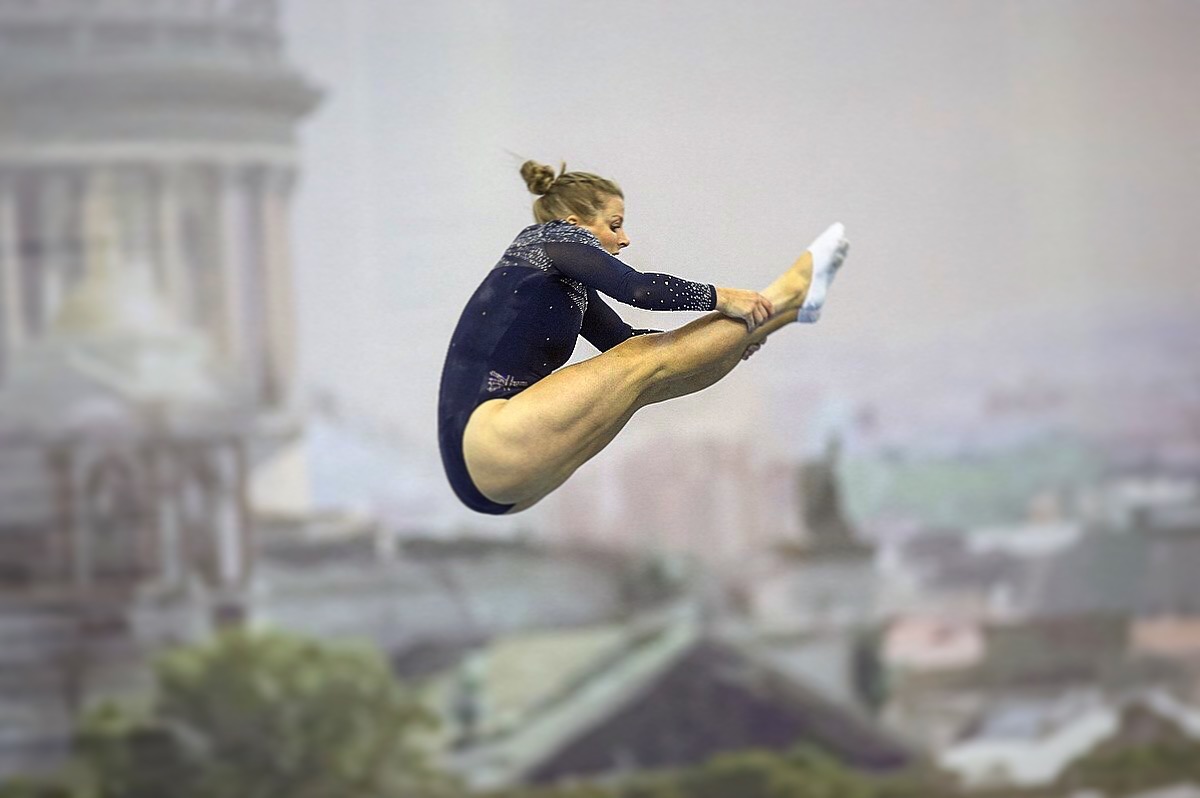
Photo credit: Mike Driscoll
“I just felt like a failure. I thought I’d failed at what I’d been trying to do and not only had I not achieved what I wanted, I just didn’t feel able to do anything.”
Being a professional athlete is a career full of extreme highs and, sometimes, extreme lows.
No-one knows this better – both literally and metaphorically – than GB trampolinist Laura Gallagher.
Having won team World and European gold medals in 2013 and 2014 respectively, she then claimed her maiden individual British title in 2017, producing several superb routines to top the podium at Liverpool’s Echo Arena.
But, just a few months before, Gallagher had seriously contemplated retiring from trampolining following long battles with confidence, identity and her mental health.
“I’d had a really tough few years with injury and I was struggling mentally quite badly. In 2016 it came to a head and I just knew I had to take some time out of the sport,” the 29-year-old recalled.
“After failing to successfully come back from an injury I’d sustained two years before, I’d had a series of bad performances which really knocked my confidence and I couldn’t really nail it on the floor.
“This was all in the build up to Rio – I felt lost, was really struggling and knew that I would be coming off funding because of my results.
“My last chance to qualify for the Olympics blew up at the European trials and after that I really struggled to deal with the situation I was in. I just felt awful.”
Finding herself at the lowest point of her career, Gallagher took the decision to step away from the sport in late 2016.
What she hadn’t realised though was that it wasn’t just at work where things were bad; it was in her day-to-day life too.
“I was really struggling to function normally,” the Bridgwater-based athlete recalled.
“I thought I was outwardly quite ok but I knew that I was struggling inside.
“I didn’t really know how to talk about it or how I was feeling, I didn’t really know what was going on. I was quite emotional a lot of the time and it was a really strange place to be in.”
One issue particularly affecting Gallagher was the constant nagging sensation that she hadn’t reached her full potential.
But rather than verbalise her frustrations, she let them bubble up inside her until they spilled over in seemingly the most innocuous of circumstances.
Remembering the incident, the 2012 European individual bronze medalist said: “It’s quite funny really, I was on holiday with my now-husband, we were playing table tennis and I got really upset because he won a game. I hit the ball and I just walked off.
“That moment upset me because when I was younger I used to play table tennis to quite a high level, it was something I was good at. Suddenly everything I thought I was good at I wasn’t any more.
“It sounds ridiculous and something so small but it was affecting me in all areas of my life, the feeling that I hadn’t achieved. I didn’t know how to get through it or who to talk to.
“My husband was amazing but he was struggling to understand that behaviour, why I was getting so upset over a table tennis match. But it wasn’t just about that match – it was that I felt useless about everything. It was hard for him to understand why or what he could do to help.”
LISTEN TO THE FULL INTERVIEW ON SPORTSPIEL HERE

At this precise moment, it suddenly dawned on Gallagher just how close to rock bottom she was.
“I was trying to be myself and be fun to be around because I’m normally a very happy, bubbly person but things were just awful at the time,” she said.
“I didn’t want to go to sleep, I couldn’t sleep at all because I didn’t want to wake up the next day and go through it all again. I wasn’t doing what I wanted to do or achieving what I wanted to achieve. I just felt a bit lost and didn’t know how to get back on track.”
In an unusual turn of events, it was a job interview – for many a highly stressful experience – that was to prove the spark that ignited the start of her recovery.
She immediately struck up a relationship with the woman who was to become her boss – Anne Dowds – who subsequently encouraged Gallagher to take up another of the sports she had excelled at when she was younger.
“At the interview I really connected with Anne,” the 2007 U19 world champion recalled.
“You have to really sell yourself, talk about your strengths and why you’d be good for that job. I realised I’d done this, I’d done that, I’d got this experience and I was not totally useless. That helped gradually remind me of who I was.
“I used to play hockey at school and Anne is a massive hockey fan so on the first day of my job she asked: ‘What are you doing on Saturday? Can you play hockey?’ I said I could and I just started playing for Taunton Vale 4s and loved it.
“I loved playing and learning how to win and lose again without it meaning anything; the only thing that mattered was enjoyment. That got me back enjoying sport and I gradually started to feel more and more like me again while also learning a lot about myself in the process.”
How I feel today 🤣😅Friday struggles after a hard training week! pic.twitter.com/JFkmHkfuWg
— Laura Gallagher (@lgtrampoline) January 18, 2019
Gallagher’s new job with a company called Five Rivers also played a crucial role in helping her control her demons.
Five Rivers helps children who have undergone serious hardship and trauma to re-engage with their communities, offering a huge array of services to cater for a wide variety of needs and help turn lives around.
By sharing their own experiences with Gallagher, they were unwittingly providing her with the support she needed to confront her own issues.
She also believes they helped change her perspective on not just her sporting career, but her life in general and encouraged her to return to trampolining.
“Working with these amazing young people and trying to help get them back on track in their lives, they inspired and helped me without realising it. I grew at the same time as the children and that helped me in my sport,” she explained.
“I came back because I wanted to enjoy it and I wanted that as my main reason – it doesn’t matter what happens after, I’m going to give it 100% and that’s all I’m going to ask of myself.
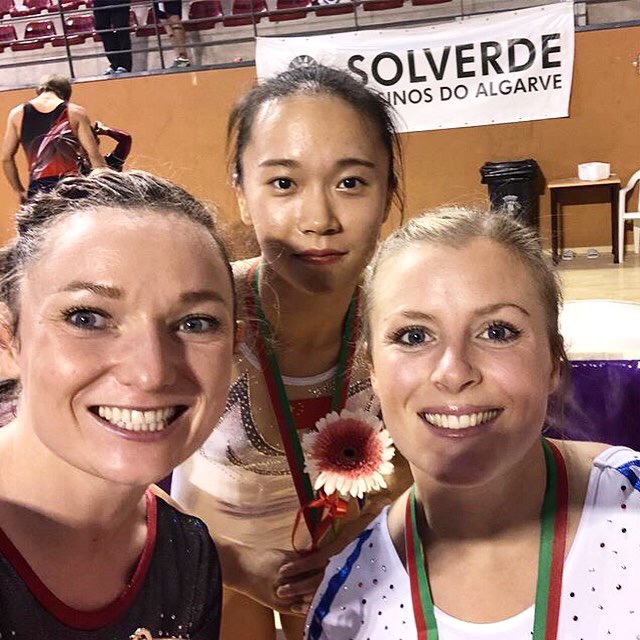
Seeing the children overcoming such hardship also gave Gallagher the chance to re-evaluate how she approached her sport, understanding that there is more to life at being good at your job and that she should be immensely proud of what she’d already achieved.
“There’s loads of different feelings but the most important one is that I lost my way. I lost complete perspective on what’s important.
“I didn’t really deal with or let go of the injuries and the difficult times. I was always so hard on myself, I never really gave myself credit for any of the things I did in between those injuries – I won major championship medals, individually and with a team.
“Because I went through that transition I now feel like I don’t have anything to fear and that I’ll be ok after sport because I’ve done lots of things and I’ve learned a lot.
“Sport gives you the biggest life lessons, bigger than many jobs – I can’t think of any other job like it as you’re putting everything into it mentally and physically.”
Gallagher had planned on retiring at the end of the 2017 season, aiming to leave the sport she had given more than a decade of service to on a high.
Yet that first gold – following on from a win at the French Masters shortly before – proved that she still had plenty left to give trampolining.
This was further confirmed as she was part of the team – including Olympic finalist Kat Driscoll and the highly promising Isabelle Songhurst – that won World Championship bronze just a few weeks later, her sixth major championship medal.
Not only had the enjoyment returned and the fire been reborn; she was back battling with the world’s best.
The following year was certainly a busy one for Gallagher, as she crammed in several major events – including an individual World Championship – around studying for her degree and the small matter of getting married.
Awesome week of training with the rest of the team ahead of the Baku World Cup next week! 🇬🇧🇬🇧🇬🇧
Hit a few P.B’s and really happy with progress! Don’t always see the gains from all the hard work, but it is soooo satisfying when you do! ☺️#FearlessFriday #AIR pic.twitter.com/hKrjwfoiDx— Laura Gallagher (@lgtrampoline) February 8, 2019
Now a full-time athlete once again, the journey of trying to ensure Great Britain will have athletes at Tokyo 2020 began at a World Cup meeting in Baku, Azerbaijan earlier this month.
But rather than focusing on the end goals – no matter how tantalising they may be – all Gallagher wants to do is enjoy her sport and see how far she can go with a clear mind.
As for her mental health, she is also confident that she has overcome the worst of it and is now in a much stronger position to deal with anything that trampolining, and life, can throw at her.
“I’m just really excited to get the opportunity to go through the year, hopefully be a part of the Olympic qualification process and just see where it takes me,” she said.
“I feel a lot clearer now, I’ve let go of everything that’s happened before and I feel much more committed as a whole person, not just physically but also mentally, to putting myself out there and not being afraid to fail,” she explained.
“You can’t really fail if you’re trying to do something and if you don’t try you’re not going to get it anyway. I feel much more whole and not in two parts.”
Women’s Six Nations Special – Leah Lyons
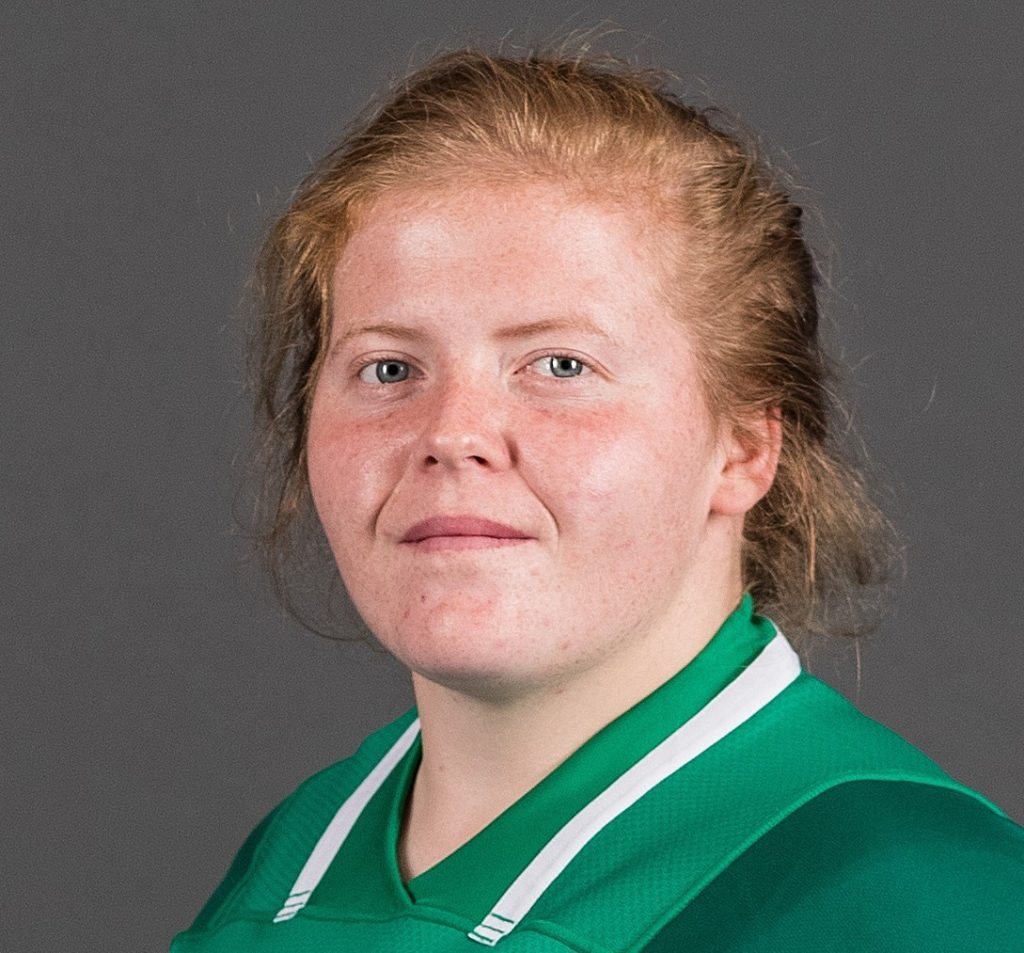
Despite all its flaws, social media can be a powerful tool for discussing some of the biggest issues in today’s society.
No-one knows this better than Leah Lyons, the Irish star who shot to prominence during the 2018 Women’s Six Nations with just one tweet.
Lyons was already well known in rugby circles for being one of the finest front row athletes in the game and had just put in a storming performance against Wales.
But it was her classy reaction to being body shamed during the game that saw her appear on news feeds worldwide, gaining plenty of adulation and recognition for bringing to light an issue that isn’t talked about enough in both sport and general society.
So after a great win yesterday, this was relayed to me.. ain’t got nothing good to say, say nothing at all #womensrugby #6nations #sillyman #notcool #IREvWAL #wrugby #thinkbeforeyouspeak pic.twitter.com/9Zg6fUMCeZ
— Leah Lyons (@LEAH__LYONZ) February 26, 2018
While she wanted to highlight what had happened, Lyons never expected the magnitude of the response she would get.
“I didn’t really expect anything from it,” the caytoo athlete recalled.
“I put that message out because I wanted to make an awareness of it. I think sometimes we don’t do it enough, we just leave it out, but this was the one day where I just thought I’m going to do it and see how it goes.
“I remember being in work next day and my phone was hopping, I just had to turn it off as I was coaching rugby and when I turned it back on there were messages from people everywhere and it was just nuts.
“People were so nice about it and I never expected that sort of reaction.”
Not that it would deter Lyons from the game she has dedicated her life to.
Speaking to the Harlequins player it is clear she loves rugby. And by that, I mean loves rugby.
That passion for the game developed at an early age and has only increased, something her Dad clearly recognised as he played a crucial role in ensuring his daughter had the chance to reach the international stage.
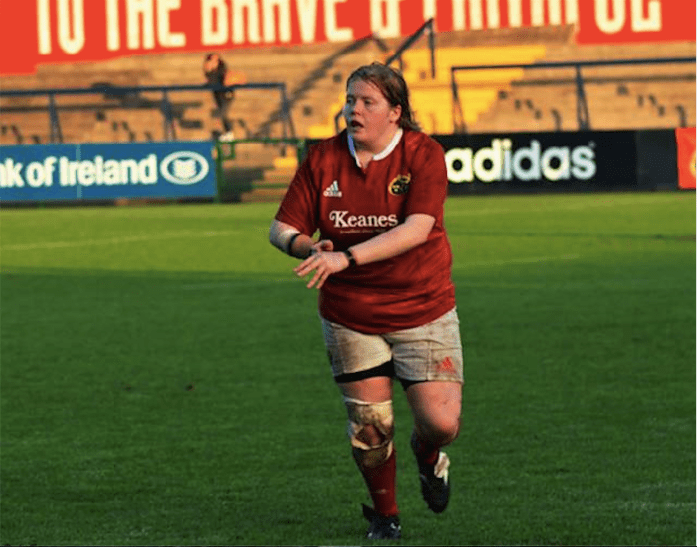
The 24-year-old said: “All I wanted to do when I was growing up – and still now – is to play rugby and I guess you’ve just got to climb up the ladder.
“It’s a tough, long way up – you have to put in the effort to get anything out of it.
“My Dad is one of my number one supporters. He’d drive me to a tournaments and matches at weekends and sometimes if there weren’t enough players for our team he’d be ringing up other teams asking if I could play with them because I just wanted to play and I didn’t care who I was playing with.
“I started when I was seven and at the time there weren’t any girls’ age group teams so I joined in with the boys all the way up to U13 and then had to change over because girls can’t play with boys at that age.
“My Dad made a decision with a few other men in the club to set up a girls team. Then they set up a women’s team in the club before I turned 18.
“He’s been a massive support and you couldn’t ask anything more from your parents.”
It didn’t take long for that dedication for both sides to pay off as Lyons achieved what most of us can only dream of – representing your country on the biggest stage in front of a home crowd when Ireland hosted the 2017 Women’s Rugby World Cup.
The tournament had a huge impact not just on the game, but on how Irish people view women’s sport on the whole and really pushed the rugby players to the forefront of the public’s attention.
Love that winning feeling with these girls! Physical game, but got the result we set out to achieve ☘️☘️
Thank you everyone for the support!Keep building 💪🏻
#sixnations #WomensSixNations #wrugby #womensrugby #scovire #rugbyunion #womens6nations #rugby #ireland pic.twitter.com/6tXZQIzeUu
— Leah Lyons (@LEAH__LYONZ) February 9, 2019
Indeed the support the Irish team are receiving is at an all-time high, confirmed when their fans set a then-tournament record attendance in their opening game of this year’s Six Nations against England.
That is something Lyons and her team-mates relish as it gives them the opportunity to be role models and inspire the next generation of players, whether that be through their performances, spending time with fans or by throwing their support behind the fantastic #CantSeeCantBe campaign.
This is where Lyons believes social media can once again have a positive impact and really help grow the momentum behind women’s sport.
“#CantSeeCantBe has done a lot, even just for advertising sport in general,” she said.
“Younger generations are massively on social media, on phones and for them to see us perform and play and it also gives us a platform to engage with them.
“All we want to do is get more girls playing rugby, get more girls playing any sport that is out there.”
#36) Jade Clarke
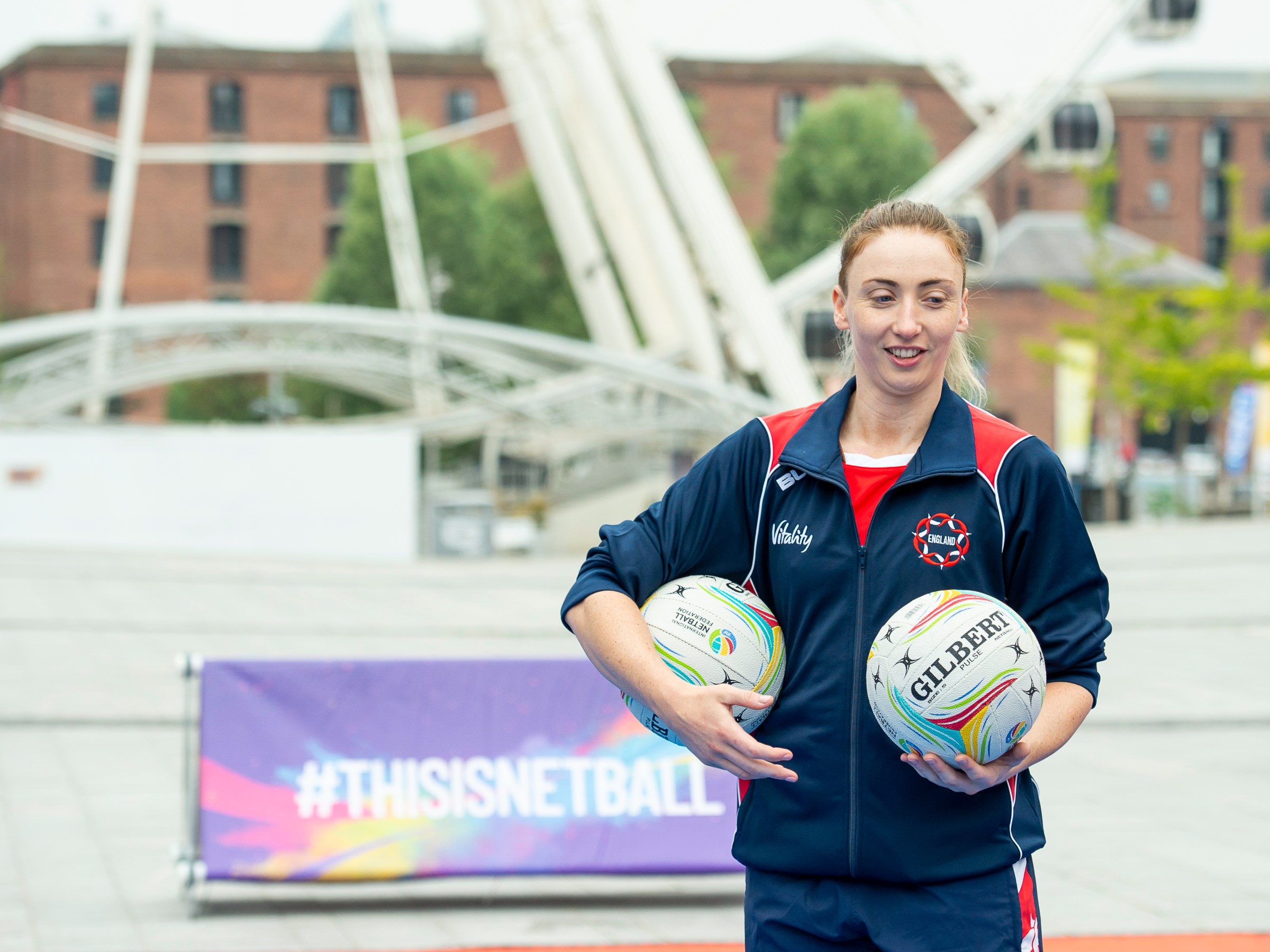
Understated is not a term you would currently associate with England Netball.
From that incredible last minute victory at Gold Coast 2018 to narrowly missing out on thrilling Quad Series title last month, they’ve certainly been making plenty of noise over the last year, as Ella Jerman described.
And with Liverpool’s Echo Arena hosting the 2019 Netball World Cup in July, expect that to continue for a while yet.
However when it comes to Jade Clarke, the term is much more apt.
Since being selected for the national team in 2002 and making her senior debut the next year, the 35-year-old has enjoyed a superb career at the top of the game.
Alongside winning that sensational gold back in April, the 2018 Commonwealth Games also saw her make her 150th international appearance, a feat no England player has ever reached before.
As well as this, Clarke captained her country to a first ever World Netball Series title in 2011 and picked up bronzes at the 2006 and 2010 Commonwealth Games.
Furthermore she also spent several seasons in the ANZ Championship – at the time the best club league in the world – and was named Player of the Season in 2013 and 2014 before winning the Vitality Super League with Wasps last year.
Add all that up and Clarke is one of the finest athletes the game has ever seen.
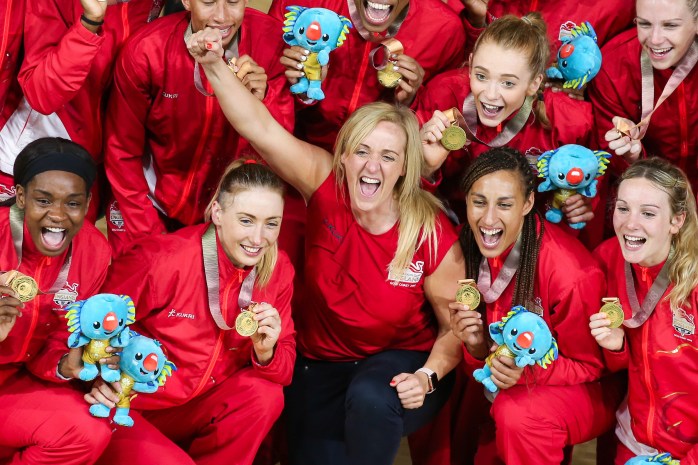
Not that you’d know it when talking to her though.
Rather than focusing on individual triumphs, the former Loughborough Lightning player always puts the achievements of the team ahead of herself.
That includes being a role model to young girls and women up and down the country, something the Vitality Roses certainly have been since that famous evening last spring.
“It’s something we’ve always wanted,” she said.
“We work hard, we train hard, we’re well behaved and we actually want to be role models.
“We want to be out there promoting our sport, we want to be meeting our fans after every game and stay out as long as we can to see all the little girls and little boys who have come out to watch and support.
“We’ve been there when there has been a couple of hundred people at a game and now there’s thousands just at our league games in the UK. We’ve seen where it’s come from and where it’s going so we really do appreciate everyone that’s coming out to support.”
England have the opportunity to grow their legacy even further this year when they take on the world’s best once again at the World Cup, which Clarke is an ambassador for.
And at a time where many sports are starting to take their main fixtures away from London, Clarke believes hosting the event in the north west is the perfect opportunity to help inspire thousands more aspiring netballers.
Having grown up in Manchester and with members of the squad hailing from across the country, she is keen to show during the summer that netball really is for anyone, no matter where you’re from.
The centre said: ”It’s brilliant. The thing about netball is that it’s so accessible.
“It’s played in schools and clubs all over the country – we want to take it everywhere and we want it to be played everywhere and people will want to watch it all over the country.
“Growing up in the north west really propelled me forward and helped me get in the team at a young age – we love our sport in the area!
“I know all the main games and finals are sold out already – it’s like gold dust.
“Even though it’s not in London it’s going to be a massive spectacle – we’re expecting sell out crowds for every game.”
Such an honour to become an ambassador for the @NetballWorldCup get amongst it, get playing, get watching. 2019 is gonna be a HUGE year for netball! #netball #ThisIsNetball #FEELPARTOFIT https://t.co/upFPsjtSF7
— jade clarke (@jadeyclarke) November 20, 2018
One of the reasons tickets have been in such great demand is the opportunity of seeing the team who pulled off such a remarkable victory that players, fans and commentators alike descended into delirious meltdown.
Despite not even a year passing since, the growth of the sport has been immense and not just in terms of participation but also the public’s awareness of and attitudes towards the game, something which Clarke and the team are very proud of.
“That next month after we got back was really special,” she recalled.
“We’ve had so many loyal fans who’ve stuck with us and so many people that joined in the journey as well.
“When we got back we had an event looking forward to the next Commonwealth Games in Birmingham – we had people coming up to us saying how they’d got up to watch in the morning and how they’d never watched netball before.
“There were also so many men saying how much they’d enjoyed it and how they’re going to keep watching. And then finishing off with Team of the Year at SPOTY was just amazing, as was the Moment of the Year as that was the public’s vote.”
As for Clarke herself, the victory was the culmination of more than a decade of incredible service to the sport.
To beat Australia on their home turf to win a first Commonwealth title is as big as it gets in netball, although a World Cup win on home soil this summer near her hometown would arguably be even greater.
Whatever happens though, Clarke knows that the immense sacrifices she has made for her sport have been more than worth it.
They’re back in action tonight! 🙌
Can you beat England’s Commonwealth Games netball gold medallists @jadeyclarke and @nataliesymone in our netball challenge? #GetInspired @EnglandNetball #englandroses pic.twitter.com/QKbqlgmmQr
— BBC Get Inspired (@bbcgetinspired) November 27, 2018
Speaking about the Commonwealth victory, she said: “It’s one of the best moments of my life, the best moment I’ve had in netball.
“When I look at it it’s not just about winning and the team performance but because of the team that was there, the team behind the team and all the girls at home that didn’t get selected.
“We’d built our culture for years and it was that moment where it all came together. No-one was in it for themselves, it was all about the team and it was just such a gusty performance.
“When you start playing you think you know what’s possible.
“You’ve got huge dreams and you just go for it, you put everything into it and put your life, your career, your relationships on hold – you never know if it’s going to happen.
“It’s a huge risk but it’s one I’m so glad I’ve taken whether we won that gold medal or not.
“It’s never going to be a waste to try and get your country to the top of the sport and do the best that you can do in whatever field you are passionate about.
“I didn’t know if it was possible but I always believed.”
#35) Susannah Gill
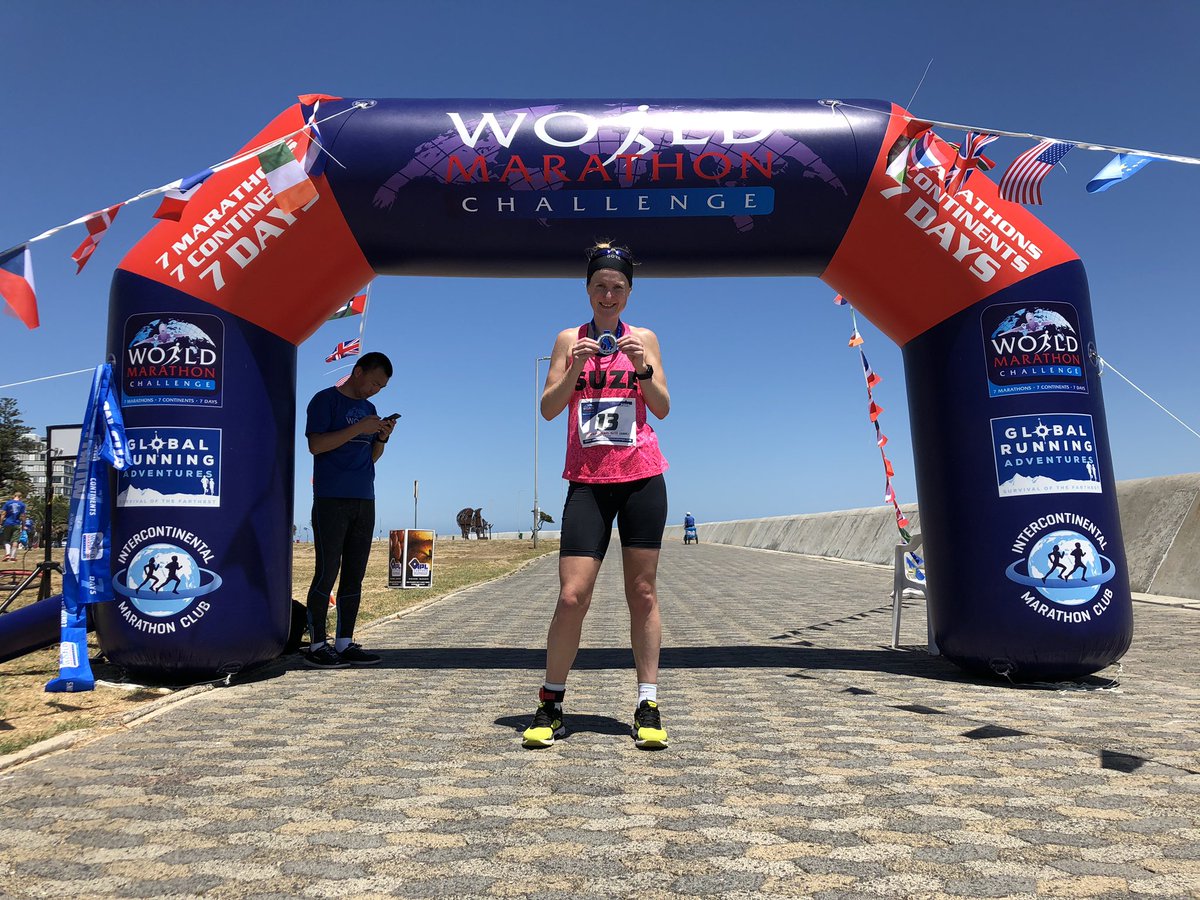
Photo credit: Susannah Gill (@TheIronLadyRuns)
What Susannah Gill achieved last week is nothing short of extraordinary.
The British runner not only completed the notorious World Marathon Challenge – also known as ’777’ as it involves running seven marathons on seven continents in seven days – but she did so in a world record time.
In total Gill took just 24 hours, 19 minutes and nine seconds to complete the 295km. She won won six of the seven stages, averaged an astounding time of 3:28 per race and smashed the previous women’s record – set last year by American Becca Pizzi – by more than three hours.
Furthermore she was quicker than all-bar-two of the men who also completed the challenge, as was Kristina Schou Madsen.
Not only that, Gill also had to cope with the huge physical and mental challenges of coping with extreme temperatures, time zone changes, hours upon hours of travelling and a severe lack of sleep.
But while this physical success alone is worthy of the upmost respect, Gill has achieved something arguably even greater.
She has delivered the ultimate kick in the balls to anyone who still believes women aren’t physically capable of being elite athletes.
It can certainly be said that changes have happened and continuously fewer people persist in the myth that women can’t be sporty. But there is still much more that can be done.
I did it!!!! 🏃♀️💪
Miami marathon done @WorldMarathon77!!
Finished 777 with a 3:26:24 marathon along South Beach and set a new World Record in the process!!
What a week!! Thank you for all the support along the way and donations to @TeamSportsAid. #marathon777 https://t.co/VvtA8QD7tc
— Susannah Gill (@TheIronLadyRuns) February 7, 2019
BBC Sport’s video with England Rugby stars Mo Hunt and Emily Scarratt, whilst very amusing, is proof that there are still people out there who regard female athletes as little more than second class compared to men.
I even experienced this myself not so long ago where, when making a reference to the Women’s Six Nations, several male friends jokingly said something along the lines of: ‘We only want to hear about the real rugby’ (i.e. referring to the men’s competition).
While I am 100% certain this was meant purely as a joke just to wind me up – I know for a fact these people have the upmost respect for women in sport – it just showed me that this culture of belittling female athletes persists in some areas, even just as ‘banter’.
READ MORE: #16) Julie Creffield
Of course a lot of this is a hangover from the 19th and 20th centuries, where women were told in no uncertain terms they couldn’t partake in sport because it was deemed ‘unfeminine’.
Or because there was no point as they were significantly weaker than men. Or, worse still, because it would damage their maternal organs, meaning they couldn’t succeed in the only thing they were designed to do – give birth.
Just writing this feels preposterous, so to think this was people actually thought (or even still think) is ridiculous.
That’s why what Gill achieved by completing such a gruelling task in Miami just a few days ago is so important.
Here is a women showing that, first and foremost, anyone from any gender can complete even the most arduous of sporting tasks.
For context, the 34-year-old is one of less than 200 people to finish the challenge since Sir Ranulph Fiennes did so back in 2003.
But even more importantly than that, she also showed that – by finishing third overall – women have the potential to complete alongside men in events such as this.
Whether this was her intention or not, we really should be using her achievements as a platform to show other women and young girls that you really can do anything if you put your mind to it.
The amazing @TheIronLadyRuns ran 7 marathons on 7 continents in 7 days in record time. Then took a transatlantic flight back to the UK before bounding in to #BBCNewsroomLive to tell me all about it pic.twitter.com/A3VFgeRrDp
— Annita McVeigh (@annita_mcveigh) February 8, 2019
This is especially the case given Gill isn’t even a runner by trade. A leading executive in the world of horse racing, running is more of an extreme hobby for anything else but one she certainly excels at.
And yet just a decade ago she was only preparing to run her first marathon as a way of getting fit.
To go from that to setting marathon times most avid runners would be delighted with consistently over seven consecutive days in temperatures ranging from -35C to +35C and with often minimal food is almost beyond belief.
Speaking to the BBC, Gill described just how physically demanding this event was for her.
“Races one to four were OK; five, six and seven have been really, really hard. I started to question whether it was such a good idea, but I got through it,” she said.
“The first four marathons I was eating quite well and getting enough calories in, and then marathons five, six and seven I’ve actually been waking myself up because I’ve been so hungry.
“I ended up getting an hour’s sleep on one flight because I just had to get up and eat a packet of peanuts, two packets of crisps and a chocolate bar – anything I could get a hold of on the plane.
“That became a challenge, because I was burning four or five thousand calories a day every day for a week.
“The only time reference I’ve had is what kind of food they’ve given us on the plane – so breakfast, lunch or dinner – so it’s been a very loose concept of time.
“I’ll get back to normal life and put myself back together again because I’m sure I’ll have some aching muscles.”
In a generation full of inspirational female runners – Dame Kelly Holmes, Paula Radcliffe and Laura Muir to name but a few – Gill is yet another proving that women are indeed capable of completing the most arduous of physical feats.
And not just completing them, but leaving many men in their wake.
#34) Katy Daley-McLean
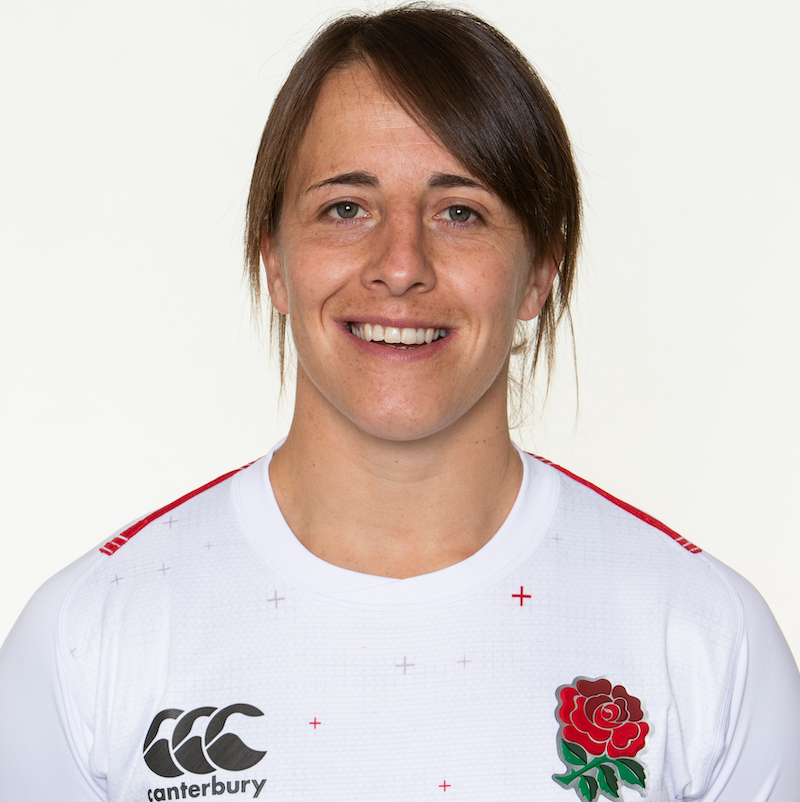
There isn’t much that can be said about Katy Daley-McLean that hasn’t been uttered on numerous occasions already.
The caytoo athlete has been an icon of English rugby for more than a decade, inspiring thousands of women and young girls the length and breadth the country.
Not that you’d know it when speaking to the softly spoken fly-half – it’s fair to say that humble is an understatement when it comes to describing her.
But while she may have a quiet and very friendly personality off the pitch, she is a fearsome warrior on it and it’s exactly this which has seen the public fall in love with her.
What’s more, the Loughborough Lightning star is one of those mercurial talents who only gets better with age.
No better was this demonstrated than in England’s dismantling of Ireland in their 2019 Six Nations opener last night where Daley-McLean ran the show and then some.
Her reading of the game was sublime; her grubber for Sarah McKenna to dive onto inch perfect; her inside pass to set up Zoe Harrison’s try genius.
The Red Roses link up perfectly for their fifth try 🌹
Watch LIVE on @SkySports [Mix or Arena] 📲 #SendHerVictorious pic.twitter.com/V9Oc0smoFz
— England Rugby (@EnglandRugby) February 1, 2019
It was a very similar performance to the one she produced against the USA back in the autumn on a night where she produced a masterclass despite the abysmal conditions.
That evening also marked her 100th England appearance, making her only the sixth England player – and fifth woman – to reach the milestone and she admitted it was the perfect way to mark the occasion.
“I couldn’t have asked for anything more from my 100th cap,” the former DMP Shark recalled.
“It was a pretty wet and miserable day but the girls were great and having family and friends there really topped it off.
“My niece and my sister came out with me which was great because they have been following me throughout my career, especially for my little sister as she’s been through a lot with us in terms of World Cups and other tournaments. So to share something nice with them was great.”
Last month Daley-McLean was rewarded for her fantastic service and superb form over recent years by being one of the 28 XV-a-side players offered historic full-time contracts.
It’s not the first time she has been paid to play the sport she loves, having been part of the side offered temporary deals ahead of the 2017 World Cup.
Daley-McLean was also part of the sevens squad that travelled to Rio 2016 and agonisingly missed out on an Olympic medal, losing to Canada in the bronze medal play-off.
While she did not particularly enjoy the transition to being a professional back then, it’s been a much smoother ride this time round and is really enjoying being able to fully focus on her rugby.
Her presence is also keenly felt by many of the younger members in the side, including half-back partner and fellow caytoo athlete Leanne Riley with whom she has already struck up a fearsome on-pitch relationship.
CLICK HERE TO LISTEN TO SPORTSPIEL’S WOMEN’S SIX NATIONS SPECIAL WITH THE ENGLAND TEAM
“It’s nice to have a really calming presence and wise heads on shoulders for me,” the Harlequins scrum-half said.
“I have quite a pivotal role in the squad and playing alongside Katy makes my game a lot easier. You’re not overthinking, you’re able to listen to her voice and calm your nerves down and that’s something that’s massively helped me personally.”
Another who is benefitting from having Daley-McLean in the squad is hooker Lark Davies – who is also a caytoo athletes and former primary school teacher – who explained that the help she gives them off the pitch is just as important as what she brings on it.
“That direction that you get from those pivotal players that sometimes as a youngster you need going forward or a little bit of advice when you need it as well is vital,” the Worcester Valkyries player stated.
“They’re all big characters too so I think it’s massive coming into a squad having people there that you can have a chat to and that can give you a bit of direction when you’re on the pitch.”
Daley-McLean doesn’t just want to be a role model to her team-mates though. She wants to show young girls that they can play rugby and that they can be just as well loved as their male counterparts.
This was something she realised upon being part of the side that won the 2014 World Cup, a victory that propelled them into the public spotlight for the first time and also started an incredible run of success for women’s team sport.
The most amazing couple of days 🌹💯#ThankYou #100caps pic.twitter.com/KVJ5grqL6y
— Katy Daley-Mclean (@katymc10) November 11, 2018
Having seen the impact such victories can have, the South Shields-born star is determined to help her side to further success and keep enhancing the perception of the women’s game.
“I remember waking up the day after we won and we were on the front pages of The Telegraph and The Times, newspapers at the time that weren’t particularly known for having many pages on women’s sport,” the 33-year-old recalled.
“For me that was a massive eye opener, seeing what we’d done and that the perception of women’s rugby had massively changed almost overnight.
“People thought that this story was worthy of being on the front of a newspaper and the thing now is to keep doing that.
“We shouldn’t be surprised anymore, it should be the norm that when women’s teams are being successful then they should now expect the same as what the men’s teams get.”
The first thing on her hit list will undoubtedly wrestling back the Six Nations title from France, while attentions will also be heading towards the 2021 World Cup before too long.
Personally there are also plenty of milestones for Daley-McLean to break. She is poised to become only the third England player after Owen Farrell and Jonny Wilkinson to break the 500 point barrier (she is currently on 499) and before long Rocky Clark’s international appearances record (137) could be on the horizon.
But for now we should just sit back and soak in Daley-McLean playing the best rugby of her career. When she’s on song, there are few better players in the world to watch and we should feel privileged that she is a Red Rose representing our nation.
#33) Women’s Six Nations Special – England
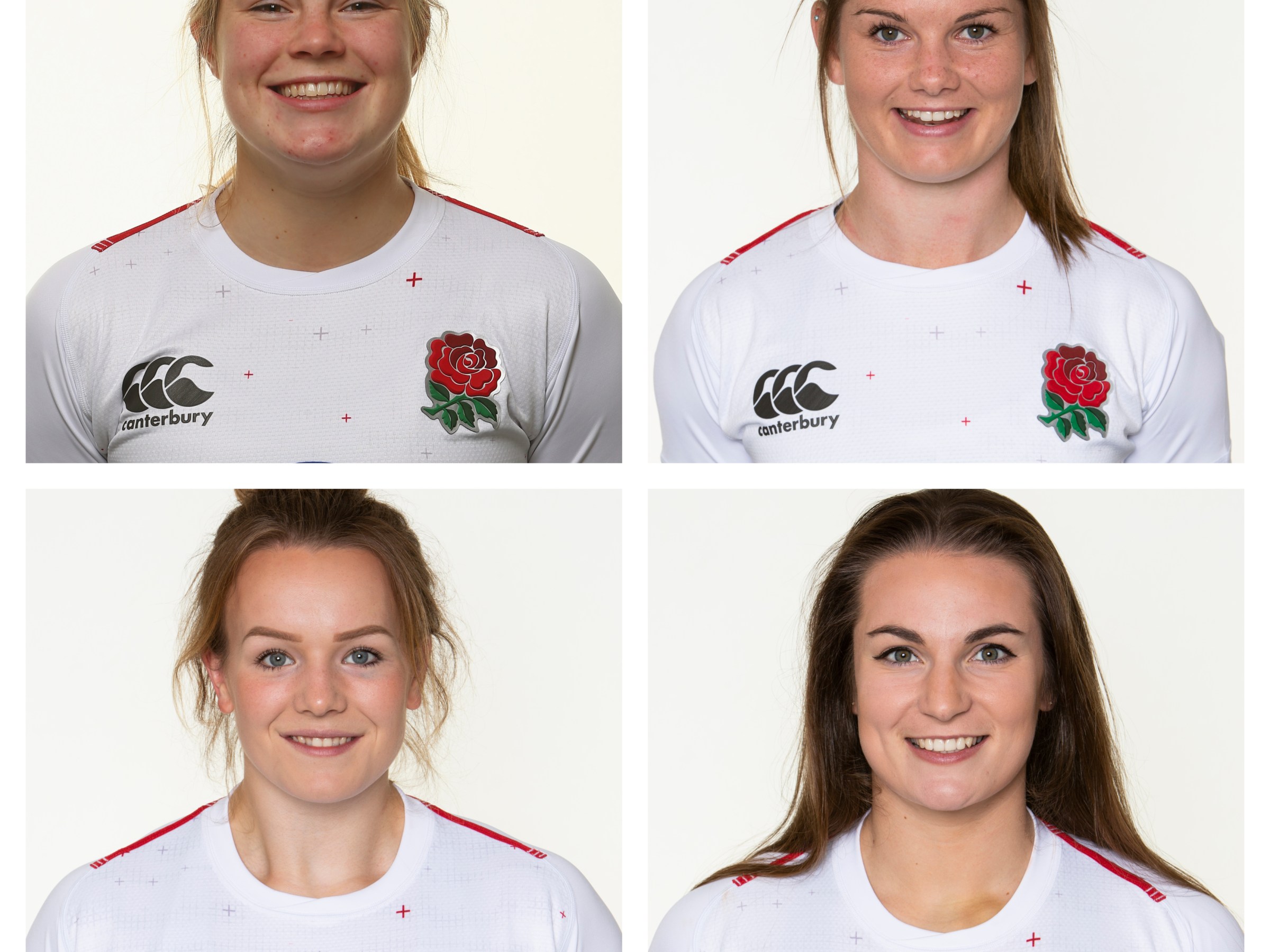
The 2019 Women’s Six Nations kicks off tonight when England take on Ireland determined to overcome the disappointment of finishing second last year.
Captain Sarah Hunter and her Red Roses side missed out on a second consecutive title with an agonising one point defeat to France in their fourth game and will be fully focused on avenging that result this time round.
They could not be in a better position too, having convincingly won each of their Quilter Internationals in the autumn.
Furthermore they have also spent the last month training as full-time professionals and will be hoping that this will elevate them to where they can consistently dominate the tournament – and indeed the international game on the whole – for a long time to come.
In the first of our Women’s Six Nations specials in conjunction with caytoo we have highlighted four players you should keep a close eye on in this year’s tournament.
JESS BREACH
Age: 21 Club: Harlequins Position: Wing Caps: 2 Tries: 11
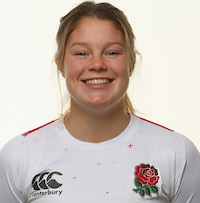
It says something when an individual who has played just two international XV-a-side games is deemed as one of the world’s best talents. But Jess Breach is no ordinary player.
The Harlequins winger burst onto the scene in late 2017, scoring an incredible double hat-trick on her England debut against Canada before following that up with another five tries in her second game a couple of weeks later.
Breach is one of the new generation of players who will (hopefully) spend their entire a career as a professional, having been snapped up by the Sevens set up shortly after that blistering start. She went on to score tries for fun in that format of the game, representing England at the Sevens World Cup last July after picking up a Commonwealth Games bronze medal earlier in 2018.
As well as clearly loving the game, she also relishes being a role model to those fans who regularly turn up to watch the Red Roses play and hopes to inspire more and more young girls to take up the game.
She said: “It’s really nice to see younger girls asking for your autograph or a picture after a game. You can also ask them if they play and they’re really excited to talk to you and the next day take what they’ve seen from you into their training session.”
With insane pace, rapid footwork and the intelligence to spot space seemingly when there is none, comparisons to the great Portia Woodman have already been made. Although her career is still fledgling, it’s clear Breach is an exceptional talent who is set to light up the world of rugby.
LEANNE RILEY (caytoo athlete)
Age: 25 Club: Harlequins Position: Scrum-half Caps: 24 Tries: 2
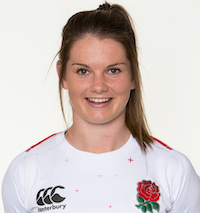
Keeping a World Cup winner and Team GB Olympian out of the side is no mean feat. But that’s exactly what Leanne Riley has already been done by being named in the starting line-up for today’s opener ahead of Natasha ‘Mo’ Hunt.
After making her international debut in 2013, Riley had to be patient and wait for a chance to force her way into the side but since getting there has been incredibly hard to shift. She has already struck up fantastic on-pitch relationships with fly-halves Katy Daley-McLean and Zoe Harrison, which was exhibited during the Quilter Internationals, especially in the game against the USA where she ran the show.
Riley is the stereotypical Harlequins player – she is fast, possesses insanely quick hands and is always looking for the gap. Yet despite this, she never seems to take a risk and 99% of the time finds the perfect pass to get an attack moving. She is also very consistent and never seems to have a bad game.
She may not have found the try line on the international scene as much as she has for Quins – crossing the whitewash for the first time in last year’s tournament – but believes that the ability to now train full-time will help her develop skills such as this to make her an even more complete player.
She said: “Rugby is a big game, you’ve got a lot of skills to work on both positionally and together as a team. We’ve always done our weights, speed and conditioning sessions with or without having a full-time job but now we have more time on the pitch to perfect those finer skills so when we come together there’s much more quality.”
LARK DAVIES (caytoo athlete)
Age: 24 Club: Worcester Position: Hooker Caps: 13 Tries: 2
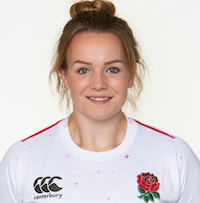
A powerful scrummager, trustworthy thrower and dynamic with and without the ball, Lark Davies is everything a high quality hooker should be.
As with Riley, the Worcester player has already achieved an impressive feat by being named in the starting squad for today’s game against Ireland ahead of Amy Cokayne but is fully deserving of her chance having consistently shone when given the opportunity.
She also has that handy knack of grabbing tries too, proved no better than a match-winning double as the Red Roses overcame a stubborn Canada outfit back in November.
Having been inspired to take up rugby after watching on TV at a time when the women’s game was rarely televised, Davies is also wanting to use the huge increase in coverage for her side to encourage even more youngsters to follow in her footsteps.
This is something she also tried to do ass a primary school teacher, a job she admits she loved and hopes to get back into once her rugby career is over.
She said: “I miss the children. I don’t necessarily miss the paperwork of teaching but I miss the interaction with children and I hope to keep my foot in the door. It’s a really positive thing to have the children in schools having a good positive role model and someone doing something a bit different, that’s what teaching is all about and it gives them something different as well.
“I will miss that the most, doing a little rugby session with my nursery children – that was always great fun.”
JO BROWN (caytoo athlete)
Age: 25 Club: Loughborough Lightning Position: Back row Caps: 3 Tries: 1
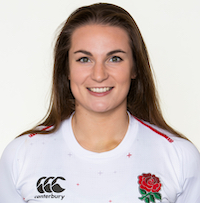
Netherlands-born Jo Brown has been rewarded for her consistent high-level domestic performances with a full-time international contract despite having just three international caps so far.
A powerful runner and tackler, Brown can most often be found dominating the breakdown or burrowing her way over the try line, something she has done firstly for DMP Sharks and now Loughborough Lightning for the last six years.
She is also a natural leader, having captained many of the teams she has played for, and is widely expected to become a dominant force in England’s forward pack for many years to come.
Before becoming a full-time pro, Brown combined rugby with being an NHS physiotherapist and one day aspires to work with disabled children and as part of the Paralympic movement.
However for the moment she is happy to put that to one side to focus fully on her international career and become the best player she can be.
She said: “For me going full-time has had a huge impact. Before I was working full-time 8-4 as a physio in the NHS and mentally that was quite taxing. Even if you’re not physically doing a lot, some of the stories and the cases you get involved in are actually quite heavy and quite dramatic. So when you go to training you try to switch off but you have all of this going on in the back of your mind and it’s just exhausting.
“But now I can fully concentrate on rugby and actually have energy to put into the right things and focus on the right things now and make sure that when I’m listening I’m taking on board everything that’s going on. There’s no excuses, I can’t say ‘I’m tired’, I can fully concentrate on what’s going on.”
Unfortunately injury means we won’t see Brown play in England’s opener against Ireland but she’s hoping to be back fighting fit for the crunch game against France.
You can watch England begin their Six Nations campaign against Ireland live on Sky Sports Mix at 17:00 this evening.
#32) WBBL
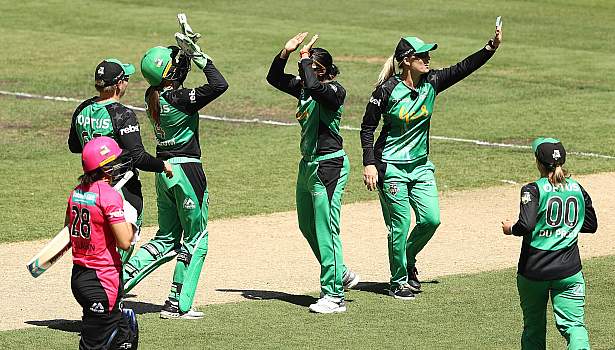
How good has the fourth edition of the Women’s Big Bash League (WBBL) been?
As a staunch supporter of all things related to English cricket, this isn’t the easiest statement to make.
But there can be no question about it; when it comes to T20 tournaments, the Aussies have got it very right.
While some argue the men’s version has regressed – with some poor pitches, small crowds and an overall lack of quality at times – the same cannot be said for their female couterparts.
The on-pitch action has often been electrifying, in particular in the field – an area often criticised in the women’s game – with some stupendous catches and run outs.
No better was this highlighted than in this morning’s semi-finals, with both games decided on the final ball by world class fielding.
Firstly a brilliant run out from Alyssa Healy saw the Sydney Sixers tie their game with the Melbourne Renegades before claiming their spot in the final via a Super Over.
SPEECHLESS.
A super over for a spot in the final. Does it get any better? #WBBL04 pic.twitter.com/dAOPwvMThn
— Rebel Women’s Big Bash League (@WBBL) January 19, 2019
Then Haidee Birkett ensured Brisbane Heat have the chance to knock reigning champions the Sixers off their perch with a stunning catch on the boundary under immense pressure – if the ball had been just a metre either side of her it would have gone for six and the Heat would have lost.
Records have tumbled throughout the tournament too. Sophie Devine became the first player to hit a half-century and take five wickets in a game, while Grace Harris scythed her way a 42-ball hundred, the fastest the tournament has ever seen.
There have also been more runs and sixes scored than ever before.
However WBBL04 has been the Ellyse Perry show. Not only has the all-rounder become the first player – male or female – to pass 2,000 Big Bash runs, she’s also broken the record for the most runs in a WBBL season (744), passed 50 on eight occasions, bagged 10 wickets and taken eight catches.
And what’s been fantastic is that her incredible feats – as well as the efforts of the league’s other stars – have been broadcast live to thousands upon thousands of fans across the country.
The level of easily accessible coverage afforded to the WBBL is unprecedented in an era where the sport is often trapped behind a paywall, with 23/59 fixtures shown free-to-air on Seven Network and the rest streamed on Cricket Australia’s website.
It’s no surprise then that more and more girls and women across Australia are taking up the game, with figures showing that they make up both 30% of the country’s players while six out of ten new participants to the sport are female.
WBBL’s elite level product pays off in numbers | Megan Maurice https://t.co/4PUeOs9N60
— Guardian Aus Sport (@GdnAusSport) January 16, 2019
Australia is not alone in seeing superb growth in the numbers of women taking up the game, with similar figures being recorded in England following the national side’s incredible 2017 World Cup victory.
But what is different here is that the WBBL is an annual event, with fans knowing exactly who will be playing and when come the summer.
We do have our own version over here in the Kia Super League (KSL) but this seems to have plateaued of late, while the WBBL continues to grow and progress with each edition to the extent where it’s going to become a stand alone competition next season.
However while it’s still associated with the men’s competition, there are already lear differences between the way the two are run which have heavily contributed to the huge success of the WBBL.
Firstly is the scheduling. The organisers have recognised that, while the men’s version attracts fans every day of the week, the women’s game still isn’t at this level yet. Instead the majority of the matches have been hosted at the weekends, when the children are off school and their parents/grandparents have more time to take them to the games.
Secondly is the atmosphere projected at the games. While the men’s competition is known for its crash-bang-whallop style, Buckethead Armies and ACDC love affair, the WBBL is a much more Sunday-afternoon-picnic type of affair which many cricket fans actually prefer.
But personally – and perhaps most importantly – it’s the way the event is covered on social media which really makes it stand out from anything else.
Rather than relying on the governing body or the men’s competition to provide updates, the WBBL has its own accounts, with more than 75,000 followers on Twitter and Instagram combined.
In comparison, the KSL has no accounts of its own.
The way the tournament is portrayed on these channels too is also first class, with scores of videos showing the best of the action from each game available for women and girls not just in Australia but across the world (the men’s clips are often restricted to Australian viewers only).
We repeat. Have you EVER witnessed a better day of cricket?! 😱 pic.twitter.com/KUA7xbo8i4
— Rebel Women’s Big Bash League (@WBBL) January 19, 2019
This heroisation is crucial in the battle to get even more young girls playing cricket – they will be looking for role models to aspire to be like and this coverage of the tournament in a social space dominated by young people is the perfect way of going about this.
The WBBL is far from perfect – a busy international calendar has meant fewer overseas stars have appeared than normal this season while the smaller boundaries compared to the men are frustrating to see given the size of some of the sixes this year.
But when it comes to global T20 competitions designed to encourage more people take up the game, then this really is the act to follow.
#31) England Netball

This week our second guest writer Ella Jerman explains why England Netball can lead the charge for women’s sport in 2019.
It was the gold that nobody predicted.
England had won just three netball titles – and no ‘major’ ones – while Australia had won fifteen.
Tracey Neville’s side had already made history by reaching their first Commonwealth Games final back in April but still few expected them to overcome the defending champions.
But no-one told the Vitality Roses that as Helen Housby scored a dramatic winning goal with the final touch of the game to send players, commentators and fans alike into delirium.
Not only had England won their maiden Commonwealth title; they’d done so by beating the firm favourites on their home soil.
Yet, despite this, who would’ve thought that one goal had the potential to change the sport forever?
Housby’s winner catapulted England Netball into the spotlight and ever since the sport has surged to new heights of popularity.
Sky Sports’ netball viewing figures more than doubled, the national team signed lucrative sponsorship deals with Vitality and Nike and more than 70,000 tickets have already been sold for this summer’s World Cup in Liverpool.
WHAT JUST HAPPENED?! 🤯 @BBCSport SPOTY Team of the Year AND Moment of the Year 😭 ❤️ I am dreaming right now!!! @EnglandNetball 🌹 pic.twitter.com/W1yW0qo667
— Helen Housby (@Helenhousby1) December 16, 2018
The Women’s Football World Cup in France this summer is widely considered as the pinnacle of the 2019 female sporting calendar but thousands upon thousands of eyes will also be firmly focused on England’s netballers when their own version starts on 12 July.
Indeed they will be keen to emulate or even better the meteoric rise of the Lionesses, who shot into the spotlight by finishing third at the 2015 World Cup and haven’t left since.
The Vitality Roses’ Commonwealth victory was the latest in a remarkable run of major titles for the nation’s women’s teams, started by a World Cup victory for England Rugby in 2014 and followed up by Olympic gold for GB Hockey in Rio and an incredible comeback from England Cricket in front of a sold out Lord’s in 2017.
And now with two World Cups on the horizon, 2019 could be another huge year for the growth of women’s sport and the Vitality Roses are determined to continue to boost the current swell of interest for women’s sport.
Speaking at the 2018 SJA British Sports Awards – where her team were voted Team of the Year – shooter Jo Harten insisted the squad are keen to capitalise on netball’s ascent into the mainstream.
She said: “There has never been a better time to be a woman in sport. All our teams are really being recognised in this country now and we want that to continue.
“We want to win again, but for women’s sport, I think the most important thing is that people can see us playing netball.
“When you put the sport on the BBC and on the front pages, people immediately want to play it.”
Since that victory on the Gold Coast, there has been a different feeling around the sport.
✨❤️ THANK YOU ❤️✨
To every player, coach, official, volunteer, fan and sponsor, thank you for your continued and outstanding support during 2018!#ItsUsItsNow #RosesRISING #NetbALL pic.twitter.com/D2Ypt0k4MW
— England Netball 🌹🏅 (@EnglandNetball) December 31, 2018
A recent survey conducted by YouGov on behalf of England Netball revealed 130,700 adult women have started playing netball off the back of that single game.
But for Harten this is only the start and she is hoping the sport can grow even further with success in Liverpool this summer.
“Having more than 130,000 new netballers is amazing, but it’s not enough. We want to get ourselves on the front pages again,” she said.
“I want to inspire as many people as possible to get out there and play netball. Whether you play locally or for England, your club and teammates become another family and support system.
“We want every little girl and boy up and down the country to have the opportunity to access not just netball, but any sport.”
Before that though, England have the task of taking on Australia, New Zealand and South Africa in the Quad Series starting this weekend as they go out to prove that their Commonwealth gold was no fluke.
The squad is boosted by the return of Harten, who will feature for the first time since suffering a knee injury in September, while Serena Guthrie – widely acknowledged of one of the game’s finest – will captain the team.
There is plenty of talent and experience in the rest of the 12-strong squad too, with England’s all-time most capped player and vice-captain Jade Clarke lining up alongside Commonwealth winners Housby and Geva Mentor.
Ranked second in the world, England will be hoping to kick off the new year in style but will also be wary of the obvious threat offered by Australia and New Zealand, who are having to adapt with not having to just deal with each other in the battle for major titles.
Indeed the Diamonds have already gained revenge for their Commonwealth Games defeat by overcoming England in September’s Quad Series and will be hoping to beat them once again in this series, also occurring in Liverpool between 13-20 January,
It’s a daunting task for Tracey Neville’s side but victory at the Quad Series could be key to stabilising the promising future of English netball and proving last April was not merely a one-off.
The series is key to measuring the world’s new netball order.
The Commonwealth win was just the beginning. The Vitality Roses will have to continue their success in order to keep the story alive.
#30) Karen Brown MBE
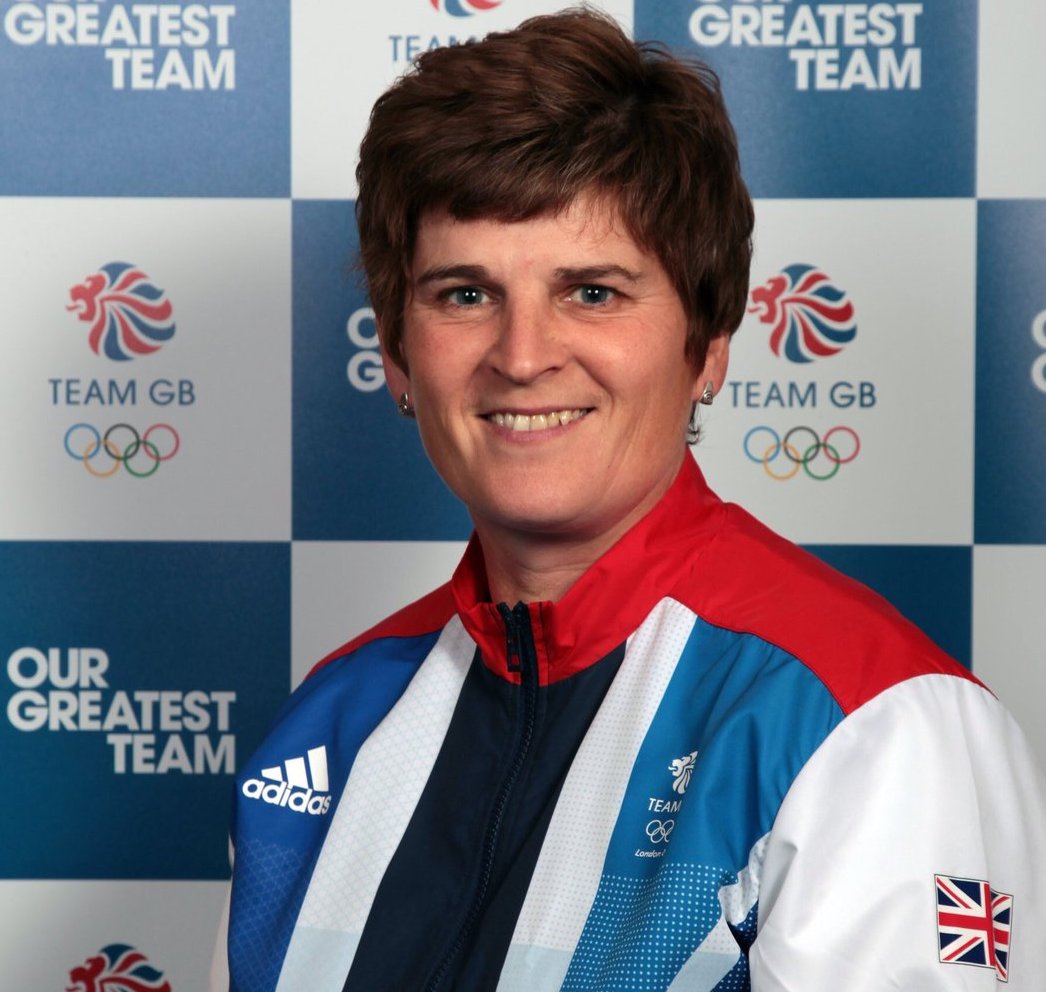
As the saying goes, just because someone is an exceptional player it doesn’t mean they will be a good manager or coach.
There have been very few who have managed to transgress this stereotype – Pep Guardiola and Kenny Dalglish are two of a handful from football, while Andy Flower also did a pretty good job in cricketing circles.
Alyson Annan is another, the former Australian hockey star having led the irrepressible Dutch women’s team to World Cup and Champions Trophy victories in 2018 after winning two Olympic golds in her playing days.
She’s not alone in her sport though, as has been recognised in the New Year’s Honours list with the awarding of an MBE to Karen Brown for services to hockey.
As we said in our piece on Tamara Taylor, the term legend is banded around too frequently but when it comes to Brown it could not be more accurate.
The number of accolades Brown has achieved and records she has set both as a player and an assistant coach are almost too frequent to count.
At the time of writing she is second in GB’s list of most capped female players with a combined tally of 355 – just behind another legend in Kate Richardson-Walsh (375) – and was part of the team that won the first ever women’s hockey medal with bronze at Barcelona ’92.
Across a 15 year playing career she also won European medals of each colour – including gold in ’91 alongside Tracy Nevill, herself awarded an OBE earlier this week for services to sport and sport sciences – while also picking up a Commonwealth silver in 1988.
Huge congratulations to Karen Brown, awarded an MBE for services to hockey.
✅ 355 international caps, second on all-time list
🏑 Two-time FIH Female Coach of the Year
🥉 Bronze at Barcelona ‘92
🥇 Assistant coach at Rio ‘16
➕ And so much more besides in service to the sport pic.twitter.com/l0vrLR9Gpm— Great Britain Hockey (@GBHockey) December 29, 2018
However as an assistant coach the medals have flowed even more regularly, with Brown helping England’s women to World Cup bronze in 2010 – their first ever medal in that competition – before Great Britain emulated the success of 20 years previous by finishing third at London 2012.
She was then a pivotal figure as England secured a dramatic European gold on home soil in 2015, defeating the Dutch on penalties, a feat Great Britain would then repeat a little over a year later in Rio to secure their historic Olympic title.
While much of the credit for those wins has gone to the players and head coach Danny Kerry, ask any of them and they will all tell you that it was a monumental team effort – with Brown very much included – that saw them emerge victorious.
Brown recalled that memorable August evening in a fascinating piece with Female Coaching Network (which you can read in full here):
“I was standing next to the five athletes and Maddie Hinch and all of us were amazingly calm – we just knew we were going to win,” the two-time FIH Coach of the Year told them.
“I think it was Alex Danson who was looking at the Dutch team before it started and said: ‘Oh my God, look at them – they look scared stiff.’
“We had worked an awful lot on what it would feel like if we were in this position, knowing in advance what we would be saying to each other, how we would react.
“I looked at Hollie Webb before the penultimate Dutch penalty, squeezed her and said: ‘You realise if Maddie saves this (not ‘if she misses’, my words were very carefully chosen) you’ve got to win it.’
“She just went: ‘Yeah, not a problem. I’ve got this.’
“She said that before Maddie had made the save.
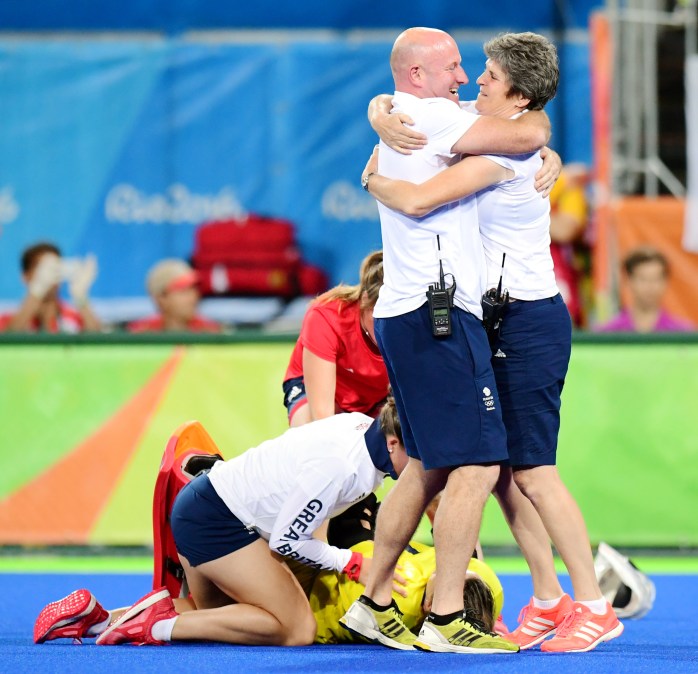
“I remember thinking as Hollie walked up to take the penalty: ‘Even if she doesn’t score she won’t let herself down, she will do well.’
“The moment it went in, I just remember leaping up in the air and then thinking: ‘Don’t run with them because you won’t be able to keep up’!
“I went back to our coaching staff, because we’re a team as well. I wanted to be with the coaching staff.”
It is this attitude that not only epitomises Brown but has also seen her held in the highest esteem within the hockey and wider communities, as perfectly demonstrated on social media when her honour was announced.
Current and former players, colleagues, people she’d met once and even those she hadn’t had nothing but praise for a woman who has played a major part in helping England and Great Britain achieve hockey success on multiple occasions.
Massive congratulations on your award Karen – it is hugely, hugely deserved.
 The 52 Blog