#19) Lizzy Yarnold
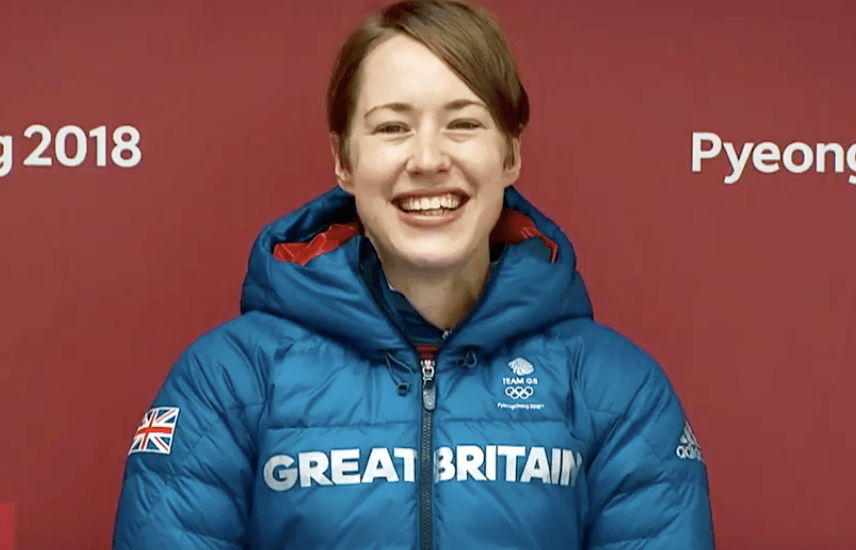
Retirement is one of sport’s inevitabilities, alongside success, failure and injury.
And while there will always be some upset at seeing their favourite athletes walking away, the mark of one that’s truly special is the universal outpouring of love sent their way after making the announcement.
This is certainly the reaction afforded to Lizzy Yarnold after the reigning Olympic champion announced she is stepping away from skeleton.
Not that many would have expected anything different for an individual who will sit alongside the likes of Sir Steve Redgrave, Sir Chris Hoy and Laura Kenny as one of Britain’s greatest Olympians.
The list of accolades Yarnold currently holds is staggering. Not only is she Britain’s most successful Winter Olympian – being the first ever to win two golds – she also holds the title of being the most decorated Olympic skeleton athlete ever.
On top of that she is one of our greatest female Olympians, with only Kenny and Charlotte Dujardin having won more golds while Nicola Adams, Jade Jones, Shirley Robertson and Steph Cook are among those who match her tally.
Yet while many of these names are rightly lauded across the nation, it can sometimes appear that Yarnold’s achievements dip slightly under the radar.
Not that the 29-year-old seems to mind, stating to Sean Ingle shortly after winning her historic second title in Pyeongchang: ‘I certainly wouldn’t pursue celebrity status.’
Rather than detract from Yarnold though, this only endears her more to us – there is nothing more fans love than a sporting star we can relate to.
Even the fact Yarnold’s Twitter account doesn’t have a blue tick makes her seem that bit more relatable.
Hey Wednesday,it’s #MentalHealthAwarenessDay! I love a reason to talk about what’s going on with you & me, find someone close to you (emotionally or physically 😉) and have a check in. Physical health and mental health are all health, it all matters.
Hope you all have a good day— Lizzy Yarnold (@LizYarnold) October 10, 2018
Whether it’s appearing on TV shows such as A Question of Sport or on her social media channels, the 2015 world champion constantly oozes fun and positivity.
Here is someone who is not only able to enjoy and appreciate the best – and often simplest – parts of their life, but also wants others to be able to do the same.
The former heptathlete dedicates much of her time to inspiring children, visiting hundreds of eager youngsters each year with the aim of teaching important lessons such as to always keep going and believe in themselves.
This isn’t just something she does with kids though; as team-mate, fellow Olympic medalist and close friend Laura Deas told the SportSpiel podcast earlier this year, Yarnold also brought this energy and zeal to British Skeleton and, in doing so, helped the team grow and succeed.
“We go back a long way – it’s very nice to have someone that you have a real good friendship with on the circuit because it’s a very testing environment,” the Welsh athlete said.
“To be able to step away from the track at the end of the day, put the kettle on, have a cup of tea and discuss the day with her is great.
“We’ve known each other a long time and we both recognise and respect how hard it is to maintain yourself at an elite level for so long.
“We’ve got a lot of respect for each other in how we go about carrying ourselves through the sport and we’re so supportive of each other.”
“Friendships born on the field of athletic strife are the real gold of competition. Awards become corroded, friends gather no dust”~Jesse Owens pic.twitter.com/nqcAmzpwjY
— Laura Deas OLY (@skeletonlaura) October 16, 2018
That respect then grew amongst the public as Kent-born Yarnold stormed to her second gold in February, overhauling a significant deficit ahead of the final run to prove she really is one of the best the sport has ever seen.
Furthermore she did so while very ill, although at the time it was not widely known just how bad the chest infection she was suffering with was.
That became apparent in a stark and honest interview with Martha Kelner back in July, where Yarnold stated her condition was so bad she could barely breathe.
In addition, she had recently learned of a growth on her knee that would later require an operation and also had a flare-up of her vestibular disorder – which causes dizziness and a loss of balance – on the first day of competition.
But the real worry was the back pain she was suffering from, which became so serious after winning the gold that she could barely walk and eventually required major surgery.
A big thank you to everyone who is helping piece this slightly broken athlete’s body back together…yesterday I had surgery on my spine to try and sort out some slipped discs in my back. Now felt like a good time to have it done, I couldn’t manage the pain any longer ☹
1/ pic.twitter.com/GCPokMKr23— Lizzy Yarnold (@LizYarnold) July 17, 2018
Combine all these and the fact that she was able to compete, let alone win, shows just how strong and determined she is – that is something that can only be admired.
Her frankness in that subsequent interview with Kelner is also something to be applauded.
Rather than keep this hidden, Yarnold chose to speak out and highlight that social media really is just a smokescreen to what goes on behind closed doors.
One quote in particular stands out: “There’s the price of having been successful.”
Here she is teaching us another important lesson – that winning often has painful consequences.
Some may take differing views on her situation, with one being that skeleton is just a sport and that what she did – risking her long-term health – was foolish.
But as any athlete will tell you, their sport is everything to them and nothing will stop them in their pursuit of reaching the top.
Her sheer courage, determination and resilience to do what she did, power through all those issues and come out on top is, to me, awe inspiring.
She didn’t just do it for her own gain though; that second gold means that Yarnold will be seen as a well respected figure and a role model to women and children alike.
Importantly, she is now someone whose views on important topics such as doping and mental health will carry significant weight and be listened to by those who matter.
Since Pyeongchang she has become the face of the #NotARedCard initiative, which aims to encourage conversations about mental health in the workplace, before also airing her views on the controversial decision from WADA to reinstate Russia’s anti-doping agency earlier this month.
Sport has given me hope and opportunity, taught me to respect, and to believe in myself. My relationship with sport changed today, the love which I had has become confusion and sadness.
International competition is in a dangerous place because of today’s decision. #NoRespect— Lizzy Yarnold (@LizYarnold) September 20, 2018
This is an area in particular where someone like Yarnold – a strong individual whose opinions will be carefully thought out and listened to by many – is desperately needed in order to try and create the clean playing fields many of us crave.
While it may be sad that we will no longer see such a fantastic athlete on the track, we can take some comfort in knowing that, after receiving an OBE for service to winter sports, Yarnold will continue to push the drive for medals as well as clean sport for years to come.
For that we could not be more grateful.
#18) Lizzie Carr

Photo credit: Joel Caldwell
As the saying goes, every cloud has a silver lining.
No-one understands this better than Lizzie Carr – or Lizzie Outside as many know her – who was diagnosed with cancer aged just 26.
“It completely blindsided me to be honest,” she recalled.
“I didn’t expect it at all. I thought it only happened to older people, other people – it didn’t happen to you. So when it did it was a huge shock.”
But just a few years on Lizzie is an inspirational mental health activist, environmental campaigner and blogger.
On top of this she holds three world records, having become the first woman to stand up paddle board the length of England, the English Channel and New York’s Hudson River completely unsupported.
That’s not bad for someone who discovered the sport completely by chance, having watched someone else trying it while recovering from radiotherapy in the Isle of Scilly.
Not only did it allow Lizzie to recover her health then, it continues to give her a platform to help control the crippling anxiety she can feel, the water being somewhere she can leave her worries behind.
She explained: “I can be really heavily anxious but I’ll go out, spend a couple of hours out in the freedom and space of the water and I can come back a different person.
“It calms me, relaxes me and most importantly gives me much more perspective.
“I think a lot of people understand this through their own activities – a lot of people say when they run it clears their head and it gives them perspective back and that’s great.
“My way of doing that has been through paddle boarding and I’m lucky to have found that.”

Not only does paddle boarding provide a way for Lizzie to cope with her anxiety though; it has also unearthed a burning desire in her to try and rid the world of plastic pollution.
The stats are startling. An estimated 5 billion tonnes of plastic are believed to be in landfill or the natural environment, while in 2010 a study revealed around 8 million tonnes were in our oceans.
However, as David Attenborough’s ‘Blue Planet II’ showed, this is now probably only a fraction of the total percentage, while there are also likely to be millions more in rivers and canals.
The passion with which Lizzie speaks about this issue is abundantly clear in our interview. This isn’t something she’s doing in her spare time – she is dedicating her life to keeping our planet a clean, inhabitable place for humans and animals alike.
“Paddle boarding has connected me back with the natural world and the environment – it was by being out on the water that I really started to understand the problems our planet is facing with plastic pollution,” she said.
“I was so horrified by the amount of plastic I was seeing and the impact it was having on wildlife.
“There were coots nests that were made up more of plastic than they were twigs and swans nibbling at wrappers.
“Once you’ve seen that you can’t unsee it and it is really upsetting.”
She set up the Plastic Patrol initiative after she completed her first expedition paddling 400 miles from Surrey to the Lake District 2016, during which she photographed and mapped each piece of rubbish she saw on our waterways before clearing it away.
On #PlasticPatrol in Cornwall this summer – it was the perfect day for a paddle and pick, but found quite a lot of rubbish considering the remoteness of our beach stops. pic.twitter.com/TvgiqZsJan
— Plastic Patrol (@Plastic_Patrol) October 8, 2018
This is something she now asks her thousands of followers to do on the Plastic Patrol app, with a staggering – and worrying – 50,000 images already uploaded from 22 countries.
Plastic Patrol is more than just a geo-tagging app though – it is an ongoing clean up operation where Lizzie arranges trips to take people out on the water and give them an experience of paddle boarding, while in return they help her remove any pollution from the rivers and beaches local to them.
With the public awareness of the issue significantly heightened following Blue Planet II, she is finding more and more people are wanting to get involved and help.
“I feel as though there was this lightbulb moment where everyone just woke from to the sleepwalk they’d been in,” she said.
“The general public really started to understand what this means, the scale of this problem and started thinking about how they can tackle it at a very local level in their own lives.
“To be able to take people out on the water and give them a great way to engage with nature while trying a new sport is brilliant for confidence building but will also connect them first hand with the issue of the environment.
“It has so many benefits – they walk away from that and they want to do something positive, they want to make changes in their lives because they have experienced in their own way what that means for the environment.”
In August Lizzie took Plastic Patrol to America, arranging lessons and clean ups along the Hudson River while also completing the impressive feat of paddling its entire 275km length in just eight days.
This expedition also proved that paddle boarding isn’t always the calm, serene sport it can often seem as she endured some extremely challenging conditions caused by the remnants of Hurricane Florence.
Recalling the challenge, she said: “It was an incredible journey. But by the time I finished I was pretty exhausted!
“For two weeks it was before I arrived, New York was blessed with glorious blue skies, really warm sunshine, calm and no wind.
“But within two hours after I began the first of eight days of horrific, unpredictable weather started.
“There was a thunderstorm when I was on the water – it was really hard to get off the water somewhere safe and it’s just really uncomfortable in those situations.
“Obviously I didn’t have any support on the water with me so it wasn’t like I could just jump in a boat and be whisked off to shore! It definitely made it more of an adventure but it makes it quite scary at moments too.”
Lizzie Carr’s #TheHudsonProject is underway, paddling the navigable length of the Hudson River & features in tonight’s London Evening Standard explaining why manufactures & retailers need to be held accountable for #plasticpollution. Track her journey at https://t.co/6uImUP7RYR pic.twitter.com/WI08nE2GiO
— Holmlands (@HolmlandsMedia) September 7, 2018
As well as the challenge itself and the time spent with the locals, Lizzie was also being filmed for a mini documentary showcasing her expedition, while she will also be releasing a book outlining her experiences paddling Britain’s rivers and canals very soon.
With more expeditions in the pipeline and plans to grow Plastic Patrol, it seems as though Lizzie will be inspiring us to get on the water and look after both our mental health and our planet for a long time to come.
Make sure you head over and visit the Plastic Patrol website to find out how you can get involved too!
#17) Ana Carrasco
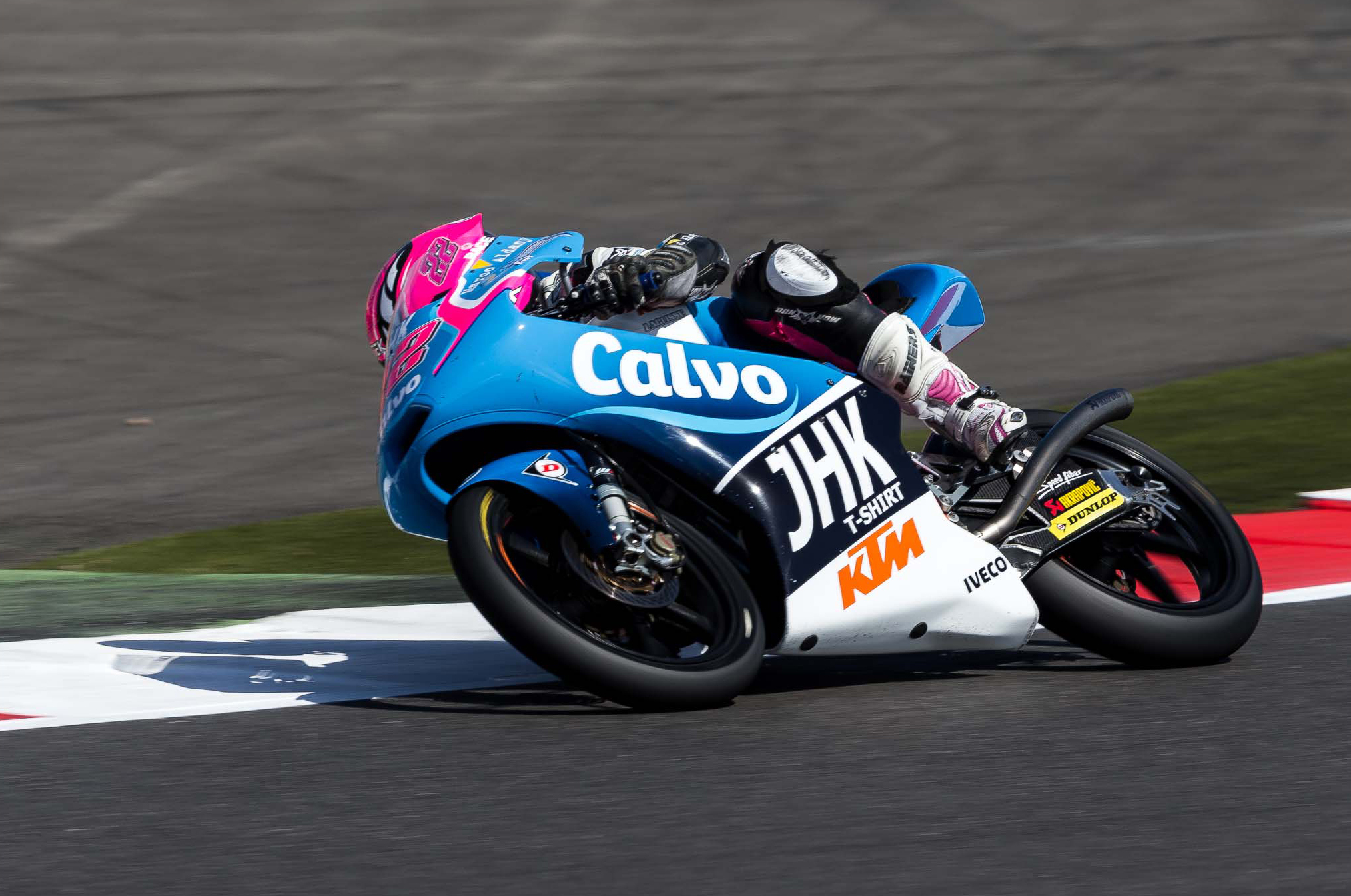
In a world saturated with choice and opportunities, breaking records or setting firsts isn’t as difficult as it might seem.
Some achievements don’t require even an ounce of talent – i.e. having the tallest mohawk (genuinely!) – but then there are those feats that require something so special only a handful of individuals can ever complete them.
Ana Carrasco is not just one of those people though – she’s also a pioneer for women in motorsport worldwide.
That might be a big tag to place on the shoulders of someone aged just 21, but if there’s anyone who can cope with that expectation it’s Carrasco, who became the first woman in history to win a motorbike world championship last weekend.
She did so in dramatic style, carving her way from 25th on the grid to finish 13th and claim the World Supersport 300 Championship title by a single point.
While this may be her biggest career accomplishment to date – and certainly the one that has attracted the most media attention – Carrasco has been blazing a trail for women for years already.
She began doing so aged 12 as the first woman to win the 125cc Extremeno Speed Championship in her native Spain, where the legal age to hold a motorcycle license is 16.
In 2011, now 14, she became the first woman to score points in the FIM CEV International Championship before upgrading the feat two years later in the Moto3 World Championship, a category effectively two tiers below MotoGP – the pinnacle of Grand Prix motorcycle racing.
Then in 2017 she became the first woman ever to win an individual world championship motorcycle race by taking victory in Portugal in the same category she would go on to win this year.
DREAMS COME TRUE💥 pic.twitter.com/7OBqJ23Tk7
— Ana Carrasco (@AnaCarrasco_22) October 4, 2018
For a sport that can be traced back to the late 19th century, it’s incredible to think it’s only now that a woman has been able to claim both an individual Grand Prix win and a world title racing alongside men.
Indeed the world of motorsport as a whole seems to be lacking way behind other sports when it comes to gender parity, although the UK in particular has certainly seen a push to get more women involved at all levels recently.
The benefits are slowly beginning to show too – Katherine Legge has forged a successful career racing sports cars in America, Susie Wolff was the first woman to test an F1 car for 22 years under the leadership of Claire Williams at Williams and earlier this year Jamie Chadwick became the first woman to win a BRDC British Formula 3 Championship race.
The Dare To Be Different foundation, co-founded by Wolff, is also one of a number of projects doing fantastic work to encourage more women to get involved in all aspects of motorsport.
But much of the attention seems to be on car racing and less on bikes, which is such a shame as there are equally as many women achieving incredible things in this format of motorsport.
They include road racing legend Maria Costello MBE, who became the first female to stand on the podium in a TT or Manx GP in 2005 while also setting the fastest ever lap by a woman around that notorious Isle of Man circuit.
The record was taken from her by Jenny Tinmouth in 2009, another woman who has achieved a multitude of firsts in motorbike racing, becoming the first woman to race in four separate British categories, including the famous British Superbike Championship.
Another star on two wheels is Elena Myers, who was the first female to win an AMA Pro Racing sprint road race in 2010 before also becoming the maiden woman across all types of motorsport to win at the Daytona International Speedway.
Three of her American compatriots – drag racers Leslie Porterfield, Cayla Rivas and Valerie Thompson – have also held a variety of land speed records while endurance and trial rider Laia Sanz has also taken on and beaten plenty of men at the infamous Dakar Rally.
But despite this, none of these women have ever really had the attention they deserved for their achievements.
Muchas felicidades @AnaCarrasco_22!!! Rompiendo barreras 💪🏻💪🏻🥇🏆 #girlpower pic.twitter.com/Vpg7OhgCtV
— Laia Sanz (@LaiaSanz_) September 30, 2018
Perhaps though this is because the general public just aren’t interested in TT, road, trial or drag bike racing. While each event attracts plenty of spectators, these are generally hardcore fans and not your average Joe.
Grand Prix racing however has a much more global appeal. It was recently reported that viewing figures for MotoGP hit astounding numbers in 2017 following their collaboration with cloud-based video specialists Grabyo, with their digital fanbase growing to 22 million and their videos receiving more than one billion hits.
BT Sport also do a fantastic job of showcasing not just MotoGP but also Moto2 and Moto3 in this country and, with Carrasco’s championship being seen as a feeder to these categories, it is therefore no wonder that her accomplishments have attracted more interest.
Furthermore, with the exception of Myers, Carrasco is the only racer to consistently beat male riders in close combat, head-to-head racing.
So much has been said in recent years about the ability of women to keep up with their male counterparts both in terms of physicality and speed and, while anyone with sense can see this is rubbish, unfortunately there has been little evidence to prove otherwise.
Until now that is. Over the course of her two seasons Carrasco has finished in the points at every race except one and added two wins this year to the historic victory she claimed last season.
The results from her three seasons in Moto3 may not look great – she failed to score points in 2014 or 2015 – but, when put into context, they aren’t actually that bad.
Her team-mate in her debut season was Maverick Vinales, a prodigious talent now tearing up the form book in MotoGP, while she had an uncompetitive bike for the other two years as she struggled to fund her way in the sport.
She was also a teenager at the time, something that’s easy to forget. While obviously age is no barrier for speed, racing craft can take time to develop and clearly Carrasco has gone away, worked on and mastered this.
Whether or not Carrasco makes it to the very top is something we will have to wait to find out, but one thing is for certain; she is a woman winning in a man’s world.
#16) Julie Creffield

Take a moment to picture yourself in this situation: you are just three weeks from running a marathon but, having spent months training, injure your back days before taking to the start line.
Now imagine having the following conversation with a doctor who you’ve just met and has no prior knowledge of you or your levels of physical activity.
Doctor: “You are clearly not fit enough to run a marathon.”
Patient: “Do you mean I am too fat to run?”
Doctor: “Well yes, to be frank.”
How would you react in that situation? I know I’d hit the ceiling and I’m sure most wouldn’t take too kindly to it either.
Yet this exactly what happened to Julie Creffield shortly before the 2014 Brighton Marathon.
Not only did she go onto complete the event though, this encounter also sparked an idea in her head that has led Julie to become a leading role model to hoards of women across the country.
Shortly after finishing the marathon, she set up the Too Fat To Run? blog to tackle misconceptions about who should be ‘allowed’ to take part in sport.
The premise of the blog is simple – to spread the word that sport, physical activity and exercise is for women (and men) of all shapes and sizes.
This might seem a bit unnecessary as it constantly feels like we as a nation are being told that we need to get more active in order to reduce our rising obesity levels, but – as Julie well knows – there are also many stereotypes that cling to overweight people trying to do just that.
As well as that interaction with the doctor, during her first run – a 3km charity event for work – nearly a decade previously a seven-year-old shouted ‘run fatty run’ as she made her way around the course.
Then there was the time that, competing in her first ever organised race, she finished so far behind everyone else that the organisers didn’t bother to wait for her and packed up the finish line.
Hosting a TedX talk last month, Julie recalled the incident.
“Standing there on a cold November’s day I felt ashamed, I felt embarrassed, I felt alone. I felt like I didn’t belong there… And not because I came last – I almost didn’t go back to the sport that I now love because of my irrational fear of judgement.”
Whilst it is clear that the stereotype suggesting women have no place in sport has been obliterated – the 2017 Active Lives Survey found a record 7.21 million women aged 16+ take part in regular sport – it seems as though it is quickly being replaced by others.
One of these is that only young, slim people should be seen exercising.
Whilst this may appear preposterous to many, the above incidents are an indication that there are some who clearly think this. And while they may have happened a few years ago, incidents of fat shaming are still far too commonplace, especially in gym or swimming pool changing rooms.
Furthermore, in the Instagram revolution we currently find ourselves in, it is incredibly commonplace to see women with amazing abs and bouncy bottoms filling our newsfeeds.
Obviously it’s fantastic that so many women so confident in their bodies that they want to show them off and that’s fine, but if you are worried about your image then this could further turn you away from exercise for fear of being judged for not looking like that.
But that’s why what Julie does is so important – she uses her voice (both literally as a public speaker and metaphorically through her blog) to show that sport, exercise and physical activity really is for anyone.
Not only that, but she also tackles some of the other important issues facing women and exercise, including one emotive piece from earlier this month in which he described the physical and social difficulties she faced getting back into running after giving birth.
Julie has an honest and open style that is so refreshing to read and listen to – she is not afraid to state something contentious, tackle a difficult topic head on and say things many would be afraid to.
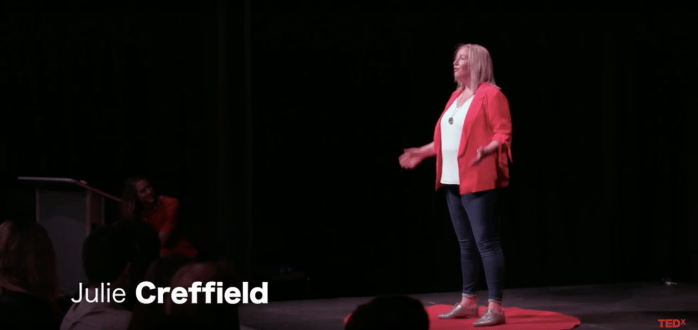
She doesn’t talk a fantastic game though; Julie has also set up ‘The Clubhouse’ which she describes as ‘the world’s ONLY virtual running club for plus sized women where we focus on health and happiness, not speed or distance.’
How brilliant is this? She has created an environment where women can get together, share their passion for running and encourage and inspire each other to something that otherwise society might tell them they shouldn’t be.
During her TedX talk, Julie also spoke about how women need to talk about their accomplishments in order to spread the word to others that they are capable of emulating or even bettering them.
“The thing about being visible, it’s not just about you. It’s about how you become a role model, how you share, how you show up, how you teach the women and girls that are coming up behind us how to live adventurous, exciting lives.”
This is exactly what Julie does – she now dedicates her life to showing all women that, if they want to, they can achieve all sorts of brilliant physical achievements.
Here is someone who, rather than let the bullies beat her, decided instead to prove them wrong and we can’t thank her enough for it.
Find out more about Julie and Too Fat To Run? by clicking here.
You can also read her opinion piece in the Huffington Post here.
#15) West Ham WFC
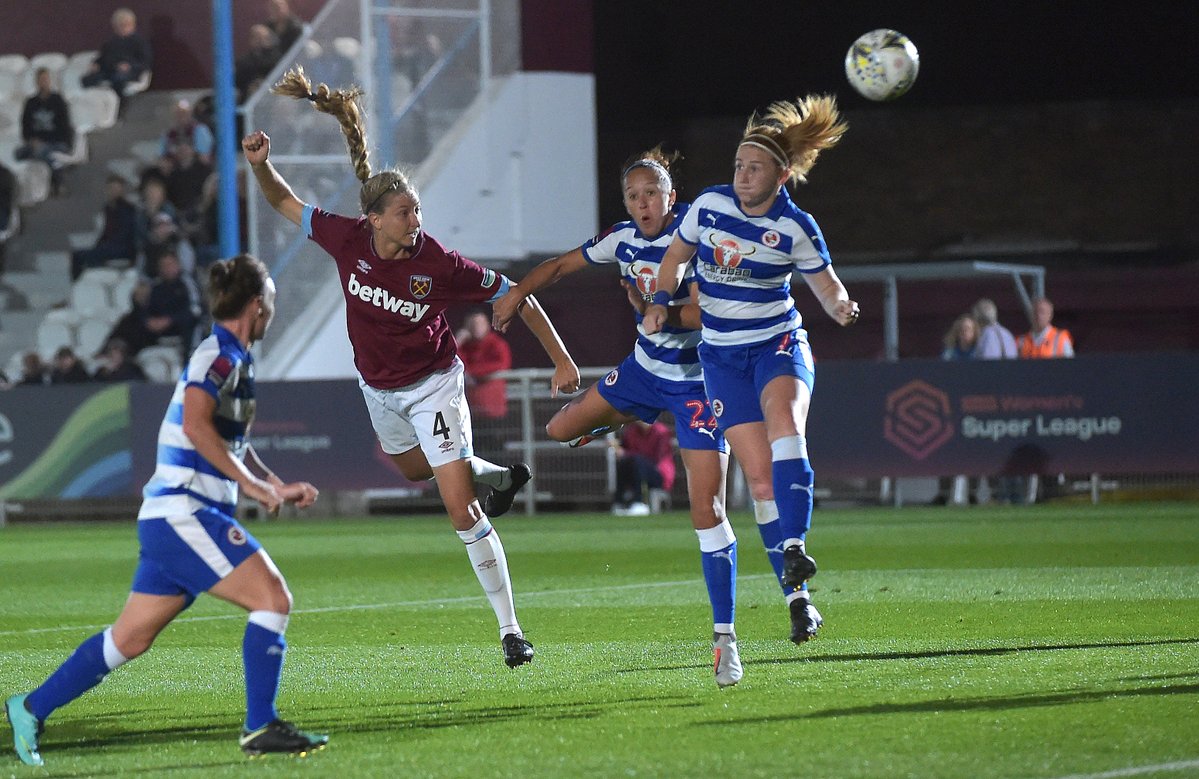
Photo credit: @westhamwomen
West Ham WFC made history earlier this week by playing their first ever top flight game of football, securing a well-earned draw against Reading in the FA Women’s Super League (WSL).
Not that you would have known it from looking at the major media outlets.
While it’s true that from the outside this might not seem groundbreaking – after all, plenty of clubs make their debuts in their respective highest tier each year – but take a look at how they got there and it’s soon clear just impressive this is.
This time last season they were playing in the third tier Premier League South and were about to embark on a run of 12 losses in 17 games.
Go back to October 2016 and the club was embroiled in its third scandal in as many years as former chairman Stephen Hunt accused the main West Ham body of sexism due to inadequate funding and support that led to the team supposedly warming up on zebra crossings.
That came 12 months after former captain Stacey Little was one of six players whoU quit the club in acrimonious circumstances, while in October 2014 Little had set up a fundraising page in order to raise money to allow her side to train and play the game they loved.
Therefore, if you take all that into account, the sheer fact that West Ham are now a fully professional outfit who look set to challenge the very best teams in the country is something quite remarkable.
And that’s what makes it all the more frustrating that no-one has really paid any attention to it.
Yes the Champions League was on that night and yes they played out a goalless draw, but surely this is just too impressive a story to miss?
Or perhaps that’s the point – no-one was interested because it wasn’t a scandal.
It was interesting to hear on Newsnight earlier this week a politician – of all people – state that as Brits we always tend to focus on the negatives rather than the positives in any situation and this certainly seems to be the case with West Ham.
While they have hit the headlines on at least three separate occasions over recent years, when have we ever heard of their success?
It’s not like there hasn’t been any either – following their formation in 1991 the team raced up the divisions, finding themselves in the then-second tier Southern Premier League after just 13 years of existence.
They also turned around their poor start to 2017/18 to only lose one of their final 14 games, also won two cups, while the trophy cabinets for the junior teams must have been bulging at their hinges such is the amount of silverware they’ve won over the years.
But has that ever been reported on a national scale? Of course not.
The last time most of us heard of West Ham was back in October 2016 when Hunt made his very bold and damning allegations against the West Ham board.
While obviously an excruciating moment for the club at the time, it actually turned out to be the best thing that could have happened for the women’s team, although not Hunt as it saw him sacked.
Whereas previously the women had only been affiliated with the club, West Ham now took them on as a fully pledged part of their brand for the first time, giving them the access to the funding, facilities and equipment that had been lacking before.
Such was the speed of their change that just 18 months later they had been awarded a position in a full-time professional league, charged with lining up against the greats such as Arsenal, Chelsea and Manchester City. Not even the most optimistic of individuals could have predicted that.
This alone is worthy of the highest praise, but what further illustrates just how strong a position the club now finds itself in is the clientele it managed to recruit over the summer.
Many highly talented international athletes joined their ranks, including New Zealand’s Ria Percival and former Manchester City player and Scottish star Jane Ross, but the marquee signings were certainly those of Gilly Flaherty and Claire Rafferty.
What makes these acquisitions so important is that they are two players in the prime of the career, were regulars at Chelsea – last year’s FA Cup and WSL champions – and both with international caps at their game, yet they felt comfortable moving to a club newly promoted from the third tier with nowhere near as much history for the next stage of their careers.
If that isn’t a sign West Ham are in a good place then it’s difficult to know what is.
This tale is a proper rags-to-riches journey, a feel good story for even the most hardened of football fans that now just needs its perfect ending.
A debut WSL title perhaps?
They couldn’t… Could they?
#14) Tamara Taylor
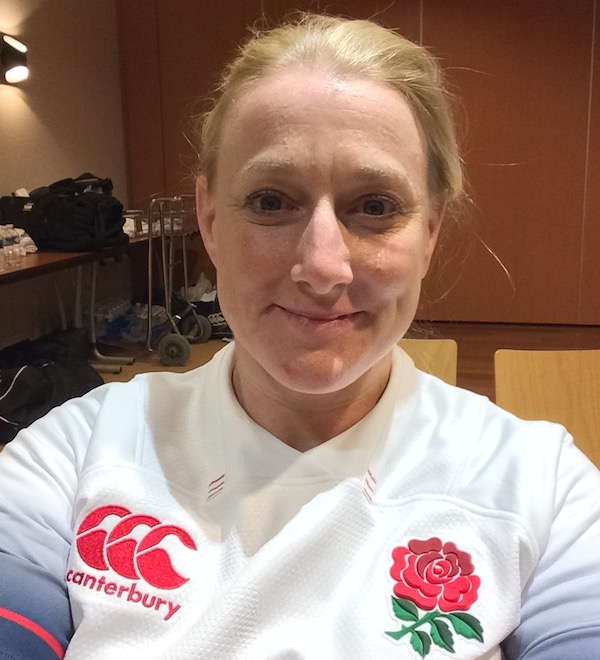
What is it that defines an athlete as a ‘legend’?
Some base it on the number of trophies, accolades and records a sportsperson collects over their career, others on the length of time an individual represents their country at the elite level for.
Furthermore there are those who also look at athletes that inspire the next generation, the perfect role models for children and adults alike.
As a result the term ‘legend’ is perhaps bounded about too frequently in sport, but there are a select few athletes who deserve to be called as such as they fulfil not one, but all of these criteria.
Jess Ennis-Hill is certainly one, as is Roger Federer. The recently retired Alastair Cook should also certainly be counted amongst that list, as should counterpart Charlotte Edwards.
Another name who is already legend of her sport is rugby union star Tamara Taylor.
While the forward ticks each box many times over, her on-field achievements alone would be enough to earn her the highest of individual tags.
Since making her debut aged in 2005, Taylor has won six Six Nations titles – all of which have been Grand Slams – and was part of the first English team to reach number one in the world rankings in 2017 as they completed a historic away series victory over New Zealand.
The list doesn’t stop there though as she has also captained her country and was a key component of the team that claimed the 2014 Rugby World Cup title – the first in a growing list of stunning successes for women’s team sport – and has also appeared at three other showpiece events.
Taylor was also named 2017 RPA Player Year, shortly after making her 100th international appearance, before going on this year to surpass Jason Leonard’s tally (114) to become England’s second highest capped player of all time behind team-mate Rocky Clarke (137).
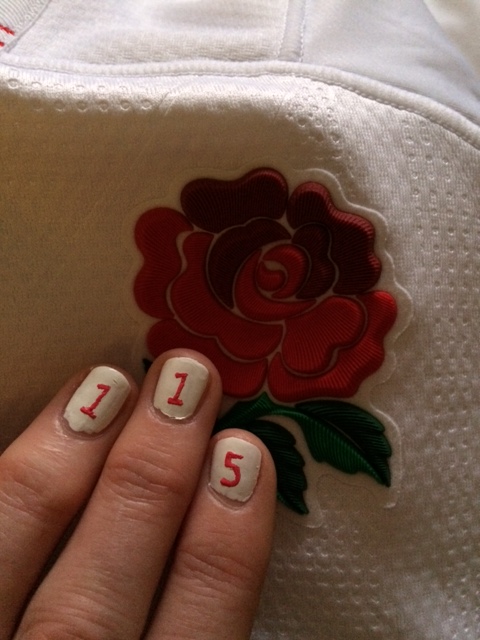
That game currently elicits mixed feelings in the 36-year-old’s mind though as it came in an away loss to France in March which ultimately meant the Red Roses couldn’t defend the Six Nations title they won last year.
The Darlington Mowden Park Sharks player said: “It’s quite a difficult one actually because it was arguably our most important game of the season – France away with the Six Nations hanging in the balance – and that just happened to be my 115th cap.
“It’s not something that I’ll really get excited about until I can look back on it because at the time the game overshadowed it and after the result I was absolutely devastated – I’d have given back a load of caps to have won that game, 100%.
“It’s really difficult beating France in France, I haven’t done it in a while and I was absolutely desperate to win that game so I think I’ll look back on it and be really proud but at the moment it’s still a little bit raw with the result unfortunately.”
Despite the disappointment of the occasion, the fact that Taylor has been able to play the game she adores for her country even just once is something that will always make her feel very proud.
It’s this love for rugby which has also kept her going all these years, pushing her through the tough times to achieve things she never thought possible when first picking up a ball in order to prove a point to those who said it was a game just for boys.
“The reason I started playing rugby was because my brother played and it looked like a really cool game that girls weren’t supposed to be playing so I thought ‘well I’m going to give that a shot, that looks really good!’” she recalled.
“And that’s why I played – it was different, it wasn’t like any other girls sport I’d played before and I kept doing it because I loved it.
“It’s very hard to keep doing a sport if you’ve fallen out of love with it and that’s what’s kept me going.
“I do think it is one of the greatest sports that you can ever play, it’s such a huge opportunity of something different for girls to play and it’s such a great game for all different shapes and sizes – it’s so inclusive.”
It says something of Taylor’s ability and contribution to the team that she has managed to achieve so many caps in an area where English rugby has been blessed with a fine selection of locks, including Jennifer Sutton, Becky Essex, Joanna McGilchrist and Zoe Aldcroft.
That level of competition is only going to increase further too as the newly developed Tyrrells Premier 15s league continues to push club outfits to new heights and help develop some superbly talented individuals.
The @Premier15s is about to start… 🎉
Looking forward to watching and taking over the @DMP_Sharks social media 😃
Mixing the new pups with the experienced Sharks.. 👇🏼💪🏼 #womensrugby #TP15s #mediatakeover #supportifyoucantplay https://t.co/0vrGyXb7D9— Tamara Taylor (@Timmytammy8) September 7, 2018
But rather than feel threatened by this, Taylor is embracing the new wave of stars bursting onto the scene as it will only enhance the skill of the international side and, as a result, grow the stature of the game in this country.
“Every position, every team you’ve got to have challenges from above and below – that’s the only way you grow,” she explained.
“You can’t ever feel safe because if you do that’s when you start taking your eye off the ball and your foot off the gas a little bit.
“So it’s great that rugby is growing from grassroots all the way up through the pathway because it’s just going to keep pushing the top level higher and higher and higher.
“Jess Breach, Ellie Kildunne and Abigail Dow burst onto the scene last year. There was Aldcroft and Sarah Bern the year before that, Emily Scarratt and Amy Cokayne before them.
“We have reaped the rewards of the community game, the universities, the schools, the counties. Girls are starting to play rugby younger, getting better training and therefore better competition levels because there’s more rugby being played at the community level.”
This is an area where Taylor is also having a huge influence too as a coach, yet another string to her already huge bow that cements her status as a great.
Throughout her career the former Newcastle University student has passed on her skills to countless numbers of youngsters and inspired them all to get involved in the game, regardless of any extrinsic factors such as age and gender.
Great work from all the girls attending the Centre of Excellence trials @DMP_Sharks yesterday.
The future rugby talent in the north is looking good 👌🏼
Well done to all the clubs who are developing their players 👏🏻💪🏼🌹 pic.twitter.com/PzzsPMxrOq— Tamara Taylor (@Timmytammy8) September 2, 2018
She is now also using her status as a well recognised international athlete to encourage others to get more involved in women’s sport by watching and/or participating.
Earlier this year she attended the Vitality Hockey Women’s World Cup and shouted about it on social media using the #ShowUp tagline.
Can’t wait to be involved in this event today while getting involved in some #showup action to support the women’s #hockeyworldcup2018
Women’s sport is coming at you…let’s embrace it 😉 #sportissport https://t.co/YBGZiU4f8g— Tamara Taylor (@Timmytammy8) August 2, 2018
Taylor now believes that athletes from all sports should do the same to encourage their fans to try something new and spread the word about women’s sport.
With England set to take on the USA, Canada and Ireland in the Quilter Internationals later this year, there is also nothing more she would like than to see to see stands packed with fans and fellow athletes cheering on the team.
“I think as sportspeople, especially as sporting females, we really need to start putting our money where our mouth is in terms of showing up to these events,” she said.
“I learnt so much sitting there on a very sunny day watching – I’ve not really watched a lot of hockey, certainly never live – and it was an amazing atmosphere, it was absolutely fantastic.
“Being at a World Cup event or an international is just amazing so we’re definitely going to get ourselves out and about more supporting each others as sports people.
“I’m really excited that our fixtures have finally been announced and that everyone can jump on the bandwagon and buy their tickets and get themselves down to the games.
“I’d just say to anybody thinking of going out and watching some sport to just come down and watch and you definitely won’t be disappointed.”
You will be able to hear my full interview with Tamara on the SportSpiel podcast from Monday 24th September.
#13) Sarah Williams
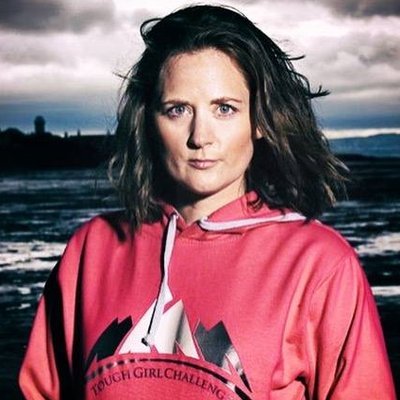
As many readers will know, The 52 was devised to promote equality and increase media coverage of women’s sport.
This is one of a number of projects set up in recent years set up to achieve the same goals, including the ‘Women’s CricZone’ website and the recently formed ‘It’s A Woman’s Game’ podcast.
But one woman who has been at the forefront of this battle for a good number of years is Sarah Williams, the founder of ‘Tough Girl Challenges.’
For those of you not already aware, Sarah quit her city-based job in 2013 and took herself off travelling across the world for 18 months, using the time to push herself to the limit and also decide on her next life move.
She ultimately settled on the task of motivating and inspiring young girls and woman and came up with the idea of creating ‘Tough Girl Challenges’ to do just that.
For so long society has suggested that only men are capable of achieving sporting excellence, setting records and completing the most arduous and gruelling of physical feats.
But since 2015 Sarah has interviewed more than 200 incredible guests on the ‘Tough Girl Podcast’ as well as writing numerous empowering blogs, each of which completely shun those stereotypes and prove that sport and exercise really is for anyone.
How to #Mentally Prepare for an #Expedition with Polar Explorer Felicity Aston @felicity_aston https://t.co/J9QIskTKod
— Sarah Williams (@_TOUGH_GIRL) September 7, 2018
As well as inspirational professional athletes such as boxing legend Stacey Copeland and Rugby World Cup winner Maggie Alphonsi, she has also welcomed a whole hosts of adventurers, explorers and everyday women who have achieved incredible feats that most of us couldn’t even think of, let alone complete.
To prove this point, here are just some of the amazing women she has welcomed on the podcast in 2018 alone:
- Fiona Oakes: British marathon runner who holds three world records
- Cazz Lander: Ultra-marathon runner, completed 12 challenges in 12 months and currently training to row the Pacific Ocean
- Kiko Matthews: The fastest woman to row the Atlantic Ocean having had two brain tumours removed and overcoming Cushing’s syndrome
- Pip Stewart: Cycled 13,000 miles from Malaysia to London and has also paddled the length of the Essequibo (the third longest river in South America)
- Terra Roam: The first woman to walk solo and unsupported around Australia
- Nicky Spinks: First woman to run a Double Ramsay Round in the Scottish mountains, completing the 116 mile, 57,000ft ascent over 48 peaks in 55hrs 56mins
As well showcasing these frankly unfathomable achievements, the ‘Tough Girl Podcast’ also discusses a wide variety of societal issues, bringing them into the limelight when sometimes they are ignored or avoided by other media outlets.
This includes mental and physical health problems, phobias and burnout, while she has also had guests on who have taken up their extreme activities for charitable causes, to seek happiness, change lifestyles and/or challenges themselves to the maximum.
What each guest shows though is that sport and exercise is for anyone and that literally anything is possible if someone puts their mind to it. Surely there isn’t a more inspirational message than that?
It seems more and more people are agreeing with this too as the ‘Tough Girl Podcast’ has been listened to in 174 countries and racked up more than 500,000 downloads.
Furthermore Sarah has also become more and more recognised in the mainstream media, reaching the final of the UK Blog Awards in 2017 before the podcast was named ‘Media Initiative of the Year’ at the 2018 Women’s Sport Trust #BeAGameChangerAwards.
But Sarah doesn’t just talks the talks – she also walks the walk too. And then some.
In 2016 she completed the Marathon des Sables (six marathons in six days across the Sahara Desert), before hiking the entire 2,190 mile Appalachian Trail in just 100 days last year.
Her next challenge – starting tomorrow (10 Sep) at the time of writing – is to cycle 4,448km from Vancouver to San Diego before crossing into Mexico to complete a 2,736km off-road bike packing route down the length of the Baja California Peninsula.
🚴♀️🚴♀️#Planning and #Preparation for the Pacific Coast Highway & the Baja Divide 🚴♀️🚴♀️https://t.co/rTB6kysDVj
— Sarah Williams (@_TOUGH_GIRL) September 7, 2018
Here is someone who had a normal, 9-to-5 job working in the city but has transformed her life and is continually showing the world that woman can achieve extraordinary physical feats.
A true inspiration, we can’t wait to see how Sarah gets on in North America and we definitely can’t wait to see her next batch of guests on the ‘Tough Girl Podcast’!
You can follow Sarah on her latest adventure as well as keeping up to date with the latest from ‘Tough Girl Challenges’ on her website, Twitter and Instagram accounts.
You can also listen to her mental health special interview with us on the SportSpiel podcast here.
#12) Caitlin Beevers
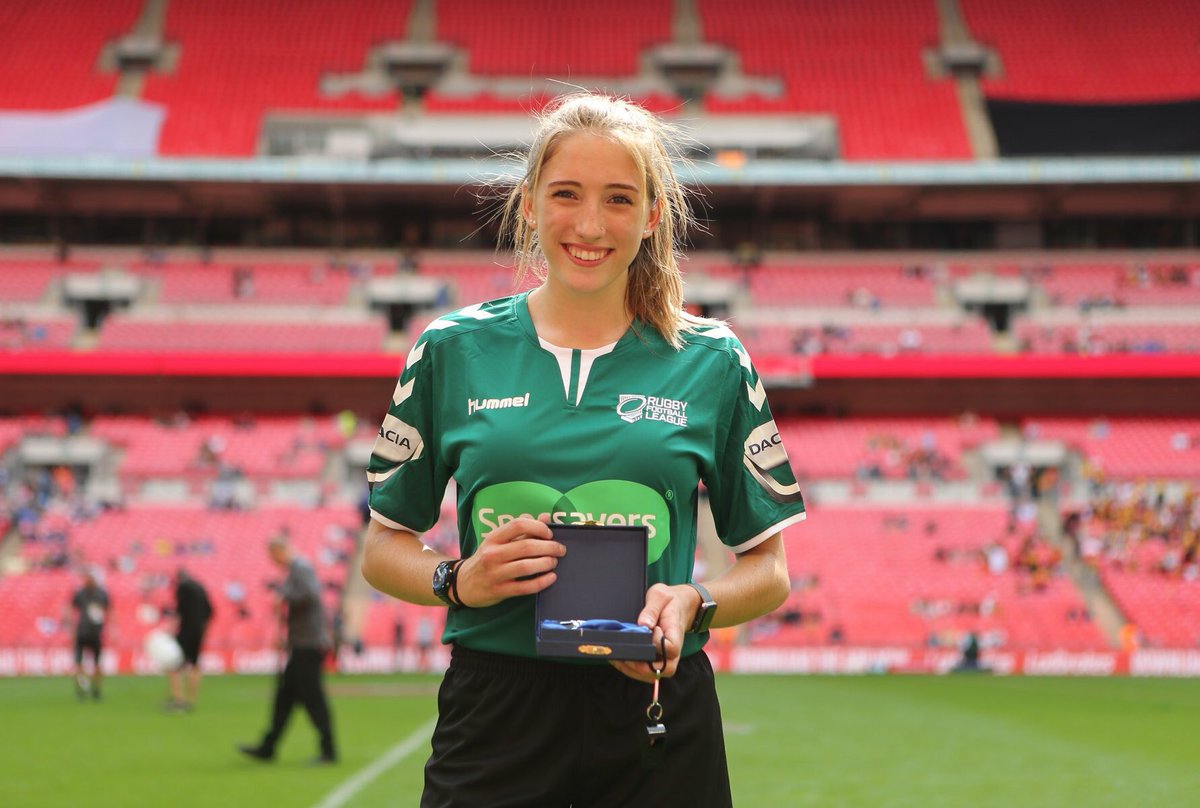
Picture Credit: Caitlin Beevers (@CaitlinBeevers1)
For most of us, creating history is something we can only ever dream of.
But for Caitlin Beevers this is becoming something of a regularity as she did that twice last month – while still at school!
As well as focusing on her GCSEs, 16-year-old Caitlin has been writing her own name into the annals of rugby league, firstly by helping Leeds Rhinos to win the 2018 Challenge Cup in their first year of existence.
Having only been formed last September, Rhinos have slotted right in amongst the big names of the sport, already qualifying for the semi-final play-offs of this season’s with a game to spare.
But their highlight of the season so far has to be winning their first ever silverware by beating fellow newcomers Castleford Tigers 20-14 in a final streamed live on BBC Sport.
Not only did Beevers start that game, she scored one of her team’s tries as they edged out Tigers at the Halliwell Jones Stadium in Warrington to cap a remarkable first year in senior rugby in which she has played in several positions for Rhinos.
Her talents don’t just stop at playing the game though as last weekend she became the first woman to ever take charge of a rugby league fixture at Wembley Stadium as she refereed the Year 7 Champions Schools Boys’ Final.
Speaking to the Yorkshire Evening Post – whose full interview you can read here – Beevers said: “It felt unreal. We’ve done our research and it looks like, from all the finals Wembley has held, I am the first female to referee there.
“It has been great to see so many people taking an interest. I have had so many people messaging me, young girls to say I have inspired them to take the next level. I didn’t think it would be like that at all.”
While her playing ability and success with ball in hand is worthy of huge praise, in many ways the fact that she is trailblazing as an official is of greater importance to the promotion of equality.
Well yesterday was probably one of the best days of my life. Having the opportunity to officiate at Wembley is amazing in its self but being the first female to referee there feels absolutely unreal! Also a massive well done to the other officials, you were all amazing😊🏉 pic.twitter.com/nTBesAHGVi
— Caitlin Beevers (@CaitlinBeevers1) August 26, 2018
The growth of women’s sport has been fantastic in the last few years – particularly when it comes to the acceptance of female athletes and the number both participating and making a living from it – but there are still areas for improvement.
Coaching is certainly one area that needs to be targeted, with many more men in charge of our national teams than women, and so is officiating.
It is saddening that when entering search terms such as ‘female referees’ or similar on the Internet, many of the options that appear on our screens are pages or videos where officials have been rated on their attractiveness and nothing else.
But unfortunately these pages won’t be forced back into the depths of the web until female officials become a regular sighting not just in men’s games, but firstly women’s fixtures.
When it comes to the likes of football, it is still more common to see a man taking charge of a women’s game, while in other sports seeing a female official is incredibly rare, if not non-existent.
As has been proven when it comes to female participation in sport, young women will only be attracted to officiating if they have role models that they can copy and that is why Beevers’ achievements with whistle in hand are so important.
Fortunately it seems as though things are starting to improve though with a handful of female officials having made history recently, including Sian Massey-Ellis who has become a regular sight as an assistant referee in the Premier League.
Then there is Joy Neville, who became the first female referee to take charge of both a men’s European game in 2017 and then a men’s rugby union match in the UK earlier this year, overseeing a Pro14 clash because Ulster and Southern Kings.
Cricket is another sport where positive changes are happening, with Claire Polosak becoming the first woman to not only umpire an Australian men’s domestic game at the end of 2017, but also take charge of an England men’s game (a fixture against a CA XI) a few months later.
Former England player Sue Redfern MBE has also set history by becoming the first person to play and umpire in a World Cup, standing alongside Polosak, Kathy Cross and Jacqueline Williams at last year’s tournament in England.
Furthermore, Redfern and Williams were also the first women to take charge of an ICC men’s fixture as they oversaw a game between Oman and Nigeria, while the number of female umpires in this country continues to grow.
Beevers’ fellow rugby league player Tara Jones is another making waves in the men’s game, having been a touch judge in the Super League, and the St John Fisher pupil is hoping to emulate her in the future.
As well as being a history maker, Beevers is also proof that women’s sport really is changing in this country. Not only is she playing a game so long seen as being for male-only, she is also stepping into a role for so long seen as male-only.
She might only be a teenager, but Beevers is re-writing the scripts and proving that sport really is for all.
#11) 20-26 August 2018
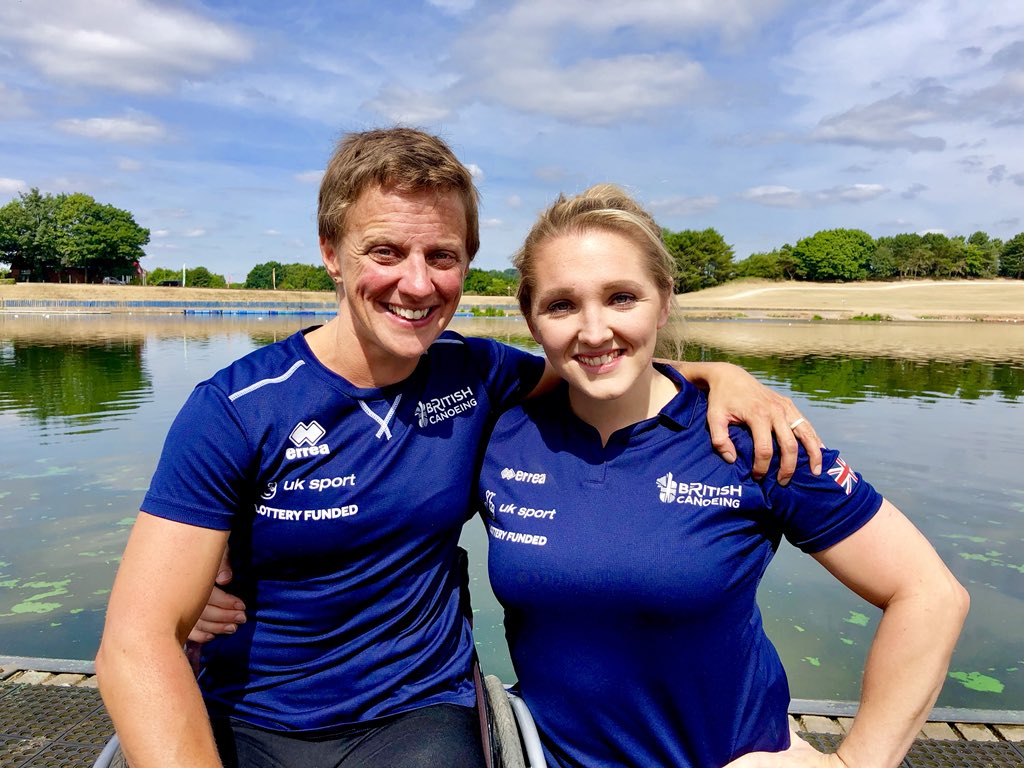
Picture credit: Nick Hope (@NickHopeTV)
Long evenings, sun, holidays, sea and stunning views – summer really is the best time of year.
It’s also fantastic for being a period with copious amounts of sport to consume.
Already this summer fans have been treated to World Cups and European Championships amongst many others.
But arguably the most important period for fans of women’s sport has been the past week.
Despite the high profile returns of the F1 season and Premier League, there has also been a highly pleasing number of headlines surrounding what GB’s female athletes have been up to, once again highlighting that public perception of women’s sport is changing for the better.
Of course success helps elicit this change in attitude and there has certainly been plenty over the last few days, including a stunning World Championship silver medal for the GB women’s wheelchair basketball team.
The 52 was lucky to be given the chance to speak to star player Amy Conroy a few weeks ago and she firmly believed the team would go far in the competition.
She could not have been more right as they reached their first ever World Championship final having shown incredible grit, determination and passion to fight their way through a tough group.
The GB Women make history and take the silver medal at the 2018 World Championships. In what was a hard fought final against the Netherlands 56-40.
We are GB 🇬🇧 Proud right now! GB 👊! These Girls ROCK!!!#TogetherWeAreGB #ThisGirlCan@ParalympicsGB @BBCSport @C4Paralympics pic.twitter.com/9PIy088ZXS
— BritishWheelchairBball (@BritWheelBBall) August 25, 2018
Wins over Spain and Germany in the quarters and semis respectively followed and, while they couldn’t quite beat the Dutch to win gold, a whole host of new role models – such as Conroy, Sophie Carrigill and Helen Freeman – have been born for us to follow to Tokyo 2020 and beyond.
Another up-and-coming star who shot to the forefront of the media’s attention this week was 17-year-old Kare Adenegan as she stunned everyone by beating the previously invincible Hannah Cockroft at the Para-athletics European Championships.
For so long Cockroft has been in a league of her own but Adenegan first showed signs of promise at last year’s World Championships, picking up three medals behind her team-mate.
Her performance in the 100m earlier this week though was something else as she left Cockroft trailing in her wake – something few of us ever thought we would see – on her way to a first major title.
Hurricane Hannah hit back in style to claim the gold in the 800m a few days later to show that she is far from done and prove that there is going to be one hell of a battle between these two for the foreseeable future.
To race against @HCDream2012 is always an honour. At the end of the day, if I’d never watched her race at the London 2012 Paralympic Games, I wouldn’t be doing the sport. #London2012legacy pic.twitter.com/JRV02GVKJy
— Kare Adenegan (@AdeneganK) August 25, 2018
There was plenty of success for other para-athletes too, with Sophie Hahn showing her mental strength by claiming a sprint double to put behind a tumultuous few months in which she has had some nasty claims about her classification thrown her way.
Medals have also been flowing for Great Britain’s women at the Para-canoe World Championships as Emma Wiggs proved she still has the hunger and ability to fight at the very top by claiming a seventh title in the VL2 200m.
That came two days after she was pipped to the top podium spot in the KL2 200m by team-mate Charlotte Henshaw as the 31-year-old claimed her first ever world title in the sport.
What makes Henshaw’s achievements particularly special though is that she only took up canoeing in 2017, having been a two-time Paralympic medal-winning swimmer previously.
It takes a special kind of person to be able to compete for their country and win medals in one sport, let alone two.
Very few people have ever been able to do this – with Rebecca Romero and Dame Sarah Storey in that very elite club – so the fact that Henshaw is winning medals after just a year in the sport is an amazing achievement and it will be really interesting to see just how good she can get.
What a day! Back on social media & catching up with all the lovely messages. Over the moon to finally call myself a World Champion. I wouldn’t have managed it without the unreal support of all at @BritishCanoeing & especially my coach @canoecol. V proud to be a part of this team. pic.twitter.com/3EiAfAVwhr
— Charlotte Henshaw (@CHenshawGB) August 23, 2018
The medals didn’t stop there this week either as triathlete Vicky Holland claimed an impressive win at the ITU World Triathlon race in Montreal to close the gap on current World Triathlon Series leader Katie Zaferes.
It was the Rio bronze medallist’s third win of the season as she battles to win her first ever world title next month and with Georgia Taylor-Brown, Jess Learmonth and Jodie Stimpson currently third, fourth and sixth in the standings respectively the future of British women’s triathlon is certainly bright.
Gold 🥇for @VixHolland and bronze 🥉 for @georgiatb #wtsmontreal 👏 pic.twitter.com/e4UoAMOye3
— 220Triathlon (@220Triathlon) August 25, 2018
There was success of a different kind in the football world this week too as Manchester United’s women played out their first home game in more than 13 years in front of a record crowd.
While they may have lost 2-0 to Reading, the fact that they broke the Continental Cup attendance record – with 4,835 showing up to watch them at Leigh Sports Village – shows that support for Casey Stoney’s team is already very high and hopefully this will continue for a long time.
Not the result we wanted, but a massive thank you to the 4,835 fans who came to today’s #MUWomen game! pic.twitter.com/Td3Mis24hd
— Manchester United Women (@ManUtdWomen) August 25, 2018
Add in to the mix that this year’s Kia Super League finals day is set to take place on Bank Holiday Monday – a date usually eserved for the men’s T20 event – and this week has proved that not only are our female athletes brilliant, the public really do care about them.
#10) Kate Cross and Sarah Taylor
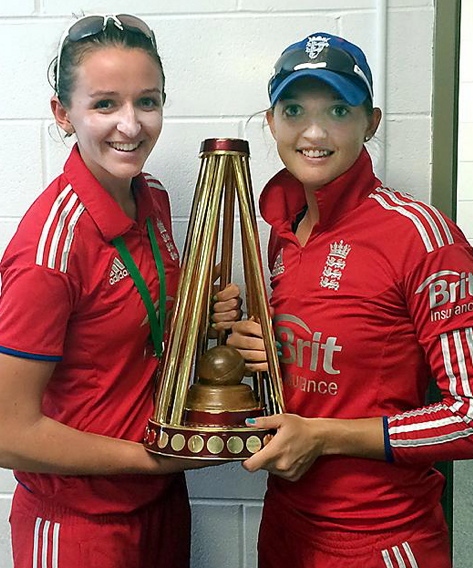
“I didn’t really know what my purpose was when I was getting out of bed.”
“I didn’t see any purpose in my life anymore, I’d stopped playing cricket and actually once I stopped playing cricket, life got worse. ”
These are the words of Kate Cross and Sarah Taylor respectively, a pair with many similarities.
As well as being good friends they are also two of England’s finest cricketers in a generation, having smashed boundaries and bowled over their doubters on numerous occasions.
They have also both suffered from crippling anxiety and depression.
It’s no secret that cricket is a sport where mental health is eliciting much debate at the moment. It’s a game like no other, where matches can last for up to five days and athletes often spend more time away from their homes and families than with them each year.
Add into that the constant pressure and expectation placed on their shoulders and it’s no surprising that playing the game can have a serious impact on a person’s wellbeing.
But when Taylor made the announcement she was to take a break from the game in 2016 it came as a huge surprise.
Here was someone with the world at her feet, widely regarded as the best ‘keeper-batter around, a player so good she was being touted as becoming the first woman to play professional cricket alongside men.
And yet while achieving all of this the Sussex player had been undergoing the greatest battle of them all since at least 2013 in complete silence.
I’m not ashamed to suffer with anxiety and no one on this earth should be. I’m still getting by and it’s not stopping me anytime soon. Mental health needs to keep being talked about. So a big thank you to @AlisonMitchell and @BBCStumped for this. https://t.co/wF0rpmVleJ https://t.co/2BR5fM1iKU
— Sarah Taylor (@Sarah_Taylor30) May 3, 2018
Shortly after Taylor took her break, her international team-mate Cross also found herself out of the international picture.
As a keen follower of the game, it was difficult to understand why the Lancashire Thunder fast bowler had seemingly fallen out of favour.
Since making her debut in 2015 Cross had shown she was more than capable of performing well on the international stage and had done nothing to suggest she didn’t deserve to be in the team.
Those questions were answered this week though as Cross admitted in an honest, frank and incredibly brave interview that she had also been suffering with the same mental illnesses as Taylor.
One of the sections that really stood out from Cross’ piece with the BBC was this:
“It was just this sense of emptiness. It’s quite hard to describe if you’ve not been through it, and it probably does sound quite dramatic to people who’ve never felt it.”
As someone who has also had very bad anxiety and depression, this struck a chord. While everyone has their own unique experience of these illnesses, there is one thing that I’ve certainly noticed – it’s so hard to describe how you’re feeling in a way that people can understand and relate to.
While it might be difficult to depict just how you’re suffering, it is certainly possible to educate people into recognising that you are struggling and that is exactly what Cross and Taylor are doing here.
Even just by talking about their experiences they are highlighting to the wider public some of the potential signs of anxiety and depression which we can take into our lives and look out for both in ourselves and our family and friends.
Probably the most important interview I have done. I hope people can read this and see that things can and do get better. Please open up and talk, it really does help.. #ItsNotWeakToSpeak https://t.co/75rZImXBR6
— Kate Cross (@katecross16) August 16, 2018
Mental health is such a complex issue and yet, despite it’s prevalence – it’s estimated 25% of British adults have suffered an illness – we as a society know so little about it.
That’s why it’s so important people like Cross and Taylor are able share their stories and experiences – not only do they have the knowledge to inform people, they are also have the power that they are hugely respected individuals that people will listen to and want to learn from.
Taylor also deserves a special mention for the way she used social media to do this throughout her break and recovery. While she may have wanted to shrink away from the world, she took the brave decision to post about how she was doing and the steps she was making.
As someone coming to the end stages of my recovery at the time, seeing this was so inspirational. Here was someone who was really, really hurting and yet still able to take the time to educate people about what was going on. It really gave me inspiration and is part of the reason I decided to take the step and release my blog piece in May 2017, which you can read here.
It’s not just mental health where athletes have an important voice either. It’s a whole array of issues where much more education is needed in general, from alcoholism and gambling to concussion.
Indeed Rio 2016 hockey gold medallists Shona McCallin and Nic White have also done fantastic work informing people about the latter having both suffered from the injury earlier this year – you can read Shona’s blog which details her battle with concussion here.
It’s fantastic to see both Taylor and Cross back where they belong – on the international stage. Whether they know it or not, they are fantastic role models to so many who have suffered with mental illness and are proof that, no matter how bad things get, they will always get better.
You can read Cross’ piece with the BBC here. You can also read Taylor’s piece with the Guardian here and watch her interview with the BBC’s ‘Stumped’ podcast here.
Photo credit: Oldham Chronicle
 The 52 Blog