#29) Ten Landmark Moments From 2018
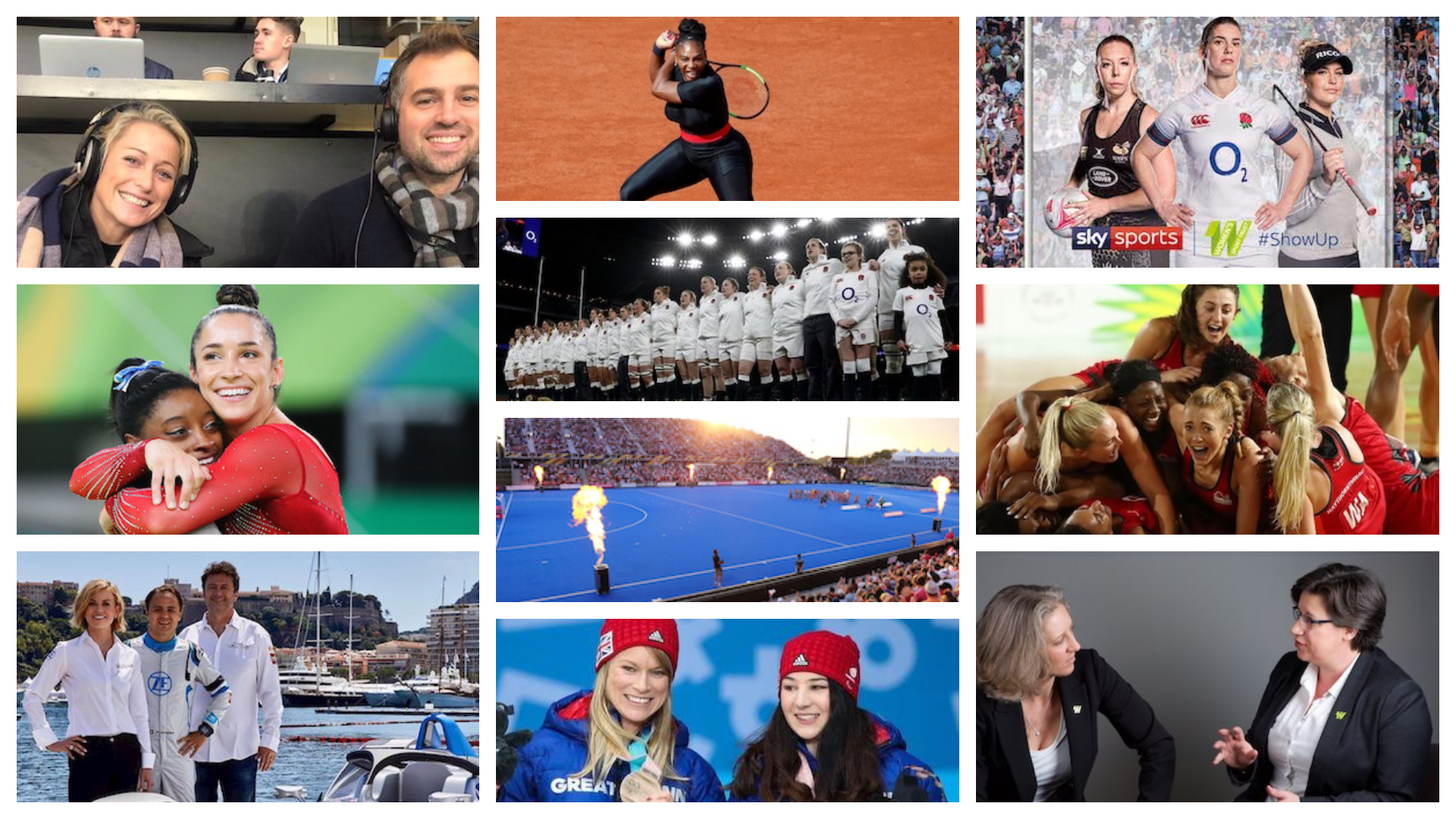
It seems as though 2018 has provided a never-ending conveyor belt of victories when it comes to women’s sport.
There was that Commonwealth gold for England Netball, a world silver for GB women’s wheelchair basketballers, Georgia Hall storming to British Open victory, Vicky Holland being crowned the overall ITU World Triathlon champion, Grand Slam titles for Bianca Walkden and Lauren Williams and multiple medals for Dina Asher-Smith, Katerina Johnson-Thompson and Laura Muir.
And that’s only scratching the surface!
But it’s not just been on the pitch where success has been occurring – there has been plenty off it too.
Here’s our chronological look back at some of the landmark moments from 2018 that have shown just rapidly women’s sport is growing.
1) Turning The Air Golden (Multiple sports – All year)
Alex Scott, Ali Mitchell, Amy Williams, Chemmy Alcott, Danielle ‘Nolli’ Waterman, Ebony Rainford-Brent, Eni Aluko, Helen Richardson-Walsh, Isa Guha, Jenny Jones, Kate Richardson-Walsh, Katharine Merry, Maggie Alphonsi, Natasha ‘Mo’ Hunt, Sam Quek, Sara Orchard, Vicki Sparks.
These are just some of the women making names for themselves behind the mic with their brilliant commentary and punditry.
2018 has certainly been a breakthrough year in terms of the number of women on our TVs and radios, with this influx of talent joining mainstays Clare Balding, Gabby Logan, Hazel Irvine and Jacqui Oatley in an ever-expanding pool.
Unfortunately with this growth comes plenty of criticism, most of it unfair and based on their gender rather than their abilities.
But for those who think their appearances are just ‘box ticking’… Think again! These women are awesome and they’re here to stay!
The now famous #bbcolympics balcony where all the (cold) antics take place 😉 pic.twitter.com/YZhTxP9hdg
— Chemmy Alcott OLY (@ChemmySki) February 22, 2018
2) The ‘Army of Survivors’ (Gymnastics – January)
The scandal surrounding the sexual abuse of young athletes at US Gymnastics has been a harrowing affair but it has also shown that women will no longer accept being maltreated by men.
The courage shown by each of the 250+ women who spoke out during the sentencing of Larry Nassar was awe inspiring.
To be able to stand up, confront that evil man and talk about what they went through in the full glare of the media eye is an achievement greater than any medal.
We’ll leave the final word to Aly Raisman:
“The women you so heartlessly abused over such a long period of time are now a force, and you are nothing.”
3) History On The Ice (Pyeongchang 2018 – February-March)
Pyeongchang 2018 will go down in legend as the Games where British women re-wrote the history books.
Lizzy Yarnold became the first athlete ever to defend an Olympic skeleton title (amongst a number of other records), Menna Fitzpatrick and Jennifer Kehoe became Team GB’s most decorated Winter Paralympians – with one gold and four medals in total – and Izzy Atkin won the country’s first ever skiing bronze.
Add into that an awesome skeleton bronze for Laura Deas, three para-skiing podium places for Millie Knight and the fact that Mica McNeill and Mica Moore even made the event after having to raise the money to compete themselves and you soon see why this Games was so important.
And don’t forget Ester Ledecka, who became the first person in Winter Olympic history to win golds in snowboarding and skiing at the same event, the latter with borrowed equipment. Now that’s impressive!
4) The Return Of A Legend (Tennis – May)
Serena Williams is just incredible.
Not only did she return to tennis from a very difficult birth this year, she nearly won two of the three majors she competed in!
Her US Open final rant aside, Williams was once again at her empowering best in 2018 and one of a number of athletes who are proving that it is possible to have children and still compete at the very highest level.
While the French Open may be best remembered for the unnecessary furore around her cat suit, that really shouldn’t detract from the fact she got all the way to the final in her first Grand Slam since nearly losing her life shortly and overcoming postpartum depression.
In response, Nike perfectly summed up what most people feel about Williams below.
You can take the superhero out of her costume, but you can never take away her superpowers. #justdoit pic.twitter.com/dDB6D9nzaD
— Nike (@Nike) August 25, 2018
5) The First #ShowUp Event (Cricket – June)
A fantastic initiative launched by the Women’s Sport Trust, the #ShowUp campaign has been an important instrument to get people talking about women’s sport on social media.
To see so many people sharing their experiences of attending fixtures on social media – and feel comfortable doing so – is fantastic and a sure sign of progress in our acceptance of women’s sport.
The highlight of the year though has to be the first specific #ShowUp event which saw England’s cricketers take on South Africa and New Zealand in a T20I double header shown live on Sky Sports.
The overwhelmingly positive reaction, full stands, relentless Twitter chatter and captivating play were all sure-fire signs of just how much women’s cricket has grown recently and the day was a huge success.
Bring on the next one!
6) They Came, They Saw, They Were Inspired (Hockey – July/August)
Ok so we’re very biased but how good was the 2018 Hockey Women’s World Cup?
The baking sunshine, superb on-pitch action and the amazing run from the Irish team were all reasons that contributed to making the tournament very special, but one thing in particular made it really stand out – the fans.
More than 100,000 people packed into the Lee Valley Hockey & Tennis Centre and provided memorable support across the two weeks of action, with the stands full for each of England’s games and the final, while BT Sport’s coverage also attracted some pretty impressive figures.
To see so many interested in what is still a minority sport – so much so that the stadium’s original capacity was doubled due to unprecedented demand – was truly amazing and showed once again we as a nation really are taking women’s sport seriously.
14 days. 36 games. 126 goals…
1 incredible @Vitality_UK #HWC2018 🙌 pic.twitter.com/R1Ne5Wre1a— England Hockey (@EnglandHockey) August 8, 2018
7) A New Venturi (Motorsport – August)
An important moment that perhaps went under the radar, Susie Wolff’s appointment as Team Principle of the Venturi Formula E team is no less significant than any of the others on this list.
Wolff has been a pivotal figure in motorsport for a long time, firstly as a driver then as a commentator and presenter, and is another woman showing that you can combine having a child and working full-time.
But seeing her at the helm of a team in a sport that will help shape the future of the motoring industry is arguably her most important achievement yet and sign that motorsport is changing for the better.
Who knows, perhaps one day we’ll see Wolff come face-to-face with husband Toto (currently executive director of the Mercedes F1 team) in the battle for a major championship… That’s a spectacle we’d love to see!
8) The Deal We’ve All Been Waiting For (Rugby Union – September)
It’s something many have been asking for since the 2017 Women’s Rugby World Cup and the RFU finally came good this year as they announced full-time contracts for the Red Roses in 2019.
Why it’s taken so long for rugby to allow its biggest stars to once again train professionally in the XV-a-side format is still largely unclear, especially considering their success in recent years and the high volume of very talented players progressing into the international team each season.
But hopefully that will all be forgotten now when the remaining recipients of these deals are announced early next year, with Emily Scarratt, Natasha Hunt and Jess Breach having already committed to transferring from the sevens programme.
Will this mean our women can exact revenge on New Zealand come the 2021 World Cup? Well if they can run them close having only trained professional for a few months, imagine how good they could be having done so for two years…
7’s was a great chapter of my rugby life, now really looking forward to getting back to @HarlequinsWomen and England XV’s. 🌹 https://t.co/Bp85E98P1M
— jessica breach (@jessbreach) December 20, 2018
9) One Second That Changed Everything (Netball – October/November)
What a year it’s been for England Netball.
Ever since Helen Housby scored that extraordinary last-second penalty shot to win her side Commonwealth gold over Australia, it seems as though they’ve been in the headlines every day since – and rightly so.
What made their success even sweeter though was that it came despite minimal government funding to the point where they didn’t know if they could to be full-time beyond 2019.
But that is likely to change now with Vitality and Nike stepping in and providing lucrative multi-year deals that will not only offer financial security to England Netball but also help them grow significantly in many areas.
This was an unprecedented move from these companies, particularly in a sport with little awareness before this year, but if successful it could be a major turning point that encourages more and more big brands to invest in women’s sport.
10) Our Inspirations Honoured (Women’s Sport Trust – December)
We did have this section reserved for next year’s women’s football World Cup but following the publication of the New Year’s Honours list we couldn’t not give the final word to the amazing Jo Bostock and Tammy Parlour.
The work they’ve done to boost the profile of women’s sport in this country is simply immeasurable – the fact teams such as the Lionesses have so much support now compared to a few years ago can certainly attributed, at least in part, to their tireless efforts.
What they have already achieved and continue to so do with the Women’s Sport Trust – including setting up the aforementioned #ShowUp campaign as well as the #BeAGameChanger awards – is changing the world of sport for the better.
Thank you for everything Tammy and Jo – we can’t wait to see what the next few years bring!
We’re incredibly proud to announce that our co-founders, @Tammy_Parlour and @Jobostock , have been awarded MBEs in the New Year 2019 Honours List for services to gender equality in sport. https://t.co/MFpLiItPgE
— Women’s Sport Trust (@WomenSportTrust) December 28, 2018
#28) Sport England/This Girl Can
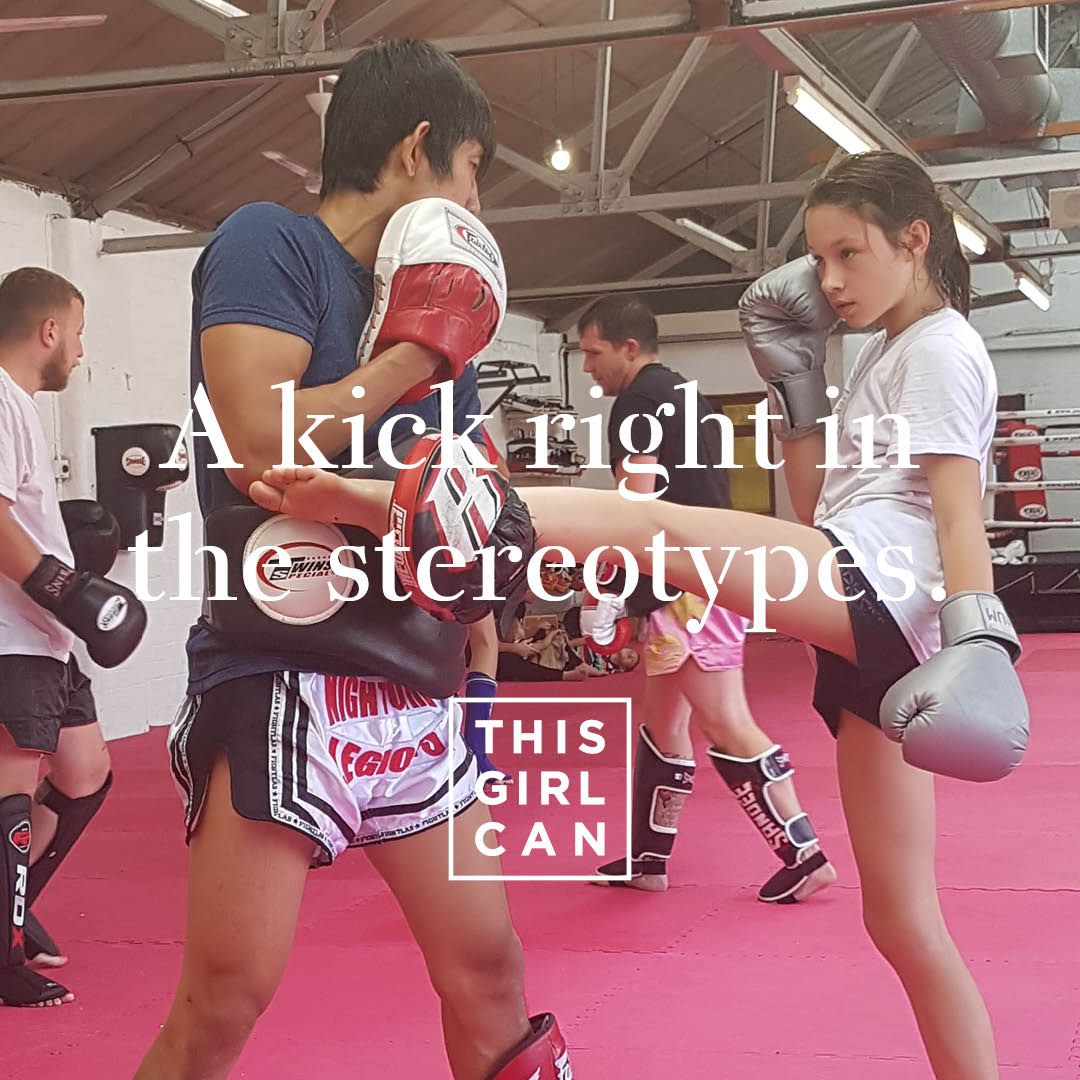
This week guest writer Shona McCallin – Team GB Olympic hockey gold medalist – explains why Sport England and the This Girl Can campaign have been crucial in the quest to abolish negative stereotypes surrounding women in sport.
What actually makes you sit back and think: ‘Yeah, that’s spot on’?
Or, to put it more simply, what makes me sit up and take note?
There are lots of things really – snippets from books, thought-provoking articles, Christmas TV adverts (well done Sainsbury’s!) or simply chatting to a new or interesting individual.
All of the above have common characteristics; they’re unique, stand out from the crowd and evoke emotive responses from me.
For this blog I was asked to pen some thoughts to paper about what in women’s sport inspires me. Where do I start? I genuinely could have done a ‘Top 20’!
Through working at London and Partners, I’ve been inspired by the rising level of brands engaging in long-haul investment and sponsorship in women’s sport with Vitality, Investec and Kia all leading the way.
Furthermore the incredible staff, practitioners and athletes I work with everyday all inspire me when I turn up to training. The level of passion, in-depth knowledge and care shown towards the wellbeing of people, the sport and the hockey community is second to none.
Daily snippets of inspiration also often come through my pre-bed reading routine; the mental struggles Victoria Pendleton describes in her autobiography or how ultra runner Mimi Anderson broke the world record despite not running before the age of 36.
However a long-standing inspiration of mine within women’s sport has to be the groundbreaking campaign ‘This Girl Can’ created by Sport England, supported by the National Lottery.
It champions a really important message and celebrates ‘active women who are doing their thing no matter how they look, how well they do it or how sweaty they get.’
It made me sit back and think ‘yeah, spot on.’
Alison showing how #FitGotReal for her 💃 #ThisGirlCan pic.twitter.com/xtJFehQtf4
— This Girl Can (@ThisGirlCanUK) December 8, 2018
For too long now people – females especially – have used the fear of judgment, not looking feminine or lacking body confidence as a barrier to sport.
I loved sport growing up but reflecting on how PE lessons were conducted at my school, not many shared my experience. “Miss, I don’t want to get sweaty”; “Miss, I’ve just done my hair and makeup”; “Miss, I’ve forgotten my P.E kit”. The list went on.
It was generally viewed as uncool to do sport and certainly uncool to look red-faced and sweaty.
Girls back then wanted to look girly, not sporty.
Times have changed since I was 13 and I’m really happy for that. Women are throwing themselves into sport more readily, they are less intimidated by physical perfection and the idea of ‘strong not skinny’ is really coming to light.
As well as this, young girls have real role models to look up to – inspiring women who put performance over appearance.
Be the star of your own #ThisGirlCan poster. You might even feature in our Twitter feed! 👉 https://t.co/TrmvYSZhSy pic.twitter.com/cydThU1KDZ
— This Girl Can (@ThisGirlCanUK) December 1, 2018
Of course the sole aim of This Girl Can wasn’t just to change stereotypes surrounding women in sport; it was also designed to actively increase female participation levels and the statistics certainly show it seems to be doing just that.
According to Sport England figures, 2.8 million women in the UK are engaging in more active lifestyles just as a direct result of the campaign.
As you can imagine, I was really pleased to see the latest This Girl Can campaign – Fit Got Real – drop in October 2018. In a nutshell, it builds on previous achievements and aims to challenge the conventional way we see exercise, stating that moving, jumping, wiggling, moving, and jiggling are now all very much acceptable for everyone.
Thank you Sport England – keep your campaigns coming.
They make me sit back and think: ‘Yeah, that’s spot on.’
#27) Emily Glanvill
‘Why fit in when you were born to stand out?’
An oft-used quote from children’s author Thomas Seuss Geisel – or Dr. Seuss as he is more famously known – this is a statement relevant to as many people as it isn’t.
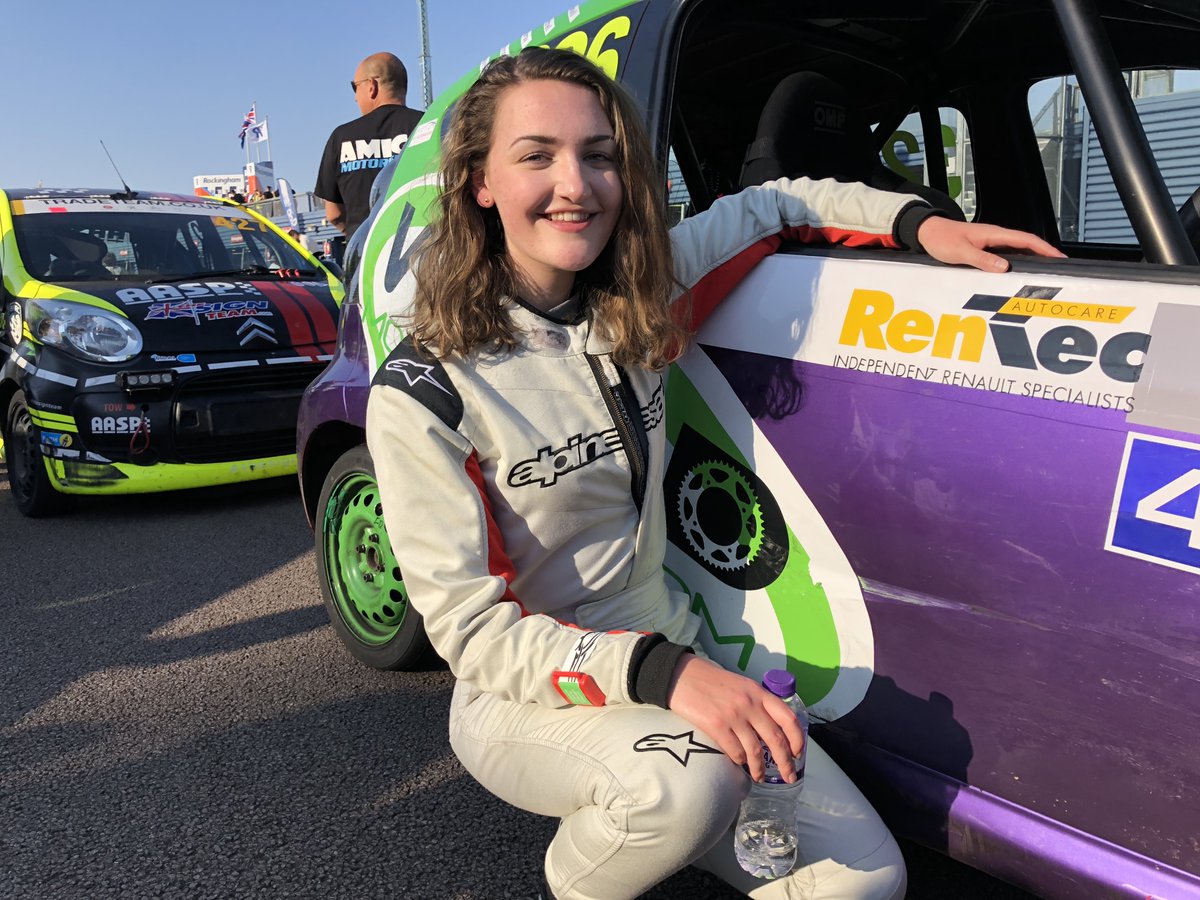
One individual who certainly embodies this motto within her life is Emily Glanvill, an exciting talent making her name for herself in the ridiculously competitive world of motorsport.
Participating in a sport with so few females is not just a way of providing a talking point for the teenager though; it’s a way of life.
Having been introduced to motorsport almost by chance – her friend’s Dad invited the two girls along to a Speedway event which saw them immediately hooked – the Scottish racer hasn’t looked back since, ascending through the ranks at an impressive speed.
Glanvill admits it’s not been the easiest of journeys so far but has loved every minute of it, especially the way it has allowed her to stand out from the crowd and do something no-one else would ever have foreseen.
“It wasn’t something where I just got in the kart and was immediately quick – I’d be lying if I said that was true, it just wasn’t the case,” she recalled in an exclusive interview with SportSpiel.
“In many ways I was pretty bad but that really annoyed me and I really wanted to work at it until I was good at it.
“At the time it was so different and so unique and I really liked that. I’ve always liked to do things that are slightly different or stand out from the crowd slightly.
“I was really into my fashion, but wearing alternative items as well as making my own clothes and things like that. But then here was this other thing that I could do that was a little bit different, unique and unorthodox for a 12-year-old girl. And that was what really appealed to me.”
Support crew 🙌😍 Thanks to my family, friends, sponsors and followers for your ongoing support of everything we do here at #TeamEGRacing ❤️🏁 You guys rock 🏆 pic.twitter.com/v5U3kxMDAs
— Emily Glanvill (@racer_emily) September 27, 2018
Despite the rocky start Glanvill was soon paving a way in the sport, firstly in the rough and tumble of autograss – a form of amateur racing on mud or grass – before being awarded the 2016 Teenager Cancer Trust Scholarship Car, giving her the opportunity to achieve her dream of circuit racing in the UK Junior Saloon Car Championship.
It’s not just the success that has made racing so enjoyable for Glanvill though; it’s also the incredibly positive impact she had on her life.
A couple of years before attending her maiden Speedway event, tough times hit the Strathclyde University student and her family as her primary school – which her Mum also worked at – unexpectedly closed.
This had a profound impact on Glanvill, happening at a time many adolescents find difficult enough as it is, and it wasn’t until motorsport came along two years later that she really found happiness again.
The 19-year-old recalled: “In the space of two weeks I went from being incredibly happy and loving school to it shutting down and having nowhere to go for the next year.
“It was a very stressful time with my Mum losing her job as well and that really changed my whole opinion of school and I was never really very settled after. So having motorsport to build my confidence and build me back up after that was the lifeline I needed.
“Racing came along in my life at the right time because I was a very shy, introverted kid who wouldn’t speak out in class, would never be able to do presentations at school.
“But getting into motorsport, getting that scholarship and doing all these media interviews and talking about something I was passionate about built my confidence so much and now I can do it quite happily.
“That’s then impacted on my university degree, getting a job and all the other aspects of my life – it’s had such a massive affect.”
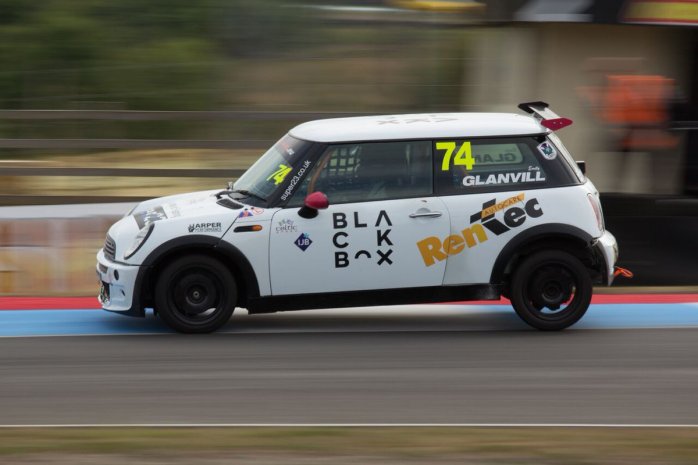
Furthermore it’s also taught Glanvill how to deal with and stand up to the sexism still prevalent both in the sport and society in general.
During her interview with SportSpiel she recalled one incident in particular which should be seen as a lesson to everyone – it’s what you do that counts, not what you say.
She said: “The story I always tell is when myself and my friend went to a karting track we’d never been too before.
“A car full of boys pulled up next to us. They got out and they were laughing, giggling, pointing and whispering saying we were going to be awful just because we were girls.
“It turned out we were going to be racing against them. We could have got angry and said something but we decided to keep quiet, go out on the track, drive our race, see how we got on and thought maybe that will prove our point rather than making a big scene.
“We went out onto the track for a 30min endurance race and I won by about three laps and just drove circles round them!
“They came off, dead white in the face, didn’t say a word, totally embarrassed and that was it.
“If you just change it around in your head and use those experiences to prove a point, get on with the job, race hard and do well you can’t argue with that.”
Being a fierce competitor, racing against men and women is something Glanvill loves to do.
As such the idea of the new all-female W Series – designed to help more women reach the upper echelons of motorsport – is not one that appeals to her.
“I would much rather race against everyone because I want to be the best, not the best girl.
“You don’t want to be the best of a small bunch; you want to be the best of everyone.”
Already in her short career Glanvill has proved on multiple times that she is certainly right up there with the best.
With aspirations of becoming the first woman to race in the British Touring Car Championship since Fiona Leggate in 2007, we are certainly looking forward to where her career takes her.
You can listen to Emily’s full interview with SportSpiel here.
#26) Ada Hegerberg

Ada Hegerberg is a truly remarkable woman who will go down in history for all the right reasons.
On Monday the Norwegian was the recipient of the first women’s Ballon d’Or, beating a plethora of immensely talented players – including six-time FIFA World Player of the Year/Best Women’s Player Marta and England stars Lucy Bronze and Fran Kirby – to the award.
Unfortunately the headlines have been taken away from her achievement due to one man’s ridiculousness. The fact such a prestigious award was being presented by someone with no connection to the game is itself baffling, let alone what came out of his mouth upon doing so.
But we’re not going to talk about that here for two reasons. Firstly, the arguments surrounding sexism in football have already been eloquently put across by people in a much better position to comment than myself.
Secondly I just want to highlight and celebrate this mercurial talent.
For someone aged just 23, what Hegerberg has already achieved in the game is frankly astounding.
WHAT A NIGHT ⭐️ Photo: Ivar Waage Johansen pic.twitter.com/bDfbUuAYrI
— Ada S Hegerberg (@AdaStolsmo) December 4, 2018
Four league titles, three Champions Leagues, the 2016 UEFA Best Player and the 2017 BBC Women’s Footballer of the Year have all come before, as well as finishing third in the FIFA Best Women’s Player category earlier in the year.
Furthermore she also has a frankly astounding 237 club career goals in just 233 games at the time of writing, with 175 of those coming in just 143 matches for her current side Lyon.
To compare, her ratio of 1.02 goals per game is greater than Pele (0.94), Lionel Messi (0.84) and Cristiano Ronaldo (0.75).
While many will argue the Division 1 Feminine is a one-team league – Lyon have topped the table for 12 seasons straight – how is that really any different to La Liga, which has seen Barcelona or Real Madrid share 13 of the last 14 titles?
And just to prove Hegerberg isn’t just a flat-track bully, her record against Europe’s elite is also exceptional – the forward’s tally of 15 in nine games last season made her the top scorer (male or female) in the Champions League. She even tweeted Ronaldo to tell him so!
While it’s clear that Hegerberg is a phenomenal talent who, with much of the rest of her career still to come, is going to break multitudes of records, she is more than just that.
She is a trailblazer, a pioneer and a perfect role model.
The maturity and class in which she dealt with that question from Monday’s ceremony – both at the time and since – has been very noticeable.
When asked about it the forward has done all she can to swiftly move the conversation back around to the award itself, refusing to waste any more than just a few words on the topic.
This isn’t to boost her own ego though; it’s to turn around the argument and show that important changes are beginning to happen in football.
Indeed she used her empowering winner’s speech to do just that, telling the world that football can now be a sport for anyone.
“I would like to end this speech with some words to young girls all over the world: Please, believe in yourselves.
“I’d like to say a big huge thank you to France Football for letting us have this opportunity to have this award. It’s a huge step for women’s football and the work you put down is such an important thing for women’s football.
“Together we’ll make a difference.”
The Ballon D’Or hier soir 😘
Let’s just talk about that speech 👏🏼
Incroyable 🙌🏼 pic.twitter.com/uK3oCpQjgI
— Lucy Bronze (@LucyBronze) December 4, 2018
Hegerberg has been delivering more than just words though in the fight for equality in football.
Having initially shot to fame representing Norway – first showing her sublime talent to the world at the U19 Euros in 2011 despite being just 15 – the former Turbine Potsdam player turned her back on international football last year in protest at how football is treated in the country.
The Scandinavian country is often seen as one of the most gender equal in the world, especially when it comes to sport – in 2017 the women’s team became the first to be paid the same as their male counterparts.
But despite this Hegerberg cites problems with the way female footballers are treated on the whole, stating money isn’t the only issue, and has taken the stand in order to elicit progress and ensure the country’s future generations have the best conditions possible.
Ultimately this means it’s highly unlikely the world’s best player won’t be appearing at next summer’s World Cup but you can only applaud someone who is preparing to sacrifice that opportunity in order to change the game for the better.
Let’s not taint what should have been a special night and a celebration of a superstar athlete with one stupid moment.
Let’s remember it instead for the celebration of a phenomenal footballer and yet another sign that women’s football is starting to close the gap to the men.
#25) caytoo
You know women’s sport is on the rise when companies are being formed with specific objectives to help it grow even further.
That’s exactly what caytoo – an exciting organisation launched earlier this month by former business intelligence quartet Jeremy Thompson, Alex Burmaster, Ellen Thornber and Mark Middlemas – is aspiring to do.
Their ultimate goal is to level the playing field when it comes to funding professional sport in the UK, reducing the reliance on increasingly threatened National Lottery money and encouraging brands to get involved as primary athlete sponsors.
While caytoo’s ambition may seem radical compared to what we currently know, it is based on a simple desire to help an industry the founders discovered a joint fondness of in unusual circumstances.
“It was chance meeting at Lord’s and a mutual avoidance of the 2017 Love Island final that brought us together,” Mark recalled.
“But in all seriousness, the inspiration was seeded from a love of sport and a mutual feeling that elite athlete funding needed disrupting for the better in the UK.
“Sport is a hugely powerful channel for reaching new and established audiences thanks to the emotional connection and engagement it delivers.
“caytoo firmly believes that every business should have a sports strategy and that today’s elite athletes are brands in themselves that can offer hugely inspiring employee and consumer engagement.”
🚀 We are thrilled to OFFICIALLY LAUNCH the @caytoouk platform!
The inspirational athlete network innovating the way athletes, sports and brands connect and do business.
👉 Find your inspiration at – https://t.co/6Qz2JYMRzx #leveltheplayingfield #upyourgame pic.twitter.com/Odo5RbR9qm
— caytoo (@caytoouk) November 20, 2018
But why women’s sport in particular?
Mark explained they caytoo has chosen to champion this – alongside emerging, extreme, disability and adventure-led sports – because, despite marked recent improvements in many areas, change is still needed, especially when it comes to funding.
This is particularly prevalent in team sports. The first entirely professional edition of the FA WSL was only launched in September. There are currently just 18 professional female cricketers in the country. Only 28 of England’s finest XV-a-side rugby union stars will be awarded full-time contracts come January, on top of around 20 sevens players.
However it is also an incredibly exciting time for elite women’s sport. Full-time professional deals are starting to appear more frequently, broadcasters are constantly increasing the amount of sport on their channels and the numbers of high profile successes that inspire thousands continues to rise.
As a result, brands are already beginning to get more involved.
Tyrrells is the title sponsor of the Premier 15s rugby division launched last year, while Nike and Vitality have recently announced major deals with England Netball, a governing body that gets minimal government support due to not being an Olympic sport.
🚀 BRANDS AT THE READY….
Inspire your audience and discover extraordinary sporting talent as speakers and ambassadors with @caytoouk! We’re talking Olympic and Paralympic athletes, world record holders, legends, rising stars… #findyourinspiration
👉 https://t.co/6Qz2JYMRzx pic.twitter.com/ilEOVGrVep
— caytoo (@caytoouk) November 20, 2018
Furthermore, Nielsen’s ‘Rise In Women’s Sport’ paper has found that women’s sport and its athletes are perceived to be significantly more inspirational than men and women’s sport more progressive on the whole.
This is something caytoo will be drawing upon, producing inspiring content through human storytelling in order to continue the momentum, enticing even more companies to get involved and ultimately one day help elicit sporting gender equality.
Mark said: “Women’s sport is changing for the better in lots of areas but there is still plenty of work to do and we want to help be part of the change needed.
“We absolutely do believe equal status will come about and so do the athletes on our platform and that’s we are driving towards.
“It’s already happened in some sports but needs to become the rule in every sport.
“Countries like Norway and New Zealand are leading the way in setting the right example in football for example and societal changes will only build on that momentum here in the UK.
“There is still a long way to go though and we are doing everything we can to help.”
What makes caytoo really stand out however is not just the rich array of talent they already have on their books, but they way in which they will be able to interact.
This includes ambassadors Simon Shaw MBE and women’s pro-golfer Iona Stephen as well as rugby legend Tamara Taylor, Commonwealth boxing champion Stacey Copeland, Red Bull ultra runner Tom Evans, Rio 2016 gold-medal-winning hockey star Shona McCallin MBE, para-taekwondo sensation Amy Truesdale and youth world champion windsurfer Emma Wilson.
Brilliant news for @caytoouk on the launch day – delighted to be on board with Caytoo as an athlete ambassador looking to support other athletes in sport to get the support they deserve. #teamcaytoo #findyourinspiration #womeninsport https://t.co/lzcmeUb3W0
— Iona Stephen (@Iona_Stephen) November 20, 2018
While caytoo will be heavily promoting their athletes to outsiders, they are also giving them the opportunity to interact with and learn from each other to help increase their skill sets and make them even more attractive to potential sponsors and brands, something which has clearly resonated with the c. 200 athletes already on board.
“The power of the group is critical. The idea of a connected community ‘of elite athletes for elite athletes’ has really resonated,” reflected Mark.
“Our mix of athletic talent brings a rich blend of resource and support that they can’t get elsewhere – if an athlete wants to talk to someone in another sport or from another generation they can.
“That on-hand advice is hugely powerful and inspiring for all those involved and its importantly something brands want to be part of too.”
It may only be in its embryonic stage but already caytoo is making waves in the sporting world – expect it to be a name you’ll be seeing a lot more of for a long time to come.
#24) Sammi Kinghorn
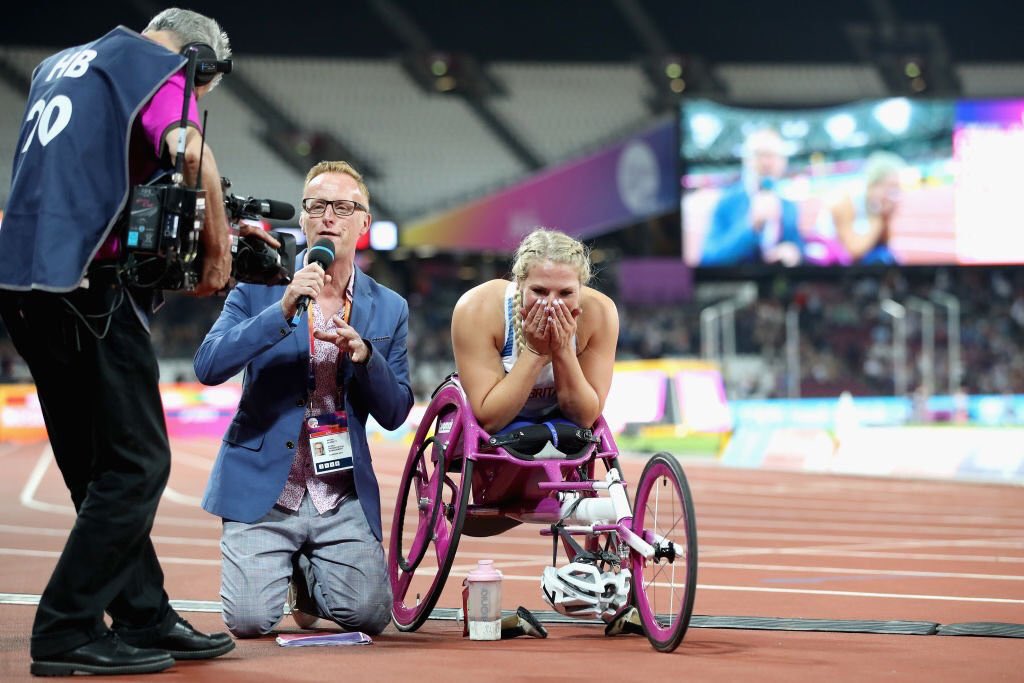
Ask any journalist to recount everything they’ve written and it is almost guaranteed they won’t be able to remember the majority.
But every now and again there is one that sticks with you forever.
For me that’s the tale of Sammi Kinghorn.
What the wheelchair racer has achieved, not just on the track but in life as a whole, is phenomenal.
Around eight years ago the social, sporty teenager was in an accident on the family farm that was to change her life forever, left paralysed below the waist after being crushed by a forklift while her Dad was clearing snow.
Now she is a double World and triple European champion, dual world record holder and Paralympic finalist in a sport she didn’t know existed at the time of the accident.
A year ago today first global title in a world record time by the phenomenal @Sam_Kinghorn. Fantastic memories! pic.twitter.com/zSAa0VUamX
— IanMirfin (@JackCaleyJuno) July 15, 2018
I was fortunate enough to speak to Sammi for the SportSpiel podcast last year and her account of the accident was incredibly honest and moving.
“I can still remember my heart thumping out of my chest as I felt my back go – I felt it break and I knew it wasn’t good,” the sprinter recalled.
“I watched my Dad shovel up some snow and lifted the bucket up and I thought ‘I have to get out now, I need to run away’.
“I ran for a bit but then slipped and fell. As I lay on the ground I felt my legs spasming pretty bad, all my muscles were twitching and then everything just tightened up and then let go.
“I knew that was the last time that I was going to feel my legs again.”
What was really striking was the maturity with which Kinghorn spoke about an experience so difficult for most to comprehend, let alone imagine.
But this is an individual who knows life has already dealt her its worst hand and is now determined to make the most of everything she has.
‘I want to be the best person I can possibly be’. Samantha Kinghorn is a Paralympian who has dealt with life-changing injury by focusing on the positives. See more of the In My Mind films here: https://t.co/6HFci7wFwO pic.twitter.com/L8fXIkiJlA
— BBC Scotland Learning (@BBCScotLearn) May 13, 2018
This is something clear to see every time she races, with the only time a beaming smile is not emitting from her face being when she’s in full flow, while her social media profiles indicate a young woman loving every moment.
Not that it’s been an easy ride for Kinghorn, in particular adjusting to a life without the use of her legs immediately after sustaining the injury.
“It was always really silly things, more frustration at not being able to do things as fast as I used to rather than being upset,” the 2017 sportscotland/Sunday Mail Sports Personality of the Year explained.
“Just getting into a car and things like that, that’s what I got more frustrated about rather than lying in bed and feeling sorry for myself – I didn’t get that because I was just pleased I was alive.
“The thing I got most frustrated about was not being able to wear heels one night, I got really upset over it. I had bottled things up and then got really upset because I couldn’t put heels on my feet.
“I remember my friend laughing at me, saying ‘you didn’t cry when you broke your back, why are you crying because you can’t put these heels on your feet?’ It’s funny now looking back but in the moment, I was 14-years-old and all I cared about was the way I looked.”
Being in the crowd to watch Kinghorn storm to her first World Championship gold at the London Stadium last July was a special moment.
Having been lucky enough to share in her story, it was a privilege to see her claim that maiden title and the roar from the crowd as she crossed the line would even have put a smile on a pre-spiritual-haunting Ebenezer Scrooge’s face.
Not that Kinghorn’s skills and qualities are limited to the track.
She is also determined to help enhance the nation’s knowledge and understanding of disability – something she barely knew about in her formative years – and spends much of her time delivering inspirational talks to schoolchildren.
People who don’t use wheelchairs will never understand what it feels like to get your tyres pumped up… 💨feel like flash! #catchmeifyoucan
— Samantha Kinghorn (@Sam_Kinghorn) July 14, 2018
“I find it really important because I had no knowledge of disability growing up,” the 22-year-old explained.
“It was a very scary place for me to be in when I was told that I was never going to walk again. I feel like it’s something that should be introduced to schools and kids should know about it.
“A lot of kids don’t know how to approach someone. They get told to hush by their parents, don’t stare, don’t look and I think they should be allowed to ask any questions they want before you get to a certain age, you’re too scared to ask and just start to assume things.
“Kids take it really well – once they’ve accepted I’m just the same as them, I just can’t use my legs, they just want a go in my wheelchair, they don’t really care after that which I think is really great.”
Having spent the early part of 2018 focusing on long distance events – finishing in fantastic fourth places in the 1500m and marathon at while representing Scotland at Gold Coast 2018 – Kinghorn will return to sprinting next season.
And with another World Championships and Paralympics on the horizon, expect to see more of this incredible young woman featuring on your screens and in your social media feeds.
#23) Liz Nicholl CBE
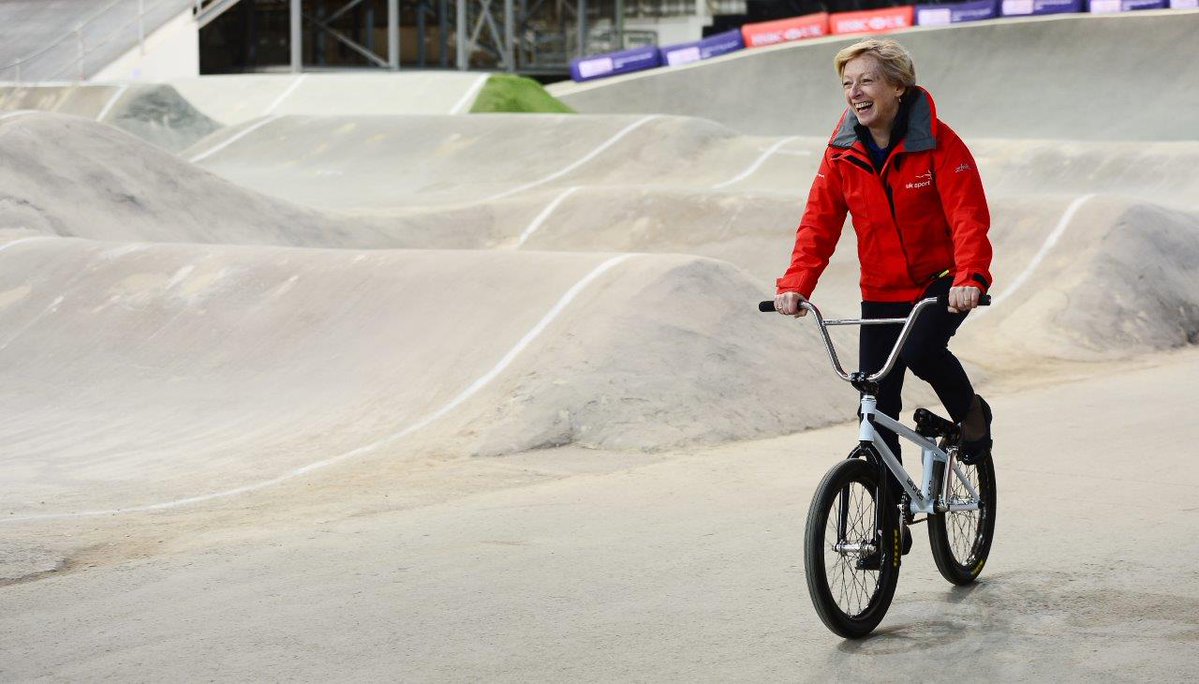
Photo credit: UK Sport
Ask any British Olympic medalist the story behind their success and often they will tell you it’s down to help they received from others.
While everyone has their own unique path, look closely into the journey of many athletes from the last 20 years and there will be one common contributory factor in each – Liz Nicholl CBE.
It is no understatement to say that as CEO of UK Sport, Nicholl helped transform our nation from perennial underachievers to serial overachievers on the Olympic and Paralympic stage.
As has been widely documented since the former Welsh netballer announced she would be stepping down earlier this week, the level of success under her tenure is remarkable:
Since taking up the role in 1999, Nicholl has overseen:
- 863 Olympic and Paralympic medals across 20 events
- Team GB rising from 36th in the Summer Olympic medal table at Atlanta ’96 to second at Rio 2016, their highest finish since 1908
- Team GB’s first Winter Paralympic gold (Kelly Gallagher and Charlotte Evans – Alpine skiing, Sochi 2014)
- Team GB’s first Olympic titles in canoeing, diving, golf, gymnastics, skeleton, taekwondo, trampolining and triathlon
- Team GB’s first Olympic medals in snowboarding, freestyle skiing and badminton
- All or part of the careers of ten of Britain’s top 15 Olympic medalists (Chris Hoy, Jason Kenny, Bradley Wiggins, Steve Redgrave, Ben Ainslie, Mo Farah, Matthew Pinsent, Laura Kenny, Charlotte Dujardin and Ed Clancy)
- All or part of the careers of ten of Britain’s top 15 Paralympic medalists (Sarah Storey, Tanni Grey-Thompson, David Roberts, Lee Pearson, Isabel Newstead, Robert Matthews, Sophie Christiansen, James Anderson, Darren Kenny and David Weir)
- Team GB’s highest greatest Summer Olympic gold and overall medal tally away from home (67 – Rio 2016) and highest ever Winter Paralympic medal tally (5 – Seoul 2014/Pyeongchang 2018)g
And that’s not to mention the almost uncountable number of Commonwealth, European and World Cup/Championship victories too.
The numbers are indeed dazzling but Nicholl’s impact has been more than just the mere statistics.
She has reshaped the British sporting landscape.
No longer are we stuck in the colonial ages of just playing cricket, rugby, football and hockey – we now regularly win major international accolades in the likes of taekwondo and canoeing, sports which were alien just a couple of generations ago.
🗣️”#Taekwondo wouldn’t be where it is today, without the great leadership of Liz Nicholl and @uk_sport.”
2⃣-time Olympic Medallist @LutaloMuhammad + @HallGary have a special message for Liz Nicholl following her announcement 📩#London2012 #Rio2016 pic.twitter.com/heZipgUmb0
— GB Taekwondo 🇬🇧 (@GBTaekwondo) November 13, 2018
Furthermore we also now expect to win medals at the Winter Olympics despite barely having enough snow to cover our gardens and an average Winter temperature around 20C above that of Canada.
Of course the increase in the number of sports at each Games has no doubt had some affect on this but the fact is that, at the helm of UK Sport and by deciding where the National Lottery money goes, Nicholl made all of this possible.
On top of this – and while it may only have been a by-product of increasing the professionalism of British sport to ensure we compete with the likes of the USA, Germany, Russia etc. – she has also created a climate where female athletes are generally accepted as equal to men.
While some team sports such as football and cricket are still playing catch up when it comes to gender equality, for the likes of cycling and athletics this has been clear to see for a while now.
Even before her stunning heptathlon victory in London, Jess Ennis-Hill was one of the most recognisable faces in British athletics. Laura Kenny is arguably even more well known than her husband Jason, despite the fact he has appeared at more Games than her. Lizzy Yarnold will go down in history as one of our greatest ever Winter Olympians. The moment Hollie Pearne-Webb scored that decisive penalty against the Dutch to win hockey gold will stick in the minds of everyone who watched it for as long as they live. Hannah Cockroft and Ellie Simmonds are two of the most recognisable Paralympic athletes on the planet, let alone in the UK.
While obviously their unquestionable talent has been the major factor behind their success, they would not have been given that opportunity if it wasn’t for the funding and support provided by UK Sport.
It’s not been a completely smooth ride for Nicholl though.
Each cycle sees UK Sport come under immense scrutiny as it decides which sports to fund, with many athletes ultimately left disappointed as their money is cut, while the model is often criticised for failing to recognise team sports, ignoring the grassroots and focusing too heavily on medals.
Then there have been the incredibly worrying allegations of sexism, racism, harassment, bullying and a ‘climate of fear’ in several sports since Rio, while accusations of doping have also dogged British Cycling in recent times.
But rather than throw their toys out of the pram, Nicholl and UK Sport have dealt with each situation in a calm and composed manner, often unafraid to scrutinise themselves and expose their own failings in order to improve.
I think it’s fair to say Liz Nicholl was at the helm during a very good innings for sport in our country! Congratulations and all the best for the future Liz 🙂 https://t.co/YaY5GVsfkc
— Etienne Stott MBE (@EtienneStott) November 13, 2018
In a world still dominated by men at governance level, the 66-year-old has been a shining beacon of light for women across the country and her legacy will live on for a long, long time to come.
We’ll leave the final word to BOA Chairman Sir Hugh Robertson:
“The word outstanding is over used but it, genuinely, applies to Liz.”
#22) #SeeSportyBeSporty
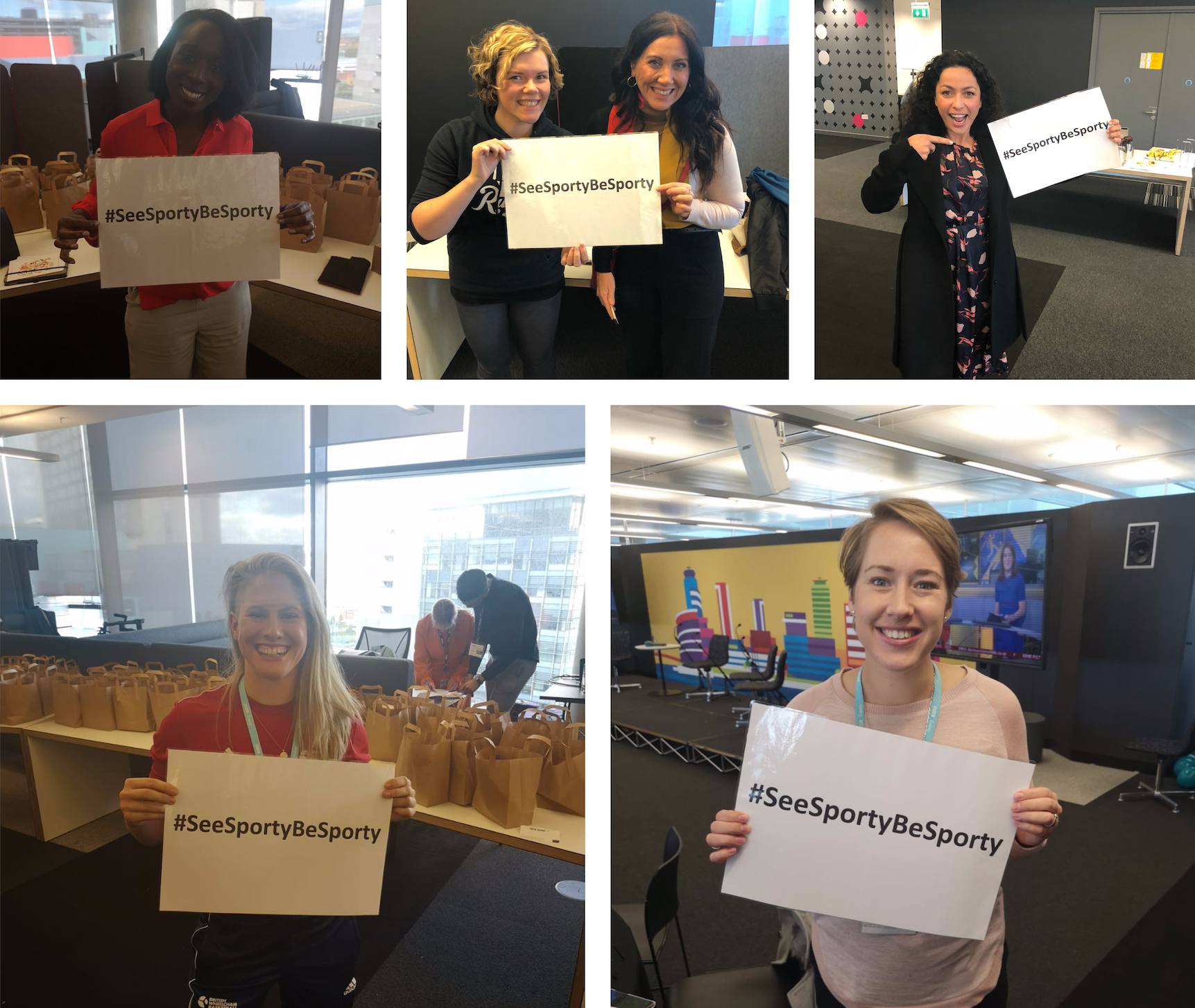
It’s no secret that media coverage of women’s sport is far inferior to men.
The stats are damning; research by Women in Sport in 2015 found that just 7% of all sport media coverage in the UK focused women, with the figure as low as 2% for national newspapers.
While there are many fantastic initiatives encouraging more women and young girls to get involved in sport, they are faced with this huge barrier – how can they inspire people to get actives if there are seemingly so few to aspire to?
This is the exact question the #SeeSportyBeSporty campaign is aiming to answer.
We’re celebrating international #DayoftheGirl by saying a massive thank you to @BFCLadies superstars @DarcieGreene Mollie Crump and Sophie Crosby for supporting our #SeeSportyBeSporty campaign #RoleModels https://t.co/0gWN7518C6 pic.twitter.com/rXSFHtLqCB
— Totally Runable (@TotallyRunable) October 10, 2018
The brainchild of former Olympic sprinter Emily Freeman and lawyer Natalie Jackson – also the founders of the brilliant Totally Runable organisation – the premise of this campaign is simple.
“If you can’t see it, you can’t be it,” stated Natalie.
“If girls aren’t seeing women in the media being sport they find it much more difficult to see themselves as sporty.
“We know from our own research that girls aged seven and above are not as confident about their sporting ability as boys. I’m not saying boys have it easy but girls have the issue that they’re not seeing the role models they should be.
“So #SeeSportyBeSporty is about calling for sport in the media to be gender equal. It’s nothing more complicated than that.”
An absolute honour having @LizYarnold supporting the campaign at #WISN5 #seesportybesporty https://t.co/0gWN7518C6 pic.twitter.com/3pOLvAZD03
— Totally Runable (@TotallyRunable) October 26, 2018
While overall coverage has certainly improved recently – especially the amount of televised women’s sport shown on BBC, Sky, ITV and BT Sport, while The Telegraph has recently appointed its first dedicated women’s football writer in Katie Whyatt – there is still a worrying discretion when it comes to photography in newspapers.
Totally Runable conducted their own research into this, buying a copy of each of the UK’s top newspapers once a month between July 2017 to June 2018.
The results were shocking. Of all the photos they saw, 17% depicted sporting action or players.
But, of those, just 2.9% were of women.
Furthermore, there was one edition of The Sun with 86 photos of male athletes and none of women, while during September 2017 there was just one picture of a women compared to 365 of men across various newspapers.
If these were magazines with photos that suggested a woman can only be a model if they are without an ounce of fat on their bodies, they would be slaughtered.
So why aren’t we doing the same to newspapers who are basically suggesting that only male athletes are noteworthy and treating their female counterparts as second class citizens?
Rightly so, this is not something Natalie and Emily will stand for and just days after completing their research, they launched the #SeeSportyBeSporty petition to bring about this much needed change.
At the time of writing they have already accrued more than 1,200 signatures, with many important figures – including Lizzy Yarnold and Hannah Cockroft – getting right behind the campaign.
To their credit, certain media outlets have also given them a platform as they try and bring about change, most notably The Guardian – the newspaper their research found to have the least male bias – and the BBC.
So excited that #SeeSportyBeSporty is getting coverage in @guardian and generating such debate. For me there’s no debate, we know girls are less confident about sport than boys but “if you can’t see it you can’t be it”. Let’s help them see it 💪🏽💜👍🏼 https://t.co/0V4O8kOHDi
— Natalie Jackson (@NatJackson52) November 3, 2018
Speaking about the overwhelmingly positive reaction, Natalie admitted she was delighted but not wholly surprised with just how much traction #SeeSportyBeSporty has received.
“We read a quote from Lucy Anne-Holmes – the founder of the ‘No More Page 3’ campaign – who said something like: ‘I thought somebody should do something about this, then I realised I am somebody’,” she said.
“So we started it thinking we just need to have something happening so we started a petition and ‘thought let’s see what happens.’
“We’ve had a brilliant response – we’ve had world champions, Olympians, Paralympians, governing bodies, the association of PE, all kinds of people supporting it.
“I think it’s really struck a chord with a lot of people. But actually we’ve had a lot of people that aren’t necessarily elite athletes but are just people like me who are just as passionate about it.”
Looking through the comments on the petition and it’s clear to see just how important this cause is to women and men alike.
“I wish I had been more active after leaving high school. Seeing more female role models might have ensured that.”
“I’m tired of hearing people don’t care about women’s sport, when it’s often so invisible it’s difficult to find out how to care. It’s such a backwards business model.”
“We should encourage everyone to be involved in sport, regardless of any factor. Sport is inclusive, so let’s start representing it as such.”
“My daughter asks every weekend what sports we can watch with women competing and other than tennis and athletics there are none!”
In the 21st century it’s quite ridiculous to think that this level of inequality still exists but the brutal truth is that it still does.
Obviously this is a highly complex issue and change will take time but we can at least make a start by raising our voices and getting behind this campaign.
As Natalie said, how can we expect to inspire more women and young girls to get involved in sport when it is so hard for them to see role models to emulate?
You can sign the #SeeSportyBeSporty petition here.
#21) Alex Paske
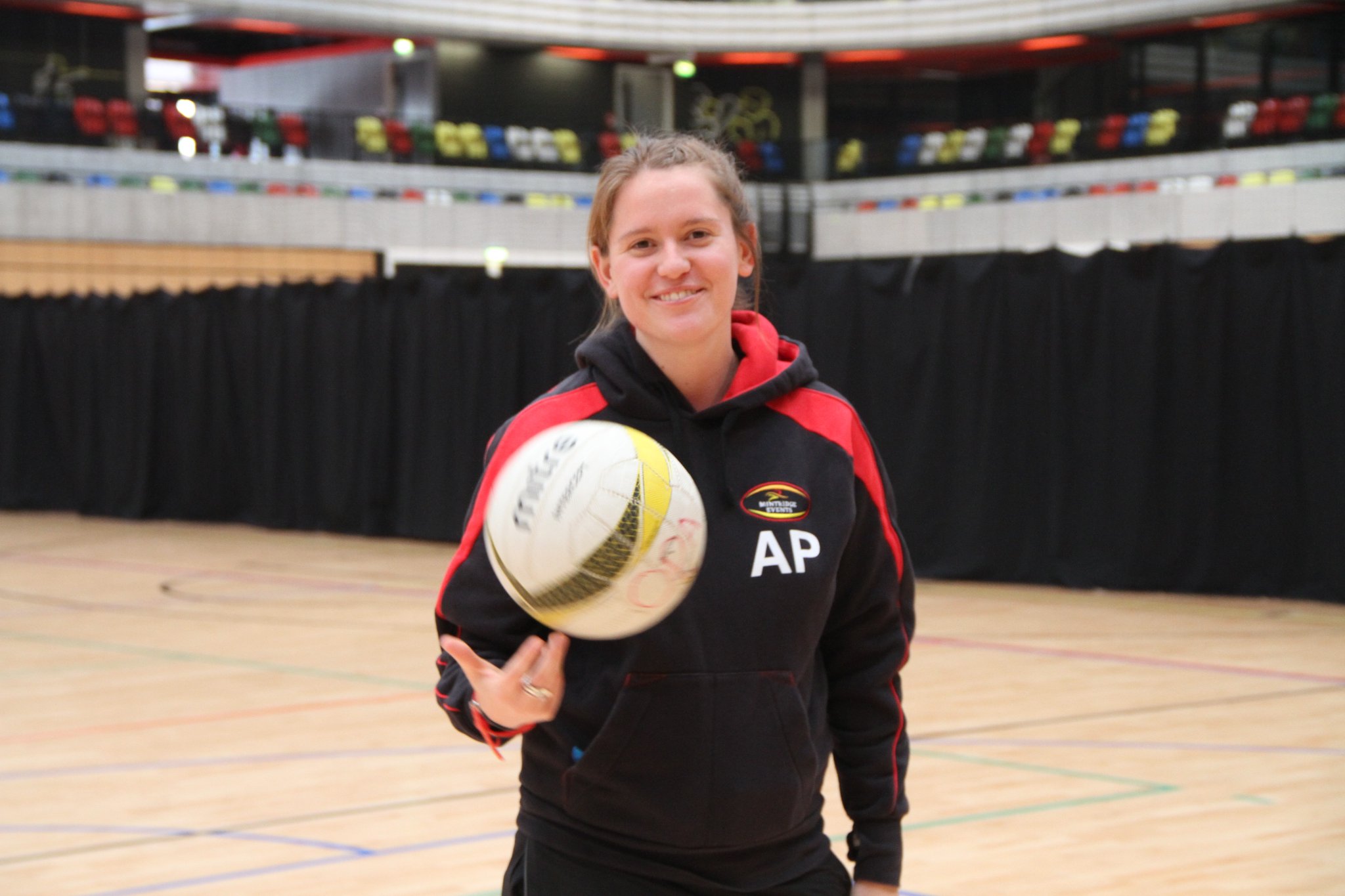
Photo credit: Alex Paske
“It’s so important to be passionate about what you do. That’s what we tell every child we work with, whether that’s in sport or otherwise.”
These are the words of Alex Paske, the founder of the Mintridge Foundation and winner of the 2018 Sunday Times Sportswomen of the Year Grassroots Award.
It’s Alex’s putting her words into action that saw her deservedly claim that prestigious award earlier this week as she was recognised for the fantastic work she and the charity does inspiring youngsters in sport and life on the whole.
Mintridge is an organisation with 30 ambassadors who go into schools delivering educational sessions on a plethora of topics, from coping with the expectation elite sport elicits to social media anxiety.
The idea came about though with the initial intention of helping up-and-coming athletes cope with not making it to the elite level and planning for a life beyond sport after exactly that happened to her when she was 15.
‘Alex The Hockey Player’ had been obsessed with the game since the age of six and dreamt of singing the national anthem and representing her country.
🌟 About last night… 🌟 #SWOTY.
It was an honour to receive @thesundaytimes Sportswomen of the Year Award in the Grassroots Category from @EleanorMills with a special tribute to Tessa Jowell. pic.twitter.com/aLsey94nTT
— Alex Paske (@alexpaske) November 2, 2018
But when the trials for the England U16 team came about she succumbed to the pressure she put herself under and failed to make the grade, a moment that was to prove pivotal in her life.
“I just remember thinking everyone’s going to think I’m a disappointment, from my friends to my coaches to my parents,” she recalled in an interview with SportSpiel ahead of the awards ceremony earlier this week.
“I then started to play because I had to play, not because I wanted to play. I always say my biggest love of all became my worst enemy.
“I haven’t really picked up a hockey stick since, which is devastating to think how much love I had for it.”
All of a sudden, Alex had lost an identity she had proudly exhibited for nearly a decade.
She was no longer ‘Alex The Hockey Player’. She was just Alex.
Not that she immediately recognised it though. Indeed, it was only four years later that she fully realised something was wrong and that she needed to re-invent herself.
Five years later and the Mintridge Foundation was born and has led to a remarkable transformation in her character and outlook on life.
The 27-year-old said: “I honestly don’t think I was fully better until I started Mintridge, which was in 2015 so that was nine years after the initial trial.
“But now I’m seeing the reward and the impact that my story is having on younger people so that is a really good coping mechanism for me and it’s helping me massively.”
More importantly to Alex though, the Mintridge Foundation is having a positive effect on scores of kids the length and breadth of the country.
In just over three years, more than 40,000 children have been inspired by the impressive array of athletic talent on their books, with ambassadors including professional cricketers, two-time world medal-winning judoka Nekoda Smythe-Davis, double Paralympic archery champion Danielle Brown, netball star Pamela Cookey and Olympic bronze medalist Marilyn Okoro.
None of us would be able to play sport without the incredible work done by people at grass roots. Alex Paske is a very deserved winner of the Grassroots Award #SWOTY2018 pic.twitter.com/dHX4o36T8Y
— Kate Richardson-Walsh OLY (@katewalsh11) November 1, 2018
One of the reasons for taking the athletes into schools is to make them relatable role models to the children and people they can look up to and want to emulate, something which Alex has found to be incredibly impactful when delivering their sessions.
“I want to make role models relatable to individuals,” she stated.
“If we can get an Olympian into their local area, particularly those disadvantaged places where there are low aspirations, with their medals saying “I grew up in this neck of the woods as well and look what I’ve achieved” I think that really helps.
“A lot of the time the messages are the same as what their teachers and parents are saying but the fact it’s coming from an Olympian just makes students listen.
“It’s the ‘wow’ factor – the GB tracksuit, the medal which makes the students want to listen to them. It’s amazing – real life superstars stood in front of them.”
The charity also runs 1-on-1 sessions for athletes, something which has also seen superb success, with one girl selected to represent Great Britain in her sport.
Furthermore, two sisters left paralysed after a car accident were inspired to join an archery club thanks to the confidence and support the programme had given them.
Aghhhhhhhhh
Just had the most phenomenal session trumped only to hear the news that my amazing friend and founder of @MintridgeFDN has only gone and done it!! #winner #grassrootsaward #swoty2018 SO PROUD of you @alexpaske truly a deserved winner LOVE YOU! 💗 https://t.co/o9BTLuWMdZ— Marilyn Okoro OLY (@mokoro4) November 1, 2018
While this project may still only be in its formative years, it is clear to see that it is already having an incredible impact on the lives of thousands of youngsters in the UK.
It’s also made a huge difference to Alex’s life, giving her a purpose she had been lacking after that disappointment and proving that she can make a difference to our society.
“Growing up all I wanted to do was play for England and for that to be my career but now I’m so much happier doing what I’m doing.
“I can take other people along on this journey whereas with hockey I would’ve been very much on my own.
“Success means different things for everybody and I want people – particularly young people – to realise that and to have the confidence to step away from the mould.
“I can’t describe how much about the little things that give me such a buzz when we go into schools and organisations.”
She may no longer be ‘Alex The Hockey Player’ but she is now ‘Alex The #SWOTY Award Winner’ because she really is one of the most inspirational women in sport.
#20) Invictus Games/Debbie O’Connell
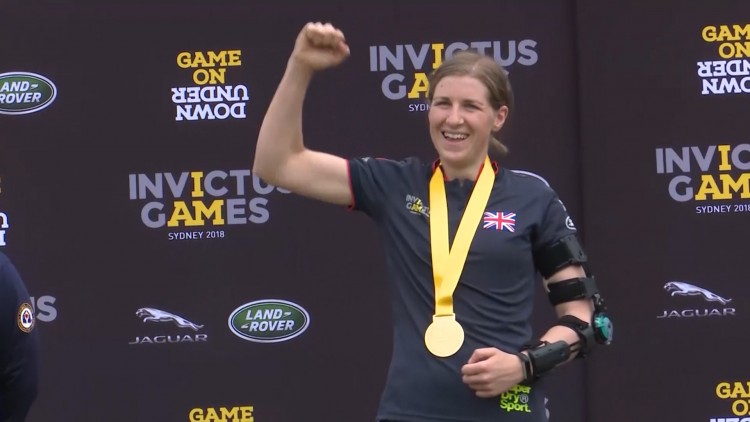
The power of sport never ceases to amaze.
It seems as though it can be used to help with any problem if you want it to, from helping to overcome mental illness to driving for society-wide gender equality.
And, as the Invictus Games have once again proved this week, sport is also a brilliant tool for helping injured and sick war veterans not only cope with the trauma they have suffered, but also achieving a happy and fulfilling life.
Each of the 500-or-so competitors taking part in the fourth instalment of the Games in Sydney has their own unique story surrounding their journey to the competition in the first place.
But the Invictus Games isn’t just a place for sharing extraordinary experiences; as these last few days have shown, this is somewhere even more are created.
Earlier in the week there was the story of wheelchair tennis athletes Paul Guest and Edwin Vermetten, who sang the Frozen song ‘Let It Go’ to help Guest – who has suffered from PTSD – after he became unsettled upon hearing a helicopter.
Then there was the incredible moment the Australian wheelchair rugby team passed the ball to tetraplegic New Zealand athlete George Nepata to score a try in the final, before swimmer Dean Knobel proposed to his girlfriend having just received his relay gold medal.
There has been plenty of canine love throughout the tournament as well, with 12 service dogs helping the athletes cope with the noise and excitement of the competition, including a Labrador called Tank who defied the rules to accompany powerlifter Ben Farinazzo onto the stage and calmed him to such an extent that he set a new personal best.
Being such a new competition, another huge positive about the Invictus Games is the high proportion of female athletes, especially considering they are still a minority in many Armed Forces – only this week have women been given the opportunity to apply for any British military combat role, including in the SAS.
It’s one of these women too who really caught my attention this week – Debbie O’Connell.
Just a year after joining the King’s Troops Royal Horse Artillery, O’Connell suffered a bad fall from her horse that broke her collarbone.
While this is an injury many have suffered and been able to recover fully, the former Army Reservist was incredibly unlucky as the bone broke in four places, with the damage so bad her left arm was paralysed.
It was the relatability of the mechanism behind the injury that really struck a chord – while the effects of catastrophic wounds caused by gunfire, bombs and mines are obviously devastating, it is a position very few of us will find ourselves in due to their relatively rare nature.
However falling off a horse is something many of us could do at anytime and really reinforces the message that injuries in the army don’t just happen on tours – they can quite easily happen at home too.
As O’Connell told Lincolnshire Live before the Games started, the fallout caused by the fall was not just severe physically, but mentally too.
“After my injury, I hit a time low,” she said.
“I had lost my job and my whole life changed. I went from riding horses and working as a fitness instructor to having to come to terms with not being able to use my left arm.
“You take your limbs for granted until you lose the use of them.
“It’s very daunting and simple tasks like turning on a tap and holding a pot or kettle underneath at the same time is impossible. Even brushing your hair becomes a challenge.”
Compare this with the interview she gave BBC Get Inspired earlier this week though and you can see not just how much sport has helped O’Connell deal with her situation, but how it has changed her life for the better.
The Lincoln Wellington AC athlete kicked off the tournament in superb fashion by winning two golds on the opening day in different sports, firstly on the bike and then in the 100m.
Such an achievement would be lauded if a full-time athlete had completed it – as Kadeena Cox experienced at Rio 2016 – but for someone who only started training for the event late last year it was just remarkable.
What was even more impressive though was the way she spoke in the BBC Get Inspired video shown after her successes proving that, no matter what happens in your life, there is always light at the end of the tunnel and that sport can help you get there.
“You think ‘No, this isn’t going to define me. This isn’t going to be who I am.’
“I’m still Debbie. I’m not Debbie with the broken arm.
“I’m going to show everybody else out there that just because my arm doesn’t work doesn’t mean that I have to give up my whole life, my ambitions, my goals and my aims.”
 The 52 Blog