WSL 2016 Preview – Part I
It’s been a long winter without any football. ‘What on earth are you talking about?’ is one of the many responses that has probably entered your head after reading that statement. Whilst I am fully aware that there has indeed been plenty of football for me to engage in over those months, it’s only been a filler for what I perceive to be the main event – the Women’s Super League. As I’m sure many of you are aware, I was fortunate enough to be offered a placement with The Women’s Sport Trust last summer covering Sunderland Ladies AFC and I absolutely fell in love with both them and the women’s game in general. I’ve been chomping at the bit to get back down to Hetton to watch a live game (for £2.50 as well) and now that moment is finally here!
The majority of you reading this probably have no idea about anything to do with women’s football. Whether that is the case or not, you should read on regardless as I take you on a whirlwind tour of each team in the greatest football league in the world.
Arsenal: 
History
The most successful English women’s team in history, the club have amassed a staggering 41 trophies in their existence, including winning the quadruple in 2006/7. They were league champions in the top tier of English football for nine consecutive years between 2004-2012, including claiming the first two WSL titles. However, they have finally been caught by other teams and are no longer the standout.
Last season – 3rd (27 pts)
Coming off the back of a poor 2014 season in which they finished fourth, they got off to a poor start with a draw against Notts County in their opening WSL game before losing to Chelsea. This was followed by a patchy mid-season spell before a strong conclusion to the season saw them as one of four teams fighting for the title. It was too little too late though and they had to settle for third.
Transfers
The acquisition of Fara Williams is arguably the signing of the summer. The England international has over 150 international caps and is one of the sweetest strikers of a ball in the game. Arsenal’s midfield was already strong, but having Williams in the middle makes it look formidable. Foreign imports Danielle van de Donk and Josephine Henning also bring an array of experience of the European leagues as Arsenal push to claim their first title since 2012.
Key player – Natalia

Whilst Williams may be the star signing, it’s Arsenal’s exciting playmaker upon whom their expected title challenge will rest. The Spaniard was the joint second-highest scorer in the league last year and, on her day, is all-but-unstoppable. Can she prove that her debut season in the WSL wasn’t a one-off?
Prediction – 2nd
Having watched Arsenal live last season, it was obvious that they should have been fighting for the title. However, I still don’t think they are quite ready yet; 2017 will be their year.
Birmingham:
History
One of the oldest teams in existence, Birmingham are a team who have worked through tough financial times in the ‘90s to the top end of the game but have scant little to show for it. Indeed, their FA Cup success in 2012 is the only trophy of significance the club have ever picked up. They were initially one of the stronger teams when the WSL was formed, finishing runners-up in ’11 and ’12, but have slipped down the table since.
Last season – 6th (13 pts)
2015 was a dire year for The Blues. Having only just missed out on a top two finish and Champions League qualification the year before, they found themselves languishing near the bottom end of the table as other teams strengthened dramatically around them. Two late-season victories against Bristol and Notts County were enough to secure their safety but it was overall a very poor campaign.
Transfers
Once again, limited finances have meant the club have barely been able to strengthen their resources, although the acquisition of the talented Corina Schroder from Liverpool is a shrewd one. The main headline, however, is the loss of lynchpin Karen Carney to Chelsea. In a team with few standout players, Carney will be sorely missed and her departure could signal the end of Birmingham’s run in the top flight.

Key player – Jo Potter
Potter has consistently been a regular in the team since signing in 2009, but with the absence of Carney the former England international now needs to step up and shoulder the burden of expectation if the club are to stay up. If anyone can do it then Potter can; she has been playing professional football for 14 years and that level of experience and know-how will be pivotal this year.
Prediction – 8th
They have just enough to be able to stay up this year, but something needs to change at this club sooner rather than later. Let’s hope someone stumps up the cash that will help them develop alongside the likes of Manchester City and Chelsea.
Chelsea:
History
Although they became affiliated with the men’s team in 2004, it wasn’t until 2014 that Chelsea started to become a major force within women’s football. Indeed, their only performance of note up until then was finishing runners-up in the 2012 FA Cup. Current manager Emma Hayes was appointed after this and since then the club has gone from strength to strength.
Last season – 1st (32 pts)
They missed out a first WSL title on goal difference in 2014, but instead of crumbling next time round Chelsea powered their way to the title in 2015. Not only that, but they claimed the double by picking up the FA Cup in front of a huge Wembley crowd in a landmark moment for women’s football. A surprise 4-0 loss to Sunderland in July threatened to scupper their chances but their quality eventually shone through.
Transfers
The acquisition of Karen Carney is absolutely huge. A midfielder with over 100 caps for England and a member of the superb 2015 World Cup campaign, Carney is one of the best players to have ever graced the game and having her in the centre of the park suggests Chelsea are planning on a treble this year. Watch out for Jade Bailey too – the 20 year-old, signed from Arsenal, may well be the next Carney in years to come.
Key player – Ji So-Yun

In a team full of exceptional players such as Fran Kirby, Eni Aluko and Katie Chapman it’s hard to pick one individual upon whom their campaign may rest. When she first signed for the club in 2014, few hard heard of Ji outside of her native South Korea. Everyone knows who she is now. A player capable of things scarcely conceivable, the midfielder was the driving force behind the team last year and if she’s on form again this year there will be no stopping Chelsea.
Prediction – 1st
Since the inception of the WSL, there has been a trend of teams winning the title for two consecutive years and I fully expect Chelsea to carry this trend on. Their team is full of exceptional ability and experience and they are streaks ahead of the rest right now.
Doncaster Belles: 
History
It’s so good to see the Belles back where they belong. Hugely unlucky to be forced out of the WSL purely in terms of finances at the end of 2013, this club was a dominant force back in the ‘80s and ‘90s. They have claimed 2 top-tier league titles and 6 FA Cups in their history but, barring victory in the 2009 FAWPL Cup, haven’t won anything since 1996. Hopefully their promotion from WSL2 will return the club to their former glory days.
Last season – 2nd (45 pts) [WSL2]
After being pipped to promotion by Sunderland in 2014, Doncaster yet again finished runners-up in the WSL2 in 2015 as Reading won the title on goal difference. However, the introduction of a top-two promotion rule meant that The Belles would not be left upset this time. They ended the season undefeated in 10 games across all competitions, although an early season FA Cup defeat to Chelsea will have dented that confidence somewhat going into this campaign.
Transfers
Doncaster have been busy during the transfer window, adding seven new players to their squad whilst only losing Beth England to Chelsea. They have brought in three players from Liverpool, including the highly experienced Becky Easton. Their marquee signing however has to be that of Natasha Dowie. The striker was hugely unfortunate to miss out on England’s World Cup squad and proved that by scoring 14 goals across all competitions last year. Bringing Dowie in shows Doncaster aren’t just around to scrap for relegation; they want to causing a major upset.
Key player – Courtney Sweetman-Kirk
A name you almost definitely will not have heard of before, Sweetman-Kirk really shot onto the scene last year with 25 goals in all competitions, leading to her being voted the Players’ Player of the Year in the WSL2. Much like Sunderland’s Beth Mead did in 2015, the striker needs to continue this to prove that she is capable of playing at the highest level. In combination with Dowie, The Belles have arguably the strongest strike force in the league.
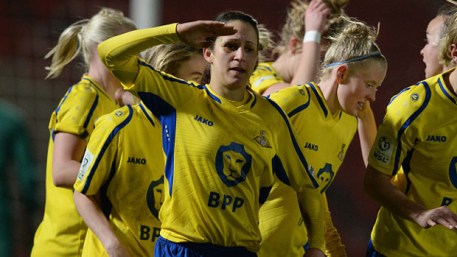
Prediction – 6th
I don’t quite expect the Belles to repeat the heroics of Sunderland this year but they should finish comfortably in the middle of the table.
A Sad State of Affairs

It’s fairly late on a Monday evening, I’ve just finished working on an essay and decide to check the news before heading off to bed. Clicking on the BBC Sport website to see the result of that night’s Premier League fixture, I am greeted by the headline that the corporation has uncovered a number of allegations regarding match-fixing in elite-level tennis. My reaction? It barely even registers.
I would love to say this was because I was tired and not really taking any notice of what I was reading, but unfortunately I can’t. My initial reaction was not one of shock or horror; instead I rolled my eyes, gave the article a quick read and went to brush my teeth. At no point did I feel any element of surprise.
With accusations of corruption, match-fixing and substance abuse currently shrouding a whole host of sports, it was inevitable tennis was going to be implicated in a scandal at some point. That may be a very cynical viewpoint, but all the ingredients are there. It’s a sport played worldwide, attracting millions of fans. Not only that, but it can be a very lucrative business. If they play their cards right, athletes, coaches and sponsors alike can all make huge sums of money from the sport.
Money seems to be the root cause of most of these problems. This is not surprising as, throughout history, those who have survived have been those who acquire most wealth; it’s a basic evolutionary pattern. Whilst this may not have always been money specifically, this is certainly the case in the present climate. What is sad is that it seems as though it is now the athletes who are being implicated in these scandals. They are supposed to be clean and innocent, doing what they are told to by their corrupt, greedy governing bodies whilst trying to adhere to the spirit of fair play. Clearly no longer.
Before I go on, I should point out that nothing has been completely proven and no player has been directly accused of throwing a match. Of course, it can be easy to see why some players may want to do this. Although the sport is full of money, this is largely reserved for those right at the top. They attract the major sponsors and win the most prize money because they are the best. Those who aren’t as good therefore don’t make as much money, thus making it hard to continue to play what is an expensive sport. So why not throw a couple of games deliberately to make more money?
This is something I personally disagree with – I am a purist and believe that all sport should be played in a fair and just manner. Those who are the best and work the hardest should win and the rest will come second; for every victor there has to be a loser. Unfortunately this is no longer the case though and in a society dominated by greed and the desire for wealth it is easy to see why some players may risk their own careers as well as the reputation of their sport.
Where do we go from here? I honestly don’t know. As much as I want to say that the sporting world will rally round and ensure such stories become a thing of the past, there is no quick fix. Money talks and, as long as it is a dominating force in sport, stories such as this will continue to emerge. Something needs to change, but what?
My Top 11 Sporting Moments of 2015
When it comes to sport, pretty much anything and everything has happened in the past 12 months. From tales of widespread corruption and state-funded doping to some of the most remarkable sporting performances ever seen, nothing has been too farfetched for this frankly insane year. There are always some which stand out more than others though and here are the ones which caught my attention (and yes, I am aware that this is a slightly strange number but you’re just going to have to deal with it).
11) Kelly overcomes a major hurdle 
We start off with the most recent feat. A relative rookie at just 22 years of age, Lizzie Kelly wasn’t a particularly well known jockey within the world of horse racing, let alone outside of it. That all changed on Boxing Day though as she became the first woman ever to win a Grade One National Hunt jump race – the most prestigious race category in the country – on the much-fancied Tea For Two. In the year when pioneering female jockey Haley Turner announced her retirement, the emergence of Kelly alongside another youngster in Sammy-Jo Bell signifies that her legacy is already having an impact. 2016 should be an incredibly exciting year for these hugely talented riders.
10) Black Cats spook the big guns
We now cross over to football and reflect on another magnificent installment of the Women’s Super League. It was an incredibly unpredictable season, with four teams still battling for the title right up until the final few games and the eventual champions – Chelsea – not being crowned until the final day. However, it was Sunderland who really caught the eye. Widely tipped to be relegated back down to WSL2 at the start of the year, the ‘Maccams’ even took themselves by surprise and were league leaders with just a handful of games to go. Although their form tailed off towards the end of the season, few will forget their incredible Beth Mead-inspired 4-0 victory over Chelsea in July alongside the superb football they played all season long (although I may be a bit biased).
9) ‘Bye Joh, I think she’s got it!’
 This isn’t a specific moment as such butJohanna Konta certainly deserves a place on this list after a superb run of form in which she lost just 2 out of 25 matches. In a year where Laura Robson and Heather Watson were still suffering with their various ailments, it was left to the Australian-born player to fly the flag for British tennis. Konta did just that. After being knocked out by Maria Sharapova at Wimbledon, she went on to win 2 ITF tournaments as well as earn a place in the quarter-finals at the Wuhan Open and even the second week at the US Open. Her grit and resolve against some of the world’s best was astonishing and saw her rise to a career best ranking of 47, meaning she is now the British number 1. Let’s just hope she can build upon this and become a real force.
8) ‘I held a world record… For less than a day’
 Unless it’s the year of a Winter Olympics, sports such as ski jumping receive very little coverage in this country. Why should they? It’s not as if we’re any good at them! However, every now and again something happens that catches the eye and this happened in Febhttps://ransports.wordpress.com/ruary as the world record for the longest ski jump was broken twice in little over a day. Slovenia’s Peter Prevc was the first to achieve the feat by jumping a whopping 250m – the equivalent of around 25 double-decker buses! Not to be outdone, Norwegian Anders Fannemel went even further the next day, adding another 1.5m (the average height of a woman from the Philippines) onto the record.
7) Scavengers now at the top of the food chain
 If anyone had said to me this time last year the Leicester City would currently be challenging for the Premier League title, I would have laughed. A lot. They were bottom of the league and struggling for points with a manager who was more interested in picking fights with opposition players and journalists than trying to turn things around. Despite this, a remarkable run to survival at the end of last season has turned into a genuine challenge for the title this time round, despite the fact their team contains no big-name players. Even the most hardened of opposition fans will struggle to deny that The Foxes have put a smile on their face at some point this season.
6) Back with a bang
Steven Finn is one of those cricketers who you can’t help but love. He constantly has a smile on his face and always gives everything he has to the cause, no matter what. That’s why his demise two years ago was so upsetting. Deemed ‘unselectable’ by his own national coach, it seemed as though this prodigious talent was now a lost cause. Fortunately his county stuck with him, coaching him back into form and when handed his chance this summer he took it with both hands, ripping Australia apart during the third Ashes Test. Stuart Broad may have captured the headlines with his sensational bowling in the next game, but for me Finn’s scintillating return to the side was even sweeter.
5) Stroke of genius
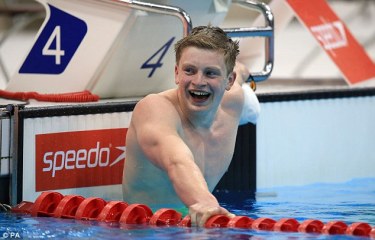
At long last, it looks as though Great Britain finally has a new crop of swimmers ready to take on the very best. In what was an incredibly successful World Championships this year, Jazz Carlin, Siobhan-Marie O’Connor and James Guy really shone through and left the nation feeling dizzyingly positive at the prospect of medals come Rio 2016. There was one swimmer in particular who really stood out – Adam Peaty. He broke the 50m breaststroke record on his way to winning gold but it was his performance in the 100m breaststroke final which really showed his class. Nearly a body length behind Cameron van der Burgh with 50m to go, Peaty somehow managed to power his way past the South African to snatch gold at the last possible moment. Breathtaking.
4) Lightning strikes again

Athletics has had a tough year, as I’m sure you are well aware (if not, where have you been?). Despite this, there have been some great moments too. Greg Rutherford became only the fifth ever British athlete to hold the Olympic, World, Commonwealth and European titles at the same time while Jess Ennis-Hill won an emotional World heptathlon gold on her return to competition. There was one man who overshadowed them all though; Usain Bolt. He had the weight of the world on him going into the Worlds. With talk of doping rife, the pressure was on the Jamaican to beat the twice-banned Justin Gatlin to ‘save his sport.’ Whether you agree with this or not, the fact is that the future of his sport relied on this one performance. But this is Bolt, the most laid back man in the world. He eased his way to victory as though this was just any other race. Pressure? What pressure?
3) Can we finally accept him as British?
 It is often seen as a stuffy, elitist, middle-class sport in this country but this year saw the nation go tennis mad as Andy Murray led Great Britain to an astounding Davis Cup victory, the first since 1936. Never before have I witnessed such noise or patriotism on a court; it was strange at first, but I loved it. Right throughout the tournament you could see how much it meant to Murray; there was no way he was going to let this chance slip through his fingers. Say what you like about him, no other tennis player has captured our hearts in such a way in living memory. Seeing him collapse in a tearful heap after the winning point in the final was a special moment that will never be forgotten.
2) Lionesses show how it’s done
2015 was finally the year that English football actually did something of note. The fact that we all reminisce about a tournament that we won nearly 50 years ago shows how rubbish the nation has been since.
 No longer though as the women’s team performed magnificently to secure third place in a highly competitive World Cup in the summer. Although there are numerous moments which caught the eye, Lucy Bronze’s wonder strike against Norway that handed the team their first ever knockout win at a World Cup was something special. Women’s football receives a lot of unfair criticism but that strike alone is enough to prove that these players deserve to be recognised as legends.
1) Against all odds
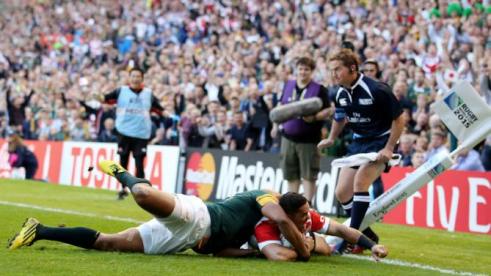
Although the England team may have failed miserably, the 2015 IRB Rugby World Cup was a huge success. There were tries aplenty, attacking rugby, controversies and fitting farewells to some of the all-time greats. Despite this, the greatest moment of all actually came on the second day of the tournament as Japan stunned defeated South Africa in one of the greatest games of rugby the world has ever seen. I was at Twickenham at the time for the France-Italy game and to see 70,000+ people from all over the world going wild when the minnows scored the winning try was… Well, I can’t describe it. Let’s just say I was speechless (and that doesn’t happen often).
What is ‘greatness’?
‘Legend’ and ‘hero’ – just two of the numerous powerful descriptors that can be used to label athletes who have achieved great things, often overcoming adversity along the way and doing something most would think improbable. Such phrases should be reserved for those who have acted in a remarkable and ground-breaking way. They should, but they aren’t.
We live in an era where the media sensationalise anything and everything in order to make money. Every story is full of exaggeration – it’s amazing how they can make a last minute equaliser in a game of football seem like the most important and incredible event since the invention of the wheel. Sportsmen and women are constantly being labelled as ‘greats’ for doing very little; not only is this quite ridiculous, it also diminishes the meaning when given to those athletes who deserve the title.
Of course, everyone has different ideas of how an athlete can come to be seen as ‘legendary’ – it could be one or two groundbreaking performances, extreme loyalty, their work to promote the game and so on. Personally I don’t think any sports people can be seen in such a way until they have retired – it’s how we remember them that I believe should define the label.
Andrew ‘Freddie’ Flintoff is a prime example. He almost single-handedly got an entire nation excited about cricket during that Ashes series of 2005 – something only a handful of others have ever managed before. One of the main reasons I took up the sport was because I wanted to emulate him. It is only now, though, that I can truly see him as a cricketing ‘great.’
After that watershed year, his career somewhat faltered – he never consistently reached those heights again until his retirement due to injury and the immense pressure put upon him. There were many embarrassing moments too, such as the pedalo incident at the 2007 World Cup. Despite all this though, he is still remembered mainly for that series. The impact Flintoff had on the sport was, and still is, huge. He changed the way cricket was seen in this country and the fact that England now have an abundance of young talent coming through who would have been youngsters during that series is certainly down to him in part.
This kind of impact on a sport closely follows that seen after the emergence of the late Jonah Lomu, the New Zealander who changed the face of attacking rugby. Up until he hit the scene, wingers in the game were generally seen as slight and agile; they were the smallest players on the pitch. Then along came this 6’5”, 18 stone battering ram and he completely re-wrote the rules.
Despite his bulk, Lomu was very quick – the All Black could run 100m in 10.8 seconds at his peak. However, instead of using this pace to avoid defenders, he used to charge his way through them and regularly did so with devastating effect. No better was this displayed than in the 1995 World Cup quarter-final against England, when he decimated the English defence on his way to four tries, the first of which in particular was astonishing (watch in on YouTube and you’ll see what I mean).
At the time, Lomu was a complete enigma; no-one had ever seen his type before and, despite the emergence of Julian Savea in recent years, there hasn’t really been anyone able to replicate the devastation he caused.
However, it’s not always about redefining boundaries and taking the world by storm; some players achieve the status of ‘greatness’ by just being consistently brilliant without ever necessarily taking the world by storm. These individuals are still quite rare, but they do exist. Abby Wambach is one.
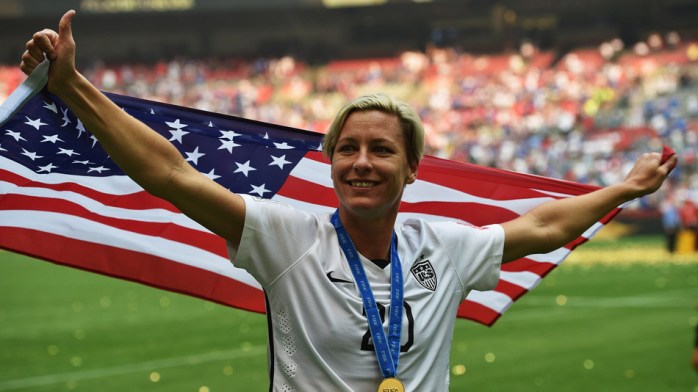
The recently retired footballer’s statistics are just sensational – her record of 184 goals in 255 games for her country is better than any male of female footballer to have ever played. On top of this, she has won two Olympic gold medals and the 2015 FIFA World Cup as well as being named the US Soccer Athlete of the Year on six separate occasions. And that’s just a short list of her achievements. Yet, despite all this, for most of her career she was just seen as another footballer. These statistics were often mentioned but almost taken for granted. It’s only now that she’s retired that we can truly appreciate just how good she was.
It’s not just her phenomenal on-pitch career that defines Wambach as a ‘legend’ though; it’s what she helped achieved off the field too. She has helped bring women’s football into the centre of the media limelight in America and this is now transferring to other countries too, in particular this one. She has made people take notice of women’s football and been a fantastic role model for the game. I will even go as far to say that I believe she was a crucial factor behind the success of this year’s World Cup in Canada. She well and truly deserves the title of a footballing ‘great.’
Being young, fit and healthy isn’t necessarily a good thing
Obesity is certainly a buzz word in today’s society. It’s impossible to avoid the countless reports about how both how “fat” this country is becoming. Not only that, there is also the constant spoon-feeding of stories about how “lazy” Britain is becoming too. The statistics don’t lie though – despite the population growing year upon year, the numbers of those taking part in grass root level sport is declining across a number of activities.
This is often put down to factors such as how expensive and time consuming sport can be, but personally I believe there is something else that is just as influential – injuries. And not just the physical problems themselves, but also how they are treated.
Sport and injury do, unfortunately, go hand-in-hand. Athletes, no matter what level, are regularly exerting excessive and often unnatural forces on their bodies and eventually they will start to break down, some more than others. This could result in anything from a few aches and pains to the need for major surgery and even permanent disability. Everyone athlete knows this but there is something about their chosen activity that makes this risk worth it. Or at least it used to.
How many of you have been to see a GP or other health care professional (not including physiotherapists) to have a sport-related injury treated recently? My guess is that the answer is very few. It’s just not the done thing. If you have an injury but can continue, you are expected to. Unless it’s blatantly obvious that carrying on is physically impossible and/or unsafe, athletes at all levels are shamed if they decide to rest and seek treatment.
This may seem an old-fashioned and out-dated view and oh how I wish it was. Sadly the reality is that the ‘culture of risk’ still pervades through all sport. It’s not just the athletes and coaches who reinforce this though; the way in which doctors treat our injuries also has a huge impact.
A few years ago a good friend of mine suffered a horrific injury at a cricket match in which the ball smashed his glasses, shattering the lenses into his eye. Whilst we were waiting for the ambulance to arrive one of the wives of a player on our team asked if it was possible to change him out of his cricket whites. When I asked why, I couldn’t believe the response I got. She told us that if he turned up wearing sports clothes he wouldn’t be seen as a priority case because the doctors would just say he had willingly put himself at greater risk by getting involved in such an activity.
In the end, he was forced to wait for over 2 hours in A&E before being treated, despite the fact that he was bleeding profusely from one eye. Not only that, but he wasn’t exactly young; he was well into his 70s. The only way I can describe this is disgusting. The injury is what should be treated, not the method in which it occurred.
It’s fair to say I receive more than my fair share of injuries but the only way I will get them seen to is if I’m forced by my friends (or I’m completely unaware of what’s going on, as was the case recently). When I do get treatment, I’ve got to the stage where I end up lying about what caused the problem because I feel that if I tell the truth I won’t get treated properly. Not that it makes any difference as, having quite an athletic figure, the moment a doctor sets eyes on me they already know the likely cause of any physical pain.
If you’re lucky enough to be able to afford/have access to private healthcare then this isn’t such a problem but most amateur athletes have to rely on the NHS. Before anyone accuses me of turning this into a political argument, I think this system does a great job considering how over-stretched and under-funded it is. It’s just the way that they treat sports injuries that irks me.
When I think about it, prejudice seems to be a very fitting way of presenting this argument. This may seem quite a strong view and of course it’s nowhere near as serious as some other forms out there, but why should we be less entitled to proper professional care than someone who has had an accident doing DIY or something similar? If all we’re told to do is rest and take painkillers it’s no wonder athletes refused to get treated.
How does this relate to falling participation levels though? For any amateur athlete, an injury isn’t just a reason for them not being able to take part in the game they love – it could also easily impact on their work and family. If they know that they’re not going to get the help they need, then they will avoid taking unnecessary risks that could cause serious problems, i.e. they will give up sport. Of course this is just from my observations but I’m confident in thinking that this has gone through the minds of many who have left sport behind.
What can be done then? I see it as a matter of education regarding patient treatment. Medical professionals need to treat each case in a completely unbiased manner and be able to put aside the context behind each injury. I can’t deny that there are unfortunately too many who try and get help when they don’t need it but there is an even greater number who refuse to get treatment when they genuinely need it as they would rather not feel belittled and patronised.
Some may argue this will be putting an unnecessary extra workload on an already stretched system, but in the long run it will save the taxpayer a lot more money if we have fitter people being treated for relatively short-term problems than an fatter population with a whole range of long-term issues.
Unofficial Match Report: Sunderland Ladies 1-3 Arsenal Ladies

Arsenal Ladies kept alive their slim hopes of securing the 2015 WSL 1 title with a gritty 3-1 win away at Sunderland, condemning the hosts to their fourth straight defeat in all competitions and ending their chances of reaching next year’s Champions League.
In an even game played at an extraordinarily high tempo, Arsenal may see themselves as lucky to have come away with the three points as two of their goals were gifted to them by mistakes by the Sunderland defence, the first of which came after a quarter of an hour as a hoofed clearance from a Keira Ramshaw corner was missed by Abby Holmes, allowing the lively Jordan Nobbs to find Danielle Carter in the box. The forward’s shot was initially well blocked by a diving Tori Williams but unfortunately for Sunderland the ball squirmed its way into the path of Chioma Ubogagu, who had no problem tapping the ball into the net.
Carter, bursting with confidence after her scintillating international debut in the week which saw her bag a hat-trick, was a constant source of threat down the Sunderland left in the first half and had a number of chances, including a shot on the stroke of half-time that was well saved by Hilde Gunn Olsen, recalled in place of the injured Rachael Laws. However it was her opposite number Beth Mead who managed to find the net for the Sunderland equaliser in the 22nd minute after a superb interception and through ball from Holmes. Mead still had plenty to do but her blistering pace allowed her to beat ‘keeper Sari van Veenendaal to the ball before rolling the ball into an empty net for her first goal since July.
The first half consisted of a lot of very attractive football from both sides but this certainly diminished in a very rough and physical second half, with both Mead and Carter receiving lengthy attention after some very robust challenges. However it was a moment of quality that lead to Arsenal’s second goal as Alex Scott was played in behind the Sunderland defence by a delightful ball, which allowed the Arsenal captain to find Ubogagu with an inch-perfect pass. The American then placed the ball perfectly into the corner of Sunderland’s net to give her side a 2-1 advantage.
Despite this, Sunderland showed the team spirit that has endeared them to all fans this season. Rather than letting this setback stop them playing their football, ‘The Lasses’ hit back hard as, spurred on by another vocal crowd, they pressed to find a second equaliser. Arsenal midfielders Nobbs, Natalia and Vicky Losada, who had seen plenty of the ball up to this point, were squeezed out of the game as the terrier-like Rachel Furness and Kelly McDougall closed down the space down to try and force their opponents into a mistake. When they got the ball, wingers Abbey Joice and Ramshaw caused all sorts of problems and Mead, as she has been all season, was giving the centre backs a lot to think about.
Credit must go to Arsenal though as not only did they withstand all that the home team threw at them, they also put the game to bed after 76 minutes as a poor clearing kick by Olsen, who had had a solid game up to this point, went straight to Natalia before the Spaniard beautifully lobbed her to make it 3-1.
The final home game of the season for ‘The Lady Black Cats’ drew a fantastic crowd of 1,166 who cheered their team right up until the final whistle and beyond, including giving left back Victoria Greenwell a rousing reception as it was announced that she will retire after next weekend’s visit to Chelsea. Although they may have faded away at the end of the season, Sunderland have been a breath of fresh air in the WSL and fully deserve their place in the league next season. As for Arsenal, they will be waiting with baited breath to see whether they have a chance of winning their third WSL title as a Chelsea draw today against reigning champions Liverpool would all-but-end their chances.
Still Living in the Dark Ages
Jonny Wilkinson is a rugby legend. Everyone agrees – those old enough to remember his heroics, those who can’t and even our great enemy from whom he ‘stole’ the 2003 World Cup. There is one person who doesn’t hold this view though – the man himself. Wilkinson refuses to accept he was ever good enough to now be recognised as one of the all-time greats of the game. Seriously, he doesn’t. Whilst this rather frank admission earlier this week may be grabbing the headlines, it was another blunt and honest statement that caught my attention – he suffered from depression for four years during his career. That is just unacceptable and highlights just how much work is still needed to be done to help professional athletes with mental health issues.
Firstly, I’d like to make it clear that I’m not saying sports should aim to stamp out depression completely; that would be absurd. It is an illness that, unfortunately, affects nearly 1-in-10 in the UK, has no specific cure and is bound to manifest itself in athletes under huge pressure to perform at their best all the time, for whom the security of their livelihood can hinge on one small mistake. In such environments depression is going to be more prevalent, yet athletes like Wilkinson are still able to suffer in silence. They should feel as though they have a system within their sport that they are not afraid to turn to and admit they are struggling. Does this exist currently? From the outside it seems not.
Wilkinson is one of an alarmingly growing number of former professional athletes who have come out and stated they suffered with depression during their careers – cricketers Andrew Flintoff and Steve Harmison, footballer Stan Collymoore and boxer Barry McGuigan are just a handful of high profile names who have done likewise. Would you have guessed it though from when they were playing? I certainly didn’t with both Flintoff and Harmison. Not only did these athletes manage to hide what was going on from others, many didn’t even recognise themselves that something was wrong. Criticism may be aimed at the sports and their structures for failing to recognise signs and symptoms but if the individuals themselves aren’t able to distinguish that they may be suffering from a mental health issue this points at a more systematic social flaw – no-one really understands depression.
I’ve already mentioned that this mental illness is now recognised as a common problem – you’re more likely to know someone who is depressed than you are someone who has had most types of cancer, Type 1 diabetes and so on. That’s a scary enough though itself; what makes it even worse is that most of us wouldn’t know how to spot depression. Even the experts have trouble in some cases. Some symptoms are common – a loss of appetite, strange sleeping patterns, becoming withdrawn – but these also crossover with many other conditions and the unique nature of each case makes it even harder to distinguish whether someone is depressed or not. Not only that, but individuals who are aware that they are not feeling ‘normal’ often hide their symptoms from everyone else. This may be because they themselves don’t recognise what is going on, or it could be that they feel as though they are not worthy of help. What is clear is that this illness is not straightforward and there needs to be a lot more education to help understand it and sport should be at the forefront of this.
Whilst being a professional athlete is an unique career in so many ways, the basic elements are the same as any other job – athletes are employed by someone who is responsible for paying them an agreed salary, providing them with the correct working conditions and ensuring their physical and mental wellbeing. That the likes of Wilkinson can suffer for so long without receiving any help can therefore be seen as the employer failing to keep their side of the contract. Of course it’s much more complicated than that but, as a place of work where constant exposure to extreme pressure will significantly increases the likelihood of depression developing, sport really needs to take the initiative and it can do in so many ways. Funding research into how to spot, recognise, prevent and help people overcome depression, using the ‘role model’ status of players to help make the public aware of the illness and creating links with mental health charities are just a few examples of just what sports can and should do.
This is not a problem that will be fixed quickly, but the sooner we go about finding the solution the better. No-one deserves to feel as though they are worthless, no matter who they are, what their reputation is and who they play for. All us fans want to see is our heroes in top form both on and off the pitch.
Unofficial Match Report: Sunderland Ladies 1-3 Manchester City Ladies
Manchester City Ladies maintained their unbeaten run in the Continental Tyres Cup and moved to the top of Group 2 by condemning Sunderland to their first defeat in eight games on a chilly Saturday evening in Hetton.
Reigning cup holders City effectively won the game in the first quarter of an hour as they exerted their obvious height advantage at set pieces, both goals resulting from corners. Nikita Parris was the first to score, pouncing in the penalty area after Rachael Laws had made a superb point-blank range block from the hugely impressive Isobel Christiansen, who then found Steph Houghton with an inch-perfect cross four minutes later. Former Sunderland defender Houghton, now captain of both club and country, gave Laws no chance with a thumping header to double the score. Indeed, it could have been three if not for an insane goal-line block by Tori Williams to deny Parris in the seventh minute.
However, Sunderland managed to hit back quickly with a set piece of their own as Victoria Greenwell produced a brilliant corner to find Gemma Wilson, replacing captain Steph Bannon for the game, who nodded into the opposing net for her first goal of the season. Despite this, City still continued to dominate possession, with South Shields-born Demi Stokes looking particularly threatening and England World Cup stars and former Lasses Lucy Bronze and Gill Scott causing all sorts of problems down the Sunderland left.
Sunderland tightened up defensively though, limiting their opponents to just half-chances before the break before enjoying a spell on the ball themselves at the end of the half, with the usually composed Beth Mead dragging a shot wide of Karen Bardsley’s goal. Mead’s pace and skill was largely nullified by the City defence, although that didn’t stop the top scorer in the Women’s Super League from causing a few problems as she worked tirelessly up until a hamstring injury forced her off after an hour. As her side’s greatest attacking threat this season, the Lady Black Cats will be hoping that the injury isn’t too serious as they maintain their quest for what would be a hugely surprising WSL title.
The second half followed largely the same pattern as the first, with The Citizens enjoying the majority of possession as they tried to find a third goal. Both Parris and Christiansen found themselves one-on-one with stand-in captain Laws but the ‘keeper was in fine form, saving from Parris and forcing the latter to put her shot wide. Laws denied Parris yet again in the final few minutes as the game reached a nail-biting climax, with Sunderland pressing for an equaliser and City countering at every opportunity. In the end it was the Blues who scored as Wilson clattered into Parris to concede a penalty which was smashed into the top corner by Toni Duggan. The City striker had a relatively quiet game by her standards but made no mistake in sealing the game for her side just a minute after hitting the post with another fiercely struck shot.
The game, played in front of a season’s best attendance of 1514, was yet another brilliant example of how much the women’s game has progressed in the last few years and even the most hardened Sunderland fans will be ready to admit that it was a privilege to watch the likes of Houghton, Scott, Bronze and Duggan perform at their best. Both sides are back in WSL action next weekend, with Manchester City hoping to record yet another win against Notts County. Sunderland, meanwhile, travel to relegation candidates Birmingham City and will want to record a win to put this result firmly behind them.
Unofficial Match Report: Sunderland Ladies 2-2 Liverpool Ladies

Steph McDougall’s late equaliser earned Sunderland Ladies a well deserved point against reigning champions Liverpool at Hetton-le-Hole in a frenetic game full of skill, speed and tough tackling.
The Lasses, who move one point ahead of Arsenal at the top of the Women’s Super League, started the game brightly as wingers Steph Roche and Keira Ramshaw threatened out wide early on. However, it did not take long for Liverpool to find their stride with Kate Longhurst and Ashley Hodson winning two corners in quick succession, the latter of which saw Lucy Staniforth’s delivery hit the top of the crossbar.
Despite this, it was not until the 21st minute that the game saw its first clear opportunity as leading goalscorer Beth Mead was hacked down in the area by Rebecca Easton before converting the penalty herself for her thirteenth goal this season. It was just the start of the problems for Easton and fellow centre back Gemma Bonner, who were severely tested throughout by Mead’s pace and skill on the ball as she put in yet another performance that will surely result in a senior England call-up sooner rather than later.
The concession of that goal seemed to spring Liverpool into life and five minutes later they were level as Natasha Dowie, determined to prove a point after being left out of England’s World Cup squad, charged down a Steph Bannon clearance before spectacularly lobbing Hilde Gunn Olsen from over 30 yards out. Like her opposite number Mead, Dowie was by far Liverpool’s most attacking threat and should have had a goal two minutes earlier as she fired wide at Olsen’s near post after good work down the right.
She was not the only Liverpool player guilty of missing a straightforward opportunity as Rosie White blazed over in front of an open goal at the start of the second half after a great cross from 16 year-old Mayumi Pacheco, who was a constant threat during the 70 minutes she was on the field. It was substitute Line Smorsgard, though, who set up Liverpool’s second goal in the 69th minute as she split the otherwise solid Sunderland defence with a sublime pass for White, who made no mistake this time as she cooly slotted the ball past Olsen for her second goal of the season.
Faced with the prospect of their first loss since April, the Lady Black Cats piled forward in search of an equaliser, with substitute Abbey Joice and fullback Abby Holmes in particular looking dangerous. This, however, left their defense exposed and the game was end-to-end with chances aplenty for either side. In the end, the pressure eventually paid off with Mead setting up McDougall to score with just two minutes to go. The excitement did not stop there though as both teams, spurred on by a vociferous crowd, continued to try and find a winner. For Liverpool, Katrin Omarsdottir missed another gilt-edged chance in front of goal after a Staniforth free-kick hit the post, before Sunderland countered with Mead firing wide, whilst the last moments of the game involved some heroic defending as both Holmes and Bannon threw themselves into the path of fiercely struck Liverpool shots.
The result sees Sunderland move onto 19 points at the head of the WSL table, although if both Arsenal and Chelsea win today (09/08) they could slip down to third place. As for Liverpool, they remain in sixth, 9 points behind Sunderland. Their next game is at home against Durham in the Continental Tyres Cup, whilst Sunderland host Manchester City in what is sure to be another enthralling game next Saturday.
Britain on the rise
London 2012; arguably the greatest Olympic Games ever, especially if you are British. With gold medals aplenty, records being broken daily and many heart-warming stories of triumph after adversity, it truly was a fortnight no-one will ever forget. However, not everything went according to plan. Whilst most sports were exceeding their targets, things were not running so smoothly over in the Aquatics Centre as the British swimmers performed terribly, picking up only three medals. This failure was easily covered over at the time but was still a huge worry for a sport that received over £25million-a-year in funding prior to the Games. Now, though, recent results suggest this was the kick up the backside British Swimming needed.
Have you been following the 2015 World Aquatics Championships? My guess is that most people will respond negatively to this. There’s no shame in that; there is an awful lot of sport going on at the moment. The Barclays Premier League returns this weekend, we are in the middle of an Ashes series – as I write this, the Aussies have all-but-surrendered the famous urn after being bowled out for an appalling 60 (oh dear, what a shame) – and, of course, the latest ‘scandal’ in the track and field world is creating many headlines. On top of that, the competition is being shown on BBC2 between 4-6pm – the time when most people are travelling home from work – and is being held in a city called Kazan… I’d never heard of it either! However, for those who have managed to keep up with the goings on in that well-known Russian city, it is fair to say that the results have been pleasantly surprising.
At the time of writing, Britain lie fourth in the overall medal table with six golds and eleven medals in total. This isn’t bad at all, especially considering this includes disciplines in which we haven’t even entered athletes, i.e. water polo. Narrow your search down to the indoor swimming medal table and things get even better – Britain is top! The USA may have more total medals, but even the traditional powerhouse of the sport have one less gold than us. Not only that, we’re also ahead of the Australians – yet another sport in which we are currently better than them. This is a frankly superb achievement, especially given the recent performances by British swimmers, and with another twenty four medals still to be won there is the chance that this could be the best British performance at a FINA World Championships ever.
A lot of the success can be attributed to new British poster-boy Adam Peaty as he has been involved in three of the golds, although freestyle specialist James Guy may argue otherwise with his superb gold and silver efforts. The world first glimpsed Peaty’s potential talent during the Commonwealth Games last year when he won two golds and a silver in the pool, providing stern competition to Cameron van den Burgh. The South African (no, not the one with the hilarious father) won the 100m breaststroke at London 2012 and was the world record holder in both that and the 50m version at the time. Despite beating this formidable opponent, many still wrote off Peaty’s performances due to the perceived lack of competition as many major swimming nations did not take part. However, his three golds so far have elevated him to be seen as the top male British swimmer at this moment in time. Not bad for someone who was afraid of water as a child.
As well as Peaty, the Commonwealth Games allowed a whole host of young swimmers to announce themselves to the world. Chris Walker-Hebborn, Ben Proud, Siobhan-Marie O’Connor and Aimee Willmott all produced fantastic breakthrough performances, whilst the Games also allowed athletes like Jazz Carlin and Fran Halsall to remind both the public and themselves of just how good they are. Despite this, as is the British way, the 47 medals collected by the British nations in Glasgow were played down and attributed solely to the ‘poor quality opposition’ as many were quick to remind the optimists that just one year earlier Halsall’s bronze in the 50m freestyle was the only medal Team GB won at the 2013 Worlds. One year later however, the swimmers are proving their critics wrong. O’Connor has already picked up a superb bronze in the 200m medley whilst Walker-Hebborn was a solid fifth in the 100m backstroke and still has the 50m event to come. Carlin narrowly missed out on a medal in the medal in the 400m freestyle with her favoured 800m event starting tomorrow and Halsall hasn’t even entered the water in an individual event yet. As well as this, the mixed 4x100m medley relay squad made up of Peaty, Walker-Hebborn, O’Connor and Halsall smashed the world record on their way to a supreme gold. Still think they’re not that good?
On the other hand, the fact that I am writing an article celebrating Britain competing with the likes of the USA and Australia in the pool shows had bad things became. For an island nation, which has some of the best facilities in the world, a return of two silvers and a bronze is utterly pathetic. Is this performance at the World Championships a sign of what is to come? As much as I’d love to say yes, the truth is that we won’t know until next year’s Olympics. For the moment though, why not just celebrate the success of the moment without playing it down? Oh yeah, because we’re Brits…
 The 52 Blog