Genius
I must confess that, over the years, I have fallen out of love with snooker. When I was younger I absolutely loved watching it, especially the Masters – according to my Dad, when I was a baby I was fixated with the colour green so we would always watch cricket, football, rugby and snooker together! But, as names like Hendry, Davis, White and Parrot disappeared from the sport, I gradually stopped following it to the point where I would always change channel if the snooker came on. I don’t know why – the game itself hasn’t changed that much – but I just did. The self-imposed exile of Ronnie O’Sullivan didn’t help – he was and is such a fantastic player to watch and is definitely a maverick of the sport. So when he decided he was going to pick and choose when he played I think I must have subconsciously decided that I couldn’t watch it anymore.
Over the last week or so the 2014 of the edition of the Masters tournament has been taking place at Alexandra Palace. Being the keen sports fan I am, I have been keeping a very loose eye over the tournament but haven’t really followed it with much interest. I was just browsing through the BBC Sport website earlier today, trying not to cry over the fact that the England cricket team had suffered one of their most humiliating losses so far in their tour of Australia, to see a video entitled: “Ronnie O’Sullivan playing snooker ‘from the gods.’” If it had been any other player I probably wouldn’t have watched the video but because it was O’Sullivan I thought I’d have a quick glance. When I saw it was nearly 8 minutes long I almost closed the tab but having seen his first shot – a seemingly impossible pot – I decided to carry on. It was the best decision I have made this year (ok, so we’re not even a month in, but you see what I mean!).
What followed was what can only be described as a work of art. After some initial fortune with a couple of early pots, O’Sullivan went on to produce the best snooker I have ever seen. He was a man possessed – if ever there was a perfect example of someone being ‘in the zone’ it was him for those 8 minutes. Everything he did seemed to end up exactly where he wanted it to. Snooker players often take a lot of time lining up each shot, working out where they need to position themselves, but there was no need for that here. O’Sullivan didn’t need to think – that would have just disrupted his mental flow. I have never seen a snooker referee move so quick – as soon as he had replaced a ball on the table O’Sullivan was playing his next shot, as though he were afraid that this spell could end at any moment. In the end, O’Sullivan finished with a break of 134, just 13 off the maximum, to lead by 4-0.
Not long after the match was over, O’Sullivan having won 6-0. His opponent, Ricky Walden, simply stood no chance. Not because he’s a bad player, but just because the greatest ever snooker player was at his best. There has been no stopping this season – he has now notched up 29 century breaks and has plenty of time to add more. In his career, he now has 724 century breaks, with 11 maximums, meaning he’s only 30 behind Stephen Hendry in the all-time list. He has been World Champion on 5 separate occasions, including the last two years, and has won 52 major tournament. The guy is insane and yet is still extremely modest, albeit irritatingly so at times. But, for me, O’Sullivan is the man who got me interested in snooker once again.
If you have 8 minutes to spare, watch this. Even if you hate snooker, the skill exhibited here is truly astounding:
2013 – my review of a wonderful year of sport
Whilst 2012 was dominated by the Olympic Games, British sport didn’t enjoy much success outside of those few weeks of madness in late summer and early autumn. 2013, however, provided us with many more reasons to celebrate. The year included long-awaited victories, new records, surprises, humiliations and the comeback of all comebacks. It’s fair to say last year was far from boring.
Let’s start with rugby. Wales won their second 6 Nations title in a row, fighting back from losing their opening game against Ireland to win their next three and set up a shoot-out for the title with England, who were on course to achieve only their second 6 Nations Grand Slam and their first for 10 years. They were, however, absolutely obliterated by the unstoppable Welsh, with 5 penalties and two Alex Cuthbert tries seeing them to a 30-3 win, their biggest ever over England.
The British and Irish Lions then toured Australia over the summer, hoping to exact revenge on the Aussies for their 2001 loss. The first two Tests were extremely tight, with the Lions taking the first game 23-21 before losing the next 16-15. Going into the game, both tour captain Sam Warburton and Irishman Paul O’Connell were injured, leading to widespread speculation that Brian O’Driscoll would captain the side in his last ever international game. However, he was surprisingly dropped to the bench as Warren Gatland picked Jamie Roberts and Jonathon Davies at centre. They were two of ten Welsh players in the starting line-up. Not long after half-time, the match was evenly poised with the Lions just in the lead. However, their superior fitness took over in the last twenty minutes as they scored three tries to win 41-16 and take the series 2-1.
In rugby league, Australia won the World Cup in style, thumping New Zealand 34-2 in the final and becoming world champions for the tenth time. The Wallabies were unstoppable throughout the tournament, not conceding a single try after their opening 28-20 win against England. The best moment of the tournament, however, came from New Zealand’s Dean Whare against the same opposition. After a period of sustained pressure near the England try line, the ball was eventually thrown wide in an attempt to find Whare on the wing. The pass was far too long, however, and it seemed as though the ball was going out of play. Whare never gave up though and produced a miracle pass behind him when he was in mid-air to set up Roger Tuivasa-Sheck to score. If you want to see it, here it is – http://www.bbc.co.uk/sport/0/rugby-league/25067747.
As previously mentioned, Brian O’Driscoll, one of the game’s greatest ever players, retired from international rugby after the Lions’ victory. He played 128 times for Ireland and scored 47 tries, 26 of those coming in the 6 Nations, making him the top try-scorer in the competition’s history. He was also selected for four separate Lions tours, appearing in 8 Tests and scoring 1 try. The victory in Australia was the perfect finish to a wonderful career.
Cricket also said goodbye to two of its greatest players in late 2013. Sachin Tendulkar, the Indian run-machine, retired from international cricket at the age of 40. The ‘Little Master’ was the most prolific batsman there has ever been, scoring nearly 16,000 Test match runs at an average of 53.79 as well as 18,426 runs in One Day Internationals at around 45. His most remarkable statistic, however, is that he is the only batsman in the history of the game to score 100 international hundreds, with 51 in Tests and 49 in ODIs. It is likely to be the first and only time this ever happens and illustrates the God-like status of the man only 5ft 5in tall. He ended his career with an innings of 72 as India beat the West Indies by an innings and 126 runs.
South African Jacques Kallis, however, went one better by scoring a magnificent 115 in his final Test innings against India, his 45th in 155 Tests. The all-rounder is the most understated cricketer of all time – he has scored over 13,000 runs in Tests (putting him third in the all-time list), has taken 292 wickets and pouched 200 catches, with only Rahul Dravid having taken more. The stats are absolutely phenomenal, yet if you ask anyone who was only a loose cricket follower who he is, they will do well to identify that he is a South African. Arguably the greatest all-rounder of all-time, South African cricket will miss him dearly.
Other sports stars to retire in style in 2013 include David Beckham, Sir Chris Hoy and the greatest manager of all time – Sir Alex Ferguson. All went out in relatively quiet fashion after hugely successful careers, although Fergie’s autobiography caused some fuss in the media. Graeme Swann’s sudden retirement halfway through the current Ashes series, however, was far less dignified. If he’d said he would retire after the series there would have been little consternation, but the fact that he just suddenly went without any real reason why has led to much criticism from fans and journalists alike. Some have called him a bad loser, others say he’s selfish – it’s unclear exactly as to why he did what he did, but I think it’s clear that all is not well in the England camp.
2013 was certainly a strange year for the England cricket team. It started with a hard-fought 0-0 series draw in New Zealand, in which England were only saved from a humiliating series defeat thanks to a wonderful hundred from Matt Prior. The Kiwis were then ruthlessly dismantled by England’s bowlers in the early summer before the first of two Ashes series got underway in July. A 3-0 victory for England was extremely flattering as they didn’t perform particularly well – the Aussies were just much worse! Coming into the current series then, there was much cause for concern for the English – Joe Root hadn’t performed well as an opener, Prior was out of any sort of form and none of the big fast-bowlers England had selected for the bouncy Australian pitches performed well in the warm-up games. No-one could have foreseen what was coming though – they are currently 4-0 with one Test to play, no batsman has scored a century, the team has only passed 300 twice and the bowlers haven’t been particularly impressive. Fair play to Australia, they have turned their fortunes around fantastically, but England are a shadow of their former selves.
It’s not all bad for England though, as the women won back the Ashes in the summer. Over 6 games (1 Test, three ODIs and two T20Is) England drew the Test (securing 2 points), won the final two 50-over games and both the T20s (securing 4 points for each) to win back the Ashes. They head out to Australia later this month to repeat the contest in what should be a hugely competitive series.
England women’s football team, however, had a much less successful year. Going into the European Championships in the summer, Hope Powell’s team were one of the favourites to win the tournament. But that couldn’t be further from what actually happened as the side choked and were knocked out at the group stages, stuttering to one draw and two losses. This lead to the sacking of Powell, widely regarded as England’s greatest coach. Things seem to be on the up now, with the side recording four wins from four in their bid to qualify for the 2015 World Cup, scoring 20 goals and conceding none.
England’s men secured their place at Rio 2014, finishing top of their group. They also beat Brazil 2-1 in February before drawing 2-2 with them four months later. This was then followed by losses to both Chile and Germany at home in November, which is a big worry given that the World Cup is just a few months away. Domestically, Sir Alex finished his fine managerial career with yet another Premier League title as Manchester United regained the trophy from their local rivals, whilst Swansea City ruined Bradford City’s hopes of a fairytale story by thumping them 5-0 in the League Cup final. Wigan Athletic, however, did produce a shock by beating Manchester City to win the FA Cup, before being relegated a few days later. Chelsea won yet another trophy by securing the Europa League, whilst Bayern Munich avenged their loss against Chelsea a year ago to win the Champions League at Wembley.
There were also many fantastic individual triumphs throughout 2013, starting with the remarkable efforts of young Welsh cyclist Becky James at the 2013 World Track Championships. She won two gold and two bronze medals as Britain topped the medal table with 9 medals in total (5 gold, 2 silver and 2 bronze) despite not having many big names, showing the future for British cycling is extremely healthy.
Sebastian Vettel won his fourth straight Formula 1 World Championship, recording 9 straight victories at the end of the season to bring him level with Alberto Ascari’s record of successive wins. Only Juan Manuel Fangio and Michael Schumacher now have more Drivers’ Titles than him and, at the age of 26, the Germany still has plenty of time to surpass them both.
In MotoGP, rookie Spaniard Marc Marquez became the first rider in 35 year to win the title in their first season as well as becoming the youngest ever champion. With 6 wins, 9 pole positions and 16 podiums, it was a remarkable season for the 20 year-old, who defied everyone’s expectations, even his closest fans.
Ben Ainslie further cemented his place in sailing history by helping Team Oracle overturn an 8-1 deficit to win the America’s Cup in what many are calling the greatest sporting comeback of all time. A.P. McCoy was another legend achieving unbelievable milestones, with the jockey recording his 4000th on ‘Mountain Tunes,’ again winning in a seemingly impossible situation after being out of contention with two hurdles left. McCoy also reached the 150 winners landmark for the 2013/14 season, the 18th time he has done so in 20 seasons of racing. He is truly the greatest jockey there has ever been.
At the World Athletics Championships, Mo Farah once again won both the 5000m and 10,000m races whilst Christine Ohuruogu produced a superb last-gasp sprint to win the 400m title. The undoubted star of the meet, however, was Usain Bolt – he achieved the triple yet again (100m, 200m and 4x100m) despite not being in the best of form, making him the most decorated sprinter ever. The achievements of these athletes was perfectly timed as just four weeks before athletic greats Tyson Gay, Asafa Powell and Veronica Campbell-Brown were just three of many athletes found guilty of doping offences. The continued dominance of these greats allowed us to, temporarily at least, forget about the huge demon that underlies the sport.
Elsewhere, Justin Rose became the first Englishman to win a golfing Major since Nick Faldo won the 1996 Masters tournament. Although it may not have been the most exciting tournament, Rose still had to battle extremely hard to beat Jason Day and Phil Mickelson, both of whom are previous Major winners. Chris Froome also worked extraordinarily hard to win the 100th Tour de France, following on from Team Sky team-mate Bradley Wiggins last year. Although his victory wasn’t as big a landmark over here as Wiggins’, Froome can be immensely proud of the win – he came runner-up last year and the decision to make him team-leader wasn’t necessarily the most popular. Not only did he win one of the most physically tough events, he overcame all the pressure the public put on him.
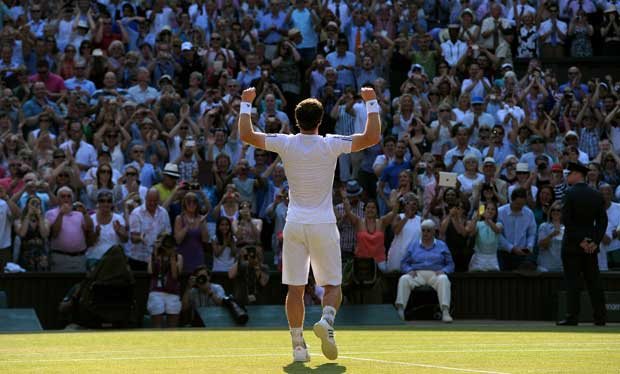
The greatest individual success, however, has to be Andy Murray’s. The Scot finally finished the wait for a Brit to win Wimbledon with a fantastic straight sets victory over Novak Djokovic. The tension released when the Serb hit his final backhand into the net was immense; the crowd erupted and Murray, ever the understater, just dropped his racquet and stared in disbelief. It was the perfect ending to a story that had so many twists and turns – there was a huge question mark over his fitness coming in to the tournament as he had been forced out of the French Open just a month before and, despite cruising through to the quarter finals, he never looked totally comfortable. He then had to battle back from two sets down against Fernando Verdasco in the quarters before overcoming the huge-serving Pole Jerzy Janowicz in the semis. Even the final point seemed to take forever. But, after 7 grueling matches, the 75 year-wait was finally over.
2013 wasn’t a good year for all individuals though. As well as the shocking drugs uncovering, the world of athletics was also rocked by the news that Oscar Pistorius had shot and killed his girlfriend at their home. Whether it was intentional or not, very few know, – all I can say is that this is undeniably the end of the South African’s career. Let’s just hope he can be remembered for all the right reasons.
Someone few have any sympathy for, however, is Lance Armstrong. Despite denying for years he took drugs, the 7-time Tour de France winner finally admitted that he had doped in an interview with Oprah Winfrey back in January. It was’nt just the doping, the constant denial or the accusations that others were trying to paint him in a bad light that upset everyone; it was also the way he came out. His interview felt very false, as though he was trying to seem like he cared that he’d let millions of people down when he really didn’t. To many, he was a hero. He was the most decorated road cyclist of all time as well as being a victor against testicular cancer. Now, he is just a serial cheat who no-one will ever trust again.
On the whole, 2013 was a wonderful year for sport. With the football World Cup, Commonwealth Games and Women’s Ashes amongst many other competitions coming up in 2014, it’s fair to say that this year has the potential to be just as inspiring, entertaining and downright brilliant.
On a more sombre not, here is my tribute to some of the greats the sporting world lost this year:
- Acer Nethercott (35) – Coxswain for Team GB rowing; won a silver medal with the Men’s 8 crew at Beijing 2008.
- Andrew Simpson (36) – Sailer; won gold at Beijing 2008 and silver at London 2012 in the Star class; drowned after the yacht he was training on for the America’s Cup capsized.
- Bert Trautmann (89) – German goalkeeper who played over 500 times in 15 years for Manchester City; most famous for playing on with a broken neck in the 1956 FA Cup final, which City won 3-1.
- Bill Hoskyns (82) – last British fencer to win an Olympic medal; won silver medals in the team épée at Rome 1960 and then in the individual épée four years later in Tokyo.
- Christian ‘Chucho’ Benitez (27) – Ecuadorian international footballer; played for Birmingham in 2009/10, making 30 appearances.
- Christopher Martin-Jenkins (67) – legendary cricket commentator on Test Match Special from 1973 to 2012; former president of the MCC; one of the most recognisable voices on the radio.
- David Oates (50) – broadcaster for the BBC and was a regular on 5Live for over 25 years; was the commentator when Fabrice Muamba collapsed in an FA Cup tie in 2011.
- Sir Henry Cecil (70) – one of the greatest racing horse trainers of all time; awarded the Champion Trainer award 10 times; trained over 25 domestic Classic race winners.
- Maria de Villota (33) – racing driver who tested with Renault in 2011 and then became Maurssia test driver in 2012; had a horrific crash whilst testing in 2012 that caused her to lose her eye and suffer other life-threatening injuries; suffered a huge cardiac arrest in 2013, possibly caused by her injuries from the crash.
- Mike Denness (72) – former England cricketer; scored 4 Test hundreds and averaged just under 40; captained England in 19 of his 28 Tests.
- Phill Nixon (50) – darts player best known for his surprising 2007 performance at the BDO World Darts Championship, where he qualified for the first time after 20 years of trying and got to the final against all odds (he was 150-1 before competition started); he lost 7-6 to Martin Adams but was 6-0 down at the internval,
- Sean Edwards (26) – racing driver; son of former F1 driver Guy Edwards; died in a crash during a private test session in Australia in which he was a passenger instructing another driver, who survived.
- Tony Greig (66) – former England Test captain; played a key part in setting up the infamous World Series Cricket; then became a well-renowned commentator for Channel 9 in Australia.
- Tony Gubba (69) – sports commentator and journalist; commentated on a huge number of sports for over 40 years, mainly for the BBC, including football, darts and ice skating.
Finally, thoughts must go out to Michael Schumacher and all his family and friends. Although I never liked him much as a driver, he is undoubtedly one of the greatest racers there has ever been. If anyone can pull through this, Schumi can.
Just shut up and let the cricket do the talking!
On the eve of the second Ashes Test, it seems as though England are desperate to take the attention away from their shocking performance at Brisbane by having a little whinge about a few words the Aussies said to them.
Sledging (or ‘mental disintegration’ as Steve Waugh championed it) is a part of cricket and has many forms. This includes direct insults on a player’s ability, e.g Aussie pace bowler Merv Hughes informing Robin Smith that if ‘you turn the bat over you’ll find the instructions,’ or their body shape, e.g Australian wicket-keeper Ian Healy telling the portly Sri Lankan Arjuna Ranatunga that ‘you don’t get a runner for being an overweight, fat c***.’ However, sledging can also subtle comments that aim to put members of the opposition off their game. The best example of this comes from Freddie Flintoff when he goaded West Indian tail-ender Tino Best, telling him to ‘mind the windows’ that he would find if he hit straight down the ground. Sure enough, Best charged down the wicket and was promptly stumped, leaving the great all-rounder giggling like a little boy.
Some of the best lines that come from cricketers are actually retorts to less funny insults. My personal favourite sledge of all-time has to be Eddo Brandes’ response to Glenn McGrath’s ‘Why are you so fat?’ The Zimbabwean’s reply was ‘Because every time I make love to your wife she gives me a biscuit.’ Although absolutely nothing to do with cricket, it is one of many examples of hilarious retorts made by cricketers.
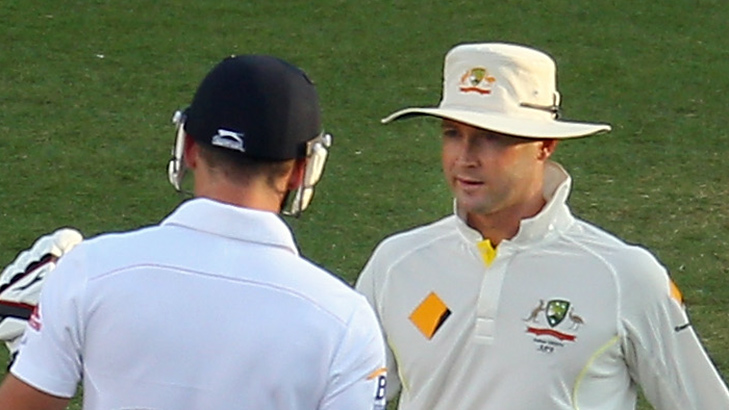
Some of the things I heard coming from both camps in the first Test, both during and after the game, were neither. They were threatening and aggressive remarks, with Michael Clarke’s ‘we’re going to break you’re f***ing arm mate’ being arguably the worst. It’s acceptable in cricket to criticise someone’s technique or their body shape, but threatening to hurt them is crossing a line. Again, it is very subjective as to where this line is and brings up the question of whether remarks like this are within the much-criticised ‘spirit of the game.’ For some, sledging shouldn’t be a part of the game at all but others are all for it, no matter what is said. Personally, I have no problem with sledging being part of the game but I do think it has to be kept within a certain limit. What Clarke said, I feel, went over the boundary of what is acceptable, but then it is dependent on opinion.
Many people, however, feel that David Warner’s comments about Jonathon Trott were far worse. After the game, the Aussie batsman commented about the England star’s game, saying he was ‘poor and weak.’ A few days later it was announced that Trott was to leave the tour due to a stress-related illness. Many former players, so-called experts and fans have since condemned Warner for what he said, with the player himself admitting he had gone too far. But did he really know how Trott felt? Cricket isn’t how it used to be; opposing teams don’t socialise with each other any more after games and most don’t play any form of cricket together so don’t really know many, if any, players from other teams. I don’t think Warner could have known for sure whether Trott was struggling mentally or not, even if he could see it in his eyes.
For me then, I feel that Clarke’s remarks were far worse than Warner’s. I also feel, however, that the English press have made far too big a deal out of this as a whole. It’s almost as though they are trying to find any way out of having to admit just how bad the English team were. Although certain individuals can be satisfied with their efforts, as a collective England were shocking, especially with the bat. However, if this was to be the main focus of attention then the whole country would be panicking that England have no chance of retaining the Ashes. There is a no win situation – the media make a fuss out of anything and everything. As a result, I guess it’s best that they decided to exaggerate the sledging rather than the poor performance – the fans still have hope going into tonight’s game and the rest of the series rather than thinking England are going to be whitewashed.
I am going to end this blog with some of my favourite sledges that haven’t already been mentioned:
– Rod Marsh: ‘ How’s your wife and my kids?’ Ian Botham replied ‘The wife is fine but the kids are retarded.’
– Legendary Yorkshire and England fast bowler Fred Trueman once said to an Aussie batsman walking onto the playing field via a gate “Don’t bother shutting it, son, you won’t be there long enough.”
– In a county match in England, Greg Thomas was bowling to Viv Richards and getting a few to whizz past the bat. After Richards played and missed another one, Thomas said: “It’s red, it’s round. Now f***ing hit it!”. This obviously angered Richards who proceeded to hit the next ball out of the ground. Richards: “You know what it looks like now go and get it.”
– Trueman again, this time to one of his own team-mates, Raman Subba Row. A batsman edged a ball from Trueman to Row at slip but, rather than catch it, he let the ball through his legs to the boundary. Row said ‘Sorry Fred, I should’ve kept my legs closed,’ to which Trueman replied ‘So should your mother.’
Gib Them a Chance (sorry, that really is the best I could come up with!)

First up, apologies for the lack of new things to read over the last few weeks! Let’s just say life has been pretty hectic… But there’s good news – the Ashes start tonight/have already started/have already finished (depending on when you’re reading this). However I have chosen not to bore you with another entirely biased blog on why England will win and will instead focus on something a little different.
Last night saw the first ever international football game involving Gibraltar, who only gained full UEFA membership in May this year. This means that they will be able to qualify for the forthcoming 2016 European Championships, although they don’t yet have full FIFA membership so cannot attempt to make any World Cups. Although their highly impressive 0-0 draw away at Slovakia suggests otherwise, I have that horrible feeling that Gibraltar may be another one of these newly-formed state teams that struggle to concede fewer than 5 goals per match, let alone score one.
Take San Marino for instance – they have only ever won one game since playing their first official match in 1986 (a 1-0 win over Liechtenstein in a friendly) and their all-time top goalscorer, Andy Selva, has just 8 goals. Although they may have the fastest goal in World Cup qualifying history (who could forget Davide Gualtieri’s 8.3 second goal against England in 1993? [Ok, maybe if you weren’t alive you are exempt]) the stats don’t read well at all. Their biggest loss was 13-0 at home against Germany in 2006, whilst they have only secured the solitary victory and five draws (most notably against Turkey in 1993), with only two of those ties coming in competitive games. They have an all-time goal difference of -468 (meaning they concede on average a fraction under 4 goals a game) and have only ever scored 19 goals. In qualification for the 2014 World Cup, they failed to gain a single point (although the group was quite a tough one), conceding 54 goals and only scoring a solitary reply.
I am being quite harsh here picking on San Marino, as there are quite a few other teams in Europe who are equally as woeful, but they are the team ranked equal 207th (or last) in the FIFA world rankings. Alongside them are Bhutan (whose heaviest loss was 20-0 against Kuwait in 2000) and the Turks and Caicos Islands (I’d be very impressed if you’d even heard of them!). These are teams who, until the turn of the century, weren’t even allowed to attempt to qualify for major tournaments and even now they have to go through preliminary rounds to even be able to face the major teams. UEFA, however, still allow teams like San Marino and Andorra to come up against the likes of Spain and the Netherlands despite the fact that it is not a question of if they (the big teams) will win, but how many goals they will score.
UEFA should really take a look at what the other administrative bodies from the other continents do. When qualifying for the World Cup in Asia, for example, the bottom 16 teams in the continent (according to the FIFA rankings) are sorted into a knockout round involving eight ties where the winners of each progress to the next round. The second round then incorporates the next 22 teams as well as the previous winners and they contest another knockout round before the winners are put into five groups of 4 with the top five ranked Asian teams. The top 2 from each group then go into two more groups of 5 where the top 2 automatically qualify for the World Cup and the third-placed teams play-off against each other before the winner of that then takes part in an intercontinental play-off against the fifth-placed team from South America.
Although that paragraph was quite long-winded, the essential of it is that the qualification process starts with competitive games between the ‘worst’ teams. As a result, these more equal teams get the opportunity to play competitive games against those of a similar standard, giving them a chance of victory, whilst the bigger teams get to play more competitive games that will prepare them more for the test of the World Cup. It would make so much sense to do this in Europe – get San Marino, Liechtenstein, Andorra etc. to play against each other in qualification before moving on to the next load such as Lithuania and Latvia before moving onto the ‘big boys.’
Although drubbings against such teams are quite fun to some fans, especially those with fantasy international teams, for the majority they are pointless games. Let’s help not just our own team but also those who are suffering as a result of this out-dated, ego-centered system and give the poorer teams a chance of actually scoring goals and winning games. I do hope Gibraltar prove me wrong though!
On a final note… COME ON YOU POMS!!
Simply the Best
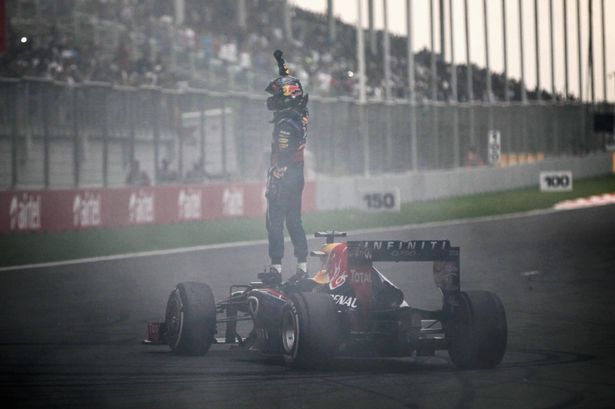
On Sunday, Sebastian Vettel wrote a new chapter in history as he emerged victorious from a rather confusing Indian Grand Prix to wrap up the 2013 Formula 1 World Driver’s Championship. It was the fourth time such an achievement had happened, moving him ahead of greats such as Jack Brabham, Niki Lauda, Ayrton Senna, Nelson Piquet and Jackie Stewart (all of whom only won 3 each) and alongside with Alain Prost. Only Juan Manuel Fangio (5) and Michael Schumacher (7) have won more titles. As well as this, Vettel is now the youngest ever four-time champion, the only the third driver to win four consecutive titles and the first to win his first four titles without another person winning in between. In shortened terms, Vettel is one extraordinary driver; but is he the best ever?
I think I can already answer this in very simple terms – it’s impossible to know. F1 is an ever-changing sport, whether it be the drivers, circuits or the rules governing the construction of the cars. In fact, it was only this year that I can remember where there haven’t been drastic rule changes from the previous season. However, the teams have had to cope with the whole Pirelli tyre fiasco so I suppose you could say that things have changed from last year – at the start of the season, in particular, teams had to be extremely careful with tyre management. In the seven races since Pirelli changed their construction back to the 2012 style, Vettel has only been beaten once and that was at Hungary, meaning he has won six races on the trot. Coincidence? I think not. Although Vettel only won five GPs last season (four of which came in succession during the latter stage of the season) he was the most consistent driver, regularly picking up podiums or strong points finishes. If it wasn’t for untimely retirements at both the European and Italian GPs (both of which he would have comfortably won) Vettel would have wrapped up the championship long before the final race in Brazil.
Although Vettel had already won four races by the time the change came in, I think it is without doubt that he has come into his own since the change. Some say this could just be because he is always stronger in the second half of the season as he prefers the tracks (just look at any of his previous seasons in F1 and you will see a strong correlation) but I don’t think you can argue that the tyre change has had something to do with it. The recent Indian Grand Prix proved that – with team-mate Mark Webber starting on the medium compound tyres (which degraded at a much lower rate than the softs that Vettel started on) many clever computer programmes all predicted that the Aussie would win by a margin of 4-5 seconds despite the fact that it was Vettel who started on pole. Although Webber retired from the race, he would have been nowhere near his team-mate come the end of the race. Vettel was in a class of his own the whole weekend (and indeed the other 5 races previously) and managed his tyres perfectly; there was never any doubt that he could utilise the strategy perfectly whilst still having plenty more speed left in reserve should it be needed.
It hasn’t always been this easy for the German though. Although he may have become the youngest ever test driver during 2006 and scored a point on his F1 debut with Sauber in 2007, making him the youngest ever points scorer in F1, Vettel’s early career was dogged by flashes of impetulance and selfishness. The first instance came when he was driving for Toro Rosso at the end of the 2007 season and crashed into Mark Webber behind the safety car, taking both drivers out of the race and costing himself a possible podium. He then started the 2008 season with four retirements (3 of which were as the result of crashes) and, aside from a wonderful 5th position at Monaco, really struggled to live up to the potential he so clearly had. However, a change in chassis from STR led to a change in form for their German driver as he finished the season extremely strongly, scoring points in 7 of the 8 races and even winning the Italian GP, meaning he had broken another record by becoming the youngest ever race winner. This strong run of form led to a call up from STR’s big sister, Red Bull – this was the best move they could have possibly made.
Vettel is an extremely intelligent man, especially when it comes to racing and setting up a car. When Red Bull signed the German for the 2009 season they were in the process of radically changing the car (as everyone was) in order to fit with the new rule changes. As well as having Adrian Newey, designer of countless title-winning cars, on board, Red Bull now also had one of the smartest racers on board. Between them they managed to design a car that was extremely efficient aerodynamically and, as a result, extremely quick. Although it was a surprise at the time to see Red Bull’s sudden transformation from a side battling for one or two points each race to one of the strongest teams out there, with hindsight it is actually not that shocking at all – they had arguably the greatest ever designer and one of the quickest men in motor racing history working for them.
However, despite having a race-winning car, Vettel’s immaturity still showed as he crashed out of the first race of that season at Australia before spinning into retirement during the next race at Malaysia (although it was very wet). However, four victories and many more podiums showed what Vettel could produce when he was his absolute best and he came second in the championship standings behind Jenson Button. He got better and better in 2010, producing many strong drives to win the championship at the final race in Abu Dhabi. Unfortunately, the childishness was evident – on hearing that he had received a drive-through penalty at the Hungarian GP Vettel proceeded to throw his toys out of the pram, making some rather rude gestures as he trundled down the pitlane. This came not long after he crashed into now team-mate Webber at Turkey whilst trying to overtake him for the lead, forcing himself into retirement, before making a sign that he thought the Aussie was… Well, not right in the head shall we say!
I think, though, that the securing of this first title really made Vettel grow up. His dominance in 2011 was Schumacher-esque, whilst the drives he produced when he really needed them in 2012 (coming from the back of the grid to 3rd in Abu Dhabi and surviving a first-lap spin in Brazil to recover to 6th and win the title) were the mark of a man, not a boy. Things have been much the same this year, aside from the extremely selfish display at Malaysia when he ignored team orders and passed Webber to take victory. His performances to the press are much more mature and when things aren’t going his way, instead of moaning, he keeps his emotions to himself and tries to think of a way around it.
This blog may seem to some that I absolutely love Vettel and, therefore, that I am a glory hunter. This couldn’t been further from the truth – I am not a Vettel fan at all (I think he is very arrogant and self-centred) and I especially dislike the way that he seems to be favoured by certain members of the Red Bull team, but I can’t help but admire what he has done over the last few years. Could he be the greatest ever? If Fernando Alonso, Lewis Hamilton, Nico Rosberg etc. get their wishes then no, but if things don’t change much then I can’t see any reason why he can’t surpass even Schumacher’s records.
Why the old ‘Give me a C…’ is a load of nonsense

When you think of cheerleading (I know most of you don’t but just pretend you do) I’m sure that a large majority of the population will imagine scandily-clad women, pom poms and silly chants. It doesn’t seem like a real sport does it? This stereotype has largely come about through the medium of TV and film, whether it be Blockbuster hits or major sporting events such the IPL and the SuperBowl, who reinforce this image by showing scores of young women doing just this.
Having just started university, my ‘Frep’ (freshers rep) managed to persuade a couple of male friends and myself to go along to the first college cheerleading session of the academic year. We all turned up not quite knowing what to expect as we guessed that what had been portrayed to us over the years was inaccurate and quite sexist. Little did we know, however, just how much fun it was going to be.
Some of you at this moment may be thinking ‘well these guys are clearly a homosexual (or possibly something stronger),’ whilst others may be thinking that we are just perverts who enjoy it because there are lots of girls there. I have to tell you that for all of us that is an absolute load of rubbish – it is, genuinely, a load of fun and so far we have done none of the cliched ‘give us a W…’ After a short warm-up in which I realised that, in spite of my hypermobility, my flexibility is nothing in comparison to some of the girls, we were quickly introduced to one of the most ‘basic’ stunts. The five leaders then proceeded to get into a very strange-looking formation and all of a sudden one of the girls was being held up in the air, arms aloft and with a huge grin on her face. As soon as I was shown that, my scepticism quickly turned into excitement at the thought of four people forming a platform for me to finally feel tall on!
That feeling was short-lived however as it soon transpired that I was far too heavy for a ‘flyer.’ But my disappointment didn’t last long as I was told that I would make a good ‘back’ – having asked whether any thinking was required, I was informed (to my delight) that all I would have to do was keep count and lift the flyer. As the groups were sorted it also transpired that I am actually too short to be a real back but, fortunately, there were a group of girls smaller than me. We then proceeded to try a ‘smush’ (which is where you get the flyer into a kneeling position off the floor) before going for the full ‘prep,’ where the flyer is fully extended. Although the leaders made it look easy, I can tell you now that even the simplest of stunts is tricky to get the hang of! Being a back isn’t too bad as I can lift the flyer from the waist but being a side must be a nightmare as they have to catch and lift the flyer by his/her feet! Needless to say there were some sore wrists and hands after!
When we’d managed to sort-of complete a ‘prep’ we then moved onto another move (the name of which I’ve forgotten) where the flyer put their hands on the shoulder of the back before the rest of the team lift them up so they are completely horizontal in mid-air. This was then proceeded by the ‘straddle,’ which involves lifting the smallest member of the team up into the air in… Well, a straddle position! Although it may sound straightforward, it is a real challenge and has given me a huge new-found respect for ‘real’ cheerleaders around the world. I can’t wait to try some of the other stunts and tumbling over the next few weeks and, at some point, put a full routine together.
It still may not be clear to you as readers though that cheerleading is even a sport. I believe that it definitely is – it requires a huge physical effort and is a competitive activity which is organised National Governing Body, The International Cheer Union (ICU) in regards to international competitons, whilst the British Cheerleading Association (BCA) runs national events. These include regional championships, the National Universities competition and the National Championships themselves. There are also many disciplines for each championship, including senior and junior events, different categories of music which they perform to (jazz, hip hop etc.), stunt groups for mixed and all-female groups and others. Rather than just being a leisure activity for women, cheerleading is a highly organised and fiercely competitive activity, not just in this country, but globally. At last year’s World Cheerleading Championships there were 12 different categories, yet it was a surprise to see that the US had 7 entrants, with Mexico entering the most (11). However, of the events they participated in, the USA won 5 of them, with only Canada winning more than 1 event. It was nice to see Scotland won the Team Cheer Freestyle Doubles, while only Northern Ireland didn’t participate from the countries in and around Britain.
What are the benefits of cheer then? Well, for starters, there is a huge emphasis on flexibility so even if you aren’t particularly bendy before you start it is almost guaranteed that you will be after. For backs and sides there will also be a huge increase in strength of both your upper body and legs as you are having to lift people up whilst taking their full weight. The flyer will also improve their core strength and balance as they have to be very stable whilst in the air and everyone’s coordination and timing skills will improve. Whilst it may not improve things like cardiovascular and respiratory endurance and efficiency, the other benefits more than make up for this.
To sum up, cheerleading is brilliant – give it a go!
He Just Needed a Break…

Aaron Ramsey’s return to form this season has been remarkable. Once reckoned as, arguably, one of the next greats of the footballing world, it is no coincidence that since his horrific leg break against Stoke City in 2010 he has never lived up to the promise he showed then. However, the start of the 2013/14 season has brought a new lease of life for the Welshman, with him scoring 4 goals so far in the league alone. My question is then; how much do injuries affect professional sportsmen and women?
There are some out there who don’t believe that injuries can affect the performance of a player. These are people who believe in trait perspectives, where you are naturally born to be good at certain things and that nothing will get in your way. So, according to this, Ramsey should have found himself playing the football he was before, yet it was clear to all that he wasn’t. This may seem very naive and narrow-minded but it was how people thought not so long ago. Fortunately the development of the understanding of psychology, especially in sport, means that very few now accept this theory and give credence to the idea that strength of mind is just as important as physical capabilities in not just the sporting world but everything in general.
Ramsey’s break was a truly horrific sight – leg breaks in sport are often much more dramatic because they often happen under immense pressure from an external force. When someone falls and breaks their leg in the street it is often quite a subtle break but there have been many cases of footballers, rugby players, American footballers, netballers, cricketers etc. sustaining severe breaks where you can physically see the deformation of the leg. Of course it’s not just legs that break but these are the ones that seem to cause most interest among the general public, largely because of their shocking nature. Ramsey’s break was no exception – his lower leg was pretty much hanging at a 90 degree angle! But it’s often not the injury itself that can affect the performer but the mental damage caused by it. However, is it actually witnessing the damage that causes a loss of confidence and, as a result, performance or is it down to the time spent out of the game?
I know from personal experience that even the thought of something missing from your body or an item not being in the right place can really affect you mentally. When I was 11 I (apparently) tore a chunk of flesh out of my abdominal region after diving to not be run out in a cricket game. All I could think of when I did it was not looking at what I had done to myself – even though I wasn’t old enough to even know the word psychology I instinctively knew that if I saw what I had done to myself I would have been scarred in more than one way. I know not everyone will react like this but I’m pretty certain that when you cut yourself or break a limb (not that I wish it on anyone!) you will automatically try and avoid looking at it. Seeing a part of your body not where it should be (or not there at all) is, I think, highly traumatic and can cause you to do anything to avoid repeating the event. So, in Ramsey’s case, if he’d seen his broken leg he may have been apprehensive about making a tackle or even playing football again because of what he’d seen happen to him last time. However, I don’t think this is the main cause of the psychological suffering.
How many of you reading this have found yourself avoiding a sport or being very tentative on your return after a serious injury? Although you may not admit to it I’m sure quite a few of you will; I certainly have. Since tearing my medial collateral ligament three years ago whilst playing tennis I have not revisited the sport and, when I have had to do other activities on similar courts, I have been much more careful than I would be on other surfaces. After receiving a serious injury everyone is going to be apprehensive on their return, although not necessarily because of the fear of a recurrence. Although I am not qualified to say so and don’t know him at all personally, I believe quite strongly that Ramsey’s lack of performance over the last couple of years has come around as a result of a lack of confidence caused by that leg break. You could see when watching him play that he didn’t enjoy being on the ball as much as before and that he didn’t even attempt to make the runs forward he used to back when he was a teenager. His natural confidence had been destroyed by that one moment and it has taken until now for the to come back. What caused that to come back I cannot possibly claim to know but something has happened for the Welshman that has caused this sudden turnaround.
Of course, not everyone will be affected by injury and some will even thrive as a result. Take Graham Onions for instance – he had a fantastic couple of years in 2009 and 2010, finding himself playing quite often for England and picking up lots of wickets. However, a serious back injury meant he was forced out of the Ashes side that won in Australia over the winter of 2010/11 as well as most of the 2011 season and, as a result, his place in the England pecking order dropped quite a bit. Did he let that affect him? Not at all – in fact I think he’s become a better player as a result. He picked up over County Championship 50 wickets in 2012 and 70 in 2013 at an average of 18.46. He was also part of the Durham side that won the title this year, something they couldn’t have done without him. And yet he still can’t get picked for England?!
It could be argued that Onions is naturally mentally stronger than Ramsey but I don’t think you can say that. In my opinion, no-one is born naturally stronger than anyone else, it is something that develops as a result of your environment. I think Onions had a greater drive than Ramsey to come back as soon as possible due to his circumstances. Although he was playing for his country, his spot in the side was far from guaranteed and, with some fantastic young fast-bowling talent being developed in this country, he knew his place was under serious threat, a fear which has come true. Ramsey, though, was already a regular in both the Arsenal and Wales teams with very little new talent appearing in both sides for various reasons. Onions situation meant that he had greater need to rediscover his form very quickly whilst Ramsey didn’t have the same incentive.
Am I saying, then, that people don’t perform as well after injuries compared to before just because of the mental trauma? No I’m not – the injuries themselves can have just as great, if not bigger, impact. Take Simon Jones for instance – a member of the 2005 Ashes winning side, the Welsh wonder was a great fast bowler for both county and country. Since aggravating a previous knee injury in that series, though, he has had eight injury-filled years. His body has no longer been able to cope with the demands of bowling 90mph and, as a result, he is a shadow of the player he once used to be, leading to his retirement last month. The former West Ham footballer Dean Ashton is another prime example – he broke his ankle in 2006 and never played again because the fusion of the ankle as it healed meant he couldn’t run any longer. The physical impact of an injury is a big factor as to whether sportsmen and women will recover their form but I also believe that if they recover fully the mental scars can still significantly hinder them.
A Shining Light
Last week, Zimbabwe’s national cricket team gave the country blighted by political corruption and severe droughts something to smile about for the first time in a long while. They won their first Test match (excluding victories over Bangladesh) for 12 years, drawing the series with Pakistan 1-1 in the process. It hasn’t, however, always been doom and gloom for the southern African country.
As a nation, Zimbabwe has only been known by its current name since 1980. On the 18th April that year the former British colony finally regained independence after 15 years of war against the Brits as well as each other. In the end it was Robert Mugabe’s Zimbabwe African National Union (ZANU) party who formed the first Zimbabwean government. Although not everyone was elated with the result, the national women’s hockey team were clearly inspired at the 1980 Moscow Olympics as they created one of the greatest stories in Olympic history, although it is one that is rarely heard of.
They weren’t told they could field a team for the first women’s competition at the Games until 35 days before the opening ceremony and didn’t even select a team until the weekend before. The team then flew over in a plane normally used for transporting meat, meaning there were no seats. The women had to strap themselves to the floor in a sitting position – imagine how scary that must have been! What’s more, none of the players had ever experienced artificial pitches, having played on grass at home and in South Africa (where they often trained) so didn’t have the correct shoes until they rushed out to buy some when they arrived in Moscow. They only played a handful of warm-up matches against local Soviet clubs due to the limited time and banning of sporting contact with South Africa earlier that year, before opening the tournament on the 25th July.
Their campaign started against Poland, not a team many expected to obtain a medal but, being associated with the USSR, many still expected them to win the match. But this group of women defied the odds, smashing the Polish 4-0. Despite this start, though, very few people expected another win, yet alone a medal – they still had games against the tournament favourites in the USSR and one of the greatest hockey nations of all-time in India. However, a 2-2 draw with Czechoslovakia followed before they stunned the world by beating the Soviets 2-0 at their home Games. Now everyone was sitting up and paying attention and, after a 1-1 draw with India, they found themselves needing to beat Austria (who had just been thumped by the Czechs) in order to win Olympic gold. And they didn’t just beat them, they annihalted their European counterparts, taking them apart in a 4-1 victory that secured the country’s first gold medal. This bunch of mis-fits from a country that had only just been recognised as independent had just beaten some of the greatest hockey teams of all time to secure the first women’s field hockey medal. Despite the boycott that meant the likes of the USA were missing, this has to be one of the greatest sporting feats of all time and I can’t believe it hasn’t been made into a film!
Their victory, however, also showed the first signs of the problems that were to come for the country. After they won the medal, Mugabe’s wife promised each player an ox as a prize but, at a ceremony hosted by Mrs Mugabe after they returned home, she presented each player with a packet of frozen meat. Although seen as quite funny by the women at the time, this seemingly innocuous event would prove to be a foresight for the terrible way the Mugabes would run the country.
As the economy has plundered under the dictatorial regime, Zimbabwean sport has never really taken off as it promised after this event. No hockey team from the country has ever taken part at an Olympics since, whilst the country has sent under 20 individuals (excluding 1988) to every Games since after having 42 at Moscow. It could be argued that this is because of the boycott that meant 65 countries didn’t appear in 1980, but looking at the stats the numbers representing the country has decreased nearly every year – they only took 7 to London 2012.
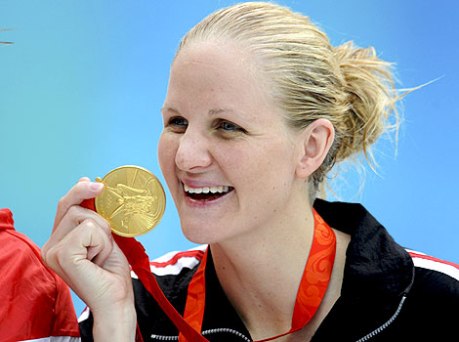
One of these competitors, however, was Kirsty Coventry. She was the only swimmer representing the country, competing in three different races. However, unlike most of the swimmers that come from Africa who aren’t South African, she is not one who will finish last in her heat. She is, in fact, a 7-time Olympic medallist. Having grown-up and trained largely in her home country, Coventry first showed her potential in 2000 by becoming the first Zimbabwean swimmer to reach an Olympic semi-final. 4 years later, after some hugely impressive performances for her university squad in America, Coventry won the country’s first medal in 24 years as she picked up gold in the 200m backstroke. This was followed up by a silver in the 200m individual medley and bronze in the 400m individual medley. She then regained her gold medal in the 200m backstroke and silver in the shorter medley as well as improving her 400m individual medley result to silver and claiming another second place in the 100m backstroke. This, combined with 1 Commonwealth gold, 8 World Championship Medals (3 gold, 5 silver), 18 All-Africa Games Medals (11 gold, 7 silver) and a multitude of African, Commonwealth, Olympic and World Records, makes her the greatest sportswomen in the country’s history. Her feats even led to Mugabe himself calling her a ‘golden girl’ and giving her $100,000 US after the Beijing Games. She couldn’t repeat her form at London 2012, though, as, at the age of 29, she just couldn’t keep up with other competitors up to 14 years younger than her.
This is where the national cricket team, however, have taken over. Their victory over Pakistan was their first over a major nation since they beat India in 2001 and has got their people smiling again. Zimbabwean cricket hasn’t been all bad though – in the 1990s they had some of the finest players in the world. This included the Flower brothers Andy (who scored nearly 5000 runs at an average of over 50 and is now England’s coach) and Grant (one of the finest all-rounders of all time), Murray Goodwin (who is still scoring shed-loads of runs in English country cricket) and Heath Streak, a fine bowler who took 216 wickets at 28.14, giving him a lower average than James Anderson, Stuart Broad and Graeme Swann. Despite being introduced to the Test arena in 1992, it took another three years for this fine crop to finally win their first Test. This came at the start of the 1995 series against Pakistan, with both Flowers making big hundreds (Grant made 201 not out, Andy 156) alongside Guy Whittall in a total of 544/4 declared against a strong attack that included the great Wasim Akram. Streak then took 6-90 to dismiss their Asian opposition for 322 before picking up another 3 as Pakistan were rolled over for 158 following on to lose by an innings and 64 runs.
This was to prove a one-off, though, as the team would then lose the series and would not win another Test until 1998. This victory can be seen to be even more special, however, as it came against an Indian side including the Sachin Tendulkar, Rahul Dravid and Mohammad Azharrudin, all greats of the game. This gave them their first Test series victory and this was followed up just a few months later with another series victory away in Pakistan. After 6 years, it seemed that Zimbabwean cricket was finally flourishing but, as with all other sports in the country, it saw a sharp decline from the late 1990s onwards as the country descended into chaos. Mugabe’s regime became ever more hedonistic, seemingly ignoring the crippling affect their economy structure was having on the country, whilst diseases and viruses such as HIV spread alarmingly quickly. This, coupled with the severe droughts that all but finished the agricultural industry (which gave the country a large percentage of its income via exportation of the goods), meant that there was no money to be invested in sport and those who could still compete really struggled. The victory against India in the early 2000s was a huge surprise but there was not to be another significant Test victory until just last week.
Things got worse and worse for the side as, in 2003, the England cricket team forfeited their World Cup match against their former colony due to safety fears. This led to Andy Flower and bowler Henry Olonga to wear black armbands, representing how they felt democracy had died in their once beloved country. Streak was appointed captain but was forced out of his position in 2004 as the Mugabe-run Zimbabwe Cricket Board tried to eliminate white players from the side. This descended into chaos and, in 2005, Zimbabwe were banned from Test cricket due to the internal crisis. They were re-instated in 2011 and, despite the fact they have lost their fine crop from the 1990s, they played some competitive games against New Zealand, West Indies and Bangladesh before their most recent series.
After nearly two decades of unbelievable struggle, it seems as though Zimbabwe is finally sorting itself out. The human rights crisis seems to be solved and it seems the country is slowly restoring itself to its former glories. Hopefully, in the years to come, the likes of Kirsty Coventry and Andy Flower will no longer be rarities but regularities and create another major sporting force. I will leave you with one of the greatest sledges of all time, which came from a little-known Zimbabwean:
Glenn McGrath (Aussie fast bowling legend):
– ‘Why are you so fat?!’
Eddo Brandes (Zimbabwean medium-pacer, former chicken farmer):
– ‘Because every time I make love to your wife she gives me a biscuit’
It’s a Fine, Fine Line
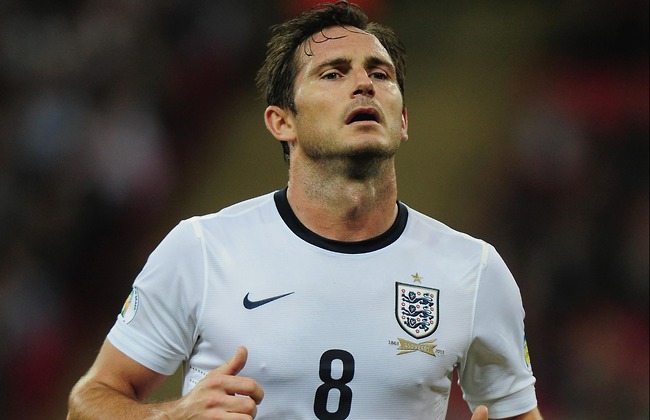
Last night, Frank Lampard achieved the huge milestone of playing for his country for the 100th time. At the age of 35, the midfielder has also found himself back in the Chelsea first-team after what many people thought would be his last season in 2012/13. Both Roberto di Matteo and Rafa Benitez regularly left ‘Lamps’ on the bench, thinking he was too old for the pace of the Premier League, but the returning Jose Mourinho sees things a lot differently. Lampard has started all 4 competitive games this season for his club and his performances clearly show he still has a lot to offer football – he scored on the opening day of the season against Hull and also captained Chelsea (and scored in the penalty shoot-out) in the European Super Cup. The question is, then, why do people assume that players approaching their mid-30s are ‘past it?’
It’s been scientifically proven that when people do reach the age of 30 their physical attributes start to decline. Speed and reflexes are two that rapidly decline, while others such as agility and co-ordination drop away more gradually over a much longer period of time. But that doesn’t mean that professional footballers will just become rubbish – most adapt their game with their vast experience and can become even better. While the certain aspects of their game might not quite be as good as when they made their debuts, many use their previous experiences to make sure they are in the right place at the right time. Lampard is a prime example – he no longer makes driving runs forward from midfield but if Chelsea do attack then he will find a position in and around the penalty area where he knows the ball is likely to arrive. As a result he has scored exactly half of his league goals for Chelsea since 2008/2009 (71 out of 142 in just over 4 seasons)– he scored the other half over a period of seven seasons. Rather than decline, Lampard has become a better player and he isn’t the only one.
Football is, in essence, a non-contact sport where professionals are reliant on skills such as co-ordination and knowing where to position yourself. Although you need to be in good physical shape, you don’t need to have an extremely strong heart, develop huge muscles or have an extraordinarily low heart rate in order to succeed. There are some sports, though, that do rely on some or all of these attributes, meaning that participants will be younger at the elite level as it is much harder to keep them up over the age of 30. At London 2012, there were 14 different events that didn’t include a single male or female over the age of 40. The eldest male and female triathletes (where exceptional endurance levels are a must) were both 37, while badminton and swimming included just a handful of athletes between the age of 35-40. Both of these sports are supposed to be ‘lifelong activities’ and are promoted by the government to get everyone partaking in a balanced, active, healthy lifestyle but, with reflexes and speed being crucial across the two events, only the youngest will succeed at the top end of the sport. 15 year-old Ruta Meilutyte summed this up perfectly, beating many athletes a lot older than her to claim the gold medal (as well as the Olympic and World Record) in the 100m breaststroke.
Although there were athletes in all of the other sports over the age of 35, only 3 managed to get into double figures in terms of the number of 40 year-olds competing. These were sailing, shooting and equestrian. Not the most physically demanding events but they still command extreme skill. Shooting, especially, is seen as a sport for middle-aged men and women so it was a huge surprise for me, then, that only 1 out of 15 golds across both sexes was awarded to someone over the age of 40, while only a 5 out of 30 ‘minor’ medals went to men over that age – no woman born before 1973 won a single medal in any of the disciplines. This seems to suggest that, while co-ordination is a skill that doesn’t reduce as drastically as other skills, it still declines to the point where the elite have little chance of winning a medal despite all their experience.
Looking at equestrian, the stats looked much more favourable as 5 golds and 11 other medals went to those over the age of 40. However, all these medals came in the team events, showing that when alongside those in their 20s and 30s they can use their experience to win but on their own they have can no longer compete at the top level. Golf is another example – many players in their 40s and 50s play a big part for their respective sides in the Ryder Cup but when it comes to Majors they cannot come close to the likes of Adam Scott. There are some exceptions, such as Phil Mickelson, but overall it seems this ‘game for old men’ is actually dominated by those not long out of their teens. Even cricket, arguably one of the least demanding sports, has very few players at the top level of the age of 35. Both Sachin Tendulkar and Ricky Ponting have recently proved that once a batsman gets to a certain age they will struggle against the best, no matter how good they were.
So, is it actually possible for older sportsmen and women to succeed at the highest level? I think that in team events such as football and equestrian, where the emphasis isn’t on physical capabilities such as endurance and speed, then the likes of Frank Lampard and Nick Skelton can carry on at the highest level until they are well into their thirties and far beyond. However, in all individual events it is hard for the ‘elder statesman’ to compete against youth, no matter how good they were or how much experience they have. They just can’t keep up.
The Big Review (Part 2)
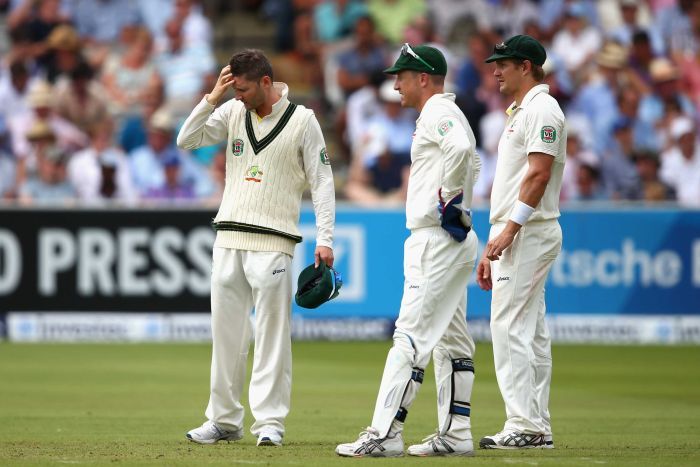
Now it’s time for part 2 of my review of the 2013 Ashes series. Today it’s the turn of the Australians and I think it’s fair to say that their ratings don’t match the 3-0 scoreline.
Australia – 6/10
- At times this Australian side looked something like the team that dominated the cricketing world throughout the 1990s and into the early 2000s. Unlike England, the team from Down Under posted two scores of 400+ (527/7 declared at Old Trafford and 492/9 declared at The Oval) but both times rain meant they didn’t have a chance to convert these into victories. They didn’t really deserve to lose 3-0 but will need to look at their batting – there were so many top and middle-order collapses and in the first Test they relied far too much on the last wicket partnership. If they can find a batting line-up that works and keep all their bowlers fit then this side could hit back hard in the next few years.
Chris Rogers (Runs – 367; Average – 40.77; HS – 110; 50s – 2; 100s – 1) – 8/10
- Recalled to the team at the age of 35 after just 1 Test, the county stalwart was by far the most consistent batsman in the team. After a nervous first couple of Tests, including a horrific dismissal off a Graeme Swann full toss at Lord’s, he really opened up at Old Trafford. His 84 runs came largely before lunch on the first day and he didn’t look back. His 110 at Durham, his first Test hundred, was a touch lucky (he was dropped on 49) but included some wonderful stroke play. Expect more runs from him in the return series.
Shane Watson (Runs – 418; Average – 41.8; HS – 176; 50s – 1; 100s -1; Wickets – 2; Average – 89.5) – 7/10
- He may have ended up as the leading run-scorer for his side but things weren’t going particularly well for Watson with the bat up until the fourth Test. His 68 in the first innings after dropping down the order to number 6 helped Australia recover from yet another top-order collapse, but it was his century at The Oval that really showed what he can do with the bat. He didn’t really play a false shot during his mammoth 176 and proved that he can convert those fifties into big hundreds. He also bowled fantastically during the series – he didn’t pick up many wickets but put the squeeze on England by bowling maiden after maiden (including 11 in 15 overs at Trent Bridge), allowing the bowlers at the other end to pick up the wickets.
Ed Cowan (Runs – 14; Average – 7; HS – 14) – 2/10
- An unfortunate victim of the Australian selection rollercoaster, Cowan did himself no favours by getting himself out with what can only be described as a waft at Trent Bridge. What’s more, it was his first ball of the series and left skipper Michael Clarke to face a hat-trick ball from James Anderson! His second innings wasn’t much better and he was rightfully dropped – there was just no sense of endurance or resistance in the short time he batted. Hopefully he can recover from this and once again don the ‘Baggy Green.
Michael Clarke (Runs – 381; Average – 47.62; HS – 187; 50s – 1; 100s – 1) – 7/10
- Some may say that this is a bit of a low rating for Clarke given the amount of runs he scored and the average he got but I don’t think it is. Too many times Clarke was part of an Aussie collapse, with only his 51 at Lord’s showing the kind of resistance needed against a fired up English attack. His 187 at Old Trafford, though, was majestic and showed just how good Clarke really is. It’s also fair to say that he undoubtedly received the two best balls of the series from Anderson and Stuart Broad that didn’t help his cause. His captaincy, however, was absolutely fantastic. He utilised his bowlers well, set imaginative and attacking fielding positions and even tried to create a result in the final game. It was the complete opposite to most current captains and was really great to see – let’s just hope he doesn’t out-do England any time soon!
Phil Hughes (Runs – 83; Average – 27.6; HS – 81*; 50s – 1) – 5/10
- His solid innings of 81* in the first innings of the first Test was largely overshadowed by Ashton Agar’s brilliance but seemed to suggest the left hander was bang in form and ready to score lots of runs. It wasn’t to be, though, as England yet again exposed the flaws in his technique, restricting him to just 2 runs in his next three innings. Needs to find some consistency with the bat if he wants to stop getting dropped from the side.
Steve Smith (Runs – 345; Average – 38.33; HS – 138*; 50s – 2; 100s – 1; Wickets – 4; Average – 28.5) – 8/10
- His unquestionable talent finally translated itself into both runs and wickets during this pivotal series. If Smith hadn’t performed he would’ve been dropped and may not have returned to the Test scene for some time – this was his final chance. To his credit, though, Smith performed brilliantly throughout the series. His batting in particular shone, culminating in his maiden Test century at The Oval. Also showed vast improvements in his bowling capabilities by picking up 4 crucial wickets, 3 of which came late on the first at Lord’s and ruined what had been a very good day for England up to that point. Let’s just hope he can continue in this way.
Brad Haddin (Runs – 206; Average – 22.88; HS – 71; Catches – 29) – 5/10
- Like his opposite number Matt Prior, this was a poor series with the bat for Haddin. His 71 at Trent Bridge almost won the Aussies the game in the most unlikely of fashions but, except for an innings of 65* which included a lot of slogging, Haddin wasn’t close to showing the kind of form he has done previously against England. His ‘keeping, on the other hand, was superb – he set the world record for the most number of catches in a series and, apart from one sitter that he missed at The Oval, was world class behind the stumps.
Mitchell Starc (Runs – 104; Average – 26; HS – 66*; 50s – 1; Wickets – 11; Average – 32.45) – 6/10
- Definitely the unluckiest man in the team, Starc was dropped on two occasions despite having done nothing wrong. He was a touch inconsistent with the ball but when he got it right he was almost unplayable and ended up with respectable bowling figures for the series. He also proved he’s no mug with the bat, spanking the ball to all parts of the ground at Old Trafford, yet it was his run out of Ian Bell with the last action of the series that showed just what a quality player he is. If he can become a regular in the team it won’t be long before Starc is regularly terrorising opposition batsmen all over the world.
James Pattinson (Runs – 72; Average – 36; HS – 35; Wickets – 7; Average – 43.85) – 4/10
- Pattinson came over to England being hailed as the next Australian fast bowling great, capable of speeds over 90mph and giving batsmen a few bruises. So it came as a big shock to us all when he tried to bowl line and length, showing no aggression at all! He was also down on speed before being ruled out of the final three games with a stress fracture of the back, which I think was the reason he didn’t bowl anywhere near his best. Pattinson could easily become one of the greatest of all time but the big question is can he stay fit? Like Starc, Pattinson also showed great promise with the bat and his partnership with Haddin almost won Australia the first Test.
Peter Siddle (Wickets – 17; Average – 31.58; 5wh – 1) – 7/10
- Peter Siddle is just great. He brings no fuss, no moaning, no controversial press conferences, just a will to succeed and a great heart. You know with him that he will give his all, no matter the circumstances. It’s also good to see that he has largely got rid of the faux pax aggression he brought to these shores in 2009 as it made him look silly and detracted from his superb bowling. His 5-fer in the first innings of the series made a lot of English fans worried but he never really found it easy to take wickets after that, despite being extremely consistent with both line and length.
Ashton Agar (Runs – 130; Average – 32.5; HS – 98; 50s – 1; Wickets – 2; Average – 124) – 4/10
- His selection for the first Test was almost as surprising as the inclusion of Chris Woakes and Simon Kerrigan in the final game. However, he silenced his critics with an unbelievable 98, setting a new record for the highest score by a number 11 in Test history. Unfortunately, he won’t be remembered for his bowling (his main trait), as it was less than impressive. Although consistent, he struggled to beat the edges of English bats and only picked up two wickets. It could have been more had Broad walked, but we’ll never know. Whether he plays again for Australia isn’t clear, but what is certain is that the name Ashton Agar will be forever remembered due that innings.
Usman Khawaja (Runs – 114; Average – 19; HS – 54; 50s – 1) – 3/10
- After showing huge promise at the end of the 2010/11 series, Khawaja’s obvious skill has never been fully realised. This was the case again this series – his 54 at Lord’s showed what a class act he can be but for the rest of the time he looked almost awestruck as he struggled to get the ball off the square. Hopefully he can bounce back from this series but the way he batted suggests he may not have the mental strength to do this. I just hope I’m proved wrong.
Ryan Harris (Wickets – 24; Average – 19.58; 5wh – 2) – 9/10
- For Harris, this was the series that really proved what a quality bowler he is. The fact he was the second leading wicket-taker behind Swann (26) despite playing one game less shows just how good he is. What makes his achievements even more impressive is the fact that this was the first time he had played four Tests in a row! His figures of 5-72 in his first innings at Lord’s showed Australia just what they’d been missing in the first game and his Test-best figures of 7-117 at Durham epitomised just how important he is to them. Without a shadow of a doubt he is their Man of the Series.
David Warner (Runs – 138; Average – 23; HS – 71; 50s – 1; Punches attempted – 1; Punches connected – Unsure) – 5/10
- Made headlines for all the wrong reasons before the series started after taking a swipe at Joe Root in a nightclub and subsequently missed the first two games. After his recall he showed just what a dashing batsman he is, highlighted in his 71 at Durham, but was far too inconsistent (notice a pattern here?). If he can just get his head down and concentrate on delivering runs week in, week out there is no doubt Warner could stay at the top of the order for a while to come, but that is a big if!
Nathan Lyon (Wickets – 9; Average – 33.66) – 6/10
- Unfairly dropped for the first two matches after claiming career best figures in Sri Lanka in his last Test, Lyon bowled well on his recall, although he lacked the potency of Swann. Was unlucky not to get more wickets at Old Trafford as his flight and guile caused problems for lots of English batsmen but was still impressive. Picked up 7 of his wickets during the fourth Test on a pitch that wasn’t really suited to spin bowlers, including Kevin Pietersen after cleverly deciding to bowl round the wicket to him. However during the final innings at The Oval KP smacked him around, showing that Lyon still lacks a certain something that will earn his bowling the respect he craves from the top batsmen.
Jackson Bird (Wickets – 2; Average – 62.5) – 3/10
- Only played at Durham as the selectors felt he would suit the pitch, Bird started off well with two early wickets. However, he then proceeded to get carted around in the second innings and did little to impress. To compound his misery, he was then ruled out for the rest of the English summer with a lower back injury to become the next Australian fast-bowling crock.
James Faulkner (Runs – 45; Average – 22.5; HS – 23; Wickets – 6; Average – 16.33) – 7/10
- Unlike Woakes and Kerrigan, Faulkner had a pretty successful debut at The Oval. Showed some great attacking intent with the bat and was aggressive with the ball, deservedly picking up 4-51 in England’s first innings. Whether or not he will retain his place for the start of the next series is unsure, but he has done himself no harm with this performance and shows signs of developing into the next Freddie Flintoff.
 The 52 Blog