The Big 2014 Review – Part II
2014 was a year full of sporting brilliance, medals and record-breaking moments. Continuing on from the first part of this review, below are my seven favourite moments from the last year:
7) Brazil’s boys battered
The 2014 World Cup saw plenty of spectacular moments, including James Rodriguez’s sensational volley and the Netherlands’ humbling of reigning champions Spain. However, there was nothing more dramatic than Brazil’s loss to Germany in the semi-finals. Being the home team, the ‘Canarinho’ were expected to win the tournament, and not reaching the final would have been enough to cause national upset. They didn’t just fail to make the final though; they were humiliated. Germany were simply in another class as they put seven – yes, seven – goals past the South Americans. Miroslav Klose adding salt to the wounds by becoming overtaking Brazilian legend Ronaldo to become the player with the most of World Cup goals. In the space of 90 minutes an entire nation was silenced and, even before a ball was kicked in the final, Germany had declared themselves World Cup winners.
6) Scotland’s favourite Child comes good
If Michael Jamieson was Scotland’s poster boy for the 2014 Commonwealth Games, Eilidh Child was definitely the female equivalent. The 400m hurdle runner had really made herself known at the 2013 World Championships, putting in a strong performance in the individual final and helping Great Britain win bronze in the 4x400m relay. The pressure on her going into the event was immense, with the home fans expecting at least a repeat of the silver medal from four years earlier. Unlike Jamieson, she didn’t fail to deliver. After cruising through the heats, Child put in a superb performance in the final to claim silver behind the very impressive Jamaican Kaliese Spencer. The delight on her face was clear for all to see and those in the stadium celebrated and cheered as though she had won. It was a truly wonderful moment to witness.
5) The long-awaited win
England women’s rugby union team has long been seen as the second best in the world, behind New Zealand. Since their first Test in 1987, they have won 182 of their 217 matches, with most of their losses coming against the Kiwis. Indeed, they had been beaten by them in the previous four World Cups, including the finals of the 2002, 2006 and 2010 tournaments. However, the Black Ferns lost to Ireland in the group stages, meaning they narrowly missed out on a place in the semi-finals. England qualified as the third best team after two wins and a disappointing draw against Canada and faced the Irish in their semi. Despite their monumental upset in the group stages, Ireland were no match for England and lost 40-7. This meant English faced Canada again in the final and, this time, there was to be no disappointment. Emily Scarratt was at her absolute best as she scored 16 of 21 points as England battled their way to victory, meaning she finished as the tournament’s top points scorer. England had won their first tournament for 20 years and finally proved they could do it on the big stage.
4) Four-midable Fragapane
As previously discussed, the 2014 Commonwealth Games saw the emergence of a lot of young British athletes with huge potential. There was one youngster, though, who stole the show with four gold medals in her first major international championship; 16 year-old gymnast Claudia Fragapane. From the first moment she appeared in the Hydro arena, it was clear for all to see that here was a future star. Her composure for someone so young and inexperienced was remarkable and so were her performances. Of her four golds, the most achieved by a British woman in a single Commonwealth Games since swimmer Joyce Cooper in 1930, the one achieved in the floor event was the most spectacular. Her performance was faultless, almost superhuman, and she did not receive a single penalty on her way to winning by a huge margin of 0.708 points.
3) A special tribute
Cricket was shocked to its core in late November with the death of Australian batsman Phil Hughes, killed when a ball struck him on the neck, missing the helmet and causing a fatal injury. This happened just days before he was due to be selected in the national squad against the touring Indian side. The way in which Cricket Australia dealt with this incident was incredible, with Michael Clarke’s tear-inducing tribute to Hughes showing the class of the man. The first Test was put back a few days to allow the players to try and put themselves in the correct place mentally, but even then it seemed wrong to be playing so soon. However, David Warner and Clarke used the pain and grief caused by their team-mate’s death to spur them on to sensational performances. On his way to a magnificent 145, Warner dedicated not just his century to Hughes, but also the moment he reached 63, as this was the score Hughes was one when he died. It was Clarke, though, who really stole the show – having retired hurt on day one with a recurrence of a back injury, the captain returned next day to battle his way to a century of his own. If it was any other match, Clarke probably wouldn’t have even come back out to bat. However, his emotional pain overcame the physical and led to this super-human performance. They may not be everybody’s favourite team, but there can be nothing but the upmost praise and respect for the Australians for this.
2) Bianchi shows his worth
Despite the dominance of Mercedes, the 2014 Formula 1 season was one of the most exciting and exhilarating for a while. However, the sport also suffered double tragedy last year – firstly, seven-time World Champion Michael Schumacher, arguably the greatest racer of all time, was critically injured in late December 2013 whilst skiing with his son. Secondly, young French driver Jules Bianchi was also severely injured after crashing into a recovery truck at the Japanese GP. It was a horrific moment which once again highlighted that, despite huge improvements in safety, open-cockpit racing is still very dangerous. What made it all the more tragic was the Bianchi was looking a very promising driver, highlighted by his performance at the Monaco GP. Despite being in one of the slowest cars on the grid, Bianchi has consistently pushed the car beyond what it should be capable of and this was especially the case in this race. He pulled off some incredible overtakes and drove his heart out to finish in ninth place, ahead of much quicker cars, to score his and his team’s first points in F1. It was one of the greatest drives I’ve ever seen and makes it even sadder that we may never see him race again.
1) Pave-ing the way
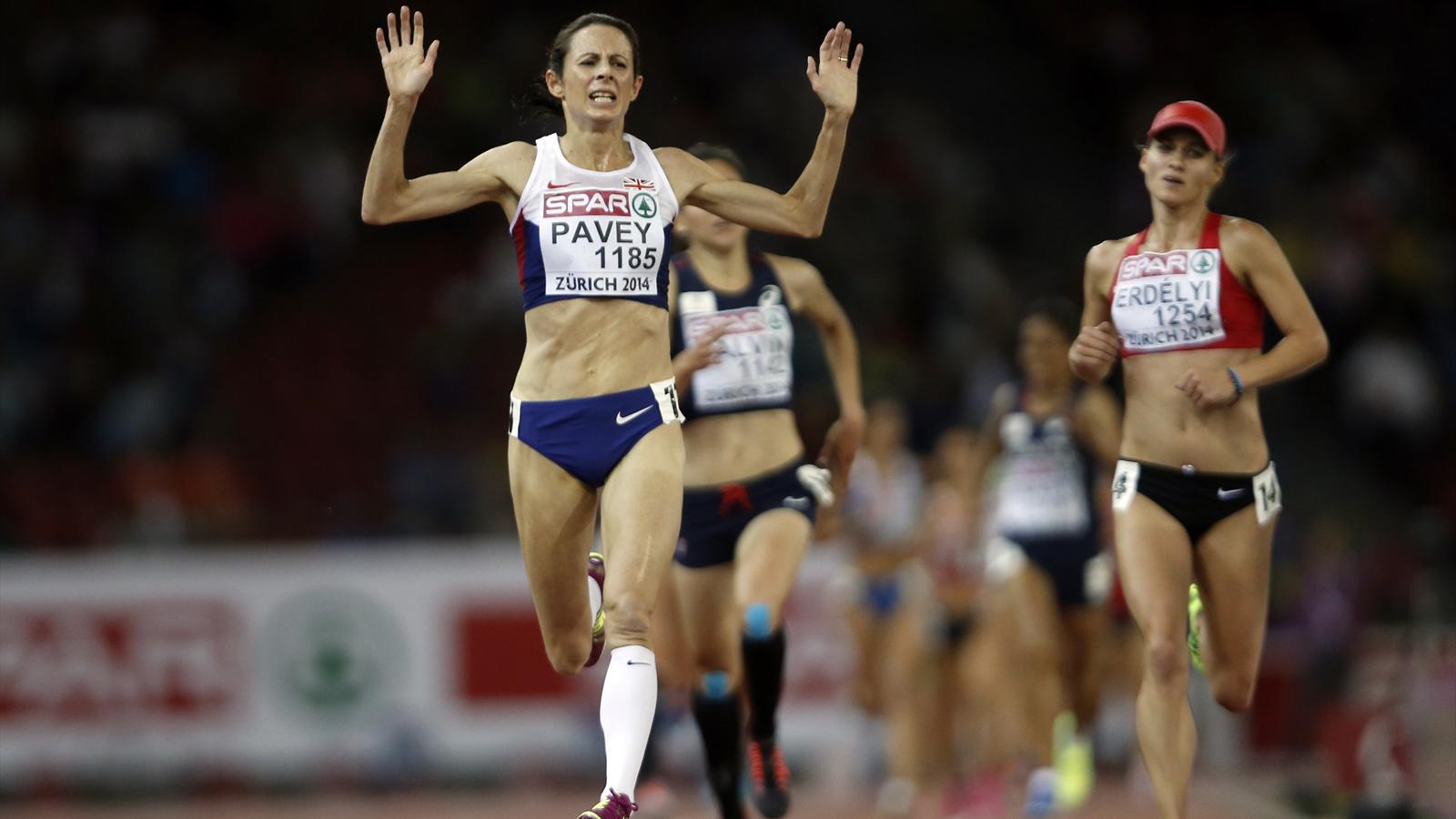
Many of the aforementioned events have centred around young athletes showing their potential. However, my favourite moment from the last year involves an athlete at the completely opposite end of their career. At 40 years old, Jo Pavey has had a long but largely unsuccessful career in middle and long-distance running. However, the older she has got the better she has become, winning 5000m silver at the 2006 Commonwealth Games and the same medal at the 2012 European Championships in the 10,000m. Going into the 2014 Euros, her confidence was high after winning 5000m bronze at the Commonwealths in Glasgow and, with the fields in both events not looking particularly strong, was in with a good chance of picking up a medal. However, no-one really expected her to win gold, meaning the fact that she did was deemed by many to be truly remarkable, especially given her age. By winning the 10,000m, she became the oldest European Champion ever and proved that perseverance and determination pay dividends in the end. Not only that, but just ten months earlier she had given birth to her second child! Pavey is an exceptional woman and thoroughly deserving of all the success she has had.
If this year is anything like the last, it’s going to be one hell of a ride – I can’t wait!
The Big 2014 Review – Part I
2014 has been yet another year packed full of sport. There was the Winter Olympics, men’s football and women’s rugby World Cups, the Ryder Cup and the Commonwealth Games alongside a whole host of other events. The public have witnessed surprises, fairytales, disappointments and tragedy. Here are the first half of my favourite moments from the previous 12 months.
14) Carlin ends drought
At the 2014 Commonwealth Games, Jazz Carlin became the first Welsh swimmer to win a gold medal since Pat Bevan emerged victorious the 1974 200m breaststroke. Carlin burst onto the scene as a 20 year-old four years ago in Delhi, winning a silver and a bronze, but poor form and the presence of Becky Adlington meant she soon fell out of the limelight. However, she was back to her best in July, narrowly missing out on gold in the 400m freestyle but dominating her favourite event the 800m, breaking the Games Record twice.
13) History maker in the snow
Lizzy Yarnold may be the British star from Sochi 2014 but I have not selected her in my list for one simple reason: she was expected to win. Although British golds in the winter are rare, Yarnold was in scintillating form leading up to the event and duly delivered. Instead, I have chosen Jenny Jones’ bronze medal in the slopestyle snowboarding event. Although those in the know gave her a chance of a medal, no-one outside of the snowboarding fraternity had ever heard of this woman from Bristol. However, her bravery and broad smile won the hearts of many and a superb performance in the final meant she won Britain’s first ever medal on the snow.
12) Peaty offers glimpse of bright future
After a few miserable years, British swimming finally looks to be delivering on a global front again. The Commonwealth Games saw the emergence of a whole host of young talent, but the real head-turning moment was the European Championships, where Britain won 9 golds and topped the medal table. Fran Halsall and Chris Walker-Hebborn both won three golds each but the star of the meeting was Adam Peaty. The young 19 year-old shone in the breaststroke, winning both the 50m and 100m events (setting a new World Record in the former) before leading Britain to success in two relay events. This, alongside two Commonwealth titles, has put Peaty in the spotlight and even led to a Sports Personality of the Year nomination. Expect big things over the next few years.
11) A rare bright moment
It has been a hugely unforgettable year for English cricket, with a 5-0 thumping from the arch enemy, a home Test series loss against Sri Lanka and horrific performances in the shorter formats. However, the 3-1 Test victory over India was a month of rare success and included one of the most remarkable batting performances the game has ever seen. After India racked up a big first innings score in the first of 5 games, England’s batting line-up had yet again collapsed. When number 11 James Anderson came out to bat his team were still 159 runs behind. However, when the innings finished England were 39 ahead. The bowler, who had never scored a half-century in professional cricket, batted superbly for 81 in an innings full of classy shots. Alongside Joe Root, who has been supreme all year and held the side together on many occasions, he helped set 6 new records and sparked English cricket back into life, albeit only for a month or so.
10) Ronnie back to his Master-ful best
Snooker has had a bad time recently, with players being accused and even found guilty of match fixing whilst other top stars have been complaining about how the sport is being run. As a result, I was one of many who had fallen out of love with the sport. One man soon changed my opinion though and, of course, that man was Ronnie O’Sullivan. ‘The Rocket’ was at his absolute best at The Masters back in January, sweeping aside all before him, including the unfortunate Ricky Walden, the unlucky man drawn to face O’Sullivan in the quarter-finals. He never stood a chance, being thrashed 6-0. The fourth frame that was the best, O’Sullivan’s break of 134 being described as ‘snooker from the Gods’ it was so perfect. Those 8 minutes of sheer genius were enough to remind me just how great a game snooker is.
9) The rookies lead the way
The 2014 Ryder Cup was largely a one-sided affair, with Europe taking victory by 16.5 points to the USA’s 11.5. Under the captaincy of Paul McGinley, the Europeans were the true meaning of ‘a team,’ whilst the Americans were the complete opposite. Although all the winning players were impressive, rookies Jamie Donaldson and Victor Dubuisson were just that little bit more. Both looked extremely calm under pressure despite the nature of the event and the fact it was their debuts, and Donaldson’s haul of 3/4 points was only bettered by Justin Rose, himself in the middle of a purple patch. It was almost poetic justice that the moment to win the Cup should fall to Donaldson, whose exquisite chip onto the green at the 15th hole led to opponent Keegan Bradley condeding the hole to Donaldson and securing the win for Europe.
8) Murdoch upsets the poster boy
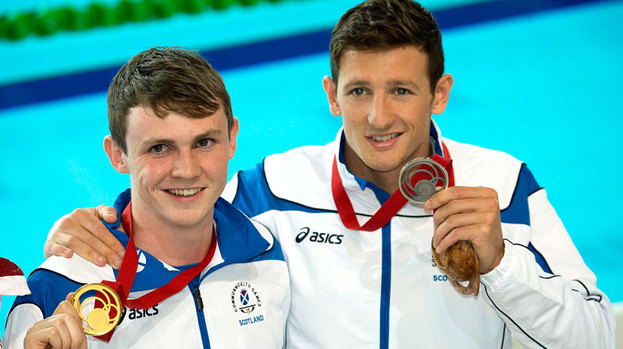
After his surprise success at London 2012, Michael Jamieson was the male face of the 2014 Commonwealths in Glasgow. He was hotly tipped to win gold in his favoured 200m breaststroke event and his form leading into the event suggested this was almost a formality. However, young 20 year-old Ross Murdoch had other ideas. He and Jamieson were paired together in the third heat and, whilst it was expected that the former would cruise through to the final, it came as a surprise to everyone when Murdoch and fellow Scot Calum Tait made the Olympic silver medallist extremely hard to earn his place, with the former setting a new Games Record in the process. As expected, Jamieson went up a few gears in the final and set himself what would have been a new Games Record. The word ‘would’ is crucial here though, as Murdoch himself went even faster and sent the crowd into a mixture of wild cheering and stunned silence.
There you have it, 7 of my favourite moments of 2014. The next post will be uploaded soon, so keep your eyes peeled!
few gears in the final and set what himself would have been a new Games Record. The word ‘would’ is crucial here though, as Murdoch himself went even faster and sent the crowd into a mixture of wild cheering and stunned silence.
No Quick Fix For This
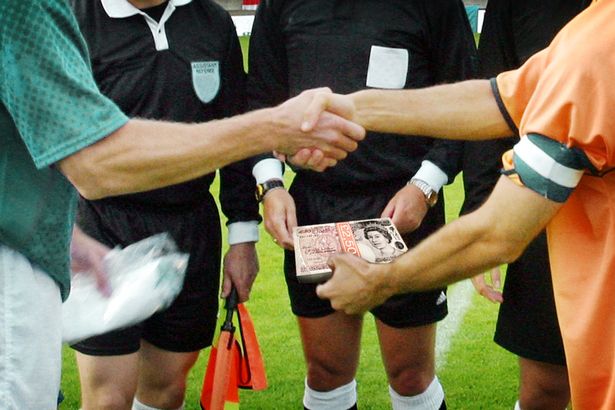
There are some issues in sport that never cease to disappear. The pattern they follow also does not change – a controversial action is followed followed by a whole host of opinions as to what should happen before nothing is done and the problem goes back underground. This time round, it is the turn of match fixing to rear its ugly head.
At the end of the 2010/11 season, Zaragoza needed to beat Levante in order to avoid relegation from La Liga, Spanish football’s highest league. They won the game 2-1, moving themselves up to 13th in the table and sending down Deportivo La Coruna to the second tier instead. On the face of it, nothing out of the ordinary occurred here. However, news broke today (16th December) that prosecutors have now alleged that Zaragoza paid their opponents €1million to lose the game. Not only that, but 10 people, including Manchester United’s Ander Herrera, have been accused of withdrawing tens of thousands of pounds in order to fund the deal.
Fixing sporting events and matches has long been a part of sport, with stories going back to the 17th century and even further. In those days, though, society was much different. There was a clear and distinct hierarchy, with games being thrown in order to appease those with power, especially if they were royalty, or at least had links to. However, in a world where ‘equality’ is a buzzword and sport does not have much influence on the running of day-to-day life, fixing in these terms no longer makes any sense. As a result, there is only one potential explanation that does – greed.
Monetary rewards are the most commonly thought of examples of greed, followed by success. In Zaragoza’s case though, if they did pay the opposition to lose the match then they were just greedy to maintain their status. Football is a game where some win and others lose, but it seems as though they thought they were above this. Either that or they were desperate not to be relegated, potentially for financial reasons. And if you were Levante, why not take the money? They themselves had only been promoted the season before and are not particularly rich so being offered even €1million could have helped balance the books.
With so many professional sports being run as businesses nowadays, it almost makes sense for team owners to be the ones fixing matches, although this does not make it acceptable. Those in charge of the bigger teams often have no real affiliation with either the club or the sport and just want to make a profit. If they cannot make that through the conventional methods, then fixing matches is a potential way of creating success and greater income. Take the 2006 Italian football scandal – in this case, five major teams were found guilty of selecting favourable referees who would be biased towards them and increase their chances of success. Two of these teams were Italian giants Juventus and AC Milan, both of whom were clearly motivated by greed for both more money and success.
Not all fixing, however, is initiated by team owners and club officials. Sometimes it is all down to the players themselves. They accept bribes and large payments, often from illegal bookmakers, sometimes to throw entire matches but, in a few cases, to fix certain elements. Take the Pakistani cricketers in 2010, who were paid around £150,000 to bowl just three no-balls in the final Test of the summer, although the performances of the team that summer suggest that they may have been paid more to throw matches.
What baffles me is that these are players at the very top of the game who already receive a salary most of us can only dream about. Of course, there are probably many more cases of fixing at lower levels that have not been reported about or even discovered, but what makes such well-known professionals want to risk their integrity and careers for a little extra money? Unfortunately this is something that has never been discovered – Hansie Cronje, the South African cricket captain found guilty of accepting bribes to throw matches, died in a helicopter crash just two years after being banned from the sport and many other convicted athletes rarely talk about why they did what they did. If match fixing is to be tackled, these individuals have to be questioned in order to prevent future occurrences.
Given its long history and the fact it still exists despite the huge changes sport has undergone, match fixing will be an issue for some considerable time at the very least. There will be periods where it is not heard of but, unless something major is done, it will hang around. After all, team owners, club officials and athletes are only human – wouldn’t you accept money to do something that may be a bit wrong morally and/or by law, but doesn’t affect life and death?
What makes the good ‘great’?

Wayne Rooney – England’s captain, the fourth highest goalscorer for his country and about to become only the ninth Englishman to reach a century of caps. Statistically, it can be said that Rooney is one of the finest footballers this nation has produced; he himself argues otherwise, as do a number of others.
Earlier this week, the Manchester United forward came out and said that he will only be able to rank himself alongside the likes of Sir Bobby Charlton – a ‘great’ – if he wins a major tournament. Whilst it is true that a number of the team that won England’s only silverware are still revered even now – Charlton, Sir Bobby Moore, Sir Geoff Hurst, Gordon Banks – there are members of the same side that only the most dedicated football fans or those who were alive at the time whose names are still recognised – it’s unlikely many of you will have heard of George Cohen and Ray Wilson before.
The way silverware is viewed is extremely subjective – it depends on the sport, the nature of the competition, the success of others in your nation and so on. For example, an Olympic bronze medal for a nation such as Afghanistan or Senegal results in a day of national celebration; if Great Britain win a bronze in a sport such as rowing, it is almost seen as a disappointment. As such, winning trophies and medals is not the be-all-and-end-all in becoming a legend.
Indeed, some of the finest players to have ever graced the sporting world have won few major tournaments. Neither Cristiano Ronaldo or Lionel Messi – currently the two best footballers in the world – have come close to winning a major accolade with their nations. Both have won multiple league and cup titles in Spain as well as the Champions League, regarded as the hardest club competition in World football, but the major tournament to win is the World Cup and both do not look like coming close to achieving this anytime soon. Sachin Tendulkar, seen as a God-like figure across India, only won a single World Cup in six attempts whilst rugby union’s Richie McCaw has only won the Webb Ellis Cup once despite leading arguably the best All Black team in rugby history. Yet, despite all this, these superstars will undoubtedly be remembered for years to come. One common theme between them all – they have incredible statistics.
Numbers are a great indicator of individual greatness – as the saying goes, stats do not lie. Messi currently holds 5 World and 9 European records and has scored over 400 career goals at the age of 27. Ronaldo is a two-time Ballon d’Or winner (2008 and 2013) and has scored 195 La Liga goals in just 175 appearances for Real Madrid. Neither of them have won the World Cup, but what they have done on the football pitch is unprecedented. Tendulkar is the only cricketer to have scored 100 centuries in international cricket, a feat unlikely to ever be repeated, and has scored more runs in both Test and One Day International cricket than anyone esle. McCaw, meanwhile, has captained the All Blacks 98 times in his 135 Tests; 88.65% of those games have ended in wins, with the forward scoring 25 tries in this period on top of that. Despite their relative lack of major silverware, the numbers prove just how special these athletes are.
You don’t have to break records, though, to still be viewed as a ‘great’; you can hold all the records in the world but you still have to perform when it matters. Cricketers Andrew Flintoff and Sir Ian Botham are great examples – neither player has particularly great career figures, but what they single-handedly did against the Australians on the biggest stage in cricket in 2005 and 1981 respectively means they will go down in English cricketing folklore. David Beckham is another great example – although a wonderful player in his own right , he automatically entered a very select band of footballers with that freekick against Greece to send England to the 2002 World Cup. As these athletes have proved, statistics count for nothing if you cannot perform on the biggest stage.
Combine all of these elements, though, and you have the ultimate sporting legends. Charlotte Edwards, Shelley-Ann Fraser-Pryce, Michael Phelps, Sir Steve Redgrave, Michael Schumacher, Serena Williams – all of them have picked up an incredible amount of silverware, their statistics are almost super-human and they always performed at their very best when it really mattered.
This is Rooney’s biggest downfall – he is highly unlikely to ever win a major tournament with England so that has to be discounted, but he does have a very impressive goalscoring record. The problem is that he has never produced his best form for his country; the only incidents that come straight to mind from his England career are his red cards in 2006 and 2011. I cannot even remember any of the 43 goals he has scored. If Rooney wants to really be classified as a ‘great’ then he has to start performing consistently at the highest level for his country. At the age of 29, though, he still has plenty of time to do this.
Injuries – they are trying to tell you something!
It’s something that any person who plays sport is guilty of; playing through the pain is the done thing. If you don’t, you’re seen as weak. Your team suffers, team-mates and fans hold it against you and, more often than not, you hate yourself for it. Unless the injury is serious you are expected, as an athlete, to continue regardless so you don’t let anyone down. What very few people are aware of, though, is the serious consequences that could come about as a result of this.
Every week there is always debate about whether a professional sports person will be fit enough in order to take to the field or arena. Some sports even have last minute fitness tests just hours before a game to decide if an athlete is ‘ready’ to participate. To me, this is absolutely ridiculous. If there is any question over a player’s fitness on the day of a game, it’s clearly a sign they aren’t ready. Even if they pass, it’s highly likely they will won’t last the entire duration of the game. What makes this even worse is that these tests are done by club doctors, who are under enormous pressure to make sure all the best players are available. This can either lead to a competitor hiding their pain during the test or the doctor passing them even if they are nowhere near ready.
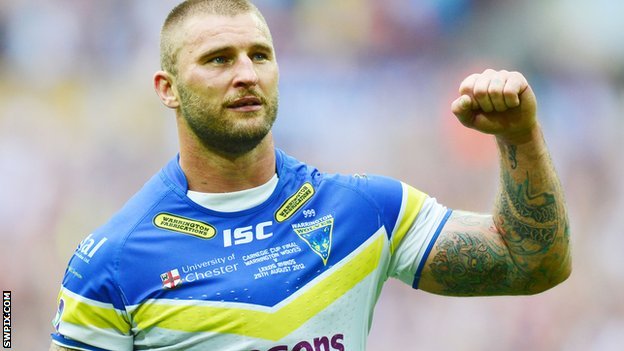
What riles me more, though, is the ‘heroic’ status often given to those players who play on through injury. Most definitions of heroism revolve around saving the lives of others, so how can athletes playing through pain be classified as heroes? The only thing they are saving is their status. Yes, they are showing loyalty and devotion and they should be admired for that, but that’s all it is. In the 2012 Rugby League Grand Final, Warrington Wolves’ Paul Wood received a seemingly innocuous knee in the groin area which caused him some discomfort but not enough for him to ask to come off. Less than 24 hours later, he only had one testicle remaining; the other had been ruptured and had to be surgically removed. The BBC, of all people, described him as a hero – he had no idea how serious the situation was, so how can he be given such accreditation? Yes, he should be commended for his dedication and exceptional pain tolerance, but he isn’t a hero.
Of course, it’s not always the athlete’s decision to continue. Professional sport has brought around a desire for success that outweighs anything else and the pressure on the players to participate no matter what is intense. It comes from chairmen, managers and coaches, fans and even national governing bodies. Olga Korbut, the four-time Olympic gold medallist in gymnastics, wrote in her autobiography about how she was forced by both her coach and the Soviet Sports Committee to compete despite the fact she could barely walk, just so the USSR could boost its status as a ‘superpower.’ Whilst quite a controversial statement, I’m sure there are many athletes out there even now who are forced to compete through injury just to please corportate officials in suits.
The only way to beat this is education – not only do people need to be taught from an early age the future risks of playing through the pain, they also need to learn how to stand up to those putting pressure on them in these situations and say ‘no.’ Whether this will ever happen I don’t know, but if it is implemented into the National Curriculum during my lifetime I will be a happy man.
It sounds as though I’m having slating at a lot of people here, but the reason I’m doing it is that I understand what it’s like to be an athlete – as well as the pressure from others, the thought of missing out on doing something you love is painful. I also, though, have experienced the problems that ignoring pain can cause.
When I was 11, I pulled something in my groin area whilst playing a game of cricket. Being young and naïve, I didn’t think much of it and played the next game a few days later despite not having fully recovered. Whilst batting in that game, I felt something go ‘ping’ exactly the same place but still continued. It was only three quarters of a year later that I was finally back to full fitness – after five months of X-rays, MRI and CT scans I was still in so much pain that I was limping. It was only when I was finally referred to a physio that I found out I had partially detached a tendon off my hip. The next four months compromised of quite intensive rehab, including having to re-learn to walk and run properly after hobbling around for so long.
Even now, nearly seven years on, there are still consequences. I still haven’t gained full mobility in my right hip, whilst my back muscles developed in abnormal ways due to not walking properly for so long. They often cause me a lot of pain and have also led to an extremely irritable sciatic nerve in my right leg which causes great discomfort at times. All because I didn’t miss a game or two of cricket to recover.
Although not life-threatening, the problems I have can be quite debilitative at times. Even now, I continue to do a lot of exercise despite all the pain they cause; the difference now, though, is that now I know when I should or shouldn’t do something. What I want, though, is for people to recognise when to stop before it’s too late. Athletes, whether professional or amateur, need to learn that playing through the pain barrier isn’t ‘heroic’; in most cases it’s just selfishness, ignorance, or a bit of both.
Although not life-threatening, the problems I have can be quite debilitative at times. Even now, I continue to do a lot of exercise despite all the pain they cause; the difference now, though, is that now I know when I should or shouldn’t do something. What I want, though, is for people to recognise when to stop before it’s too late. Athletes, whether professional or amateur, need to learn that playing through the pain barrier isn’t ‘heroic’; in most cases it’s just selfishness, ignorance, or a bit of both.
Have a Little Patience
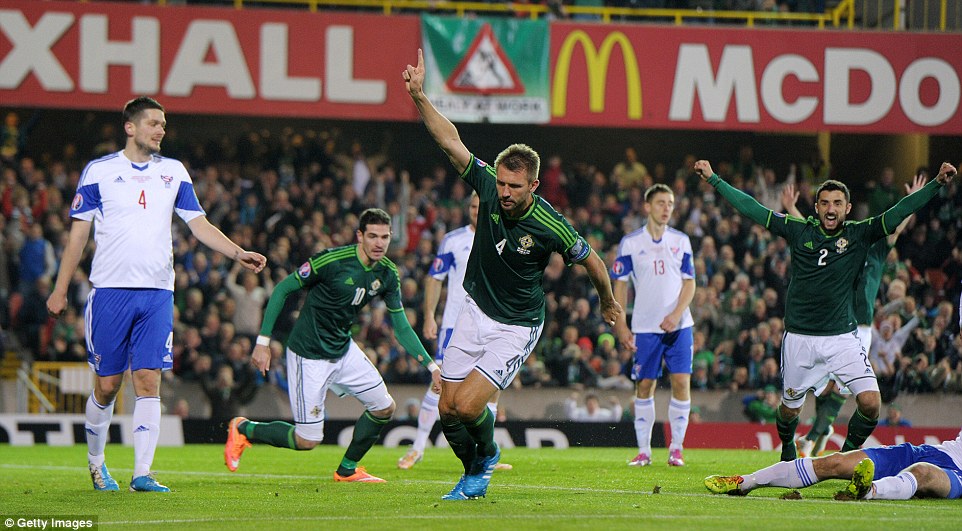
Professional football is a very fickle business if you’re a manager. One minute fans, players and chairmen alike see you as a God-like figure; the next, you’re a villain who should be banished from the world as quickly as possible. Nowadays, it seems as though even just losing one game can lead to the sack. Unless your name is Michael O’Neill.
It’s highly unlikely that the majority of you reading this will have heard that name before. Even I didn’t really know much about him, other than he manages the Northern Ireland football team, until the other day. The former Newcastle and Wigan midfielder was appointed manager of the national team in December 2011 in what some considered a surprise move after bigger names had been strongly linked with the job. However, O’Neill had been very successful at his previous side Shamrock Rovers, winning successive Irish league titles as well as leading the side out in the Champions League for the first time in the club’s history.
The Green and White Army, a shadow of the side that graced the World Cups of 1982 and 1986, needed someone who had experienced recent success and O’Neill was just the perfect fit. The partnership didn’t start well though. In his first 18 games in charge, the side recorded just a single victory alongside 7 draws. Their attempt to qualify for the 2014 World Cup was feeble at best, with the team losing to both Luxembourg and Azerbaijan. They finished second from bottom in their group with just 7 points, which was a worse performance than their attempt to qualify for the 2012 Euros in a tougher group.
It wasn’t all doom and gloom though. The team put up two exceptional performances against a much stronger Portugal, claimed a very credible draw away to Israel and even beat Russia 1-0 in front of 11,000 delighted fans at Windsor Park. Not only this, but David Healy’s 96th minute equaliser against Azerbaijan showed just how hard the team were prepared to battle for the manager. This was further confirmed in their extremely gutsy performances against Uruguay and Chile, making their World Cup-bound opposition work very hard for their victories.
Despite all that, the stats didn’t make good reading going into their opening Euro 2016 qualifier away at Hungary last month. They hadn’t scored in four games and had lost six of their last eight. On top of that, they won an away game for in 18 matches and hadn’t beaten their opponents, ranked over 60 places above them in the world, in five previous attempts. Some were saying O’Neill was lucky to still be in charge. Finally, though, his team converted their performances into a victory as they recorded a 2-1 win thanks to late goals from Niall McGinn and Kyle Lafferty. They followed this up with a solid 2-0 win at home over the Faroe Islands on 11th October and then, three days later, pulled off a fantastic 3-0 away win against a Greece side who had only been knocked out of the World Cup on penalties just a few months earlier. Northern Ireland now top their group, something even the most optimistic fans couldn’t have imagined.
Before the three wins, O’Neill had only won 8% of his games in charge of Northern Ireland. In football nowadays, this is unheard of. If a manager’s win ratio is less than 50% they face being out of a job. Roberto di Matteo, who guided Chelsea to their first Champions League title in May 2012, lasted just five more months before being sacked. Even more recently, Scunthorpe United sacked their manager Russ Wilcox after winning just two of their eleven games in League 1 this season despite getting the team promoted last year, included an run of 28 games unbeaten at the start of his tenure. Unbelievably, most fans weren’t even disappointed to see him leave.
It’s no secret that loyalty is no longer a value in football. Cases of a player staying with a club for the entirety of their careers, or even more than five years, are now extremely rare and the managerial conveyor belt is getting shorter and shorter – most of them do well to stay in charge for a season and a half! Rather than being in the ownership of the fans, teams are now just businesses in a cut-throat society where malfunctioning parts can easily be replaced. Many fans themselves have been drawn into this and are very quick to turn on managers at the slightest sign of trouble. They have forgotten that football is only a game and that, whilst upsetting, losses are part-and-parcel of it.
On the basis of this, it’s amazing that O’Neill is still in charge. However, there are two reasons as to why he may not have been sacked: 1) he is manager of a national side run by a national governing body and not a greedy businessman and 2) his side aren’t expected to qualify for major tournaments. If he was in charge of an England or a Germany, O’Neill wouldn’t have lasted five games, let alone eighteen. However, Northern Ireland are a lowly-ranked side who often just make up the numbers during qualification and, as such, there isn’t as much pressure to get results. All the Irish FA realistically want to do at the moment is to develop players for the future and give tougher opposition a good fight – O’Neill proved he could do this and this must have been a key reason as to why he was kept as manager.
Will Northern Ireland qualify for Euro 2016? As much as I’d love to say yes, they still have to play Romania, Finland (both twice), Hungary and Greece – all of these sides are above them in the world rankings and will be desperate to qualify. It’s not beyond their reach though; if they can keep their momentum going then there’s absolutely no reason why they can’t qualify. As for O’Neill, he can be an example to both managers and owners across football – if you have just a little bit of patience and faith, anything can happen.
Change WILL be a good thing

For those of you who like to go to bed early, you would have woken up to the big news gripping the Formula 1 world at the moment. And, for once, it doesn’t concern the battle between Mercedes team-mates Lewis Hamilton and Nico Rosberg. It isn’t even relevant to the current Japanese Grand Prix or even the 2014 Championship. However, it is still highly exciting – Sebastian Vettel is to leave Red Bull Racing after 15 years.
Although not officially confirmed, it is pretty much certain that Vettel will be joining Ferrari next season. Having been linked with the team for a couple of years, they are the only viable outfit available. McLaren may match the prancing horse in terms of history, but Vettel has openly expressed his desire previously to race in the red car. What’s more, with the team really struggling to even make the podium they will undoubtedly be extremely keen to get the four-time World Champion on board. That said, they already have two former winners already on their books in Fernando Alonso and Kimi Raikkonen. Many will also argue these are two of the best drivers on the grid and I will go as far as saying Alonso is one of the best of all time. However, it is he who is the odds-on favourite to be leaving.
When Alonso joined the team in 2010, the dream partnership was finally formed. Although he isn’t Italian, the Tifosi have always taken a shine to the Spaniard and he made no secret of how much he wanted to drive for Ferrari. As a result, expectations were high, but the promise of a World Championship has never materialised. His greatest opportunity was in his first season, where Vitaly Petrov to famously denied Alonso the title by holding him up for well over half the race. Since then, the performance of the car has gone dramatically downhill, although he has claimed 6 wins and 28 other podium finishes, finishing second to Vettel in both the 2012 and 2013 Championships. All of this, though, was attained in cars that were distinctly average. If you compare his results to that of team-mate Felipe Massa, how he achieved what he did is beyond belief. 2014, though, has been the worst season. A combination of Mercedes dominance, Williams resurgence and an awful car has seen Ferrari really struggle to get out of the midfield, Alonso only picking up 2 podiums and new team-mate Raikkonen claiming a measly 45 points.
For a team with such history, performances like this just aren’t good enough. We have already seen the resignation of team boss Stefano Dominecali earlier this season and it was around that time rumours surfaced suggesting Alonso was on his way back to McLaren. At first this seemed a little ridiculous, bearing in mind how bitter the relationship became during his ill-fated season with the team in 2007, but as the season has gone it has still lingered, as if tempting the Spaniard. He seemed to be keeping strong though, even just two days ago (2nd October) insisting he wasn’t going to leave. He isn’t saying the same now. He was very coy in his BBC interview earlier though, confirming nothing except his surprise at Vettel’s decision. He was very uptight though and his answers were unusually short; not the behaviour of a man staying at the team.
It will be interesting to see, if Alonso does go to McLaren, what happens. As well as overcoming his own personal problems, he has to turn the team around and make them competitive again, hopefully alongside Jenson Button. Although many will disagree, I think this is exactly what is needed – two experienced race winners to develop a car that will be near the front of the grid. Neither have won a race for some considerable time but they have similar styles and it’s likely that they will agree with what direction the team needs to go in, something they wouldn’t necessarily have got from rookie Kevin Magnussen or the relatively inexperienced Sergio Perez.
It’s the same at Ferrari. Although he hasn’t won a race under the new regulations, it is no coincidence that Vettel won four titles in a row. Not only does he have some superb talent, he also knows how to set up a car to be the quickest of all. If he gets his way and the team to design a car to suit him, there is a strong chance that Ferrari will also be in the hunt for race wins next season. I also think Vettel coming in will really help Raikkonen. The two are really close, yet competitive, friends and if anything will wake the Finn up then this is it.
As for Red Bull, they have kept faith with their development programme and promoted Toro Rosso driver Daniil Kvyat to race alongside Daniel Ricciardo. The young Russian has really impressed this season, especially over a single lap, and has maturity that goes far beyond his age. Spare a thought for his team-mate Jean-Eric Vergne though. After losing the battle with former Toro Rosso driver Ricciardo to replace Mark Webber this season, he has already been told he won’t be retained for next season and has again missed out on being moved up to the outgoing champions. I think it’s very harsh on the Frenchman – he’s outscored Kvyat this season and always gave Ricciardo a very good race, yet is just being thrown on the rubbish heap because of his age. I really hope he finds a drive for 2015 as he is very talented and much quicker than many give him credit for.
Normally I hate to look towards the next season when there is still one going on, but in this case I’ll make an exception. If all goes to plan, then it’s highly conceivable that McLaren and Ferrari will be able to challenge Red Bull and Mercedes for race wins next year. And if Williams continue their rapid rejuvenation we could well be seeing five teams battling it out for the both titles next year. My mouth is already watering at the prospect.
Vote For the Future
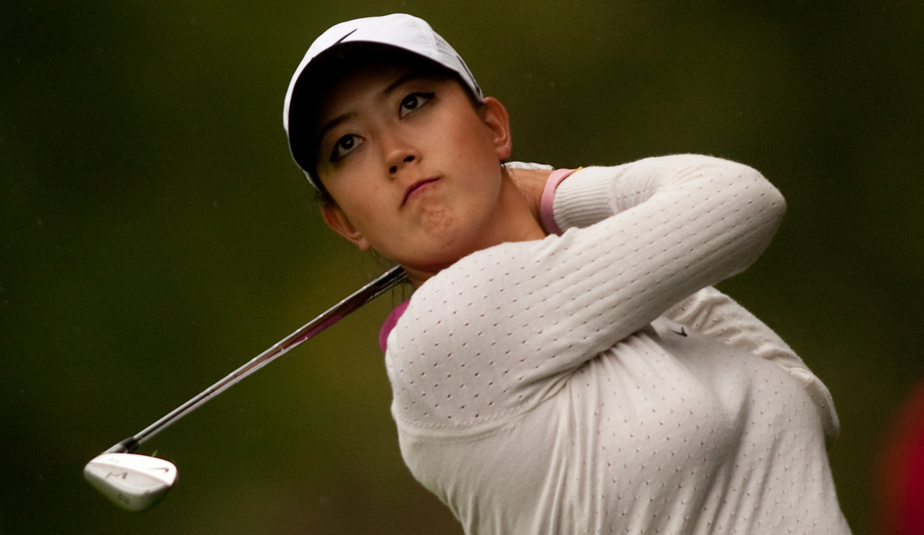
How many of you can name the golfer in the above picture off the top of your head? If as many of 5 of you can then I’ll be extremely impressed. That is Michelle Wie, arguably the most famous female golfer in the world at the current moment in time. Does her name now ring any bells? For the majority of you, I imagine not – and I wouldn’t blame you for not knowing.
In Britain, we live in a society where females are finally being recognised as equal to men, but our sport is seemingly still a long way behind. Only now has one of the most famous golf clubs in the world – the Royal and Ancient Golf Club of St. Andrews – had a vote to see whether women should be allowed to become members. Women have been given the right to vote for who runs the country, acts have been signed to make sure they get equal pay in the workplace and yet they weren’t allowed to set foot in a golf club? It’s absolutely obscene and yet it took a boycott from Alex Salmond (how appropriate) when the Open Championship was held there in 2013 to even make the situation known to the wider world. It’s not even as if golf members really do anything visit and play at the club, so why on earth hasn’t anyone questioned why women weren’t allowed to join until now?
If the vote is passed and women are allowed to become members, there could be a major revolution in sport. However, the key word there is could. In terms of gender equality, golf a long way behind many other sports so if women can get equal status here then others will believe they can also bring about change. But will allowing females to just become members of a golf club really be enough to create significant change? With the way this vote has been covered, I fear it won’t be.
To be fair to the BBC, they have covered this story well on their website since it was announced that there was going to be a vote in March of this year. Both The Independent and The Guardian have also provided good online coverage of the vote across the last couple of days but that’s about it from the major news sources. Any other mentions are generally linked to the current referendum, although this result will actually be announced tonight. The lack of coverage shows, though, just how far women have to go in order to be seen as equals in sport. Even as I listen to the radio now, the discussion is about Cardiff City manager Ole Gunnar Solskjaer’s resignation as Cardiff City FC’s manager – the vote hasn’t been mentioned once all morning. There was a brief 10 minute debate about the vote, but that’s it. This could be a historic moment for women, yet the focus is on something so much more trivial (sorry Cardiff fans!).
The only way, though, that sportswomen can get the media discussing them is through the media that so often ignores them. One of the reasons for this is the general public perception that women are more boring to watch, something I personally disagree with. Yes, men may be naturally a bit quicker and more powerful and this may make spectacles more interesting, but I’ve often found that women are actually much more skillful and intelligent as a result. In fact, many of our women are much more successful than the men. The cricketers enjoyed a double Ashes win last year, the footballers qualified for next year’s World Cup in style – winning all 10 games, scoring 52 goals and conceding just 1 – and the rugby union players won the World Cup just a few weeks ago. All this and I haven’t even mentioned individual stars such as Jess Ennis and Nicola Adams. Yet are any of these teams easily available to watch. As far as I’m aware, no.
This is an absolute scandal in my point of view, but the truth is that people don’t want to watch them. Whilst you’ve got to accept that some people will never think it’s right for women to play sport, we live in such a liberal society now that I’m sure the majority will be instantly interested in women’s sport if they were given the opportunity to watch. The only way of doing this, though, is to increase the accessibility of women’s sport – teams need to keep encouraging people to watch them with ideas such as discounts for family tickets, whilst the big news companies need to increase their coverage. It’s even worse that American sports such as baseball and American Football now attract a fair amount of coverage over here – I don’t care about them, I would rather watch women from our Home Nations participating in proper sports!
If tonight’s vote goes as planned and women can become members of St. Andrews, will it lead to immediate changes? Probably not, but what I hope is that it will have a domino affect. If women can get higher up the ladder in such a male-dominated sport as golf, then hopefully others in less patriarchal events will take confidence and fight for even more equality, leading to the potential of equal media coverage in the future. There’s still a long way to go, but let’s hope this vote is the start of something big.
It’s Gonna Be E-lectric

Sir Richard Branson, Leonardo DiCaprio and Alain Prost walk into a bar… Sounds like the beginning of a terrible joke or a very, very strange dream. However, it could easily become a reality, all thanks to Formula E. Let’s just hope the newest version of motorsport doesn’t end up as the punchline.
For those of you who don’t already know, Formula E is essentially the same as F1 except that the cars are run entirely by electric batteries. It is the brainchild of current FIA President Jean Todt and has developed at an extraordinary rate – just 3 years ago it was a fantasy, now it’s ready to launch. There are still a number of teething problems though, the main one being that the batteries in each car will only last half the race distance! You’d think that this would have been the first thing those in power thought of but clearly not… Credit to Williams F1 though, as they only had a year to design and build the batteries, but you would have thought they would have designed the races around the battery life and not vice versa… Still, it will create a unique form of excitement as each driver has just minute to enter the pits, jump from one car into another and get back out on the track when the battery gets low.
It’s here though that the major problems seem to end (unless you hate the idea of noiseless engines). Formula E is seen as a wonderful idea by many environmental campaigners, none more famous than DiCaprio himself. Indeed, he’s so excited by the prospect that he has become the co-founder of the Venturi team. F1 is used to the glitz and glamour of Hollywood stars, but none have ever owned a team as far as I’m aware. The presence of such a famous face is bound to attract a lot of sponsors, making the Venturi team and Formula E much more marketable and much more likely to succeed in a sporting world run by money. His presence is also likely to attract a lot of his fans so they can see what all the fuss is about, which is a brilliant way of generating motor racing to a wider audience. This will also be helped with the presence of Team China and Mahindra Racing, an Indian-run team. Formula E has done really well to acquire these two teams in order to attract new fans from two of the largest nations in the world and increase interest in a sport which is losing many European fans. Branson is also bringing back his Virgin Racing franchise and his presence will also undoubtedly attract a lot of financial interest.
As well as there being plenty to attract new fans, there is also a hell of a lot for racing purists to get excited about. Both the well-renowned Audi ABT and Dragon Racing franchises have set up teams in the championship – which will attract audiences from DTM and IndyCar respectively – whilst Aguri Suzuki, Mario Andretti, Jarno Trulli and Alain Prost bring a wealth of experience from Formula 1. There are also a host of famous names who will be racing too – for those of a certain generation, hearing the names Prost, Senna, Sarrazin and Piquet lining up on the same grid will stir memories of great battles at a time when F1 was arguably at its best. Whilst the current crop may not be as good as their predecessors, they are still an extremely strong bunch who should make the racing absolutely fascinating.
Overall, the line-up contains 12 drivers who have raced in F1 and another handful who have tested with various teams. These aren’t just drivers selected at random; they are some of the finest drivers around. Some are bringing their vast experience to get this format up and running – Nick Heidfeld, Takuma Sato and Trulli, driving for his own team, have raced in around 600 Grand Prix between them – but many of the drivers will view this new format as another platform on which to establish their credentials and get to the very top. Jaime Alguersuari, Sébastien Buemi, Bruno Senna and Nelson Piquet Jr. can class themselves unlucky to not still be in F1 and will be fighting hard to attract attention, whilst youngsters Antonio Felix da Costa and Daniel Abt will want to burst onto the scene.
More importantly for me, however, is the fact that there will be two women on the grid in Beijing. In a sport that for so long has been dominated by men, it finally seems as though women are starting to break onto the scene. In the US, Danica Patrick has performed strongly in both NASCAR and IndyCar, but that’s about it. The British and German F1 GPs this year also saw Susie Wolff test the Williams in first practice and, although she was hugely unlucky to have an engine problem at her home event, she did a solid job in the latter and was only a small fraction behind Felipe Massa. However, these two are the only females to have had any real chance since the 1990s. Wolff’s fellow Brit Katherine Legge will be one of the women on the grid for Amlin Aguri, whilst Michela Cerruti will be driving alongside compatriot Trulli. Both women will see this as the perfect opportunity to kick-start their careers, although Cerruti has had a superb season in the Auto GP series, and the fact that Formula E is free to view (all the races are live on ITV4) will hopefully attract many young women and get them wanting to race.
As well as being a feeder system, Formula E will most likely serve as a technological guinea pig for F1 too. The introduction of the hybrid system and ERS into F1 this year shows that the sport is already moving into the electrical market and it is more than probable that it will incorporate ideas from this format before long. Although this season all cars will be the same, as of next year each team can come up with its own design and it will be this that F1 designers and engineers will be very interested in – what is the best way to run an electrical car? Don’t be surprised if, before too long, F1 becomes entirely electric as a result of this series.
It’s going to be different, it’s going to be a bit whacky, but all the signs suggest that Formula E is going to be brilliant. Let’s just hope it doesn’t go the way of A1GP and Formula 2, both of which were great ideas but weren’t managed very well. Somehow, with DiCaprio investing a lot of money, I don’t think that’s going to happen…
The Start of Something Special

British athletics hasn’t had much success for a long time – indeed, there have been very few medal-winning athletes since the likes of Ovett, Wells, Coe and Thompson way back in the ‘70s and ‘80s. That’s not saying that there haven’t been some outstanding athletes since – Dame Kelly Holmes, Sally Gunnell etc. – but they have been few and far between. That is, until now.
Two years ago the signs were there that the situation was starting to improve – after a relatively strong performance at the 2012 European Athletics Championships (four golds, two silvers and a bronze), Britain almost matched this haul in London. Mo Farah (twice), Greg Rutherford and Jess Ennis all won Olympic gold (within 45 minutes of each other) whilst Christine Ohuruogu battled hard for 400m silver and Robbie Grabarz picked up an unexpected bronze in the high jump. Indeed, this was Britain’s most successful track and field performance at a Games since 1964. However, there were many more competitors who didn’t perform anywhere near their best. On the track, no male sprinter reached any finals whilst the men’s 4x100m relay team was disqualified in the heats. Team captain Dai Greene could only manage fourth in the 400m hurdles final despite being one of the favourites, whilst his female counterpart Perri Shakes-Drayton massively underperformed in the semis after such a promising heat. Things weren’t much better in the field, with Phillips Idowu looking completely uninterested and Holly Bleasdale crumbling under the pressure in the pole vault final. Whilst many other sports enjoyed a huge rise in fortunes in London, athletics looked to have been left behind and the team actually failed to achieve their target of 8 medals.
This then led to the departure of the highly controversial Charles van Commenee as the Performance Director of UK Athletics (UKA). He was replaced by former coach Neil Black who has over 20 years of experience working alongside athletes such as Gunnell and Linford Christie. He only had a year or so before the World Athletics Championships in 2013, meaning that it wasn’t expected that there would be any increase in success at the tournament. However, although the team only picked up three golds and three bronzes, the event was hugely encouraging.
Mo Farah again won the 5 and 10k double, Ohuruogu added her another World gold to her vast collection and both the women’s 4x100m and 4x400m relay teams won bronze, a superb achievement for the former as they couldn’t even get a squad together for London. Tiffany Porter also more than made up for her disappointing performance at London with a superb bronze in the 100m hurdles but it was outside of the medals where a lot of the best performances were seen from athletes few had heard of before. James Dasaolu ran the 100m in 9.97 seconds during his semi-final, only 0.06 seconds off his personal best set earlier in the year, whilst Adam Gemili announced himself as a serious prospect for the future in the 200m. Andrew Osagie was a very good fifth in an exceptionally strong 800m final, whilst Will Sharman burst onto the scene with fifth in the 100m hurdles. Both the men’s 4x400m team and Hannah England (1500m) were one place outside of the medals whilst Eilidh Child surprised a lot of people with a strong fifth position in the 400m hurdles. Finally, in the absence of the injured Ennis, Katarina Johnson-Thompson secured a personal best points score in the heptathlon but could only manage fifth.
However, despite the strong performances of the promising young athletes at the tournament, there was one key theme amongst them all – none of them were quite good enough for a medal. Whilst getting through to a major final is all well and good, at the end of the day if you don’t win a medal very few people will ever remember that you even took part. Black must have noticed this too and worked hard on it as, just one year on, a lot of the aforementioned athletes went from gone from being just outside a medal to being in with a chance of gold.
At the Commonwealth Games in July, Britain picked up a combined total of 6 golds, 17 silvers and 11 bronzes. Whilst some events, particularly the field ones, weren’t particularly strong, many of the track events featured a number of world class athletes. Notably impressive performances were silvers for Gemili and the 4x100m relay squad against some very strong Jamaicans, whilst the women’s 4x100m team picked up a wonderful bronze behind insanely strong Jamaican and Nigerian line-ups. Jodie and Bianca Williams were only outdone by the class of Blessing Okagbare in the 200m, whilst Scotland’s Lyndsey Sharp (800m) and Child (400m hurdles) were more than deserving of their silvers against very strong opposition. Sharman (110m hurdles) also picked up silver but will have been disappointed as gold was there for the taking.
Going into the European Championships two weeks later, confidence was pretty high. However, even the most optimistic of fans wouldn’t have predicted what was to come. The British team secured 23 medals, a record haul, with 12 of them gold, also a record. Alone this is a remarkable achievement, but given that many athletes were nowhere near their best (i.e Sophie Hitchon in the hammer, Goldie Sayers in the javelin and Steve Lewis in the pole vault) and some of the stars (i.e Jess Ennis and Johnson-Thompson, arguably the two best heptathletes in the world) weren’t in Zurich, it shows just how strong the whole squad is now.
There was also a number of further examples of Black telling his athletes not to settle for ‘minor’ medals or just being in a final as a number of athletes recorded personal bests and won medals could only have dreamed of a few years ago. Gemili added to his Commmonwealth silver by convertuing his 5th place in the 200m from the 2013 World Champs to European gold whilst Child added European gold to her Commonwealth silver. Martyn Rooney overcame a shocking 400m in Glasgow to win gold and Jo Pavey, at the age of 40, overhauled much younger opposition to win the 10,000m title, something she had only just missed out on at the same event two years earlier. Farah yet again won both the 5,000m and 10,000m titles whilst Porter, Dasaolu and Rutherford all won golds alongside the both male relay teams.
As a result Britain topped the medal table, something they hadn’t achieved since 1998. Although GB often perform strongly at the Europeans, they never really translate this into worldwide success. However, this time I think things will be different. Black has done a wonderful job so far but we won’t be sure just how good Britain is until the World Championships next summer. What is certain, though, is that athletics in this country is the strongest it’s been for a long time.
 The 52 Blog