Change is necessary, but what needs to be done?

October 5th 2014 – a date no fan of Formula One or motor sport in general will easily forget. This was the day when the sport lost one of its own. Although he may have only died this month, this was the last time the world saw Marussia’s Jules Bianchi, in his prime, doing the thing he loved the most – racing cars. His death may now be a rarity in a sport with a long history of fatal accidents, could more still be done to prevent similar accidents from happening again?
As a big F1 fan, I don’t like to miss a race. If I can’t watch it live then I record it and catch-up as soon as possible whilst making sure I don’t find out the result in the meantime. I always used to say to friends and family ‘unless there is a serious injury or death, under no circumstances tell me the result.’ Having been born into an era where it is taken for granted just how safe the drivers are, this was always said partly in jest; I never expected it to come true. Even watching the race that day, which was taking place under abysmal conditions, it never crossed my mind that someone may die. Therefore, when the news came through that Bianchi was seriously hurt, I was shocked as it was a completely new experience for me. However, for the seasoned followers it was an unfortunate reprise of the older, darker days of F1.
Over the last few years Formula One has seen some horrifying crashes, such as those of Robert Kubica during the 2007 Canadian GP and Mark Webber at Valencia three years later. These high-speed, car mangling crashes left the majority wondering how both drivers managed to escape without serious injury. This pays testament to the incredible work that has been done over the last twenty years regarding the safety of the drivers. Nearly everything that can be made safer has been. Crash barriers are now designed to absorb all the energy generated from a high speed impact, the cars cocoon the drivers within them like a ‘joey’ in its mother’s pouch and the tracks are designed with huge run-off areas to minimise the chances of a car-on-wall impact. However, as Bianchi’s incident proves, the battle to provide complete safety is never complete.
One of the inherent dangers of open-cockpit racing is that the head – one of the most vital yet fragile elements of the body – is exposed. There have been many measures put in place to provide as much protection as possible, such as neck supports and roll cages, but the fact is that the head is still vulnerable to being hit by objects. Bianchi died of injuries sustained when he careered head-first into a recovery vehicle which was removing the stricken Sauber of Adrian Sutil and, unfortunately, he isn’t the only driver to have recently died because of a blow to the head. In 2012, Marussia test driver Maria de Villota crashed into a team truck during a straight-line test. Although she initially survived, she a cardiac arrest a year later which doctors believe was caused by neurological problems she had as a result of the severe head and facial injuries she suffered. Henry Surtees, son of former F1 champion John, died in 2009 after being hit on the head by a stray wheel, whilst Felipe Massa was lucky to survive after being hit on the head by a spring from Rubens Barrichello’s car at the 2009 Hungarian GP.
Naturally, Bianchi’s accident and subsequent death has lead to the re-emergance of calls to ban open-cockpit racing and ensure each driver is fully protected. Whilst an obvious move, I and many others don’t agree with this. It’s part of the sport and creates an element of risk which makes F1 so addictive to both the drivers and spectators. As David Coulthard said earlier this week, if you take that away then you kill the sport for good. If anything Formula One is now too safe – accidents are a rarity – and this is one of the reasons many fans have become disinterested. There is something exhilarating about seeing cars crashing, as long as the driver is unharmed, and the less frequent this is the more people don’t watch.
Instead, the focus should be on completely minimising the risk of a driver hitting their head, something which the FIA have already done by introducing the Virtual Safety Car. This forces drivers to lap at a certain speed whilst an accident is being cleaned up instead of them rushing round to catch up with the rest of the pack. This was what Bianchi was trying to do and led to him hitting some standing water at high speed, causing him to aquaplane uncontrollably off the track. There should also be new regulations concerning the recovery of cars that have retired. It’s all well and good trying to do the job as quickly as possible but the fact is the marshals and recovery truck should not have been in that position whilst the cars were still lapping at high speeds. It is pure luck that no-one else was killed or seriously hurt.
However, what shouldn’t be forgotten is that a human being has lost their life. Bianchi was a fine racer and destined to win races, if not championships, at the highest level for years to come. Let’s hope that his legacy can now be used to make sure nothing like this ever happens again. RIP Jules Bianchi.
Wimbledon 2015 Review
So there it is; after two weeks of racquet smashing, cross-court winners and ridiculous grunting, Wimbledon 2015 is over. Time for the British spectators to put their tennis clobber back in the loft and return to return to the sport(s) they follow for the other fifty weeks of the year. On paper it was a tournament lacking in surprises as the No.1 seeds won three of the five senior competitions. Look further into it, though, and you will see that there was far more to it than that.
Fans of any sport love an upset and there were plenty of those right from the very start, especially in the women’s event. Both Simona Halep, ranked third in the world, and ninth seed Carla Suarez Navarro were defeated in the first round, as was 2014 runner-up Eugenie Bouchard. Defending champion Petra Kvitova could only make it as far as round three. However, the biggest surprise has to be Rafael Nadal’s defeat to the unknown Dustin Brown in round two. The only Rastafarian player on the tour was in scintillating form as he battered Nadal into oblivion amongst a frenzy of flying dreadlocks and chest thumping. There were outrageous drop shots, unbelievable winners and smiles aplenty as the Jamaican-turned-German citizen epitomsed the adjective ‘cool’ in the scintillating heat.
Whilst Brown may have captured the affections of those at SW19, Australia’s Nick Kyrgios certainly got them talking. After announcing himself to the world last year with a spectacular run to the quarter-finals as a wildcard entrant, more of the same was expected this time round. However, although his tennis was largely up to standard, it was his antics both on and off the court that caught the attention. Fines for swearing, arguments with umpires and even accusations of not trying in a game against Richard Gasquet overshadowed what should have been seen as another impressive performance. At one point he even turned on his own fans – the Aussie ‘Fanatics,’ who bought a sense of fun to an often mundane crowd – and generally behaved like a stroppy teenager in press conferences. Whilst we often implore for more characters in professional sport, there are many who would rather Kyrgios kept his mouth shut and got on with the game.
As for the respective singles champions, their tournaments were much less eventful. Novak Djokovic, accused of cheating in the run-up to the event, barely looked troubled as he eased his way to a third Wimbledon crown. Even in the final, where he was up against a rejuvenated Roger Federer, you got the sense that the Serb never really needed to play at full capacity in order to win. The only time he was properly challenged was when he lost the first two sets against South African Kevin Anderson in the fourth round, yet the general consensus was still that the 11-time Grand Slam winner would still be the victor and, despite rain and bad light forcing the game to be played over two days, he did just that.
Serena Williams’ path to a sixth Wimbledon title could have been quite tricky due to a tough draw that included matches against her sister Venus, two-time Australian Open champion Victoria Azarenka and 2004 winner Maria Sharapova. However she bulldozed past all these opponents, with the only player to really test her being Britain’s Heather Watson in the third round. The 23 year-old, who had only ever made it so far at her home event once before, was in inspired form as she took arguably the greatest female player ever all the way, even leading 3-0 in the final set. Her courage and sheer determination gripped the hearts of a nation and, if few had heard of her before, they certainly have now.
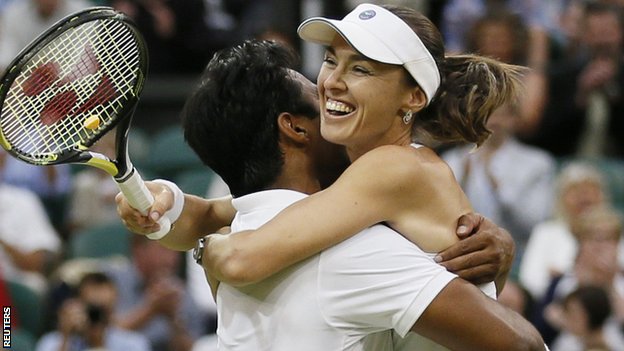
That game was just one of many special moments witnessed across the fortnight. Fellow Brit and wildcard Liam Broady showcased his potential with a gutsy 5-set win over Marko Matosevic, a performance which got the crowd on Court 18 so loud they could be heard from the other side of the grounds, whilst James Ward came agonisingly close to reaching the fourth round before bowing out to Canadian Vasek Pospisil in another 5-set classic. There was also the return of Laura Robson after a lengthy injury lay-off and, as previously mentioned, the performance of Dustin Brown. However, the most heart-warming moment has to be the successes of 34 year-old Martina Hingis. The former world number 1 is a Wimbledon favourite, having won the 1997 event at the age of 16, and the sight of her beaming smile collecting the women’s and mixed doubles titles was verging on magical.
As for the sport on the whole, things look good for the future. Although both Djokovic and Williams still continue dominate, there are a whole host of other players ready and waiting should they slip up. On the men’s side, Federer and Andy Murray barely put a foot wrong all tournament, whilst both Marin Cilic and Stan Wawrinka have won Slams in the last couple of years. Things are even more open on the women’s side, with Sharapova, Halep, Bouchard, Ana Ivanovic, Caroline Wozniacki and now the hugely impressive Garbine Muguruza being among just a handful of the names knocking on Serena’s door. Whilst critics may argue it’s currently boring and predictable, the future of tennis looks to be an exciting one.
Why I’m proud to call myself a ‘Diva’

I thought I’d switch things up a bit this week. Normally I like to write from a third person perspective, offering one viewpoint on whatever takes my fancy in the sporting world. Look through some of my recent stuff and count how many times the word ‘I’ is used. I’m pretty certain the number won’t be high, whereas here it’s already been used three times in the space of half a paragraph. This is because I don’t like to self-indulge; I would much rather talk about other people, things, anything rather than me. And not just when I’m writing, in general life. However, recent events have taught me that I probably should care more about myself; I should take myself seriously. This post is, I guess, me making a start on doing that. The problem is, it’s bloody difficult when you’re not used to it!
As I sit here writing this, I’ve already had to stop typing with my (preferred) left hand because it’s too painful. I have a line of pain running from my little finger right up through my forearm to my elbow; I can’t turn my neck without it hurting; the entire left side of my back is causing me great discomfort. On top of this, I’m currently going through self-managed rehab as a result of suffering a serious foot injury 13 weeks ago. Yet I still insist there’s nothing really wrong with me, that I don’t deserve the sympathy of others, because what I’ve got is nothing in comparison to most. And, to me, it’s not. I’ve been in pain every day since I was about 11 years old. This is nothing new to me and, as long as I can still do things, then I will. I don’t even think of the potential consequences.
It was this attitude that meant I risked permanent disability not so long ago. Just three days after tearing most of the ligaments in my foot, I did four cheerleading routines in one day. A week after that I did a national competition whilst barely being able to walk. Stupid isn’t it? I knew as soon as I did it that it was a serious injury – I’d never been in such pain and the audible sound of tearing tissue was, let’s say, not pleasant. Yet I still insisted on walking home (which was over a mile away) with my cricket bag, training the next day and doing the aforementioned competitions. It wasn’t until I saw a physio seven weeks later that I realised the potential severity of my actions. I was told that if I’d rolled my foot again the ligaments may never have healed properly and I wouldn’t be able to walk properly again.
How I did what I did is beyond me; I was in absolute agony. Actually that’s complete rubbish, I know the exact reason why I carried on – I was not going to let my squads down. When I first took up cheerleading, I wrote an article expressing how great I thought it was. However, even then I never envisaged how much a part of my life it would become. I have never enjoyed anything so much and a large part of that has to be down to the people. I’ve been doing team sports since the age of four but have always felt like an outsider, never part of the group. That’s largely of my own doing, I know that. However, when I first joined the Durham Divas Junior Varsity team this year I was immediately welcomed and made to feel like part of the team. This was one of the weirdest experiences of my life – people actually wanted to talk to and get to know me! Normally it takes me a long time to make friends, but within a handful of sessions I felt like I knew nearly everyone on the squad.
This is not to say I don’t have some great friends in other walks of life, but there is something about doing a sport with so much potential danger that does bring people together in a unique way. Right from the very start everyone was great to me and that is why I ignored the pain and risked everything to compete in those competitions; I wanted to repay everyone for how good they had been to me. It wasn’t a selfish act, it wasn’t me being stubborn and refusing to let all the hard work ‘go to waste,’ and it certainly wasn’t for an ego boost. I just didn’t want to let anyone down.
Last night, at the annual end-of-year meal, I was handed an award. This isn’t something especially new as I have been fortunate enough to win a few cricketing trophies over the years. But this award was different; it was given to me by my peers, not a coach. On top of this, I was nominated in some of the awards we as a squad voted for. Whilst I may not have won any of these, the fact that I was even thought about is incredulous for me. I’m the guy normally left as an afterthought, one of the last to be picked in PE and stuff like that.
When given my award, I was embarrassed. I was delighted to win it of course, but I’m not used to praise; I genuinely find it really difficult to deal with. I am much happier acknowledging the hard work of others. I was also very embarrassed when thanked for helping out with the all-girl Varsity squad. I felt like I had no need to be thanked, I was just helping out in a time of need and I was honoured to even be asked. The fact that my fellow cheerleaders have thought about me and recognised my effort is extremely humbling and I cannot thank them enough.
It’s not just praise I find difficult, it’s talking about myself in general. Emotions are particularly hard for me to express. Not because I’m a guy and it’s not a ‘masculine’ thing to do, but because I’ve learned that it’s best not to show feelings. I guess I probably did it in the wrong ways when I was younger and now just avoid it altogether. I’ve never really told anyone what really goes on in my head. However, I feel as though I’ve now found one or two friends through cheer who I feel, one day, I may be able to fully open up to. They’ll probably regret putting themselves in that position should I ever do that but it really means a lot to have friends who I feel want to listen.
In the past nine months I have met some truly incredible people whilst with the Divas and have been made to feel wanted and respected and I hope that I’ve repaid this. I can say without hesitation that I’m immensely proud to train and compete alongside them and cannot wait to do so again in the near future. Apologies for the lengthiness of this post (there’s so much more I could have said) and hope you managed to make it this far without getting bored/fed up with how much I’ve talked about myself. I guess I’ll probably get a fair bit of stick for this but, you know what, I don’t care. However, normal service will be resumed next time, I promise!
Same old, same old
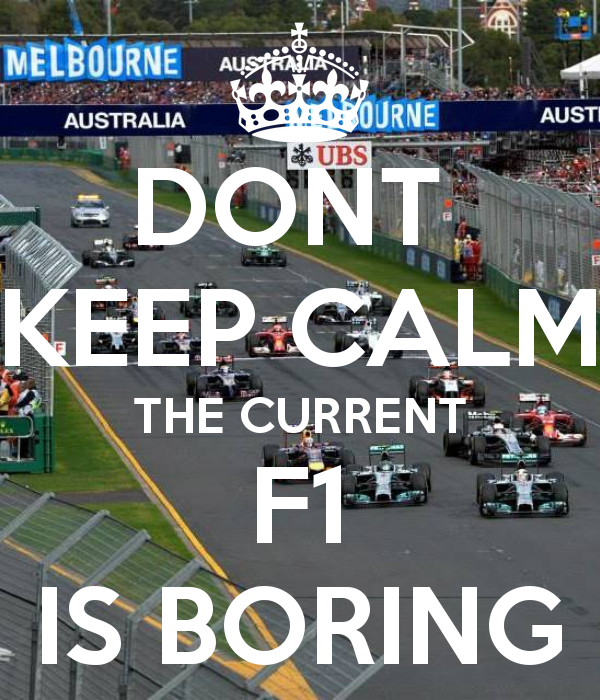
It can take a lot to admit you’re wrong. This is even more the case when in a position of authority; imagine being on the end of much resentment from those who followed your ill-advised guidance/rules. Now take this and put it on a global scale, having to concede you have made a mistake to millions upon millions of people. That’s how the powers-that-be of Formula 1 should be feeling.
It’s a sport that can very much be classed as old-fashioned, which is quite ironic as F1 is supposed to be a showcase for the very latest car-related technology. Indeed, some supermarkets are planning on using Williams’ aerodynamic engineering to make their fridges more energy-efficient. That’s not what I mean though. Whilst these elements may be futuristic, it’s the way the sport is run that is behind the times. It feels as though we as fans have been transported back into the days of the Industrial Revolution, with those in charge being predominantly middle-aged white men who are going to do things their way no matter what the consequences are. So the announcement last week that major changes were being planned in order to make the racing more exciting was nothing short of a big surprise.
F1 has rightly been on the receiving end of much criticism in recent years. Boring action on and off the track, predictable results and so on have led to many fans turning away. Watching a race used to be a Sunday afternoon ritual in my house; now, I’m lucky if my Dad will even watch the start of a race with me. I’ve stuck with the sport because I can remember the days when the racing was joyful to watch and, as my university housemates will tell you, I am forever trying to impress upon them that it is still magical. But even I have to admit that the good days have been gone for a while. At the moment, one of the few saving graces for me is that a Brit is at the top, but even then I would rather it be Jenson Button.
One of the biggest problems is that the cars are slower than they were ten years ago. Again, this is extremely ironic as road cars, who often utilise F1 technology, have been getting quicker and quicker in that time period. I can see why this is the case, i.e. in the interests of safety, F1 is performing well within its limits. The cars are now so well padded that drivers can suffer huge impacts and walk away without so much as a scratch. On top of this, most of the tracks have huge run-off areas that allow plenty of time for the cars to slow before they hit something. Whilst it’s obvious that there should be limits, the fact is that the emphasis is no longer on pure speed alone.
This argument is furthered by the grievances many have with the tyres, engines and lack of refuelling. Formula 1 has always been a sport where tactics have come into play alongside the raw ability of the cars and drivers, but never has it been the case that tactics alone shape not just whole races but entire seasons. Trying to make tyres last a set amount of laps, ensuring engines be used over four races and so on; it’s more of a test of the driver’s restraint than their talent. Personally I am all for the suggestions to bring back re-fuelling and having unlimited sets of tyres and/or those which won’t disintegrate after a couple of laps. I, along with most fans and even the drivers themselves, want to see the abilities of the drivers being tested.
Of course, all of the problems have been exaggerated by the fact that only one team at a time seems to be able to win. At the moment it’s Mercedes, before them it was Red Bull and going back to the early noughties it was Ferrari. However, whilst the latter can partially be attributed to the sheer genius of Michael Schumacher, the more recent domination can be largely put down to money. I’m not saying Lewis Hamilton and Sebastian Vettel aren’t supreme drivers, I just think there are others out there (i.e. Fernando Alonso) who, given the same resources, could do just as well.
The simple fact is that certain teams can afford to hire the best personnel and create the slickest car components whilst everyone else just has to make do with what they’ve got. However, whilst they may be complaining about this now, it is their own fault as they were the ones who refused a £40 million budget cap for the 2010 season. Subsequent controls have been put in place but it seems to be too little too late. The disparity between the teams is now too great for a simple restriction on spending to be of any impact.
So what would I like to see change? As already stated, I would love re-fuelling to come back, more durable tyres and generally faster cars. On top of this, I believe that the authorities need to cap the larger teams more than the rest in order to try to overcome the disparity. It’s all well and good making things flashier and quicker, but if there is little competition for championships then you might as well keep things as they are. Will it happen? Only time will tell.
A recipe for success?
 It’s been quite a week; a royal birth, the 70th anniversary of VE Day and even some sunshine have all befallen us since the beginning of the month. There was something else too but I can’t quite remember what… Anyway, in all the excitement it’s been quite easy to forget everything else that’s been going on, which is just as well for England’s cricket squad after their humbling loss in the third Test against the West Indies.
For those fans who can remember back the ‘80s and further beyond, such a result isn’t a rarity. Hearing the names Croft, Garner, Richards, Holding, Dujon, Greenidge and so on is enough to stir many unpleasant memories. This was a time when the Caribbean boasted some of the greatest names ever to have played the game. As a player, losing was an honour; staying alive was a bonus. Not now. Power struggles, financial insecurity and the influence of other ‘more attractive’ sports have seen the former powerhouse slide down the rankings across all formats of the game. Six of their best players decided they would rather play in the IPL rather than represent their country. On paper, they should have had no chance.
In England, however, they faced a side in just as much turmoil. They came into the series off the back of a frankly appalling display at the World Cup and an extremely disappointing 18 months. Indeed, the only success they had experienced in that period of time was a 3-1 Test series victory over a pretty shoddy Indian side in the summer. Despite all this, incoming ECB Chairman Colin Graves demanded a 3-0 victory; no pressure lads! Unfortunately, despite a superb team performance in the second Test, they failed in the third and left with nothing more than a 1-1 series draw and some impressive tan lines.
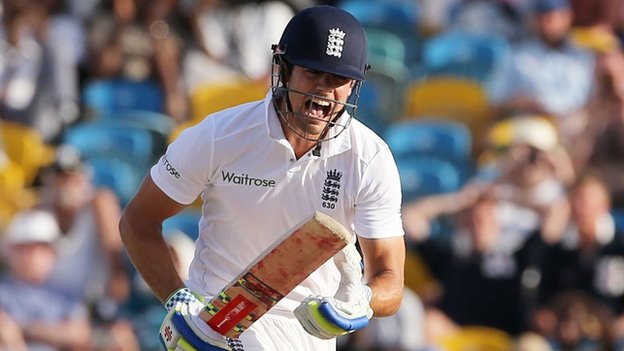
Cue much media consternation and calls for wholesale changes. However, although the result may not have been what was desired, there were some positives to take from the series. Firstly, and arguably most importantly, Alastair Cook finally found some form. It’s been obvious that the pressure of captaining a losing side has had a profound effect on his batting and led to him being unceremoniously dropped from the World Cup side as both skipper and squad member. However, some superb performances in both the second and third Tests – including his first international century for nearly two years – showed that Cook still has a lot of fight left in him and was a firm two-finger salute to his critics. As well as this, England also look to have found two world-class batsmen in Gary Ballance and Joe Root. Both looked in scintillating form throughout the series and judged each situation perfectly – if they needed to defend they did; if the ball was there to hit, they hit it. This is something England sides have been lacking for a while now – batsmen should not be afraid to ‘have a go.’ Personally, I’d much rather see a batsman give away his wicket looking to take the initiative (although not playing a reckless slog) than just plodding along. On the bowling front, James Anderson was irresistible; on the rather flat and lifeless pitches given to him, he did what he does best and found enough movement to cause all the batsmen trouble.
However, I do agree with the media that changes do need to be made, but with the selectors and not the players. Whilst county cricket gets its fair amount of criticism, it has bred all of the current England XI and, despite what most people think, we do have an abundance of talent; it’s just not used properly. This can be attributed almost entirely to the selectors. How on earth they though bringing back Jonathan Trott, at the age of 34 and with no clear evidence that he had got over his ‘burnout’, to open the batting – a position he has rarely batted in – was a good idea is beyond me, especially when a perfectly good replacement in Adam Lyth was waiting in the wings. Also, to fly Moeen Ali over for the second Test after only just recovering from an injury was not only risky, it was a massive slap in the face to Adil Rashid, the leg-spinner who had been on the tour since the beginning. Apparently he didn’t bowl too well in a warm-up game so wasn’t deemed good enough to play… These men need to get their ego-inflated heads out of their considerable backsides!
Interestingly, the squad picked for the ODI against Ireland was a bit different. Whilst most of the changes were enforced due to the timing of the match, coming less than a week after the conclusion of the Windies series, the selection of a whole host of aggressive and exciting players such as James Vince, Sam Billings, David Willey and Mark Wood is vastly different from recent times and suggests that, finally, the penny has dropped and the selectors recognise that things need to change. Unfortunately the game was rained off before it could get going, but I really hope this was more than just a one-off. If it isn’t, I really fear for the future of English cricket.
Something needs to be done, NOW
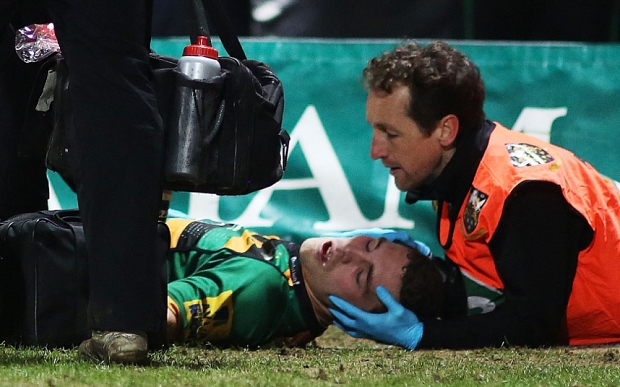
After receiving four huge blows to his head recently, the decision to rest Welsh rugby star George North for a month seems like a good one, especially with the increasing worries surrounding concussion in contact sports. Whilst I am all in agreement that he should take time out of the game, the figure given for the recovery time baffles me.
Despite all the recent hype, no-one really knows what concussion is. I’m not just talking about the generic population; even leading experts still don’t have a clear definition. Type ‘concussion’ into any search engine and you will get a vast array of interpretations, symptoms and even causes. I have even found one website which claims that concussion is the ‘most minor type’ of brain injury. Try telling that to the family of Jeff Astle, the former footballer whose death can be attributed a degenerative brain condition probably caused my multiple concussions during his career.
There are a vast array of reasons as to why there is so little understanding, but the key one is that there is no obvious indicator. It’s not like a broken bone or ruptured ligament, injuries which are visible to the naked eye or on a scan; concussion is a hidden injury which requires the sufferer to communicate exactly what is going on inside their head. As well as this, most of the symptoms – the NHS list fourteen – that are associated with it also crossover with other problems, whilst the injury is highly individualistic in nature – each concussion is different from the next and there is no consistency in terms of both symptoms and recovery time.
This is why I think North’s prognosis is ridiculous; there is absolutely no evidence to suggest that he will be fine in exactly a month. He may need longer to recover; he may need less, we just don’t know. The RFU used to recommend that all concussed players have a minimum of three weeks off, but this was scrapped as it became clear there was no research which supported this. Instead, North’s coaching team should take the approach adopted by fellow rugby star Mike Brown, who has stated that he is going to take as much time off as he needs until he is symptom free. Whilst his fans may not appreciate this – he may be out for the rest of the season – it is definitely the way to approach the injury at the current moment in time.
Nonethless, the fact that Brown and North are prepared to miss crucial games to recover is extremely positive. It finally shows that rugby union is taking concussion seriously. The problem is, though, that this realisation is not being transferred to the general population. I am pretty sure that I would be right in thinking that most of you reading this have very little familiarity with all matters related to concussion and that you may have even learned something by reading this. There’s nothing wrong with that though; there is nothing and no-one in place to make us aware of the dangers of concussion. The focus for politicians and the media in particular is on obesity, which is fair enough given the serious implications it could have. However, I believe there should be more of a focus given to other serious problems such as concussion so the population are aware of how to prevent and deal with them too.
What is even worse, however, is that our doctors also have no clue regarding the diagnosis and treatment of concussion. Whilst it is difficult to be certain that an individual is suffering from concussion, it is better to be safe than sorry and assume they are. However, when I was checked out in A&E for my fourth concussion in seven years, I was told there was nothing wrong with me and sent home. A few days later I took myself back to hospital as I was still suffering but was told to just rest and it would clear up in a few days. It took 13 weeks before I was completely symptom-free. These are the people we trust with our lives, yet they still allow this to happen. It’s ridiculous and something needs to change.
I personally wish North a speedy recovery and hope to see him back playing for his country before long. Fortunately for him, he is in the best hands as a professional in a sport with arguably the best concussion knowledge and protocols. For the rest of us, the only thing we can hope for is that we don’t get concussion because, if we do, it’s highly likely that we won’t get the help we need.
Heroics cover over the cracks
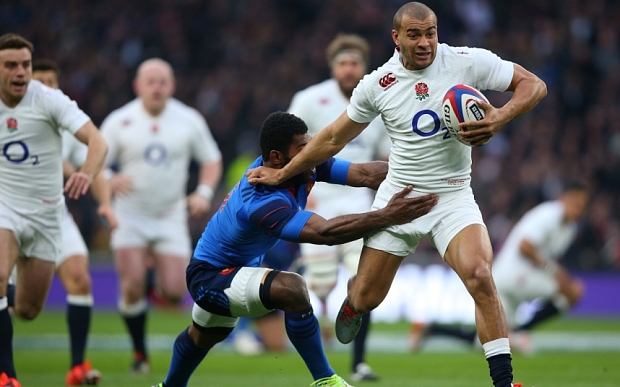
After England’s rugby union side almost pulled off a sensational result against France last Sunday, many fans were left feeling extremely positive about their chances at the upcoming World Cup. However, they didn’t do quite enough and finished runners-up for the fourth successive Six Nations, meaning they haven’t won the event since 2011. The future of English rugby looks bright, but there are still gaps that need to be plugged if silverware is to be won again.
Despite opening their campaign with a highly impressive 21-16 victory over Wales, England’s defensive play was often questionable throughout the championship. Both Italy and the French managed to punch alarmingly large holes into the backline whilst there was far too much ill-discipline in their own half, which resulted in England’s only loss to eventual champions Ireland. Not only that, but against Scotland they butchered a number of golden attacking opportunities that should have seen them win by a much greater margin than they did. Yet they still managed to come second.
All things considered, it can be said that England’s tournament was a success, finshing runners-up even with all the aforementioned problems. Take a look at the wider context, though, and it’s clear to see why many, are labelling the outcome as a failure. The comments of Ian Ritchie – chief executive of the RFU – following the France game may seem harsh but he’s got a point; England are a team who should be winning titles. Finishing runners-up means nothing to a nation who invented the game and won the World Cup not so long ago. England may be consistent – something most of our national teams lack – but at the moment they are consistently failing to get over the finishing line.
England should take heart from this tournament though, not least because of their attacking play. When Stuart Lancaster first took over as head coach after the dismal 2011 World Cup campaign, the brand of rugby played relied largely on kicking and was dull. Many of the players were ageing, slow and happy to just trundle along and hope the opposition would make a mistake. This has all changed now; the players are younger, quicker and not afraid to take defenders on. As well as this, the ball is now passed and offloaded much more efficiently than in the past, often leaving the opponents scrambling to regain their shape. Not only is it refreshing to see England play in such a way; it’s bloody exciting.
The change in style also highlights just how cohesive this current group of players is. England have had a number of superb talents in recent years but they have never fully gelled into a team. This could perhaps explain the emphasis on kicking – there may have been a lack of trust in each other to protect the ball when in-hand. The last few weeks, however, have shown that Lancaster finally has a squad full of skilled individuals who are also performing well as a unit. I will even go as far as to say they are the best overall ‘team’ England has had since that World Cup-winning side of 2003, although they still have a way to go before matching the standards of Johnson, Wilkinson and co.
On top of all this, there are still a number of star players due to return from injury, including Manu Tuilagi and Owen Farrell. Nonetheless, whilst their availability for the World Cup will be a huge plus, I personally would be cautious about bringing them straight back into the side. Despite making some errors against France, George Ford – Farrell’s replacement at fly-half – had a superb tournament and really linked up well club team-mate Jonathan Joseph, himself deputising for Manu Tuilagi at outside centre. Although he may be a better overall kicker, I personally don’t think Farrell is as quick-thinking as Ford, whilst Joseph was the tournament’s top try-scorer. Not only do neither deserve to be replaced, but doing so may actually diminish the cohesiveness of the squad and have a detrimental effect on performance.
The key question is this: does England’s performance in the 2015 Six Nations suggest they can win the World Cup? As much as I’d like to say yes, I think it should only be done so with great caution. They may have run New Zealand and South Africa – the top-ranked teams in the world – relatively close last Autumn but there is still a gulf in class between these two and the rest. However, England have clearly improved since then and, with the tournament being home soil, the chances of an upset are as great as they ever will be.
Once a cheat, always a cheat
 I don’t have much in common with tennis ace Andy Murray. He’s an international sporting superstar; I’m not. He has a gorgeous fiancée; I don’t. He is worth millions of pounds; I’m already in debt. However one thing that we do share, aside perhaps from our monotone voices, is an absolute dislike for dopers.
After American tennis player Wayne Odesnik was yesterday banned for 15 years after his second doping offence, Murray was quick to comment on the decision. Of course, this was done in his usual dead-pan style but it was interesting to hear some of his rather honest opinions on Odesnik and doping in general. As well as this, the fact that he took the time out of training to give interviews surrounding the ban of someone ranked over 250 places below him shows how anti-drugs Murray is. It’s common to hear former athletes speaking out on such issues; it’s rare to have fellow professionals do so.
Due to the lengthy nature of the ban – the longest ever given in tennis – and his age (31), Odesnik’s career is over, something he himself has recognised by announcing his retirement minutes after the punishment became public. His attempts to deny knowledge of taking anything and uphold his reputation, though, are feeble at best. Several illegal drugs were found in his system; that is no accident. On top of this, he had already been previously banned after being caught with human-growth-hormone. Despite this, some may think that 15 years is too long. Not me though – a precedent needs to be set to deter other athletes from following suit and this finally seems to be a good example of one. Such a ban would end most sporting careers even at the tenderest of ages – if this is not an incentive to avoid doping then I don’t know what is.
Unfortunately, because of the ‘second chance’ policy many sports employ, it will be a long time before such punishments are regularly given out. Take athletics for instance; if an athlete is found guilty of taking drugs for the first time, they receive a maximum ban of two years. Whilst this can seriously affect an athlete’s chances of future success, there is still a good possibility that they can return to the sport and continue from where they left off. It’s more of an inconvenience than anything else. There are discussions underway to ban first-time offenders for up to four years in athletics but I think this still needs to be longer, otherwise there is still an incentive to cheat as getting caught won’t mean the end.
I’m not saying, however, that all those found ‘guilty’ of doping receive such heavy bans; in some cases it is a genuine mistake or down to sabotage from a member of their coaching team. In 2011, defender Kolo Toure was caught with an illegal substance in his body whilst at Manchester City, although it turned out to be that this was because he had taken a diet pill to lose weight without looking at what was in it. There are always going to be cases where athletes are genuinely innocent, but unless this can almost certainly be proven then they have to be treated as cheats and punished accordingly, not let off lightly.
Some may argue that, to avoid all this, drugs should be made legal. ‘Surely it would even out the playing field and ensure there are no cheats?’ If only it were that simple… Whilst more developed countries, especially those with a history of doping violations, would have little problem adopting such policies, this would scale down the range of competition drastically. Many poorer countries would effectively be banished from being allowed to compete against their richer counterparts and that is, quite simply, discrimination. In an age where equality is a buzzword, that would be extremely hypocritical indeed.
Odesnik’s ban may be a rarity now, but if doping and other forms of cheating are going to be truly tackled in sport then it should be the example that is turned to in future cases. Whilst all athletes play to win, surely those who truly care will recognise that such a risk would not be worth taking if it meant the end of their careers if they were caught? Or is that just wishful thinking in such a materialistic society?
The Top 10 Cricket Humiliations
The 2015 Cricket World Cup has already produced a number of high-profile slip-ups and shocks, not least England’s humbling by a rampant New Zealand side. Here we take a look back at 10 classic moments that left fans, pundits and fellow players pinching themselves for hours after they occurred (probably).
10) Signs of a Prosper-ous future
Zimbabwe have produced a number of results against the odds over the years. However, very few people could have predicted their one-day victory against an in-form Australia in September 2014. After restricting the visitors to just 209, tail-enders Elton Chigumbura and Prosper Utseya hammered Zimbabwe to their first victory over the Aussies for 11,406 days, leaving the Australian media to brand the result as one of the most humiliating in the country’s history.

9) ‘A 10 year-old would catch that’
South Africa’s Vernon Philander will go down as one of the greatest fast bowlers the country has produced, which is just well as it means this ghastly drop will often be forgotten. In just his sixth ODI appearance, England’s Matt Prior gave Philander a chance at mid-off that Geoffrey Boycott’s mum would have taken blindfolded. However, he somehow put it down and left Mark Nicholas speechless – it really was that bad.

8) Ever heard of a bat?
The 2005 Ashes series may have been a disaster for Australia but they did have some moments to smile about, including this dismissal. Shane Warne, spinning the ball a mile, floated a delivery up outside off stump. Andrew Strauss went to pad it away, leaving all three stumps visible. The ball pitched, spun and cannoned into Strauss’ exposed wicket, leaving him walking off very sheepishly and the mercurial spinner giggling like a mischievous kid.
7) Dye-ing to beat you
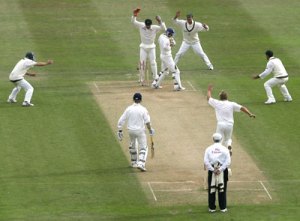
England have an unfortunate history of losing to ‘minnows’ at recent tournaments, especially the Netherlands. However, it was their defeat by Ireland at the 2011 World Cup that was undoubtedly the most embarrassing. Not only was the result itself humiliating, especially considering it was their first loss to the associate side after setting them a huge target of 328, but match-winner Kevin O’Brian had bright pink hair at the time. ‘Nuff said.

6) ‘Keep your face to the sunshine and you won’t catch the ball’
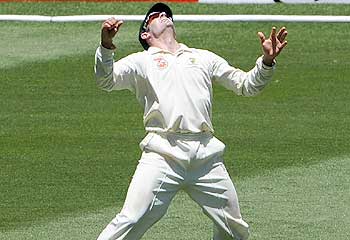
Missing a catch is bad, but not even getting your hands to an attempt is all-but-unforgivable. During South Africa’s tour of Australia in 2008/2009, the Protea’s Dale Steyn sliced a shot high into the line of the sun. Mike Hussey was the nearest man but it was clear he couldn’t see the ball and, eventually, it landed a good two metres to his left. Even his own fans couldn’t help but laugh.
5) Not such a magic number
Last April, Wirral CC’s 1st XI were dismissed for just 3 runs. Whilst this isn’t the lowest total ever recorded in cricket, the only scorers were ‘Extras’ and the last batsman, who ended up unbeaten with a single run to his name. Whilst being dismissed for such a paltry total is one thing, being outscored by a tail-ender with a highest score of just 14 is simply degrading.

4) Gibbs ‘drops the World Cup’
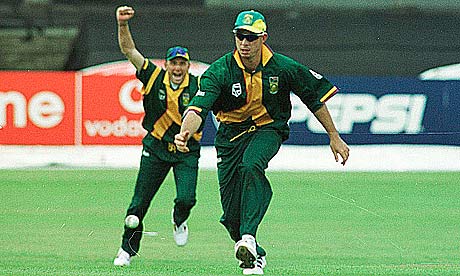
Dropped catches are as much a part of cricket as sledging and egg-and-bacon ties, but there are some that should never happen. During the 1999 World Cup, Australian captain Steve Waugh hit the ball straight at South African Herschelle Gibbs. He initially took the chance but, in going to throw the ball in celebration, saw it slip out of his hands. He never made the same mistake again.
3) Ajit quacks up
Spare a thought then for poor Ajit Agarkar, who once registered seven – yes, seven – consecutive Test ducks against Australia. Whilst looking hopeless against pace of Brett Lee, Glenn McGrath and Damien Fleming, his worst dismissal was when he slapped a truly awful delivery from part-time bowler Mark Waugh straight at the fielder at point. It was funny at best, tragic at worst.

2) Inzamam-Fall-Haq
As well as his run-scoring feats, Pakistan’s Inzamam-ul-Haq will also be remembered for many whacky dismissals throughout his career, the most ignominious being when he fell onto his stumps when trying to sweep England’s Monty Panesar in 2006. The ball missed the bat, hiting Inzi’s considerable midriff and causing him to lose his balance. Despite a Herculean effort to leap over them, gravity took over and he could only career into the stumps.

1) Tuffers’ moment of madness
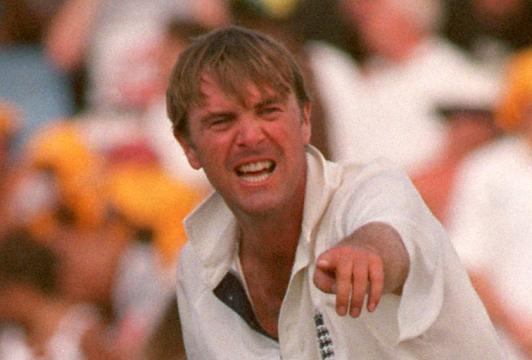
Phil Tufnell’s career is littered with ridiculous mistakes and howlers. This missed run-out in an ODI against Australia, though, is scarcely believable. After a mix-up between the batsmen left them stranded at the same end, the ball was gently lobbed to Tufnell for an easy wicket, yet he managed to drop it. Not only that, his subsequent throw from a metre away missed the stumps, summing up English cricket in the ‘90s – truly awful.
Depression in Sport – still a long way to go
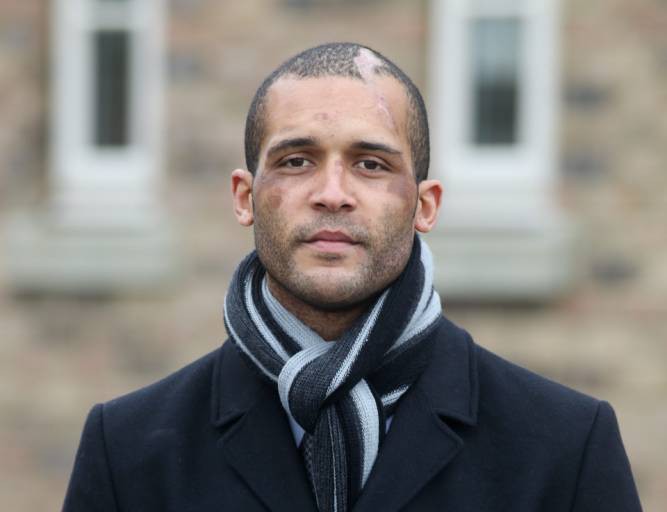
Last week, former professional footballer Clarke Carlisle admitted that his collision with a lorry back in December was no accident; it was an attempt to end his life. Such incidents involving professional sportsmen and women are, worryingly, becoming more common but Carlisle’s story is one of the most alarming. He is the ex-chairman of the Professional Footballers’ Association (PFA) – the trade union for current and former players who, amongst many other things, offer advice and support for those struggling with mental health issues – and yet he claimed he suffered from depression for 18 months without telling anyone. Measures may be in place to help athletes going through such hardship but this clearly highlights just how far there is to go with the treatment of such problems in sport.
Being a professional athlete is a unique career. Athletes are under huge pressure to perform at all times, their job security is constantly under threat and a lot of people rely on them for many different reasons. This, however, is the same with a lot of other professions. The two factors that really separate elite sport from anything else are that most careers are finished by the age of 40 and many players are subjected to constant public scrutiny of their every movement, often from an extremely young age.
Nowadays, when athletes ‘turn pro’, they expect the constant media attention. Some even look forward to it; seeing your face in the press, people in the street asking for autographs, being on TV – it seems like the perfect life. Unfortunately, this stereotypical view is generally far from the reality. Whilst being in the news may be great when the coverage is positive, there will also be times when such reporting will be extremely negative and many hurtful things will be said and written. On top of this there is the huge lack of privacy that many high-performance sportspeople have to deal with. Imagine reporters hanging around outside your house all day; not being able to take your children to school without someone writing about it; having members of the public shouting abuse at you in the street. No longer does it seem such an idyllic prospect.
The increasing professionalisation and commercialisation of elite sport, in combination with the rise of social media, means those at the top will now be unable to avoid such occurrences. As a result, athletes need to be taught methods of how to recognise and deal with the pressure. Organisations including the PFA and PCA (Professional Cricketers’ Association) are now working with charities such as ‘Sporting Chance’ to help those in professional sport diagnose depression in both themselves and others, amongst many other things, whilst many professional clubs also employ psychologists who are trained to help with such problems.
Despite all of this, Carlisle’s plight shows that being taught to cope is not enough. The fact that he felt as though he couldn’t seek support from the networks he helped to set up suggests that there is still a lot of stigma surrounding mental illness in sport. Former England cricketer Steve Harmison hid his depression for ten years under the guise of homesickness. He was afraid that if he admitted he was depressed the coaching staff would use it as an excuse to drop him after one bad performance. Fortunately, Harmison found ways of overcoming his feelings but this is not always the case.
Between 2009 and 2011, three footballers – German goalkeeper Robert Enke, Rushden and Diamonds’ Dale Roberts and Welsh legend Gary Speed – all died after reportedly suffering from depression for a number of years without really telling anyone. These individuals clearly felt they were in an environment where they could not be open about their problems for fear of harming their careers; this needs to change. Athletes need to know that admitting they have depression is one of the strongest things that they can do and they need to feel as though that when they do everyone around them will be supportive. The message that depression is not a weakness but an illness needs to be made crystal clear.
Let’s hope that lessons will be learned and there will finally be a drastic change surrounding mental health in sport. If there isn’t, expect to see many more cases such as that of Carlisle, although the next individual may not be so lucky.
Let’s hope that lessons will be learned and there will finally be a drastic change surrounding mental health in sport. If there isn’t, expect to see many more cases such as that of Carlisle, although the next individual may not be so lucky.
 The 52 Blog