My Top 10 Sporting Moments – 2016
It’s that time of year again for me to churn out my incredibly well informed, not-at-all-biased (please note the sarcasm here, my ego isn’t yet that big) top ten list of sporting moments that occurred during 2016.
It was really hard to choose just ten after such a momentous year for British sport but, with the help of some of my mum’s exquisite Christmas cake and a quick skim through the Rio 2016 DVD, I managed to do pick out those moments that got me exhaling with incredulity, put goosebumps on my skin and, in one instance, nearly caused a tear or two to slyly escape from my eyes.
I hope you enjoy it and if there’s anything you disagree with… Well, do whatever you want, as long as you don’t sue – I could barely afford to buy Christmas presents, so please don’t sue me!
10) 13 Is A Magic Number
I’ll kick off this list with a feat you probably haven’t heard of but is by no means any less incredible than the rest.
Downhill mountain biker Rachel Atherton is already a legend of her sport, having won three World Championships and four World Cups before this year got underway.
Not only did she win both titles again in 2016, she absolutely dominated the field, especially in the latter event, becoming the first female rider to win all seven rounds of a World Cup series. In fact, Atherton has not lost a World Cup race since April 2015 and has now won 13 successive races, which is a world record. Utterly remarkable.

9) Wham Bam Tam (and Loz)
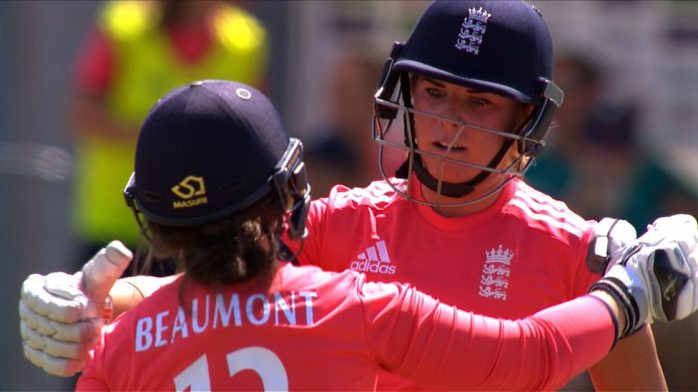
England’s female cricketers are a talented bunch, but for too long they have been carried by their standout players, with others consistently underperforming. So, when run machines Charlotte Edwards and Sarah Taylor left the team after the T20 World Cup, many were rightly worried for their future, especially in the batting department.
Step forward Tammy Beaumont and Lauren Winfield.
The two scored 568 runs as a partnership across the six matches they played against Pakistan in July at an average of 94.66, with three century stands. This included putting on 235 for the first wicket in the second ODI, before an English T20 record partnership of 147 a few days later against the same opposition cemented their transformation from bit-part players into the most formidable opening pair in world cricket.
8) Foxes Trot To Title
No list such as this is complete without recognising what Leicester City achieved this year.
This was a side who had narrowly escaped relegation the season before with a team of solid, if unspectacular, players and a new manager many expected to be sacked by Christmas – how they managed to win one of the greatest leagues in the world is something no-one will ever truly understand.
Many may think Leicester’s title win was so great that they deserve to be at the top of this list and had it been compiled in May they would have been, but this is a reflection on the whole year. Since August, a surprising run in the Champions League aside, Leicester have been bang average and that is why they only find themselves at number eight.

7) At The Double
Many argue whether the achievements of Paralympians rank alongside those of able-bodied athletes, with the focus of debate largely centring around the quality of the opposition. Whether you agree with this or not, the achievements of Kadeena Cox during the Rio 2016 Paralympics are undeniably special.
Only two years after suffering her second stroke in just over 12 months and being diagnosed with MS, Cox became the first British Paralympian since 1984 to win medals in two disciplines – cycling and athletics.
While she was outstanding each time she competed, it was her performance in the C4-5 time trial that, for me, was the defining performance of the Games. She annihilated her opposition, including the legendary Dame Sarah Storey, to win gold by over a second, less than 24 hours after winning bronze in the T38 100m sprint on the athletics track.

6) The Max Factor
In 2016 Formula 1 saw what is hopefully the beginning of a return to the good times, with exciting races, spectacular crashes and a title that went down to the wire. It also seems that the sport has unearthed another Ayrton Senna.
We all knew that Max Verstappen was a prestigious talent – he won on his debut for Red Bull in Spain having been promoted from Toro Rosso – but in the penultimate race of the season in Brazil he produced a performance that showed he has the potential to be among the greatest ever.
It was a drive reminiscent of the legendary Brazilian’s breakthrough podium in the rain-sodden 1984 Monaco Grand Prix. Verstappen passed car after car in appalling conditions, finding grip where no-one else could and leaving pundits, fans and colleagues barely believing what they had just witnessed.

5) Kenny Do It? You Bet He Can
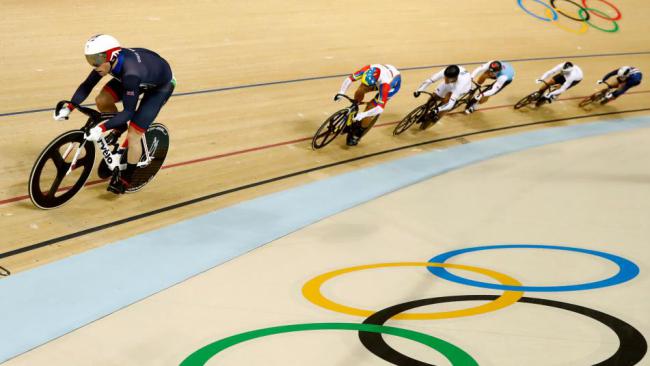
Following on from Rio, Jason Kenny is now firmly cemented as one of the greatest athletes this nation has ever produced, equalling Sir Chris Hoy’s record for the most gold medals won by a British athlete (6). It’s not just the medals that prove this though – his performance in the keirin final was almost superhuman.
He not only had to beat a world class field including Germany’s Joachim Eilers and Aziz Awang of Malaysia, he had to do so after two false starts, one of which could have seem Kenny himself disqualified.
He eventually came through all the drama and tension to secure his third gold of the meet. While many of us across the country jumped out of our chairs, roaring with delight, he smiled sheepishly, hugged fellow gold winner Laura Kenny and went for a warm-down. It was classic Kenny, understated and underwhelming, but we wouldn’t have him any other way.
4) Sending Records Tumbling
Before Rio, I knew absolutely nothing about trampolining. And now, I still know nothing, except that Great Britain has two superb athletes who didn’t just defy expectations during the summer, they obliterated them.
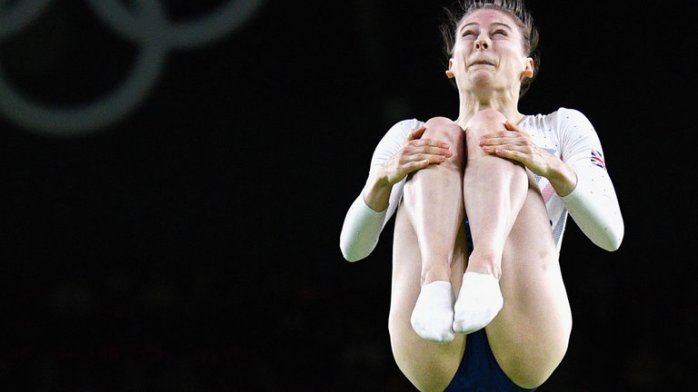
Not only did Kat Driscoll and Bryony Page become Britain’s first ever Olympic trampoline finalists, Page went one further and secured an unbelievable silver behind the Canadian Rosie MacLennan in her first ever Games.
As I said, I know nothing about trampolining but I watched Page’s final routine and I just knew it was good and so did she. However, despite this it was great to see an athlete look so genuinely shocked at winning an Olympic medal and her tears at the end nearly (but not quite) set me off as well. A real fairytale.
3) Creating History Down Under
England’s rugby union side could have had a top ten list of their own, so remarkable has their year been.
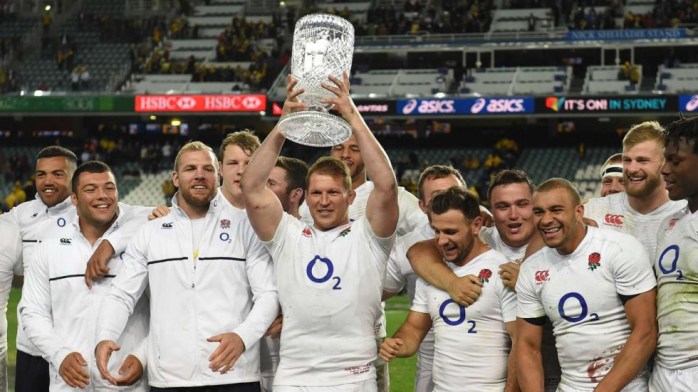
On top of achieving a 6 Nations Grand Slam in the spring, the team won all of their matches in 2016 and currently hold a record of 14-game-unbeaten record. Coach Eddie Jones has transformed the side since taking over and it was against his native Australia that they produced their best performance.
Heading into the final Test of three during the summer, England knew a victory would secure their first ever whitewash Down Under. However, despite having already lost the series, Australia were determined to avoid further humiliation and came out fighting, producing one of the greatest games of rugby of all time.
England eventually won a pulsating game 44-40, playing some scintillating rugby, and secured a historic 3-0 series victory that will forever be remembered.
2) Simply The Best
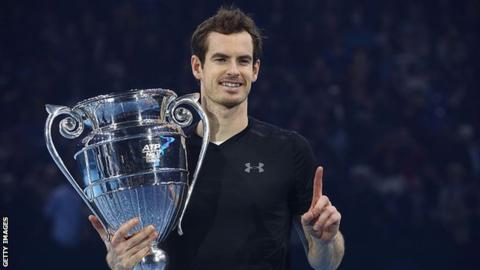
As with England’s rugby team, Andy Murray could have a list of his own after an astonishing year in which he reached the final of the Australian and French Opens, won at Wimbledon for a second time, defended his Olympic singles title, emerged victorious in the ATP World Tour Finals and finished the year as world number one.
Although his victory over Novak Djokovic in the ATP final was epic, it was actually his gruelling semi-final encounter with Milos Raonic that I saw as his greatest moment of the year.
Knowing that victory would ensure he ended the year on top of the rankings, he was sternly tested by the Canadian and had to save a match point in a final set tie-break that finished 9-7 in his favour after swinging this way and that. Only a true great would’ve held on to win that match and Murray did.
1) Hol-lie Mackerel, They’ve Done It!
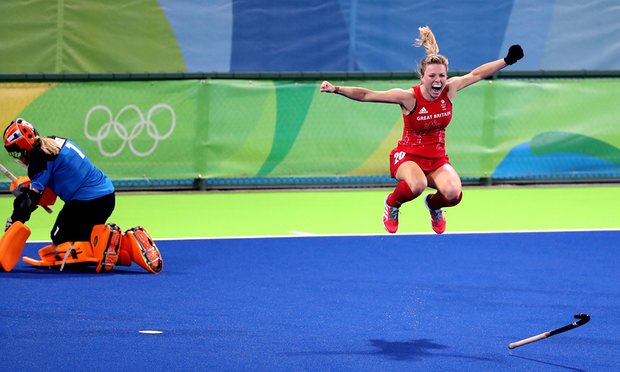
Surprise surprise, it’s the Team GB women’s hockey team that makes it to the top of my list. It’s not like I talk about them a lot or anything…
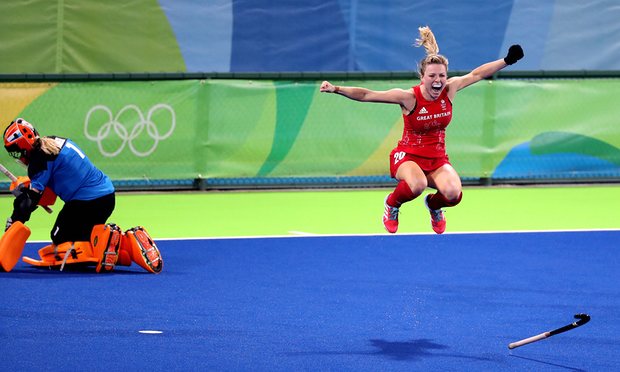
What the team did during those two weeks in Rio was sensational and to beat the Netherlands in the final was just incredible. They played some really entertaining hockey and got me hooked on a game that I never showed any interest in previously.
As is the case for most people, it was Hollie Webb’s decisive penalty in the shoot-out that was the most magical moment for me. From the moment she stepped up to take it, I knew she was going to score. I just had a gut feeling.
Seeing the wild celebrations at the end, the raw elation of winning such a historic gold medal, was a truly magical thing and one of those ‘I was there’ moments (by that, I mean I watched it live on TV).
And off the field…
**WARNING – what you are about to read is a prime example of major fanguying**
Now learning how to be a proper sports journalist, I’m just starting to get used to interviewing some of the biggest names around, but I still find it unbelievable that little old me is speaking to these people who have achieved great things and are known globally.
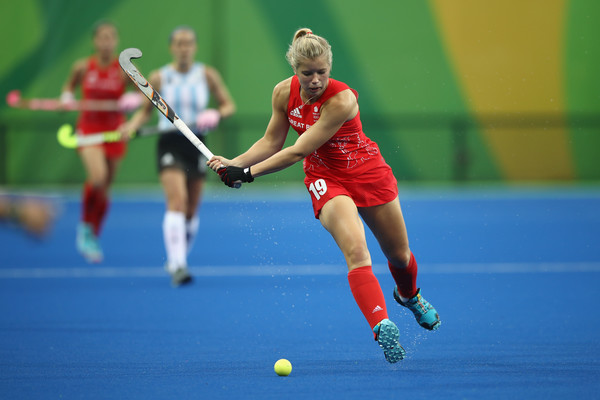
I never get starstruck however, but there was one meeting where I thought it would happen and that was with hockey player Sophie Bray.
Bray was a player I’d really admired during Rio, and no, not for the obvious! She was one of those players who worked incredibly hard for the team, putting in consistently brilliant performances, yet was not one of the big names that everyone knew. She reminded me a little bit of myself (although I don’t play hockey and am distinctly average at most sports in comparison) and she quickly became my favourite player.
And yet there I was, just four months later, having a coffee with her in Costa! I’ve interviewed plenty of athletes but it’s always been over the phone or in a professional environment, never in such a relaxed atmosphere. That scared me and in the days before the interview I was genuinely terrified that something would go wrong!
In the end it was a really enjoyable interview (for me at least and I hope for her too) and she could not have been easier to talk to. Definitely my favourite moment of what has been a challenging 2016.
Inspirational
I do love a good moan. Those of you reading this that know me will most certainly agree. I may only be 21 years of age but, my word, do I sound like a miserable old grump most of the time. It’s not about one specific thing either; I find myself moaning about a whole variety of topics, from politicians to the price of pasta to nail varnish (yes, this has happened). Just the other day I caught myself banging on about the new dance craze that is ‘dabbing’ – apparently I’m the only person of my age who thinks it looks ridiculous. Anyway, I digress. If there is anything that the current Paralympic Games has taught me however, it’s that I really have no need to grumble as much as I do.
One of the things I moan about most is the state of my body, which some would argue is with fairly good reason. I have suffered at least 38 separate injuries already during my short life (I’m not exactly sure how many times I’ve damaged my fingers and hamstrings), with nearly half of those occurring in the last 18 months. In 2016 alone I have visited five separate hospitals, been carried off a cheerleading mat fearing I’d broken my neck and back and, most recently, left needing surgery to repair my knee.
Whilst many may believe that I do have a right to moan about this, I now disagree as most of these injuries were self-inflicted. Furthermore, there have been a number of times when I have risked making these injuries worse by continuing to participate in sport instead of resting, whilst it was also my idea to have a 6’5” male jump on my back at the end of a cheer routine. It’s not my own stupidity that has made me realise that I’ve got nothing to moan about though; it’s the fact that there are so many people out there who have suffered much, much worse problems than me and yet still manage to achieve remarkable things, all with a smile on their face.
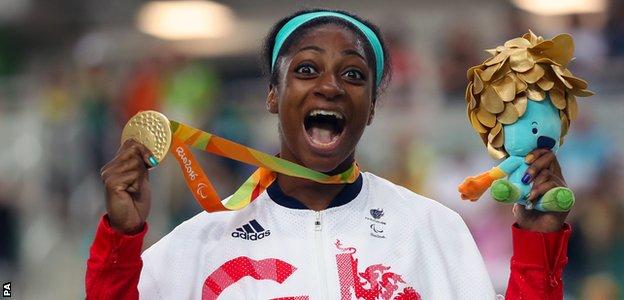
The story of Britain’s most recent golden girl, Kadeena Cox, has really caught my attention. Like most people, I hadn’t really heard of her before the 10th September 2016. Everyone knows who she is now. Her performance in the C4-5 time trial in the Rio Olympic Velodrome last night was unbelievable. Last to go in the event, I just couldn’t see Cox being able to overcome the supreme Chinese athletes who had just decimated the great Dame Sarah Storey’s times. Shows how much I know. Cox didn’t just win gold, she annihilated her opposition, finishing over a second ahead of the silver medallist and setting a new world record in the process. Less than 24 hours after winning a bronze on the athletics track.
Cox’s performances are just the tip of how special she is though. A promising track and field athlete in her younger years, Cox suffered a stroke in 2014 at the age of just 23. Later that year, after returning to full fitness in less than two months, she was diagnosed with MS. Almost exactly two years later she is now a Paralympic champion and has a chance of three more medals before the meet is over.
The thought of being able to deal with not just one, but two, life-changing illnesses must have been incredibly daunting, yet Cox has just got on with it and not let it hold her back in any way at all. Not once during her post-race interview did she let that beaming smile drop from her face and it was clear to see just how delighted she was with her performance. She seems to be so humble and has not let her illness stop her from doing anything she wants to. I bet she hasn’t once moaned about her situation either.
Of course, Cox is not the only inspirational competitor at Rio 2016. In fact, each and every para-athlete, whether they have appeared on an international stage or just at amateur level, has had to overcome serious impairment just to be able to take part in sport, something many of us able-bodied individuals take for granted. They deserve so much more attention and media coverage than they currently receive; why should be Cox, Storey, Ellie Simmonds, Jonnie Peacock and so on be deemed less newsworthy than the likes of Jess Ennis-Hill, Mo Farah and Sir Bradley Wiggins. Each is a hero in their own right, regardless of whether they are disabled or not.
Moaning is an inherent part of human nature; we all do it and there is nothing wrong with having a whine every now and again. Next time I feel the urge to grumble about my ailing body though I’m definitely going to stop and think twice. Not only has Rio 2016 provided great entertainment in the opening few days, it’s also taught me that, really, I am lucky. Whilst I may be incapacitated at the moment, I am otherwise fairly physically healthy and should never take that for granted.
Rio 2016 Review
It’s all over. Almost as soon as it had begun, the Games of the XXXI Olympiad have ceased to exist. Not that it passed by quietly. The last fortnight was full of drama, suspense, controversy and incredible sporting achievement. Team GB have returned from Rio no longer as ‘just’ athletes, but national treasures. In this post I run through some of my favourite moments from Rio 2016, which I admit are incredibly biased towards Great Britain, but do include some memorable achievements from others too.
Most entertaining sport to watch – Rugby sevens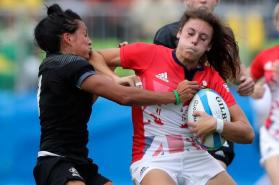
Who else would love to see canoe slalom and diving given greater TV coverage? Whilst they may not have much in common, both are gripping as they hinge on absolute precision; one tiny mistake can mean the difference between coming first and last. However, it was the sport making its Olympic debut that really caught my eye. Explosive and dynamic, exhibiting skill and strength in equal measure, I hope the powers-that-be keep it a part of the programme beyond Tokyo 2020.
Greatest surprise – Bryony Page
 This was a hard one to choose as there were so many unexpected British successes. Joe Clarke’s hugely impressive gold in the K-1 slalom came close, as did the amazing bronze medals achieved by gymnast Amy Tinkler and badminton pair Marcus Ellis and Chris Langridge, but Page’s silver medal was that extra bit special. No British woman had ever qualified for a trampolining final before, let alone won an Olympic (or World) medal.
Most heart-warming moment – Abbey D’Agostino and Nikki Hamblin
In spite of increasing professionalism, the ‘Olympic Spirit’ is still a core value of the Games and appeared in abundance during Rio, most notably in the women’s 5000m heats. Hamblin and D’Agostino were part of a mid-race collision that saw both fall, the former staying down, distraught at what had just happened. However D’Agostino, who had torn her ACL and meniscus, encouraged Hamblin to continue and they helped each other over the finish line. True sportsmanship.
Greatest comeback – Jazz Carlin and Becky James
The desperate lunge by Liam Heath and Chris Schofield to secure an unlikely silver in the K-2 200m final was the greate st comeback in terms of athletic action, but both Carlin and James cannot be beaten here. The two athletes share a number of similarities; both are Welsh and both won two silvers after overcoming serious illnesses that could have affected their lives, not just their careers. Inspirational.
Most tear-jerking moment – Bryony Page
I rarely cry. It’s not that I don’t want to, I can’t. Even at a good friend’s wedding recently, whilst others around me were sniffling, I wasn’t even close to tears. It therefore came as a great surprise that, having watched Page finish her routine in the trampoline final, I felt a few drops sting the back of my eyes. Seeing the raw emotion of someone who was so delighted at having performed at their absolute best struck a chord and I was so delighted when she secured her historic silver.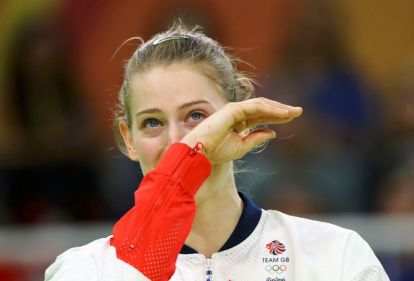
Best celebration – Great Britain women’s hockey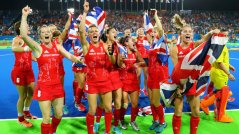
This may not have been the most inventive or unique celebration – that has to go to Japanese wrestler Risako Kawai for flipping her coach after winning gold – but the sheer delight exhibited by GB’s hockey superstars was a joy to behold and showed just how much the victory meant to them.
Greatest statement made – Katherine Grainger and Victoria Thornley
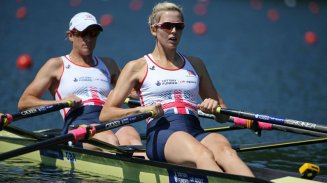 For some athletes, winning an Olympic medal is more than just a reward for years of hard work and dedication; it’s also a big two-fingered salute to anyone who doubted them. This was the message delivered by Grainger and Thornley with their superb silver in the women’s double sculls. Not deemed good enough to represent GB until a few weeks before the Games, they weren’t expected to make the final, let alone medal. Take that British Rowing!
Most dramatic event – Men’s keirin final
Andy Murray’s gruelling singles final against the fiesty Juan Martin del Potro was a tense affair, but nothing was quite as excruciating as the final event in the Velódromo. The final event of the track cycling calendar eventually saw Jason Kenny join Sir Chris Hoy as the most successful British Olympian, but not after two false starts and a nail-biting sprint finish. Even with a ruined knee I leapt out of my chair, such was the relief I felt when Kenny won.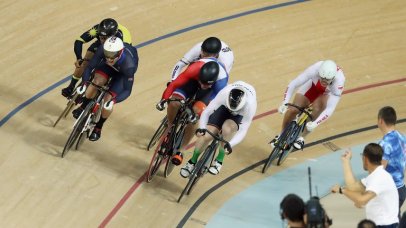
Greatest individual performance – Wayde van Niekerk
As fans, we witnessed plenty of utterly unbelievable feats during the Rio Games, such as Ethiopian runner Almaz Ayana smashing the 10,000m world record, but it takes something special to leave Usain Bolt in shock. That is exactly what van Niekerk did in the 400m final, annihilating the opposition as he stormed to 400m gold, breaking Michael Johnson’s 17 year-old record in the process. Bolt, and the rest of the world, could only cover their mouths in shock at what they had just witnessed.
Most contentious decision – Various boxing results
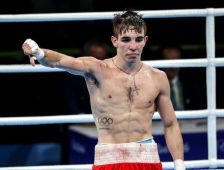 Great Britain’s male 4x400m relay team can feel hard done by after their highly questionable disqualification, but even this could not match the disgust and disappointment various boxers must be feeling right now. The judging right the way throughout the competition was terrible, even after the AIBA sent some officials home after admitting they made incorrect decisions. Was this a case of poorly trained judges or corruption? Only time will tell.
Most dominant performance – Laura Trott
This could have been awarded to so many athletes – Simone Biles in the Olympic Arena, Mo Farah and Usain Bolt on the track, Jason Kenny in the Velódromo and Hannah Mills and Saskia Clark on the Marina da Glória – but for me Trott’s performance in the omnium was on another level. She looked certain to win right from the start and the final event – the points race – was basically a 100 lap victory parade for the four-time Olympic champ.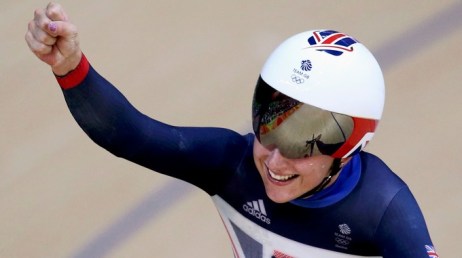
My favourite moment – Gold for women’s hockey
As much as I will try, I will not be able to remember each and every medal Team GB won during Rio. Some memories will stick with me forever though, such as when I welled up after watching Bryony Page win her silver medal or the relief I felt after Jason Kenny finally emerged victorious from the men’s keirin. Neither, however, quite matched the sheer joy I experienced after seeing the women’s hockey team win their first Olympic gold after a fantastic final against the Netherlands. After eight gruelling matches, Hollie Webb’s decisive strike in the penalty shoot-out and the subsequent celebration is a moment that will appear in emotive montages for years to come.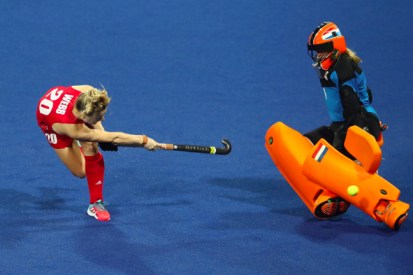
How not to run a sport
It’s here, it’s back; the Olympic Games are upon us! It’s scarcely believable that it’s already been four years since London 2012, the memories are that strong. A lot has happened in that period of…
Source: How not to run a sport
How not to run a sport
It’s here, it’s back; the Olympic Games are upon us! It’s scarcely believable that it’s already been four years since London 2012, the memories are that strong. A lot has happened in that period of time however. For example, Britain is no longer part of the EU, Joe Root has established himself as arguably the best batsman in the world and I can now grow a beard. We should be incredibly excited at the prospect of another gluttonous fortnight for Team GB, but unfortunately there has only been one focus in the build up to Rio 2016 and a negative one at that.
We shouldn’t be surprised at the recent findings that Russia has adopted a state-sponsored doping system. Accusations of such practices hark back to the Cold War, when the USSR was looking to establish itself as the greatest superpower of them all and decided that sport was one of the ways in which it could do this. The difference this time, though, is that they have been caught out. Not by the IOC, not the IAAF (the body that run athletics), not by any anti-doping agencies. Russia was found out by a German broadcaster and some of its own who had the courage to speak up. Not that we’re reminded of this by the authorities.
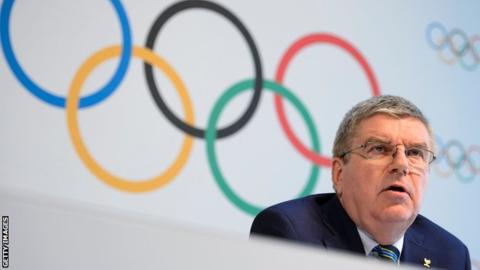
Thomas Bach, president of the IOC, recently claimed that the whole doping scandal hadn’t damaged the reputation of the institution. Personally, I have absolutely no idea how he can say that. The way this whole scandal has been dealt with is an absolute joke. Firstly, how could the Russians get away with this completely undetected for so long? Surely this country should have been one of those under the greatest amount of scrutiny, given its history of doping? It’s not like this is a small scale finding; the government is funding athletes across a wide range sports to be injected with drugs. How that can go unnoticed is baffling.
The most farcical element, however, has to be the furore surrounding which athletes should and shouldn’t be allowed to take part at Rio. One minute all Russian track and field athletes are banned, the next it is being stated that some may be allowed to compete if they can prove they are clean and then all of a sudden they are back to all being excluded again. The IOC doesn’t know what to do; they are making it up as they go along. It’s not as if they haven’t had time to prepare for this. Admittedly, the McLaren Report (which officially outlined just how great the scale of the doping is) was only released a few weeks ago but everyone knew what it was going to say and the IOC should have planned exactly what it was going to do.
Furthermore, I am not in favour of the blanket ban that has been imposed on Russia’s track and field athletes. There are undoubtedly individuals in there who are completely clean and have done everything they can in order to represent their nation on the greatest stage, yet they are paying for the madness of their team-mates. I really liked the suggestion that if any Russians were found to be completely clean then they could compete under a neutral flag – at least they would get the chance to do what they had earned the right to do. This idea quickly disappeared without a trace though.
Another thing I do not understand is why the IOC has announced that any Russians who have served doping bans before, regardless of their sport, are not allowed to compete yet those from other nations can. Having spent the last couple of days trawling through various websites, I am led to believe that there are at least 111 athletes from 61 countries in 15 different events who will be competing at Rio having previously been banned having breached anti-doping violations. Some of these were bans were due to missed drugs tests, whilst others later had it proven that they had not intended to cheat, but the vast majority knew exactly what they were doing. Yet they get a second chance to compete?
These aren’t just small-time athletes with little chance of obtaining medals either. Sprinters Justin Gatlin, Yohann Blake and Shelley-Ann Fraser-Pryce, as well as cyclist Gregory Bauge, are just a handful of competitors with previous convictions that have a strong chance of winning their respective events. Why has this rule not been implemented with them? They are just as guilty, if not more in some cases, as any Russians yet they haven’t been stopped for taking part. I’m not saying they should be, but if a rule applies to one then it should apply to all. Take Lizzie Armitstead. Having missed three drugs tests in a 12 month period, the rules state she should receive a two-year suspension, yet it looks as though she is free to cycle for the foreseeable future. Don’t get me wrong, I think Armitstead is arguably the greatest female road cyclist in the world and I genuinely believe she hasn’t doped, but rules are rules. There needs to be some consistency.
Such is the way with modern sport, it is highly likely that some athletes will be caught doping at Rio 2016. It sounds pessimistic, but it’s true. I just hope that this doesn’t detract from what promises to be a great spectacle. Stories like this have surfaced before and there will be many more in the future. The fact that we all still care about the Games proves that this doping scandal will soon be forgotten. The only things we will remember are the positive memories of outstanding sporting achievement.
Consistently inconsistent
Disappointment; a feeling all of us will experience at some point in our lives. The pattern that leads to it never changes – there is an overhyped build-up that promises of plenty of rewards and elicits a lot of excitement but ultimately the end product is distinctly average and leaves all parties feeling largely underwhelmed. Sound familiar? If you’re a follower of any of England’s national sporting teams, in particular the men, you will know exactly what I mean.
Before every major tournament we, the fans, seem to forget any notion of logic and common sense and suddenly believe that the players we spend most of our time slagging off with friends, family and even the neighbour’s dog are capable of beating the best the rest of the world has to offer. Not that there is anything wrong with a bit of national pride, but this is England we are talking about. The nation famous for being the perennial runner-up in the sporting world; the country that most others point and jeer at. If there is one thing that will be almost certainly guaranteed with an English sports team, it’s abject failure on the international stage.
However, there has been one sport in which this trend looks to have changed. After a poor Test series draw against a distinctly mediocre West Indies side followed a frankly humiliating 2015 World Cup, the England and Wales Cricket Board finally took their heads from out of their own backsides and realised they needed to do something to stop their side from becoming a laughing stock. English cricket had got stuck; batsmen and bowlers alike were more than happy to sit back and patiently wait for the opposition to make mistakes from which they could capitalise. This may have been fine in the ‘70s and ‘80s but in an age of crash-bang-wallop cricket such an approach was alarmingly outdated, as the results across all formats were proving.
The solution? Bring in an Aussie. The appointment of Trevor Bayliss as head coach may not have necessarily been the most popular with the fans but he has certainly done the job England desperately needed and they have been a joy to watch since he took over in May 2015. Ben Stokes in particular has caught the eye; not only did he blast two of the most memorable centuries ever seen – words cannot describe how good his 258* against South Africa was – but he has also produced some remarkable spells with the ball and taken some outrageous catches, including that grab during the 2015 Ashes. He is not the only one to have shone, but the Durham all-rounder is the epitome of the new, all-action, explosive England side.
This isn’t necessarily always the right approach to take however, especially in the Test arena, as proved in last week’s series opener against Pakistan. Many of the batsmen gave their wickets away playing rash shots when the situation, especially in the second innings, demanded calmness and a bit of resolve. There was no tempo in either knock and, in short, it was all a bit chaotic. Only the ever-reliable Alastair Cook and Chris Woakes really looked comfortable against a Pakistan attack that, whilst talented, should not have been able to dismiss England for under 300 on a flat Lord’s pitch.
James Vince was especially culpable in both innings for getting himself out whilst trying to score runs too quickly. The end of his first innings was poor, trying to force for runs leggie Yasir Shah before he had picked what deliveries he was bowling, but it was the second dismissal just after lunch on the fourth day that was the most frustrating. Before the interval the Hampshire man had played some gorgeous shots and finally looked at home in the Test arena.
Yet just a few balls after play resumed he was gone, wafting loosely at a wide ball 8 runs short of a maiden fifty. Whilst Vince undoubtedly has the talent to succeed, his head is all over the place. He looks like he’s trying too hard to fit into the new template outlined for English batsmen instead of concentrating in a manner that has brought him so much success in the county game.
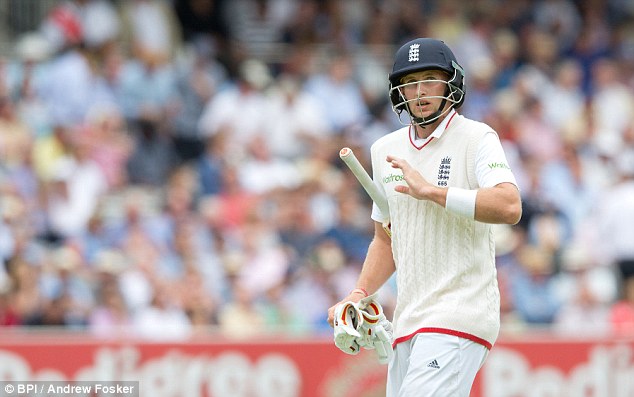
If Vince is a source of frustration, then fans must be tearing their hair out watching Joe Root at the moment. The most complete batsman in the England side isn’t exactly experiencing a lean spell but he has only scored one century in his last 22 innings. In that same length of time the Yorkshireman has notched 7 fifties and looked at ease against all bowling attacks he has faced, yet not managed to convert these starts into big scores. What is infuriating most about Root though is the way he is getting himself out. Rarely is he dismissed by a good ball. Instead, he keeps finding new ways of gifting his wicket to the opposition, the latest of which was pulling a long-hop to deep square leg. Like Vince, England’s vice-captain seems to be taking the desire for attacking cricket too far. Not every ball has to go to the boundary; it’s ok to give a bowler a maiden over every now and again. All he needs to do is play his natural way whilst adapting to the situation of the game and refrain from playing silly shots that may give his wicket away.
Whilst this new attacking brand of cricket may be exciting to watch, if England are going to really challenge for the title of best Test team in the world then they are going to need to temper this and only employ it when appropriate. This is much easier said than done and a lot of the team are still finding their feet at the top level but they need to learn sooner rather than later, otherwise their enormous talent may never be fully realised.
England v Sri Lanka – 2nd Test, Day 2 Report

In the absence of the crocked Ben Stokes, it was England’s other two all-rounders – Moeen Ali and Chris Woakes – who took centre stage at Chester-le-Street as they put their team in prime position to make it an eighth successive Test victory at the most northerly international cricket ground in the world.
England resumed on a par score of 310-6 after a first day in which Sri Lanka bowled well on a pitch that did not offer them much in return. This was a theme that continued in the opening echelons of the morning session, with Nuwan Pradeep beating the edge of a visibly nervous Woakes on a number of occasions.
Woakes certainly rode his luck as he survived one of the simplest chances he will ever offer before he added to his overnight score as wicket-keeper Dinesh Chandimal, nursing an injured thumb, could not even get a glove on an effort that most club players would have not trouble snaffling. However, it was the drop of Moeen Ali a few overs before that was to prove the most costly. On 36 at the time, the Worcestershire man mis-timed one of his trademark booming drives to a wide delivery and was dropped in the gully.
Three hours later, Ali had certainly made the most of the chance offered to him as he crashed his way to his second Test century, his first for nearly two years, bringing up his 1000th run in the process as he eventually finished unbeaten on 155. This may not have been the most fluent of knocks but it was a score that he desperately needed as question marks surrounding his batting have started appearing recently, although his decision not to take easy singles on offer near the end of the innings left many frustrated, with Graeme Swann describing it as ‘brainless cricket.’
England declared on a weighty 498-9 but not after some more erratic Sri Lankan fielding. After a first day in which they took some stupendous catches, they could not have looked more amateur in comparison yesterday, with fumbles and mis-timed slides a regular occurrence. Even when Steven Finn offered the simplest of return catches to Rangana Herath, many in the crowd were anticipating that he would let it slip through his fingers. Fortunately for everyone he didn’t and, on completion of the catch, the veteran spinner had picked up the 300th wicket of his Test career.
Woakes may not have been entirely comfortable with the bat but when he came on to bowl he looked as though he belonged on the international stage. Having struggled to break into the England side in any format over the last few years, with many critics arguing he was too slow to trouble the best batsmen in the world, the Warwickshire player was by far the most threatening of England’s bowlers.
Coming off the back of a career-best 9-36 for his country earlier in the week, Woakes did not bowl a single bad ball in his seven overs and took three Sri Lankan wickets in a 13-ball spell the likes of which we are accustomed to seeing from team-mate Stuart Broad. His scalps included the captain Angelo Mathews as well as the in-form Kusal Mendis, the only batsman to look vaguely half-decent on the tour so far, with a snorter of a delivery. He bowled with plenty of zip and had fantastic rhythm, regularly clocking 86-87mph deliveries and finishing with figures of 3-9.
James Anderson (2-31) and Broad also bowled well, if not quite matching the exceptional performances they produced under more bowler-friendly conditions at Headingley. The former took the first wicket of the innings, bowling the hapless Dimuth Karunaratne round his legs, whilst the latter ended with 3-35 against his name in the scorebook after picking up two late scalps, the second of which included some exceptional catching in the slips from James Vince and Joe Root.
The only slight negative for England was the continued poor bowling form of Finn. Although economical, he rarely threatened the bat and looked down on pace too. Despite this, Sri Lanka closed on 91-8, still needing another 208 runs just to avoid the follow-on, almost certainly going to succumb to another embarrassing defeat.
How to Silence Your Critics
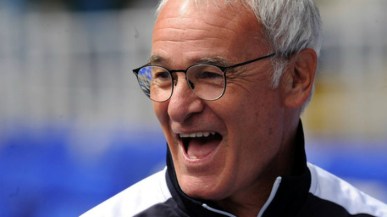
Leicester City, champions of England. Even now, more than week since this was confirmed, something about it doesn’t quite ring true. It’s not a bad thing though; if anything their success has been the kick up the backside that the game has needed. What makes this remarkable achievement even more special is that its orchestrator was the type of person that is never supposed to succeed in the cut-throat world of professional sport; a nice bloke.
Leicester is a team that only 14 months ago was staring down the face of an inevitable relegation, their return to the top flight after a decade of disappointment in the lower tiers not quite matching the fairytale script written for them at the beginning of the campaign. They had gone 8 games without a win and their manager, the bulldog-like Nigel Pearson, was more interested in getting to grips (quite literally) with the opposition than scaring his own players into turning their fortunes around. However, as the first daffodils of 2015 started to bloom across the country, The Foxes emerged from an elongated hibernation and started to play the sort of football that had secured their passage back into the Premier League. Indeed, their sudden upturn in form was so remarkable that a quick glance at the end-of-season table seems to suggest they were never in any real danger of relegation as they finished 14th.
Despite leading his team to the second greatest escape in the history of the Premier League – West Brom’s 2004/5 effort will take some serious beating – Pearson was relinquished of his duties at the end of the season, something that may have been caused by the large number of back-page headlines he found himself on the receiving end of. The Nottingham-born manager seemed to thoroughly enjoy causing controversy but, like a moth drawn to light, this was only ever going to prove to be fatal. The news of his departure was met with content by a number of Leicester fans; that is, until his replacement was announced. Claudio Ranieri, the 64 year-old known as ‘The Tinker Man’ for his policy player rotation, was the man charged with helping the club avoid the drop for a second consecutive year. It was not a popular decision, especially as only a few months earlier his Greece side had lost at home to the Faroe Islands, a nation of less than 50,000, in a European Championship Qualifier. Subsequently, The Blues were quickly touted as relegation favourites whilst fans, journalists and ‘experts’ alike slaughtered the Italian, some even going as far as saying that he would be sacked within the first month of the season.
How foolish they all look now. Not only has Ranieri silenced his doubters by accomplishing the objectives set by the chairman at the start of the season, the fact that he has achieved the impossible by winning the league with a team with no discernible superstars has completely humiliated them. Not only that, but he has done it with a smile on his face throughout. At no point did the Italian seem remotely fazed by anything and it was so refreshing to see him having a laugh and a joke with the press. So often managers and players alike give interviews with the enthusiasm of a teenager being asked to read poetry whilst looking like they would rather the journalist physically assaulted them instead of having to answer more of their questions.
Ranieri has also single-handedly dispelled the myth that money elicits success in football. The fact that Leicester’s second most expensive signing, the £9 million Andrej Kramaric, spent the entire season on loan in Germany is testament to that. Ranieri recognised that the club already had a formula that worked, as proved by their dramatic run towards the end of last season, and instead chose to build up on that. He brought in players such as Christian Fuchs and Shinji Okazaki, experienced names but never likely to set the world alight, who matched the ethos of the club; hard-working individuals who play for the team, not themselves. The entirety of the Leicester squad costs less than Manchester City defenders Nicolas Otamendi and Eliaquim Managala with plenty to spare, yet if this pair was in the centre of The Foxes’ defence they would be a weaker team.
With ridiculous sums now being spent on players with no discernible track records, it can be easy to forget that football is a team game. A big price tag comes with a huge responsibility to live up to it and the majority of players cannot cope with that. Ranieri was well aware that and instead gave greater responsibility to players who were already at the club, a decision that certainly paid off. Kasper Schmeichel was in the form of his life in goal, although admittedly his role was somewhat limited thanks to the indomitable Robert Huth and Wes Morgan in front of him. Danny Drinkwater regularly displayed the sort of talent that once convinced Manchester United to sign him, whilst Marc Albrighton finally lived up to his potential on the wing. As for Riyad Mahrez and Jamie Vardy, their unbelievable seasons have already been well documented and there’s not much more to add that hasn’t already been said. The entire team got behind their manager and repaid the faith he showed them from the get-go. That’s what football should really be about.
Whether or not Leicester can even come close to repeating this next season is something we shall just have to wait and find out but, until then, football should revel in one of the greatest feel-good stories it has ever produced. Thanks to a manager dubbed as an ‘uninspiring’ choice less than a year ago, they have pulled off one of the most unimaginable shocks in the history of the game. To misquote two cliches, Claudio Ranieri has proved that, if you’re good enough, you’re never too old.
The Revolution Continues
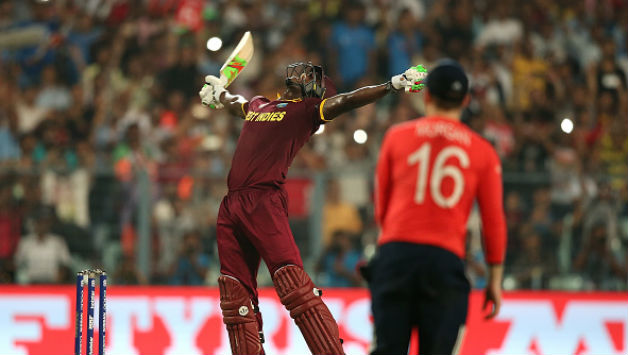
I’ve been converted. It’s a day I thought would never come. Being an old-fashioned so-and-so, I’ve resisted this new uprising for so long. I’m not a fan of change and like to preserve the status quo – as the saying goes, if something isn’t broken then there is no need to fix it. But even I now have to admit that this is the future and an exciting one at that. I have fallen in love with T20 cricket.
No, this isn’t just me jumping on the bandwagon of England’s unexpected success at the recent World Cup; the shortest form of cricket has been teasing me for a while now and this tournament has finally tipped me over the edge. It had everything – upsets, incredible comebacks, nail-biting finishes, the works. What’s more, it was extremely easy on the eye, with flashing bails, stumps cartwheeling across the ground, huge sixes and some funky kits (unlike those garish examples you see in the IPL). What caught my attention the most though was the simply unbelievable standard of fielding exhibited by all 24 male and female teams. There are normally one or two sensational catches in a tournament but this time round that number was somewhere in the region of twenty! There is nothing more spectacular than watching a human being flinging themselves through the air to catch a ball one-handed. My personal favourite? It has to be Pieter Seelaar’s effort against Ireland in the preliminary group stages. Words don’t do this catch justice, go and watch it for yourselves!
There were concerns about the state of the pitches going into the tournament as India has a reputation for producing batsman-friendly surfaces that could have led to some astronomical scores but I think it’s fair to say this wasn’t the case a lot of the time. Although some of the pitches were criticised for players for being too slow and difficult to score on, this actually added to the entertainment as it led to a number of exciting low-scoring affairs. Across the tournament, there were wickets that favoured batsmen, others which turned miles and some even helped the pace bowlers, which is a rarity in that part of the world. I don’t normally have many good things to say about the cricket administrators in India, but this time round they have played a blinder.
Whilst the men may have grabbed the majority of the headlines, the women’s tournament was also fantastic to watch. Take the semi-final between Australia and England for instnace. Chasing 130-odd to win, the English were coasting at the halfway point before the Southern Stars strangled them and eventually ended up winning when it looked certain they were going to lose. It was also refreshing to see some other teams give these two powerhouses of the game a close challenge – England only just scraped through their group whilst the Aussies lost the final to the West Indies, another result that wasn’t on the cards. Whilst it may not necessarily be a good thing for England that other teams are catching them up, the fact teams such as the Windies and New Zealand are shows just how much the women’s game is developing. The future certainly looks bright and I cannot wait to see it unfold.
It’s a shame that the tournament is already over as it barely seemed to have begun, but that also adds to its appeal. World cups in many sports seem to drag and take forever to complete; this one was over in less than four weeks. This is partly due to the fast-and-furious nature of T20 cricket, but also because of a lack of nations participating. It’s weird how cricket is the only sport that isn’t opening its horizons to new teams; the number of teams competing at the 2019 ODI World Cup will be reduced from 14 to 10. It’s almost as if those who run the game have something to hide that they don’t want to be discovered… Hopefully the performances of the associate nations at the tournament, in particular Afghanistan who actually beat the champions West Indies as well as giving runners-up England a scare, will convince the powers-that-be that they deserve to be included in future tournaments.
So now I’ve been converted, what next? Well I guess nothing really; it’s not as if my opinion conversion to T20 cricket actually has any impact on the world! I haven’t changed my view of Test cricket either – I will always prefer this version to anything else. But the fact that even I now accept that T20 cricket is the way forward shows just how much the game has progressed over the last few years. It’s fun and it’s exciting. Cricket is suffering massively with dropping numbers of people participating and T20 must surely be the way to reverse the trend. Let’s just hope those who govern the game recognise it.
WSL 2016 Preview – Part II
Here is the second part of my preview of the 2016 WSL. You can find the first part here:
https://ransports.wordpress.com/2016/03/22/wsl-2016-preview-part-i/
Liverpool:
History
Although they won three successive FA Cups between 1994-1996, Liverpool have always been a team that have flitted in between the top and second tiers of the game. Although they were one of the founder members of the WSL, it wasn’t until their integration with the men’s team in 2013 that they finally managed to claim victory in the top division of the women’s game. This was followed by a second success in the 2014 WSL.
Last season – 7th (13 pts)
Big things were expected of The Reds after two consecutive titles but they were hugely underwhelming in 2015, finishing just above the relegation spot with the joint-second worst defence in the league. Things weren’t much better in the FA Cup, Continental Cup or Champions League and this led to the departure of manager Matt Beard at the end of the campaign.
Transfers
The loss of Natasha Dowie and Fara Williams will be huge for Liverpool as they often carried the side at times last year. However, they have acquired players of huge experience in Natasha Harding and goalkeeper Siobhan Chamberlain and this will be vital in what is quite a young team. They have also signed the hugely excited defender Alex Greenwood and have also tied up a deal for Dutch captain Mandy van den Berg; both of these signings, along with Chamberlain, will certainly tighten up their defence.
Key player – Gemma Bonner 
With wholesale changes to the playing staff this year (Liverpool have brought in 9 new faces and let 10 go), captain Bonner has a major task on her hands ensuring the squad are firing on all cylinders from the get go. She is a battler and superb leader though and will certainly want to ensure last year was a one-off.
Prediction – 7th
This is a team very much in transition so I don’t expect too much from them. The future looks bright though and they will certainly be hoping this season is the springboard that will return them to their rightful place near the top before too long.
Manchester City: 
History
Unlike most of the teams in the league, The Citizens have been affiliated with the men’s team since their inception in the 1980s. In 2012 they became fully integrated, with the club announcing an intention to rebuild the club and place more emphasis on their female members. 2013 saw the creation of WSL2 and it was widely expected that Man City would be placed in that league. However, to much surprise, they were fast-tracked straight into the top tier in place of an unfortunate Doncaster. They have since repaid this decision though with very strong showings and were victors in the 2014 Continental Cup.
Last season – 2nd (30 pts)
2015 was the highest league finish City had ever achieved in their history, narrowly missing out on the title to Chelsea on the final day of the season. It was a much improved season in comparison to 2014 but, with players such as Lucy Bronze and Steph Houghton in their team, they were disappointed not to come away as victors.
Transfers
City have bolstered their attacking options, bringing in experienced Scot Jane Ross from Vittsjo as well as Kosovare Asllani from PSG. They have also converted the signing of Nikita Parris from a loan deal to a permanent one and these three strikers, in partnership with the superb Toni Duggan, have the potential to embarrass any defence in the world.
 Key player – Izzy Christiansen
This may seem a slightly strange choice given the stature of some of the players in this team but, in Christiansen, City have a player capable of unlocking the tightest of defences with her sublime passing ability. The service she will provide to the likes of Duggan and Parris will be the undoing of many teams.
Prediction – 2nd
Although they may be the current equivalent of Real Madrid’s ‘Galacticos’ I can’t see The Blues overcoming Chelsea just yet. It will be incredibly tight though.
Notts County: 
History
The club has only existed in its current format since 2014. Previous to this, the team was known as Lincoln Ladies until they were relocated to Nottingham in order to meet the WSL criteria of being completely integrated with a male club. Although this caused much controversy, the team still retains a large and loyal following and finished a creditable 6th in their first season as Notts County.
Last season – 5th (15 pts)
Last year was another highly respectable year for The Lady Magpies. They might not have the money or facilities some of the bigger clubs do but what they do have is a fantastic team spirit and this certainly showed in 2015. Their highlight of the season had to undoubtedly be a league double over reigning champions Liverpool.
Transfers
County have done well to retain the majority of their star players, with the loss of England World Cup star Alex Greenwood being the only major casualty. They had brought in the promising Natasha Flint from Man City but she has already left the club for reasons as yet unclear. In spite of this, the club have also acquired an array of talent in the likes of Angharad James and Maja Krantz, whilst the addition of veteran Rachel Yankey could prove crucial in what is an otherwise youthful side.
Key player – Carly Telford

The goalkeeper had a fantastic 2015, resulting in a call-up to England’s World Cup squad, and the same will be expected of her in the forthcoming campaign. Look out for more stunning saves as Telford looks to help push Notts County towards the upper echelons of the league as well as striving to become England’s No.1.
Prediction – 5th
Although the team contains few standout players, they have proved that they are a well drilled unit under manager Rick Passmoor and should find themselves in the middle of the table once again.
Reading: 
History
By far the youngest club in the WSL, the women’s section of Reading FC was only formed in 2006. Their run since has been amazing. They won the Southern Region Premier Division in their debut season and the South West Combination the following year. This was followed by a panel voting them into the FA Premier League Southern Division in 2009/10 before further promotion the next year to the National Division, at the time the top tier of the women’s game. They stuttered a little after that but, in their first season after being accepted into the WSL 2, they came a fantastic third behind Sunderland and Doncaster.
Last season – 1st (45 pts) [WSL2]
Reading built on their brilliant WSL2 debut in 2014 by being crowned champions in 2015, thus earning promotion to the top flight. The season went right down to the wire as they needed to beat Aston Villa in their final game to take the title and, despite a late fightback, they held on to win 3-2.
Transfers
It’s been fairly quiet for The Royals, with one departure from the club and four players signed. The standout acquisition is that of Jade Boho-Sayo, an experienced forward who has played in the Champions League and scored 8 goals in 9 games for Bristol City last year.
Key player – Helen Ward
The departure of superstar Fran Kirby halfway through last season threatened to derail Reading’s campaign but Ward, alongside Emma Follis, more than stepped up to the plate in her place. The former Arsenal and Chelsea striker, who only returned to the side halfway through the season after having a baby, is a proven goalscorer and her goals may be vital in the club’s fight to stay in the league.

Prediction – 9th
Whilst I think Reading will be far from outclassed in this league, I don’t think they’ll be able to stay up. Their history suggests that they should be able to but, on paper, they just don’t have the strength in depth throughout the squad.
Sunderland: 
History
Another relatively new club, Sunderland have enjoyed plenty of success since their inception in 1999. This included three straight FA Premier League titles between 2010-13 before being accepted into the WSL2 for the 2014 season. In the face of some tough opposition, Sunderland continued their remarkable run by securing their fourth straight league title and were promoted to WSL1 at the first time of asking.
Last season – 4th (20 pts)
Very much the surprise package of the season, The Lady Black Cats found themselves fighting for the title with just a handful of games to go. However, as the season wore on the effects of having a small squad shone through as their performance dropped off. Despite this, they very much proved they belong at the top level.
Transfers
Sunderland have strengthened their resources by signing some the hugely experienced Kylla Sjoman from Celtic as well as Krystle Johnson from Manchester City. The acquisition of former youth product Lucy Staniforth from Liverpool has also proved to be very popular and, alongside Brooke Chaplen, will provide excellent support for the attacking trio of Beth Mead, Keira Ramshaw and the world-class Steph Roche.
Key player – Beth Mead 
The young striker took the league by storm last year and proved that she could repeat her remarkable goalscoring record from 2014 against the very best. Even when the team were struggling at the end of the season, Mead still provided a constant threat to opposition defences. On her day, arguably the best striker in the league.
Prediction – 4th
Many critics believe Sunderland will suffer from the infamous second-season syndrome but, having watched a number of their games, I think they will be even stronger this year. They have a fantastic team spirit as well as a number of high quality players and may even challenge for a Champions League spot.
 The 52 Blog