#9) #HWC2018

Sport has a habit of producing special moments.
They can be very much personal – i.e. returning from injury or winning a maiden tournament – or they can be cultural, marking a major shift in perceptions.
It’s fair to say the 2018 Vitality Hockey Women’s World Cup was special for both reasons.
In a slight change to the normal format, here are four reasons why #HWC2018 will go down in history as a game changer for women’s sport.
14 days. 36 games. 126 goals…
1 incredible @Vitality_UK #HWC2018 🙌 pic.twitter.com/R1Ne5Wre1a— England Hockey (@EnglandHockey) August 8, 2018
1) Irish eyes are beaming
You know you’ve done something remarkable when Mariah Carey and Conor McGregor are tweeting about you!
As sporting stories go, if what the Green Army achieved in London isn’t deemed worthy of a film script in the future then frankly nothing is.
Taking part in their first World Cup since 2002, the second lowest ranked team at the event stunned everyone by not just qualifying from a tough group but by going all the way to the final.
There was a fairytale-like feeling surrounding the team from their opening day victory over the US and that momentum continued to grow and grow. Victory over India secured their quarter-final status with a pool game to spare (which they lost to England), before they beat the same opponents on a shootout to reach the last four.
But their story wasn’t to end there though as they created national history by (apparently) becoming the first team to qualify for a World Cup final in any sport after another tense shootout victory over Spain.
What really stood out about their tournament though wasn’t necessarily how far they went but how they got there.
It was so difficult to pick a ‘Player of the Match’ for each game because they were all brilliant. Obviously there were the shootout heroes – Ayeisha McFerran, Chloe Watkins and Gillian Pinder – but collectively each player was fantastic in every match, epitomising a true team effort.
They may have lost to The Netherlands in the final but by then the tournament was already theirs. If #HWC2018 is remembered for anything, it will be Ireland.
World Cup silver medalists 🥈💚 pic.twitter.com/DrdMPQb4zf
— Green Army (@IreWomenHockey) August 5, 2018
2) Predictable unpredictability
If you thought the men’s football World Cup was full of surprises, that was nothing in comparison to the shocks thrown up in London.
Alongside Ireland’s unprecedented success, the tournament was full of upsets from the first afternoon right up until the last when the Spanish claimed their first ever World Cup medal by beating Australia – ranked several places above them – to secure bronze.
That came just days after they had knocked out a German side who looked imperious in the group stages, with many touting Die Danas as dark horses for the tournament until that loss.
Italy also wrote history in each of their group games, starting with achieving their maiden World Cup victory in their opening match against China before qualifying for the knockout round for the first time with a last gasp victory over Korea.
It wasn’t all positive though as they also created some unwanted history by being on the end of the largest ever World Cup defeat as the Dutch blitzed them 12-1. But considering it was their first World Cup since 1976 the fact they picked up any points at all was incredible!
Indeed the eventual champions were the only side who didn’t look like being on the receiving end of an upset – aside from being taken to a shootout in their semi-final in Australia – as they stormed their way to an eighth World Cup title.
3) Women’s hockey (and sport) became mainstream
It certainly was a weird sensation seeing hockey on both the home page of BBC Sport and main BBC websites.
But this became a fairly regular occurrence during #HWC2018 as the sport finally made the headlines it has deserved for a while.
Indeed, this tournament could well be the breakthrough event for women’s team sport in this country.
More than 120,000 tickets were sold for the 14 days of action, with the 10,500 seater stadium packed out for every England game, the semi-finals and final. Furthermore, viewing figures for certain fixtures on BT Sport were supposedly higher than they get for some of their mainstream men’s team events.
People cared about it. People wanted to watch it. People were interested in women’s sport.
Credit must go to BT for the fantastic job they did showcasing the tournament, despite the disappointment of some that it wasn’t on terrestrial TV. Their coverage was informative yet fun, patriotic yet celebratory of other nations and definitely inventive, with plenty of gadgets and gizmos.
Furthermore they had a fantastic array of inspirational women – Kate and Helen Richardson-Walsh, Sam Quek, Crista Cullen and Mel Clewlow – presenting alongside Chris Hollins and Simon Mason who, along with the fantastic players on show, proved that hockey really can be for anyone and everyone.
A special mention must go to #ThePride too. Experiencing the roar of the fans in the crowd was enough to give anyone ‘goosies’ and to see all the love and support for the team on social media was incredible. They came, they saw and they certainly delivered!
England take on a free-scoring Dutch side in the #HWC2018 quarters, Crista Cullen & Helen Richardson-Walsh preview. https://t.co/LLXFPDzu7U
— BT Sport (@btsport) August 2, 2018
4) Hometown heroines
They may not have hit the heights they were hoping for but, once again, England’s international stars have inspired a generation.
Yes the performances weren’t perfect but what was clear to see every time they played was the sheer amount of effort each player put in.
They literally left nothing out there in their quest for World Cup glory and showed that, whatever the odds, you should never give up on your dreams.
Seeing how distraught they were after losing to the Dutch was heart-breaking but they should also take pride in what they achieved and there are certainly plenty of positives moving forward.
We must remember that this is a different squad from the one that won 2015 European gold and formed the backbone of the legendary GB squad that won the Rio Olympic final.
Instead there are now a host of young players right at the start of their careers who are bursting with potential. They still have plenty to learn but combined with a core group full of experience who will help them along their journey, I have no doubt they will become a fearsome side in the next few years.
It is a genuine privilege being able to work alongside not just the 18 who appeared at the World Cup, but every single member of the men’s and women’s squads and I have so much faith both will winning major medals medals on a regular basis in the near future.
Reflecting on all that is a home World Cup.
We can not always win on the pitch, but we can always win off it. 🥇#thankyou #behindeverygreatplayer 🌎🏆 pic.twitter.com/QsjUa3gHDo
— Alex Danson (@AlexDanson15) August 11, 2018
And finally…
As Ireland proved, hockey is very much a team sport but a team cannot be formed without a host of talented individuals.
There were plenty of fine performances throughout #HWC2018 and several players can count themselves very unlucky to have not made this list but here is my 18-strong ‘Team of the Tournament’:
Goalkeepers: Rachel Lynch (AUS); Ayeisha McFerran (IRL)
Defenders: Rocio Gutierrez (ESP); Jodie Kenny (AUS); Elena Tice (IRL); Laura Unsworth (ENG); Zoe Wilson (IRL)
Midfielders: Eva de Goede (NED); Lily Owsley (ENG); Chiara Tiddi (ITA); Lucina von der Heyde (ARG); Chloe Watkins (IRL)
Attackers: Alex Danson (ENG); Rosie Malone (AUS); Charlotte Stapenhorst (GER); Eugenia Trinchinetti (ARG); Kitty van Male (NED); Lidewij Welten (NED)
#8) Sporting Mums
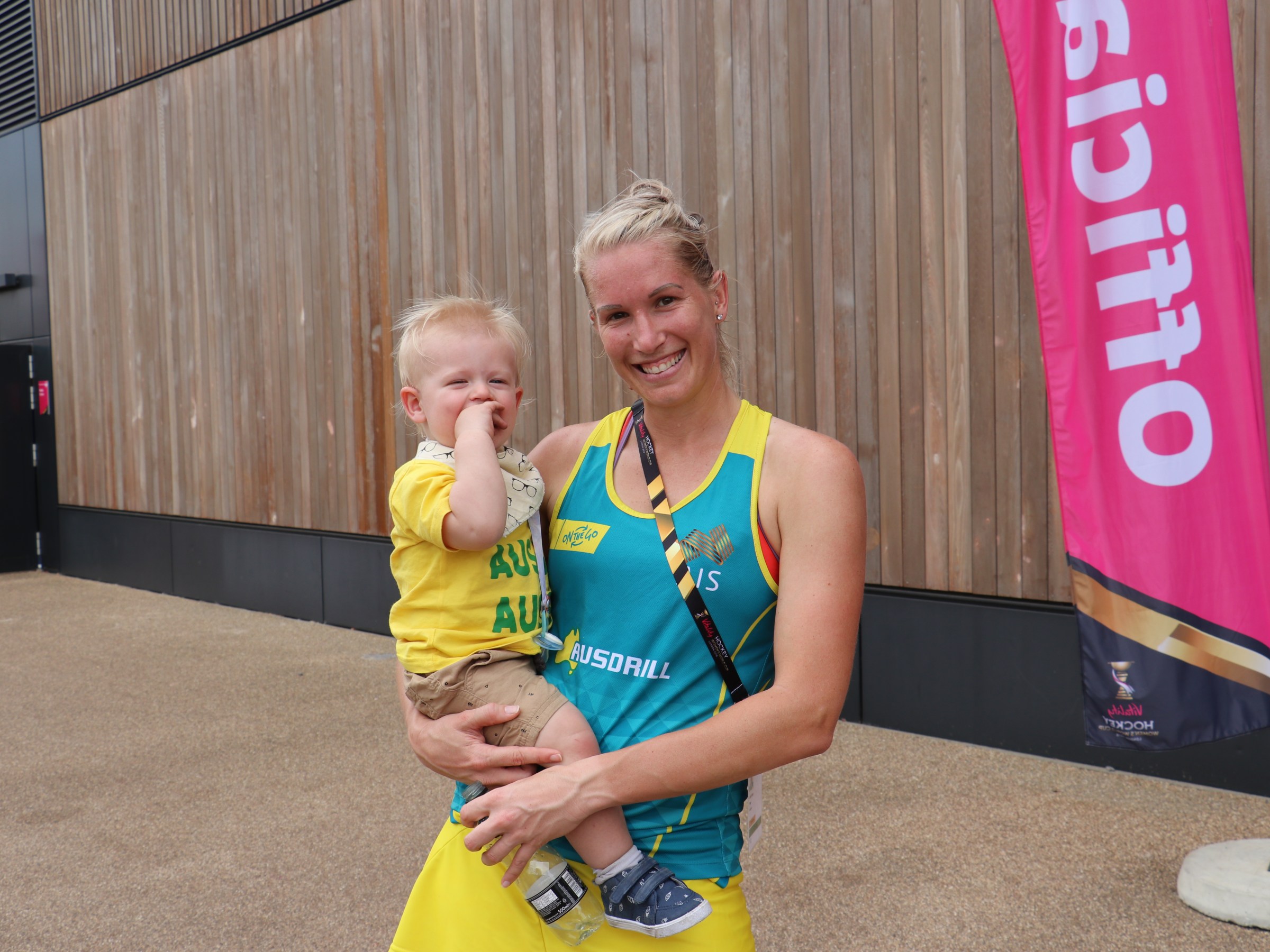
Mums are incredible.
Obviously Dads are awesome too but there’s just that something little bit extra special about the people who physically grow humans inside of them.
Following on from that is the most painful experience known to mankind in order to give us life.
If you then add all of the other things that come with being a new parent – breastfeeding, sleepless nights etc. – it’s completely understandable that becoming a mum can take its toll on the mind and body.
Imagine doing all that and then returning to a profession which demands constant peak physical fitness. Sounds impossible doesn’t it?
Yet there are so many athletes who have not just returned to elite sport but also matched or even eclipsed the levels they were at beforehand.
To me, that commands the highest of respect.
Coming back and succeeding from a serious long-term injury is one thing but to come back after creating a new person and perform even better than before is something else.
Being halfway through an Olympic cycle, 2018 certainly seems to be the year of sporting mums returning to action, with Laura Kenny hitting the headlines last night (Friday 3 August) having won her 11th European track cycling title in Glasgow.
Earlier in the day Dame Sarah Storey also returned to the sport she has dominated for so long by taking Para-cycling World Road Championship gold in the C5 time trial after giving birth to her second child last year.
This might just be my favourite picture from yesterday! #mumlife #happykids #happymummy #onouradventures #daddybehindthecamera 😍😍😍 pic.twitter.com/vR5wI9DVaE
— Dame Sarah Storey (@DameSarahStorey) August 4, 2018
In addition, later today Australia’s Jodie Kenny will take to the field in front of 10,500 fans for what should be a fantastic 2018 Vitality Hockey Women’s World Cup semi-final against The Netherlands just over a year after giving birth to her son Harrison.
And then there is Serena Williams, who already remarkably won the 2017 Australian Open whilst pregnant before reaching the final of Wimbledon in July just months after a difficult birth that could have cost the record-breaking star her life.
While being a professional athlete is in itself just another career, it is very unique in that it is so highly dependent on an individual’s physical state and this is one of the reasons successful post-partum comebacks are so impressive.
Due to the incredible stress and pressure it is put under, the body changes significantly both during and after pregnancy. For some it can be difficult to regain the levels of fitness they had before.
Yet not only have these individuals been able to negate all of these changes, they have come back in just as impressive – if not more so – shape.
Yes ok, that is part of their job and what they are paid to do but for most people it is difficult to keep in decent nick at the best of times, let alone so soon after having given birth. And then to come out and win titles at the very highest level… Frankly, that’s just ridiculous!
Another noticeable characteristic of all the aforementioned athletes is that, to them, sport is just a job and motherhood comes first. In fact, these are pretty much the words used by Storey the day before her she picked up her 24th cycling world title.
They have all recognised that, actually, sport isn’t the be-all-and-end-all and that family comes first, which seems to certainly give them all an added element of maturity over and above what they already possessed before.
This certainly came through when speaking with Jodie Kenny earlier in the World Cup, just months after returning to hockey at the Commonwealth Games held in her home country.
While obviously disappointed to lose to New Zealand in the final, the 30-year-old said that being able to go on a lap of honour with her son around her home stadium was one of the most special things to happen in her career and that she just hoped one day he’d be proud.
I love talking about being a mum and an athlete.. If I can inspire one mum out there to follow their dreams that’s a big win! #mumsinsport #HWC2018 #followyourdreams https://t.co/dIBzwlxePt
— Jodie Kenny (@JodieKenny7) July 28, 2018
Her namesake Laura also showed that motherhood has slightly changed her persona following yet another European victory last night.
One of the reasons we as a nation fell in love with Kenny – aside from her exceptional talent on the bike – was her bubbly, infectious personality that always came across no matter what. Listening and watching any interview with the 26-year-old was always a joy because of her constant smile and proneness to bursts of giggles.
While all of this was still very much evident as she spoke to Jill Douglas last night, there was a more measured approach to her speech, as though becoming a mum has slightly tempered her youthful exuberance, but only by a fraction.
What was clear however was that there is still a deep, burning desire within her to not just repeat her previous performances on the track but better them.
This is something noticeable in all these athletes. Each of them will go down as legends in their own right for what they have already achieved and it would have been totally understandable had they stepped away from sport but, despite recognising their kids now come first, they still want to win.
No-one is this truer for than Williams. There is literally nothing she hasn’t won in tennis and yet, despite having had her life put in danger while giving birth, she still wants to come back and win more. It’s just remarkable.
Combining parenthood and a job is tough for anyone, let alone being a professional athlete. But this is not just what these four athletes – amongst many more – do, they nail it.
They are, in every sense of the word, heroes.
#7) Amy Conroy
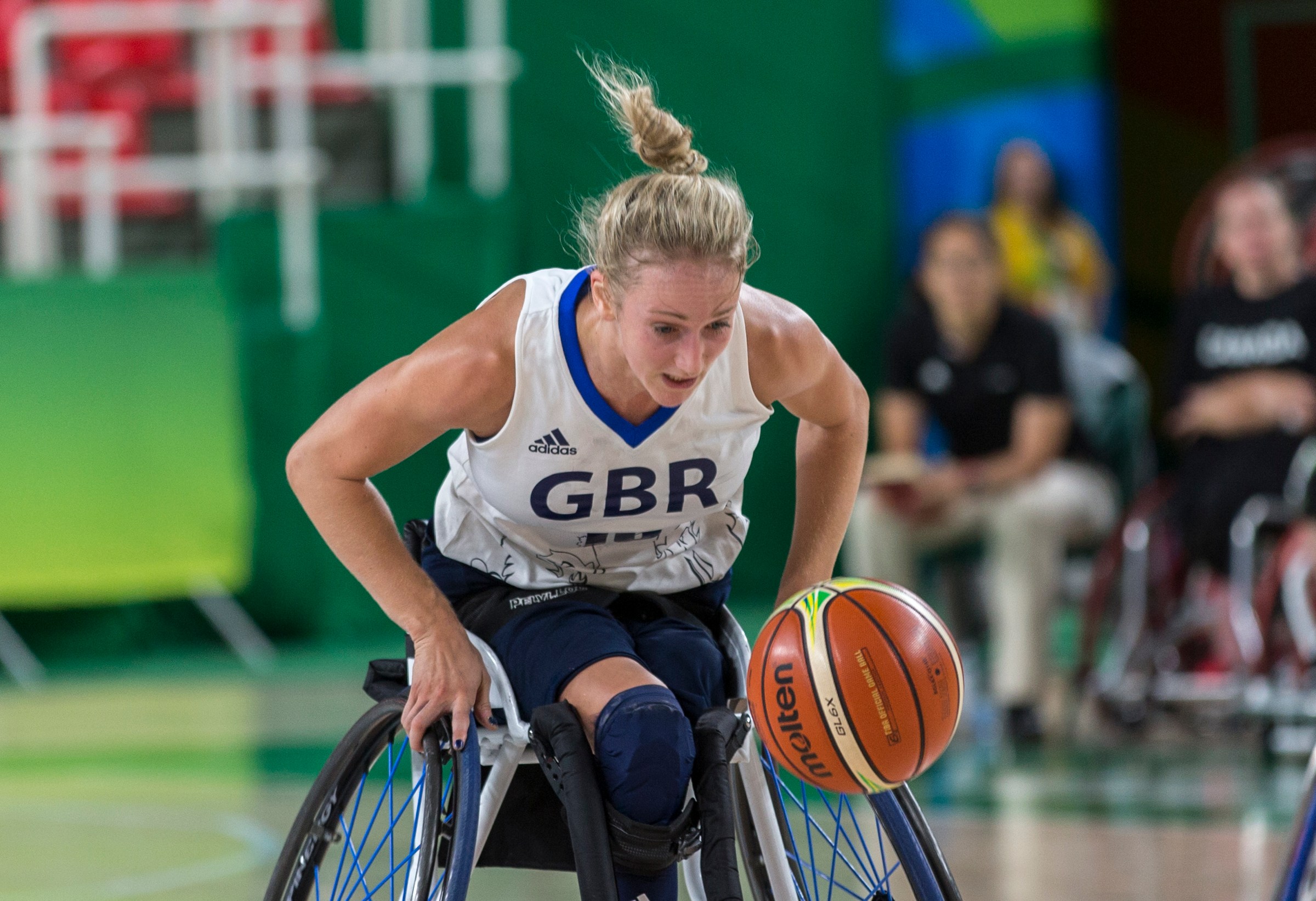
Sport has the power to change lives in a way almost nothing else can.
Everywhere you look – whether it be at the elite level or a club’s 8th XI – there are stories of triumph over adversity, feats of bravery, tales of courage and those who have turned their fortunes around for the better.
Few people know more about the positive impact of sport though than GB wheelchair basketball star Amy Conroy.
She may be aged just 25 but already Conroy is a two-time Paralympian, an U25 world champion and a European bronze medallist. Furthermore, next month she will also be part of the team aiming to cause a few upsets and bring home a medal from the World Championships in Hamburg.
And that has all come after having lost her Mum to cancer at a young age and having overcome a particularly aggressive form of cancer that saw her lose a leg.
At just 12, the fit and active youngster started suffering from pain in her knee that was initially put down to how much exercise she was doing.
But eventually a trip to A&E resulted in doctors conducting x-rays, something that would ultimately change her life.
“I just remember the diagnosis really clearly,” she recalled.
“I found out that I had osteosarcoma – a tumour, cancer – and it spread pretty badly to a few places. I was given 50% chance of survival.
“I was there with my Dad and we just looked at each other – my Mum had passed away previously of cancer – and it was just that moment you don’t forget.”
A year later and Conroy – known by her team-mates as ‘Tiger’ – had overcome the toughest battle of her life and was in remission.
But it wasn’t a straightforward journey to that point. She spent pretty much every day in hospital, suffered from horrible bouts of sickness – “the first day I counted it was 75 times!” – and had to have her leg amputated halfway through after chemotherapy was unsuccessful.
“An x-ray showed my thighbone and there was just nothing left of it,” the former Loughborough University student recalled.
“I guess it’s a big thing to have your leg amputated but at the time it was just one of those things and I’ve never looked back since.
“I don’t think I’d change anything now, I’ve adapted and I really love the way my life is turning out.”
Conroy certainly has every reason to feel positive. Having beaten off such a horrible illness, she is now one of the game’s most feared scorers, finding the net seemingly without fail every time she plays.
She was also part of the team that made history by finishing fourth at Rio 2016, the highest position the women’s wheelchair basketball outfit has ever achieved at a Paralympic Games.
The enthusiasm and passion she has for wheelchair basketball is evident when the Norwich-born athletes speaks but it could have been so different had she not persevered after a dubious start.
“I wasn’t a fan at first,” she admitted.
“I didn’t know much about disability sport, I thought it was just going to be like ‘everyone come and have a try, the basket’s going to be on the floor, it’s quite gentle’ but once I got into it I loved the aggression of it.
“I guess when you’re a sick kid and people see you, you’ve got a bald head and you’re in this big Red Cross wheelchair, they are quite precious of you but I just loved how everyone was equal and how people went at you. I haven’t looked back and got really addicted to it.”
One of the biggest influencers in Conroy’s career to date has undoubtedly been her Dad, who helped her through the difficult days of the illness, encouraged her to attend that first session and has been with her every step of the way.
“We do have a special bond. He’s amazing. Because it’s just him, my sister and me all these experiences have just brought us closer and he’s been there from day one when I first started,” she said.
“Each evening he’d take me to the outside courts when there were all these guys there and dog poo on the floor. At the time he probably thought ‘God she’s hopeless!’ but he stuck with it.
“It’s always special when I see him in the crowd or after a good game because it does mean quite a bit to him.”
While the attentions of Conroy and her team-mates will solely be on the basketball in Hamburg, each of them know that whatever happens performance-wise they have already overcome some of the toughest challenges life has thrown at them.
“In day-to-day you just forget about all these things. We’re just focusing on our game and we’ll take little things really seriously like losses which we can get really frustrated and down about,” she admitted.
“But then when you step back from it and realise everyone’s story, they are really inspirational girls.
“We don’t say this cheesy stuff to each other but when you put it into perspective I am really proud to play alongside them.”
Great Britain begin their World Championship campaign against Brazil at 10:15 BST on Thursday 16 August.
#6 Inner Warrior
Sport as we know it may have only existed for less than 200 years but already it has deep rooted perceptions that can be difficult to alter.
Some are positive but equally plenty are negative, arguably the most prevalent of which is that women have no place in certain activities and events.
While it’s true progress is happening, there is still a long way to go before women are wholly accepted as coming close to their male counterparts – just look at the abuse Alex Scott and Eni Aluko received for being employed as pundits at the recent men’s football World Cup.
However there is one sport in particular which is well and truly on its way to smashing that stereotype: rugby.
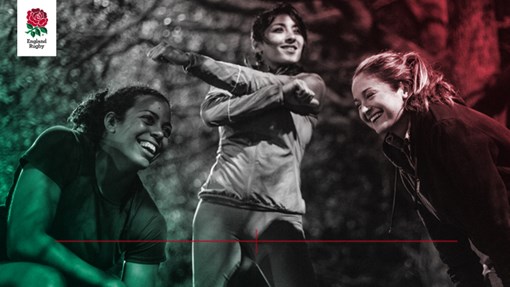
While success on the pitch – the XV-a-side squad won the World Cup in 2014 and came second in 2017, while the sevens team medalled at both Rio 2016 and Gold Coast 2018 – is certainly a factor behind this, they also have the fantastic Inner Warrior campaign which is introducing a whole new audience to the game.
So long seen as the quintessential, boys-grammar-school-only sport, Inner Warrior is playing a pivotal role in completely obliterating that image and showing that rugby is a sport just as open to women as it is to men.
The first camps – which give women the chance to learn the basics of the game and give them a taster – were held early last year as part of the RFU’s project to get 25,000 women participating in contact rugby by this summer.
But just a few months after the scheme was released that target had already been hit a full year ahead of schedule – it was initially a four year plan running from 2014-2018 – with Inner Warrior also smashing its proposed targets.
In May 2017 alone more than 2,600 women took part in 150 Warrior Camps across the country, a 73% increase on their original target and forming a significant portion of the 7,000 women who had attended training sessions since January 2017.
By the end of the year more than 10,500 women had attended various camps, with 3,500 of those having never picked up an oval-shaped ball before. Furthermore, the number of women who then wanted to further their playing and participate regularly was so great that 41 brand new teams were founded.
In comparison to the total number of women in the UK these figures might not seem like much but, in context, they are astounding. To have achieved that level of growth in such a short space of time is superb.
As well as being a great idea, this is in part down to clever timing on behalf of the RFU. As is the case with every sport, it’s always the major events that attract new people, especially if their nation does well.
There is a reason why the initial strategy and then the Inner Warrior camps were launched at the start of years that included World Cups in which England were expected to do well, while last year the whole tournament was shown live and free-to-air on ITV.
For so long women have not had the opportunity to go and emulate the players who have inspired them on their screens but now, thanks to Inner Warrior, they do.
The importance of this cannot be underestimated – the momentum surrounding a sport can so quickly dissipate after a major tournament but with these camps their legacy can continue to live on and help discover a future generation of talent players.
It’s not only the timing that has impressed but also the project message itself. It is very clear and simple but also highly effective – every women has an ‘inner warrior’ they can find and unleash through rugby.
In a world where women have been oppressed for so long this is a bold and empowering statement and almost certainly one which has played a huge part in the success of the camps.
The visuals surrounding the message are similarly simplistic but powerful. They depict women of all shapes, sizes, age and ethnicity showing attributes for so long they were told they couldn’t have – strength, speed, bravery, courage, determination.
The numbers may be strong but perhaps the biggest indicator as to how successful the Inner Warrior campaign is that so many of the players are fully on board and reinforcing the message via their social channels.
While it is certain that they would have been asked to post this, to see the likes of Tamara Taylor and Emily Scarratt really driving forward the message shows just how important it is to everybody within the RFU.
Great turn out in perfect rugby weather at @BeverleyRUFC #innerwarrior camp tonight. Great to meet you all.Thanks for my hat 🐻 #rain #beaver pic.twitter.com/2UYsOEIGcu
— Tamara Taylor (@Timmytammy8) May 15, 2017
The players know they are blazing a trail and making huge strides to showing rugby is a sport for men and women and they are also showing they are keen to show that anyone – no matter who they are or where they come from – can play.
Yes there are so many fantastic campaigns run by teams and NGBs encouraging women to take up their sport but there is a reason why the Inner Warrior campaign won the ‘Inspiring Initiative – Nation’ prize at the 2018 Women’s Sport Trust #BeAGameChanger Awards.
And that’s because it’s bloody brilliant.
#5) Aluko, Scott, Sparks
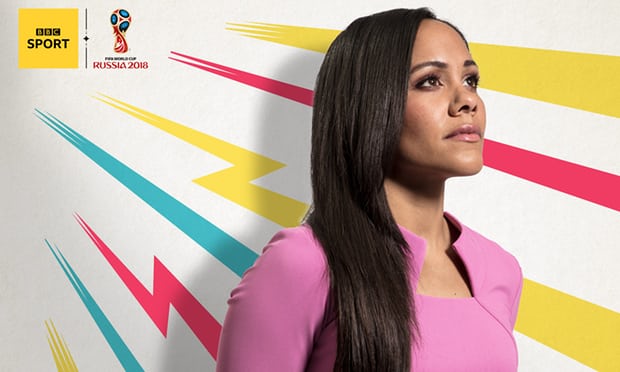
Rather than the disaster many anticipated, the men’s FIFA World Cup in Russia has actually been one of the most energising, uplifting learning experiences this nation has undergone in recent memory.
As fans we have learned so many things – that England actually have a good crop of players; that Russia is not all bad (in fact, a lot of it seems pretty good) and that waistcoats are cool.
However, somewhat less positively, it also appears that the great game still has a sexism problem amongst fans in this country as highlighted by reactions to the presence of Alex Scott, Eni Aluko and Vicki Sparks on our screens and in our ears.
Before we go into detail, let’s be clear on one thing: this is a minority we’re talking about. Judging by the thousands of posts on social media, there was plenty of praise thrown their way throughout the tournament.
But unfortunately there was also a decent proportion of comments that weren’t so pleasant and, in some cases, nothing short of outrageous and neanderthalic. And that wasn’t just by the Twitter trolls either – in Aluko’s case she was subjected to an embarrassing display of sexism by Patrice Evra in front of millions of watching fans.
And while I could eulogise their coverage of the world’s biggest sporting tournament for the rest of the blog, it’s not actually this that’s impressed me the most.
Of course they have all been absolutely fantastic, but really that was only to be expected. There are reasons Sparks was chosen to be the first woman to live commentate on a men’s World Cup game, that Aluko has now covered three major tournaments despite still being a player and that Scott is already a very regular presence across all formats of the BBC.
Those reasons are passion, insight, knowledge and – above all – engaging personalities.
But what really impressed me was the maturity and grace with which they dealt with such a volatile situation that unfurled before them.
How many of us would have bitten the bullet and reacted to some of the awful, unfair comments written and said? I know I would have been sorely tempted and there are many that do often – just look at Gary Lineker and Piers Morgan!
What particularly wound me up were the numerous suggestions that Scott and Aluko have no place being pundits on men’s football because they played the women’s version.
Sorry, what?! Here we have two of England’s greatest players of the modern generation with caps, trophies and goals galore between them. They finished third at a World Cup. If they’re not qualified to give insight then frankly no-one is.
It’s astounding to think that there are people out there who genuinely think that men’s and women’s football are two completely different sports. Yes ok there are some differences but seriously?
While each would have been more than justified in reacting, they rose above the situation and just carried on doing what they do best.
No more evident was this than when Aluko completely brushed off Evra’s ridiculous comments and carried on with her informative and insightful analysis of the Costa Ricans.
Scott has also showed remarkable restraint on social media, where she is perhaps the most active of the three. There has not been a single character of negativity in any of her tweets and she portrays having the time of her life, something which comes across even more when she appears on TV.
There were a couple of references to the debate surrounding her appearances but even then she managed to turn them into a positive. This included retweeting a post from Jason Manford that said ‘She’s not just a pundit. She is inspiring and opening up the game to a host of people who never thought this game was for them.’
She’s not just a pundit. She is inspiring and opening up the game to a host of people who never thought this game was for them
— Jason Manford (@JasonManford) June 23, 2018
These words could not be more true. In the space of a month Scott, Aluko and Sparks have shown that female football pundits and commentators are just as good – if not better – than their male counterparts.
Of course they’re not the first – Gabby Logan, Jacqui Oatley, Sue Smith and Rachel Brown-Finnis are just a few who have been fantastic in recent years – but what they have done is taken the world’s biggest stage by storm and proved so many people wrong.
This certainly feels like a watershed moment in terms of having women broadcasting and covering the world’s most popular game alongside men and I would not be surprised if this is the tournament referenced as a game changer for years to come. And that is all down to Scott, Aluko and Sparks.
#4) Beth Dobbin
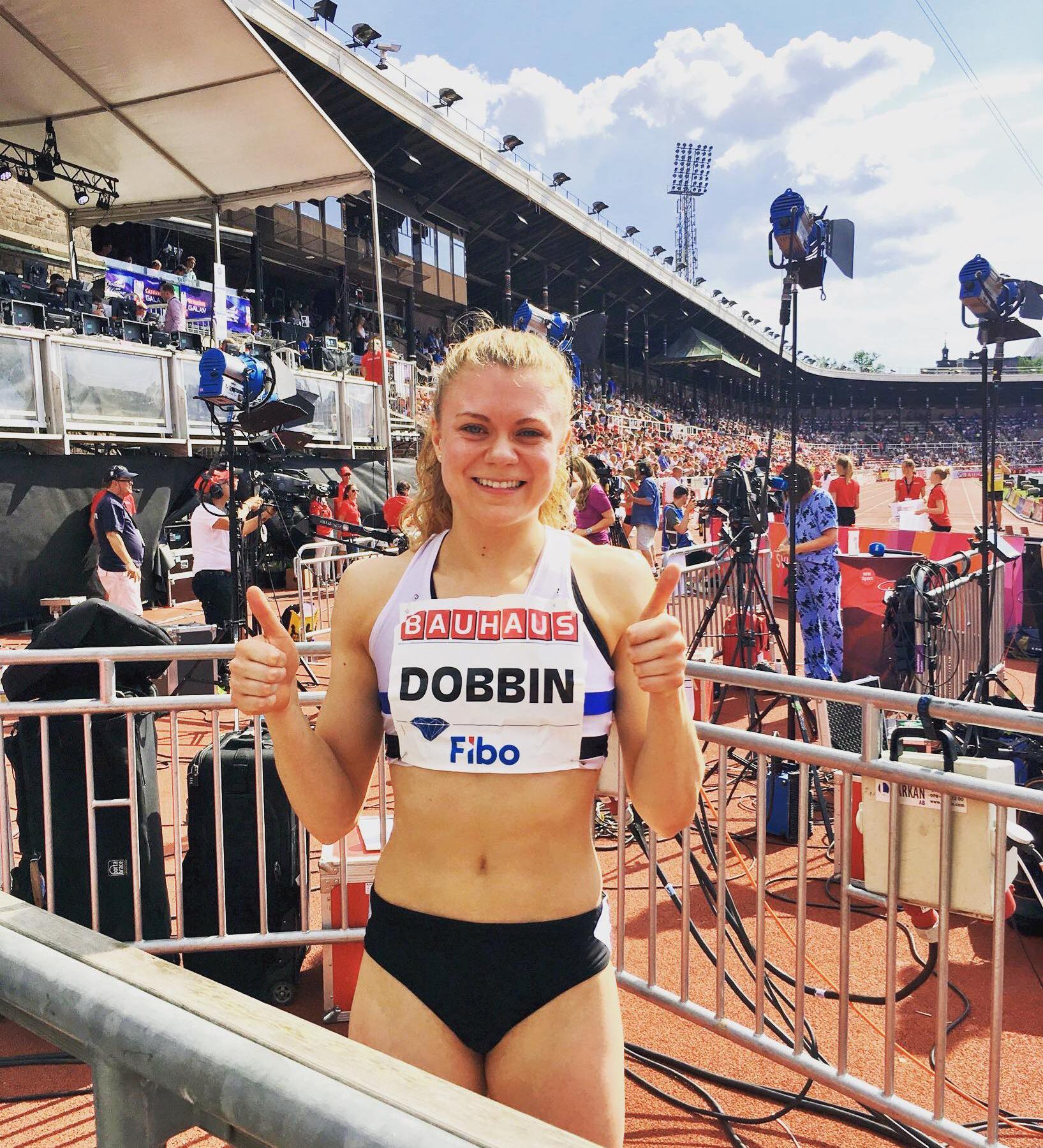
Have you heard about the sprinter who went from relative obscurity and missing out on a place at the Commonwealth Games by 0.01s to British champion in the space of a few months, breaking a 34-year-old record on the way?
Sounds too good to be true doesn’t it? Surely this is the type of narrative only found in children’s books or Hollywood scripts?
Yet that is exactly the tale that has unfurled for Scottish athlete Beth Dobbin.
Back at the start of this year, very few people would have heard her name before. But anyone who even vaguely follows the sport of athletics certainly knows who she is now.
Dobbin first hit the headlines on 2 June as she set the then second fastest 200m time by a British woman this year, clocking 22.84s during a meet at Eton and breaking the Scottish record held by Sandra Whittaker since the 1984 LA Olympics.
Then just last weekend she lowered that record twice more, stunning everyone to beat Bianca and Jodie Williams and become the British 200m champion for the first time.
That result means she has qualified to represent Great Britain for the first time at this summer’s European Championships alongside the two Williams’ and defending champion Dina Asher-Smith, while she has also been selected to wear the vest at the forthcoming World Cup event in Berlin.
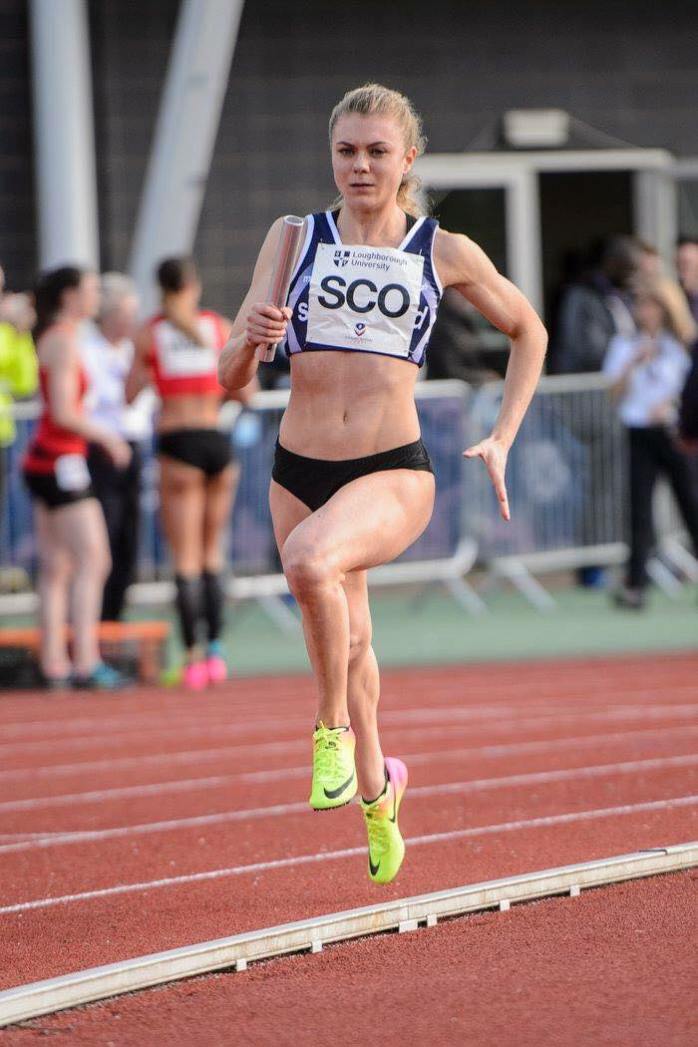
And all this came just a few moments after Dobbin suffered arguably the most agonising moment of her career to date as she missed out on representing Scotland at Gold Coast 2018 by just one hundredth of a second.
To put that into context, the blink of an eyelid takes around 0.3s in total. Or, in more sporting-related terms, Jordan Pickford had around 0.4s to react and fling his hand up once Carlos Bacca struck his penalty for Colombia during the World Cup.
Losing out by such a small margin certainly hit Dobbin hard and she admitted struggling to enjoy watching the event, but that it has spurred her on (clearly!) to avoid any such disappointment occurring again.
Speaking with my colleague Alasdair on SportSpiel recently, the Loughborough AC athlete recalled: “The only way I can describe it was heartbreaking. It was devastating.
“But you have it in your mind that you’re only one hundredth of a second off so I was thinking maybe they may still take me, I might get a relay spot and all of these kind of things but they never did so it was genuine heartbreak.
“Watching all the other athletes out there, seeing everyone posting being at the Commonwealths and watching every single second of it on the TV, it was really hard to take.
“But I made a promise that I would never let that happen again and every session I do at the moment it’s in the back of my mind that I missed out by 0.01s so I can’t do that again. It really has motivated me.”
These achievements alone would be enough to command the highest respect of even the most hardened athletics fans, but that is only part of Dobbin’s story.
Not only has she overcome such disappointment in spectacular fashion, she has done so without any funding or sponsorship, instead balancing her training schedule with holding down not one but two jobs as a receptionist and member of security at Loughborough University.
This harks back to the days when top athletes – those who represented their countries at the Olympics – were fully amateur and saw sport as more of a hobby than profession.
The world may have moved on since then and before long it is likely that Dobbin will soon receive the financial support she deserves, but the 24-year-old stated that – while not always easy – she thoroughly enjoys juggling the two.
She said: “I struggle with the sleep. I work from 7-3 so I have to be up at 6am. As athletes we’re told to get 10 hours sleep per night but I don’t think I could physically fall asleep at 8pm!
“But I’ve always been a grafter. Ever since the age of 13 I’ve wanted to be independent and earn my own money. I’ve babysat, sold programmes at my local football club, I’ve always had a job and even if I was to find funding, find sponsorship I would still have to work because I’m so used to it.”
If Dobbin were to be a character in an Aesop fable, she would almost undoubtedly be a cross-breed between the tortoise in the hare, having had to work for years to win the race at an almost unfathomably fast pace.
She is showing no signs of stopping either – expect memorable things from her not only this summer but going forward to next year’s World Championships and (whisper it quietly) Tokyo 2020.
#3) Laura Muir
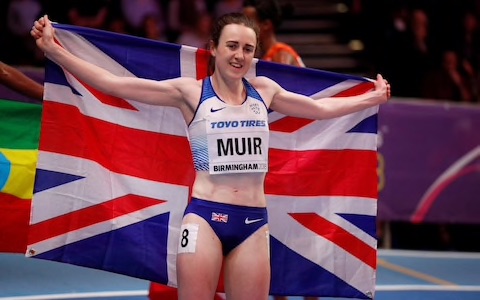
Most brains function in such a way that the ability to concentrate on more than one thing at a time is incredibly challenging.
And that’s not just multi-tasking either – very few are capable of being able to hold down more than one job or focus on more than one project at once. Our brains just don’t work like that.
Not Laura Muir’s though. Not only is the Scot arguably the best middle-distance runner this country has seen since Dame Kelly Holmes – with many expecting her to medal at Tokyo 2020 – just last week she also qualified as a vet!
The act of combining studies and training isn’t so rare in the sporting world – I work with athletes studying for psychology and business masters as well as accountancy and personal training qualifications – but veterinary studies is a whole new level entirely.
Not only do you have to learn the anatomies of a huge variety of animals, you also have to discover how to diagnose and treat a vast array of ailments, made harder by the fact these different species can’t communicate what is wrong in the same manner humans can.
It wasn’t like Muir was sat on her bum studying out of textbooks either. Veterinary studies is a degree that involves a huge number of practical elements that can be very physically demanding. For example it has been reported that she used to get up at 5:30am to milk the cows.
Every day.
Imagine doing that and then having to head off to training four or five times a week… And then having to cope with the pressure and expectation that is so heavily placed around her by the media. It certainly is a good job that Muir has high stamina levels!
Yet despite all that the Glasgow University student has continued to impress time and time again on the world stage. To put things into perspective, here are just some of the athletic achievements Muir has achieved since beginning her degree back in 2012:
- Competed at Commonwealth, European, European Indoor, World and World Indoor Championships as well as an Olympic Games
- Broke Yvonne Murray’s 27-year-old Scottish 1500m record in 2014 aged just 21
- Broken both Dame Holmes’ 1000m and 1500m British records, as well as the British Indoor 5000m record
- Became only the third British woman to win a Diamond League event in 2016
- Took golds in the 1500m and 3000m at the 2017 European Indoors, breaking the championship records on the way
- Won bronze in the 3000m at the 2018 World Indoor Championships having nearly missed the race after being caught in a snow drift as she raced from sitting an exam in Scotland to the event in Birmingham. She then followed it up with a silver in the 1500m a few days later.
It’s not been a completely smooth ride for Muir either. There was heartbreak on home turf at Glasgow 2014 as she could only finish 11th in the 1500m final while, despite a huge effort to chase down serial winner Genzebe Dibaba in the same event at Rio 2016, the Glasgow University student eventually crossed the line seventh.
Then there was last year’s World Championships in London. Having raced to get fit for the event after suffering a foot fracture, Muir once again pushed monumentally hard but ultimately fell short of the medals, finishing 4th and 6th in the 1500m and 5000m respectively.
But it is these which actually make Muir’s future so exciting. At the age of 25 there is still an abundance of running left in her legs and now that she has the option to focus solely on her running there is seemingly no limit as to how good she could become. There will be a hunger to right those wrongs too, something which will only spur her on further.
The fact that she has broken seven records and picked up four major international medals while undertaking one of the hardest degrees going is, quite frankly, astounding and is exactly why Laura Muir deserves to make The 52.
#2) #ShowUp

There’s no doubt about it: the noise surrounding women’s sport is the loudest it’s ever been.
The column inches, coverage hours, viewing spectators and heroes created have all soared exponentially compared to what they were ten years ago. It’s still embryonic in comparison to their male counterparts, but it’s certainly a solid foundation to build upon.
And that is exactly what the #ShowUp campaign is aiming to do.
The brainchild of Sky Sports and the Women’s Sport Trust, the premise of #ShowUp is simple – watch a game, take a picture/video of yourself doing so and shout about it on social media.
While anyone and everyone is being encouraged to watch any event – from local club games to international fixtures – the first designated #ShowUp event is being held tomorrow (Sat 23 Jun) in Taunton as England’s cricketers take on New Zealand and South Africa in a T20 tri-series.
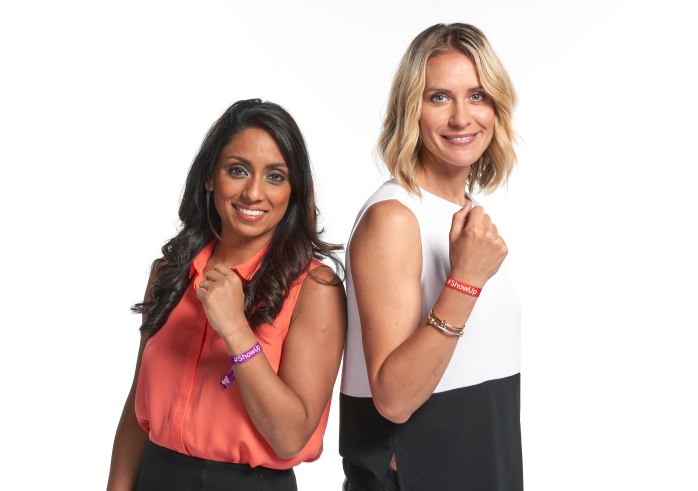
Both the games will be shown on Sky Sports as part of an entire day of coverage that starts at 6am and will continue until around 9pm, fronted by #ShowUp ambassador Isa Guha alongside Mel Jones and Ebony Rainford-Brent. Furthermore Olympic bronze medallist and cricket fan Goldie Sayers will also be on our screens as a roving reporter.
The 52 was lucky enough to be given the opportunity to speak to Guha ahead of the event and the former player-turned-commentator said she can’t wait.
“I’m feeling very excited and looking forward to being involved,” the two-time Ashes winner said.
“We believe it’s going to be a sell out, we’re going to have loads of former players down and it will be an incredible day of cricket for everyone I’m sure.
“We’ve got three brilliant teams involved with this series who should put on a good show for women’s sport so yeah, I’m looking forward to it.”
If the cricket is anything like it was in the first round of the series – in which both New Zealand and England set record scores within hours of each other – then it will certainly be a special day for those in attendance.
It will have to go some to match last summer’s World Cup final though. Held at Lord’s in front of a sell-out crowd, England – led by Anya Shrubsole – pulled off an incredible comeback to seal a win that still elicits goosebumps even now and will continue to be referenced for the foreseeable future.
Guha was part of the team that achieved T20 World Cup glory at the same ground back in 2009 and said the reaction to the two wins could not have been more contrasting, proving just how much women’s cricket has grown in less than a decade.
She stated: “They were incredibly different. As a player you don’t really think about the crowds much but I do remember arriving on the coach and seeing a pub advertising the fact that Sri Lanka were playing Pakistan in the men’s final but there was no mention of the women.
“But fast forward to 2017 and it was marketed way better and pretty much everywhere so everyone could see. It was a spectacle in its own right.
“The game has come on leaps and bounds in terms of the coverage it’s getting and you just got the sense that everyone was pulling together – the ECB, the ICC, the country grounds. They wanted it to be the best World Cup ever and they achieved that.”
That victory last July was one in a sequence of incredible performances from women’s team sports in a run stretching back three years previously, starting with a 2014 Rugby World Cup victory for the Red Roses (as they are now known). Since then there has been a third-placed World Cup finish for the Lionesses, a breathtaking Olympic gold for GB Hockey and most recently a sensational Commonwealth victory for England Netball.
Yet despite this, there is always the fear that these successes will eventually fall to the wayside.
And that’s why the #ShowUp campaign is so important – it is trying to continue and further that momentum, giving people the opportunity to continue to be able to watch their heroes, create new ones and continue to be inspired by women’s sport.
This is something Guha wholeheartedly agrees with and is a key reason why she wants to be part of this movement.
“A winning national team is so important because ultimately you’ve got young kids watching who aspire to be the next generation.
“On the back of Rio, hockey clubs opened up so any young girls or boys could go and play hockey. And it wasn’t just girls last year who walked away from the World Cup wanting to be Anya Shrubsole either, it was boys as well and they still talk about it now.
“It is about inspiring the next generation and that is exactly what you get when you have a winning international side.
“You have so many seminal moments in sporting history over the last few years and it’s great that it’s all happening at the same time because there’s a collection of people to get involved in different sports.”
It may only have been around for a month but it’s clear to see that already the #ShowUp campaign is having an impact and let’s hope that tomorrow’s event is just a starting point.
With so much women’s sport this summer, there’s no reason you can’t #ShowUp too, whether it be attending the game itself or watching on TV. You won’t regret it.
Isa Guha is an ambassador of the #ShowUp campaign. Sky Sports and the Women’s Sport Trust are asking you to take to social media and let us know how you are going to show up, what are you attending or going to watch this summer? #ShowUp @SkySports @WomenSportTrust.
If in doubt, here are just some of the events you can #ShowUp to this summer:
23 June: Women’s IT20 Tri-series (#ShowUp Day) – Eng v Rsa, Eng v Nzl (Taunton)
28 June: Women’s IT20 Tri-series – Rsa v Nzl, Eng v Nzl (Bristol)
1 Jul: Women’s IT20 Tri-series – Final (Chelmsford)
7-13 Jul: Women’s ODI Series – Eng v Nzl (Headingley/Derby/Leicester)
7 Jul: Netball Super League Grand Final (Copper Box Arena)
21 Jul – 5 Aug: Vitality Hockey Women’s World Cup (Lee Valley Hockey & Tennis Centre)
22 Jul – 27 Aug: Kia Super League
2-5 Aug: British Open (Royal Lytham)
30 Aug: World Cup Qualifier – Scotland v Switzerland
31 Aug: World Cup Qualifier – Wales v England
#1) Stephanie Inglis & Louise Renicks
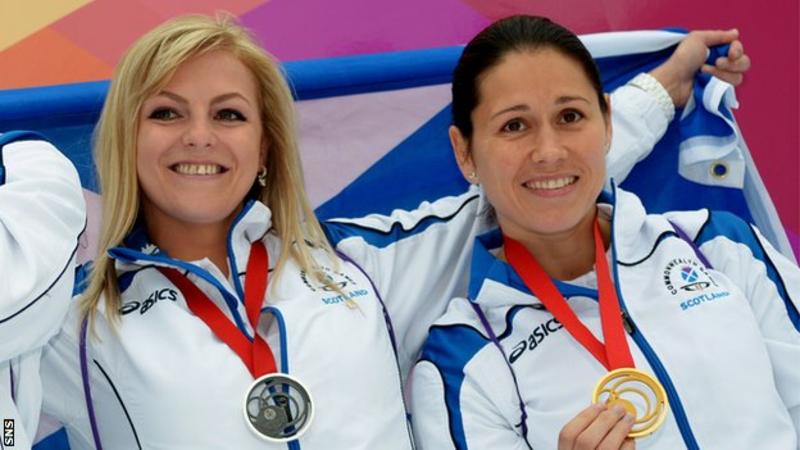
So here it is, the first iteration of The 52 and we are starting with the uplifting story of two Scottish judoka who have battled back from despair to join forces at the 2018 European Veteran Judo Championships.
Four years after both medalled at the 2014 Commonwealth Games on home soil in Glasgow, Louise Renicks and Stephanie Inglis combined as competitor and coach respectively to claim a silver at the 2018 European Veteran Judo Championships in the same city earlier today (16th June).
But their journeys in between have been anything but straightforward, making this latest achievement even more special than it normally would be.
Following her silver in the 57kg at the Games four years ago, Inglis took a break from the sport in 2016 to go and teach English to underprivileged children in Vietnam. This is alone is enough to command the highest of respect, but it’s what happened next that is truly awe-inspiring.
Riding pillion on a motorbike on her way to school, Inglis’ skirt became caught in the wheel, causing a crash that left her with severe brain injuries amongst others. So serious was her situation that doctors told her family she had a 1% chance of survival.
But within a month she had battled off a number of infections and awoken from her coma. Just over a year later she had astounded everyone to recover to a point where she was planning on a return to the sport, aiming to compete at Birmingham 2022.
However there wasn’t to be a fairytale ending as she was forced to retire following medical advice, with doctors warning that one more knock to her brain could be life-changing.
For many this would have been a crushing blow after working so hard to reach the top again, but reading through Inglis’ retirement statement it is clear to see just how strong an individual she is.
Instead of letting the situation get the better of her, the words are from an individual who realises they have fought the toughest battle they will ever face and come out the other side on top.
One sentence in particular stands out as being the perfect testament of that:
“I know that I am capable of achieving anything in life.
Since that announcement the 29-year-old has turned to a career as an athlete mentor and coach, the latter of which has seen her link up with former team-mate Renicks, who herself has had a rough time since winning 52kg gold at Glasgow 2014.
Struggling with both a persistent shoulder injury and a lack of funding – something athletes in any minority sport will understand – Renicks made the ultimate sacrifice in 2015 as she gave up her hopes of qualifying for Rio 2016 to give sister Kimberley the best possible chance of making the Games instead.
The estimated figure for them both try try and qualify for Rio was £40,000 but, rather than struggle through, the elder sister made the painful to step away from the sport and instead help Kimberley both in financial terms and by becoming her coach. If that isn’t true sibling love then I don’t know what is.
While their goal wasn’t successful that time, the sisters have not given up and still have ambitions of combining to ensure Kimberley makes Tokyo 2020 instead.
Renicks is also the reason Inglis made the move into coaching after announcing her retirement, bringing the two together for the first time since medalling at their home Commonwealths.
In some ways this medal at the Veteran Europeans – Renicks’ first competition since retiring – has completed a circle which started in the same city four years ago.
They have gone from the highs of sport to having to deal with some of the toughest things life can throw at them but ,instead of being beaten, they have literally fought their way through adversity and are proving that no matter what sport and life throw at you, there is always a way through.
With both coaching the next crop of exciting young Scottish judoka, expect their legacy and influence to last for many years yet.
Lousie Renicks and Stephanie Inglis, you truly are an inspiration.
It’s the process – not the person – that’s the issue
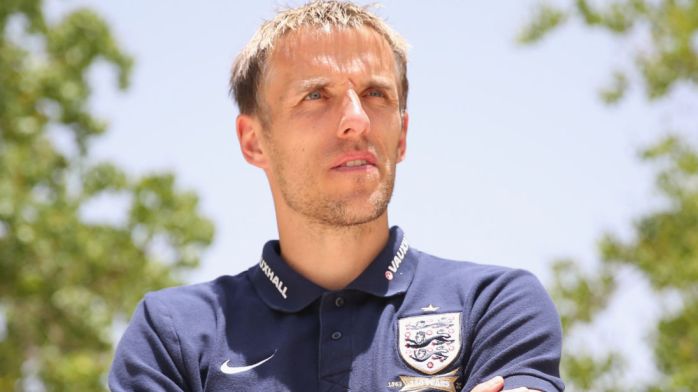 A new managerial appointment in football is supposed to bring feelings of hope, optimism and positivity. It’s the dawn of a new beginning.
But Phil Neville’s announcement as the next England women’s boss could not have felt further from that.
The former Manchester United and Everton defender may be deemed a great player of the recent past by some but his lack of managerial experience poses a real concern given the fact he has been tasked of taking charge on of the best teams in international football.
And by that, I mean that he has only ever taken charge of one game and that was in the lower leagues.
It’s not Neville himself that is the main issue here though. For me it’s the process by which he has been selected.
Baroness Campbell claimed yesterday that there were 147 applicants from 30 countries for the job, yet there were only ever two we heard about in the media – Neville himself and then-caretaker manager Mo Marley.
Not only that but Neville had been linked to the job for weeks before it was officially given to him. It was obvious in the past month that he was going to get the role, to the point at which it seemed as though the FA were going through the motions by interviewing anyone else.
In my opinion, this selection sends out a strong message that the England women’s team is being seen as a proving ground for Neville to trial his worth as a manager. That stinks.
We all know that the FA are desperate to find young, exciting, successful home grown managers and rightly so. The fact that only Eddie Howe and Sean Dyche are the only Englishmen under the age of 50 leading Premier League sides is worrying.
But the women’s team should not be used as an experiment to find the next mercurial talent. They are a serious outfit and should be treated as such. The demonisation of the FA over this appointment highlights just how much the respect has grown for the team in recent years.
Furthermore this selection shows that, despite the public admiration for the Lionesses, the national governing body still views these players as inferior to not only the senior men but also the junior ones as well.
If the FA are so desperate to test how good he is why not put him in a position of authority in an age group side – away from the spotlight – and groom Neville by working him up through the ranks, much like what many will suspect is happening with Steven Gerrard at Liverpool?
Simply put, this controversial selection not only attracts more criticism for the FA but could also backfire spectacularly. The team’s superb third-placed finish at the 2015 World Cup has put them on a pedestal that means failure to replicate or better this next year will cause the doubters to come down hard on the governing body.
It is also unfair on the ‘Class of 92’ member as well as ultimately this could ruin any managerial career he wants in moments. It’s obvious he wanted this job but is it right for him? In my opinion the answer is obvious – no.
Of course Neville could prove us all wrong, be an instant success and lead the Lionesses to World Cup glory next year. But that is a huge ‘if’ and one which should not even be being considered.
On the other hand though, some of the criticism surrounding his appointment is – in my opinion – almost as laughable as the decision itself.
How on earth can we tell Neville won’t know how to work with women? Where is the proof to suggest that will be the case? I know from personal experience that playing with men in teams sports doesn’t necessarily mean that you will prefer to lead them.
I actually found coaching girls and women in both cricket and cheerleading easier than taking charge of guys because, on the whole, I get along with them better. And that’s not a boast, it’s just the truth, probably because I was close to my mum and sister growing up.
Like me, Neville grew up in a stable household with a mum and sister so there is no reason to suggest he might not be the same.
His tweets haven’t helped his case either but we should not judge a person based on just 140 characters. That’s not to say I condone what he said as those comments were stupid and derogatory but how can we tell that’s what he actually thinks of women?
The long and short of it is that I think it’s not Neville who is the problem here but the FA. Once again they seem to be stuck in the dark ages, failing to recognise the remarkable rise women’s sport finds itself on and seeing the Lionesses as some sort of petrie dish. Let’s just hope for their sake it works out.
 The 52 Blog