F1 2014 Mid-Season Review

We’re just over halfway through the mid-season break of the 2014 F1 season and, therefore, I think it’s a good time to discuss whether any of the major regulation changes have actually worked.
One of the first announced modifications ordered by the FIA was that teams had to implement a new crash structure to the front of their cars (mainly the nose cone and front wing), although this could be adapted to suit the aerodynamic packages of each team. Even before the first engines were fired up at pre-season testing and this system was put to use, there were already serious concerns as to how the structure had changed to look of the cars. Over the past two seasons, many teams had implement a ‘platypus’ nose cone design to suit the previous safety regulations. Admittedly, it wasn’t the prettiest but in comparison to what’s on show now, it was a thing of beauty! Ferrari’s ‘vacuum’ design is by far the worst out there, but the ‘anteater’ (McLaren and Williams), ‘walrus’ (Lotus) and ‘ice-cream cone’ (nearly everyone else) versions are nearly as bad – look them up on the Internet! Even the tidying up of the rest of the car (e.g. smaller rear wings) cannot detract from the hideousness of the front end. Some of the teams, namely Toro Rosso and Marussia, have liveries that detract from the monstrosities quite well, but they are all a serious eyesore!
However, the structures have more than made up for this over the course of the season. Felipe Massa (multiple times), Sergio Perez and Kimi Raikkonen, amongst others, have all suffered huge (and I mean huge) head-on collisions with barriers this season and yet they have all walked away with nothing worse than a few bruises. Just a few seasons ago crashes like that could easily have resulted in broken bones – Michael Schumacher broke both his legs at Silverstone in 1999 – and not long before the drivers would have been lucky to walk away with their lives from similar incidents. It took the death of a great in Ayrton Senna for Formula 1 to really re-think it’s safety policy but since then the improvements have been remarkable. As a fan who follows the sport regularly, I’d much rather see a car look a little bit like cleaning device than see one of the world’s greatest drivers suffer serious injury or death. Indeed, it’s quite therapeutic to see them get smashed up whilst the drivers can walk away and race again!
Another problem raised during pre-season was the sound of the new engines. The move from the V8 to the V6 Turbo engines means they are much quieter than in previous years and this caused lots of people initially made a lot of fuss about it. I, though, can’t really understand why. Yes, it may be disappointing for the fans actually at the race that the cars aren’t as loud but for the majority of us who watch it on TV it actually makes very little difference – all it takes is one of the sound editors to turn the volume up a bit! I also much prefer the sound of the new engine – it is reminiscent of the cars from the 1980s with its deep, meaty sound. The engines of the last few years have been somewhere in between that and the high-pitched screams of the late ‘90s/early ‘00s and have actually been quite boring. Although a bit quieter, the turbo engines are much more exciting to listen to.
The engines are also much less powerful this year – around 150bhp – and this led to a new power system for the 2014 season. Last year the drivers could press a button that gave them a boost of extra power for around 8 seconds per lap, but this new system means that the energy saved from braking can be used for up to 33 seconds per lap to counter the loss of power from the engine. The new system also doesn’t need the drivers to press any buttons, freeing up more of their time attentional capacity to focus on the racing. Although it sounds great in theory, I’m not so certain about the system as it is currently. There have been many occasions this year when the system has failed and the huge loss of power has meant the driver had to retire, something which wasn’t so much of a problem with KERS. Although the majority of the teams have overcome the problem, there are some who haven’t (i.e. Lotus). As a result their race weekends are being severely compromised and, although not everyone can win, any fan will tell you that it’s better to see a large number of drivers fighting hard for one or two positions than just a few.
One final change that I think has been a big success though is the revised tyre compound introduced by Pirelli. Last year, the sport was blighted by tyre problems – there were punctures galore and teams were more focused on getting their cars to last as long as possible on a set of tyres instead of racing. This year, though, I think Pirelli have finally got it right – whilst the tyres are much stronger, there is still an air of unpredictability about them. This means teams are trying out various different strategies during races and makes it confusing to work out who will finish where in the race, which is absolutely brilliant. Whilst punctures and tyre blow-outs are exciting to a point, there is nothing more entertaining than seeing five or six cars battling over the same position on tyres in various states of degredation.
Overall then, the changes for the 2014 season have led to cars that are uglier, quieter, slower and less reliable than in previous years. However, they are much safer and (with the exception of Mercedes) seem to be much more similar. This, as well as the success of the new tyre compounds, has led to much more exciting racing. Even though Mercedes have been almost completely dominant up front this year, the scrap for the final podium position and the ‘minor’ points has been absolutely wonderful and has meant 2014 has, so far, been one of the most exciting seasons for years. I just hope that it can continue for the next 10 races…
Comm-on, let’s get excited!

It’s a week today (16th July) until the opening ceremony of the Commonwealth Games, but how many of you reading this actually know that? Despite the fact that it is being held in Glasgow (i.e on our doorstep) there is seemingly much less of a focus on this event, despite the obvious similarities to the Olympics that created such a hype across the nation just 2 years ago.
Although it may not be such a worldwide event, there are still 71 nations that will compete from five of the six continents. As well as this, there will be a whole host of star names taking part including Bolt, Weir, Farah and Pearson on the track; Le Clos in the pool; Adams in the ring; Wiggins, Kenny, Trott, Bobridge and Meares in the velodrome and Daley off the platform. Indeed, only Yohan Blake and Becky James are the only real big names missing, highlighting how important an event this is for all those taking part. There are also a number of different and arguably more exciting sports than those seen in the Olympics, including netball, rugby sevens and squash; there will also be lawn bowls but I’m sure even that will be gripping. It’s going to be 10 days of pure excitement and I just don’t get how there is so much less interest than there was for London 2012.
It probably doesn’t help that the World Cup falls in the same year. This being the national sport, it naturally attracts the attention of the majority of people, which is fair enough, but the Commonwealths have been completely overlooked by the majority of the media (note I’m moaning about them yet again!). Yes, it was a fantastic tournament full of drama and entertainment, but the fact is England failed. It’s the same with the cricket and the Tour de France – these three sports seem to be dominating the back pages, news bulletins etc. at the moment but as a nation we aren’t doing very well at any of them. Why not focus on something where the home nations actually have a strong chance of success? As well as this, it’s a chance to get one over the Aussies and repay them some of the pain they caused over the winter.
What I also love about the Commonwealth Games is that, if you are from the UK, there is the option to support more than one nation. Whereas at the Olympics there is just one Great Britain team, here the Home Nations are represented in singular form as England, Scotland, Northern Ireland, Wales, Jersey, Guernsey and even the Isle of Man. Whilst I understand that some from Scotland may not want to support England or someone from Northern Ireland support Wales, personally I will be following all seven (whilst favouring England). This isn’t just because I’m a glory hunter, I also want to see athletes who may represent Team GB at the next Olympics as the Commonwealths are a good indicator of how the preparations are going for Rio in just two years time.
Part of the reason, I think, for the lack of general knowledge about the Commonwealths is that the BBC hasn’t advertised it anywhere near as much as they did with both the London 2012 and recent Winter Games. They have advertised on TV, radio and the Internet as well as announcing a very strong broadcasting team including Clare Balding, Gabby Logan, Hazel Ervine and Gary Lineker. The intensity of their efforts, however, is palpable in comparison to two years ago. Whereas then there were multiple trailers being played across all the BBC’s formats well before the Games got underway, the only trailer I’ve seen for this event has been used sparingly on TV, whilst I’ve heard very little on their radio stations. If the main broadcaster of the event isn’t doing a lot then it’s no surprise that newspapers, radio stations etc. are choosing to focus on other things.
As well as this, there are two rather disappointing things for me about these Commonwealth Games, the first being that there is no rowing. As well as reducing the chance of medals for the Home Nations, it’s a shame that such an exciting sport that captured a nation in London is not on the programme in Glasgow. It always produces heroics and drama as well as showcasing the unbelievable feats of the seemingly super-human athletes, and it’s not as if Scotland don’t have the ability to host it – the last time it appeared was when Edinburgh had the Games in 1986. I get why certain sports are dropped (i.e. equestrian) – because there are often not enough countries to participate – but there are so many nations in the Commonwealth who have strong rowing squads that I just can’t understand why it isn’t on the programme. What’s also disappointing is the lack of para-sports. Although there will be 22 events across 5 different disciplines, this is nothing in comparison with the Paralympics. Whilst we cannot expect there to be the same level of participation due to the fact there are a lot less nations taking part, it is disappointing that there are the opportunities for wonderful athletes such as David Weir and Aled Davies to take part are so limited.
However, these shouldn’t detract too much from what I hope will be a truly memorable week and a half of sport. If you weren’t excited before, then I hope reading this may have changed that just a little bit. The 2014 Commonwealth Games will provide us with clashes, crashes, controversy, unbelievable commitment etc. and I for one am going to be glued to the TV (except when I’m playing cricket!).
Let the ball do the talking
World Cup – arguably the most popular phrase in the UK, if not the world, at the current moment in time. With just two days until what some say is the second-biggest multi-national tournament (after the Olympics), I should be really excited. But I’m not. Yes, I’m looking forward to it, but I feel as though the tournament itself will be an anti-climax. Why? Because of the excessive coverage surrounding it.
It seems as though the only sporting thing anyone has talked about over the last two years is the World Cup. There has definitely been an almost non-stop focus on the event for about the last 6 months and, if I’m being completely honest, I’m sick of it. It’s got to the point where main sports stories have included out-of-date food being found at England’s hotel in Brazil – there is so much other sport going on at the moment that, to me, it’s incredulous as to how that is more of a story than, say, the wonderful performance of England’s under-strength rugby union team in New Zealand at the weekend. Why do we need to know what time Raheem Sterling went to the toilet or whether Joe Hart had fish for his dinner last night? I’d much rather read or hear about how England’s male and female teams are doing at the hockey World Cup in the Netherlands than that rubbish.
Of course, today’s world of the internet, smart phones and tablets means that there is now 24/7 access to sport. You would think that would lead to easier access to articles, podcasts etc. for sports like hockey but, if anything, it has actually pushed them further aside. Because newspapers now also have websites, they can post short articles about that on their website and use the paper itself for other things. Looking through the back pages of a well known paper even now, the amount of informative text is actually limited. Instead, there is a greater focus on the opinions of the journalists and guest writers who are often ex-sportsmen. And it all seems to centre around the more well-known sports, especially football. As a result, less followed sports such as hockey get much smaller spaces in the papers as people would rather know how the English football team should play against Italy in comparison to how the England hockey team performed the other day.
Football fans aren’t complaining, however, as their sport is being discussed more than ever. I think too much. Everyone now has to have an opinion and if you don’t, you’re not seen as a real fan. It’s as though you can only be seen to be a true supporter if you openly discuss the game at every opportunity, leading to too much focus on the small and trivial aspects. I follow and watch football for two reasons – to see my team/country win and to be entertained. But it seems as though many people aren’t satisfied with this – they need to know the players’ middle names, what pets they have and what they ate at 3p.m on the 3rd February. The media satisfy this need as it creates profit and this leads to everyone becoming instant experts. Listening to radio call-ins can be hilarious as you get people who, just because they have read a couple of things or listened to a pundit on Match of the Day, think they have the answer to all of their team’s problems and won’t listen to anyone else, often leading to arguments. Although it makes for entertaining radio, they are just fans at the end of the day and don’t really know the ins and outs of the game, despite what they think.
The huge focus on this World Cup in particular has already lead to stories being blown out of proportion and it hasn’t even started yet! For example, Steven Gerrard didn’t complete training yesterday due to a tight groin. Within a couple of hours, there were discussions and opinions flying around about who should replace him in the starting line-up, despite there being no suggestion he wouldn’t be fit for Saturday! It’s a huge contrast to thirty years ago, where no-one would have heard about it until the team sheets were handed in an hour before kick off or maybe just not at all.
When I turn on the TV on Saturday evening, all I want to do is watch England do everything they can to beat Italy. Even if they play ‘boring’ football, as long as they win then I can forgive that. I do have my favourite players, but I don’t care who plays as long as they give everything to the cause. I don’t want to spend hours pointlessly discussing or listening to people discussing something I and they have no control over, especially when we don’t have the knowledge of those who are being paid to make the decisions (i.e Roy Hodgson).
I feel that this increased coverage of sport, especially football, has actually taken away from the simple love people used to give it. The constant need to analyse and discuss even the most trivial things doesn’t make events such as the World Cup exciting. Tomorrow night, I want to feel like I do on Christmas Eve – I want to be tingling with excitement, knowing that the greatest football tournament is just around the corner. Instead, I’m just wishing it would hurry up and start so I don’t have to listen to people drivelling on about what teams should or shouldn’t do. For me, knowing more has actually taken away some of my love for the game and I don’t think I’m the only one.
A Sweet Tooth for Success
Cake is a fantastic thing. It has many uses – birthdays, weddings, mood-raiser – and there are numerous different variations. There is a cake for everyone out there, unless by some serious set of unfortunate circumstances there is someone allergic to every single potential ingredient. Even if a cake is ruined (i.e. it’s burnt) it is still charming – in fact, it often becomes more special. It’s such a shame, though, that there is always someone who ruins this idyllic entity.
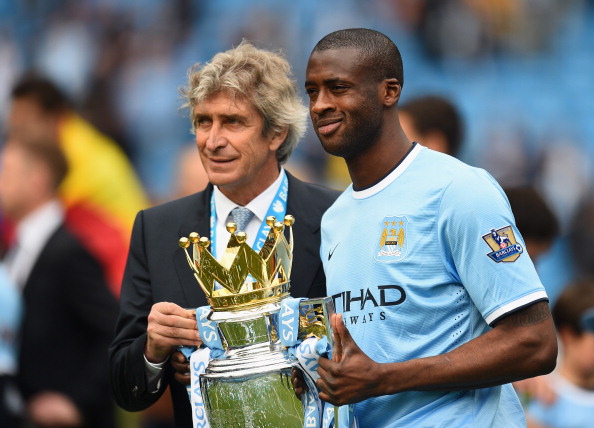
Footballer Yaya Toure had a superb season for Manchester City – he scored over 20 goals from midfield and was a key factor in the club regaining the Premier League. Couple that with the League Cup trophy, the prospect of Champions League football next year, a salary reported to be in the regions of £200-£280k a week and a guaranteed place in the starting line-up for the Ivory Coast at the World Cup next month, Toure’s life seems to be going pretty well. Yet, less than two weeks after winning the league, the midfielder seems to want out of the club – all because he wasn’t given the lavish birthday celebrations he was expecting.
It all started on Monday morning when his agent, Dmitri Seluk, tweeted that the Ivorian’s birthday celebrations were a ‘joke.’ Although no-one seemed to take this seriously, by the end of the day this story was dominating the British sporting world as Toure, after initially denying he was unhappy, said that he backed his agent’s comments. Reports are unclear as to exactly what happened, but it seems that the pair were unhappy that the player only received a ‘small’ cake and birthday messages on Twitter. Seluk said he expected at least a handshake from the club’s owners to show they wished Toure a happy birthday and that, because they hadn’t, they were showing his client a huge lack of respect.
I can’t help but think that this isn’t the complete picture. With the close-season now upon us and players looking to start to find new clubs, this stunt seems to reek of a ‘come and get me’ cry, potentially to his former employers Barcelona. Seluk has utilised the ‘lack’ of birthday celebrations to suggest that his player wants out. If he had been given an £800,000 car, as Brazilian defender Roberto Carlos once was on his birthday, would he still be moaning? Probably not. It’s likely that they would have found another way to express Toure’s desire to leave. Of couse, they haven’t explicitly said that the player does want out, but what other reason can there be to ruin the perfect image of cake?
He isn’t the first Manchester City player to behave in such a childish manner in order to get a point across. Carlos Tevez’s refusal to warm-up in a Champions League game instantly springs to mind, whilst Mario Balotelli’s constant sulkiness was extremely petulant and left City fans feeling relieved when he left. All of these players joined Mancester City after their takeover by Khaldoom Al Mubarak in 2008 and the way they have all reacted to perceived injustice suggests that their only motivation to be at the club is money. These players should follow the example set by Joleon Lescott, another Manchester City player – an England regular not so long ago, the centre-back has barely played for the club this season and seems destined to leave in the summer. As a result, he hasn’t even been selected as a standby player for the World Cup. Has he complained? Well, if he has I certainly haven’t heard anything.
Fair play to Seluk as he has played this story brilliantly. He knew the media would quickly pick up on his tweet due to its surprising and controversial nature and, within 24 hours, Toure became a bigger story than the upcoming World Cup (at least for a few hours). Even now, three days later, there are new developments to this story as the pair are now claiming that Toure may only stay if he is offered a coaching job at the club after his career finishes. For City to offer Toure this would be a huge gamble as he has no coaching credentials to speak of and he still has plenty of playing years left. By making more and more outlandish claims that many people know City will struggle to meet, Seluk is increasing the likelihood of his player leaving and this will no doubt be picked up by some of the biggest clubs around the world. This is even more so as Toure showed this season that his is playing the best football of his career.
But my praise for the way this story has been conducted stops there. It highlights just how immature certain players are – if he had come out and just said ‘I want to leave’ then fair enough. Hiding behind an occasion such as a birthday, which is supposed to be a special time, to express this desire to leave is just absurd. But the most upsetting bit of this story is that Toure actually seems to have received two wonderful looking cakes of a size that many people would be overjoyed with and is still complaining. Some people are never satisfied…
Time to choose
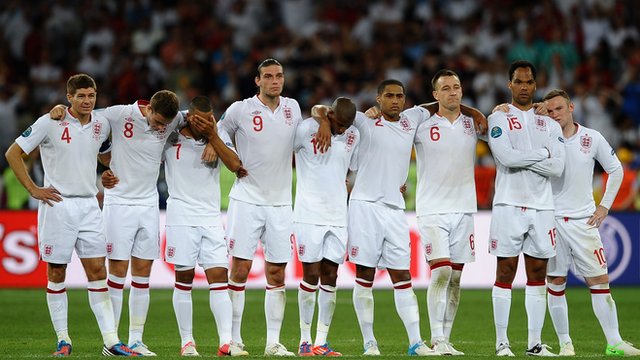
With less than two weeks until Roy Hodgson names his squad and only seven until the opening of the 2014 World Cup, speculation as to who is going to Rio is rife among the British media. Actually, it’s been a hot topic of discussion since January but now you’ll find it being discussed in every newspaper, sports radio programme and sports news bulletin across the country. Everyone has their opinion as to who should go and, of course, I have mine. However, I will try to restrain from saying who I think should go and suggest who I think should be considered until the very end, where I will offer my suggestion for the 23.
Starting off with goalkeepers, it looks certain that Joe Hart will be the first choice for the national squad. Despite a very well documented wobbly period at the back end of 2013, his status as England’s number 1 hasn’t really been in doubt since replacing Rob Green after the 2010 World Cup. His reaction to being dropped by Manuel Pellegrini also showed his maturity, something that he will need at his first World Cup proper.
Green has been playing regularly for QPR this season, but since ‘that howler’ against the USA four years ago he has never forced his way back into the team and doesn’t look like doing so now. The main candidates to be Hart’s understudy include West Brom’s Ben Foster, who only recently made himself available to play for his country again, Fraser Forster (Celtic), John Ruddy (Norwich) and Great Britain’s Olympic ‘keeper Jack Butland. None of them look serious contenders to challenge Hart for the jersey and, with just 9 caps between them, their lack of experience on the biggest stage is a potential worry should anything happen to the City shot-stopper.
The back four selects itself, barring injury, as Glen Johnson (Liverpool), Phil Jagielka, Leighton Baines (both Everton) and Gary Cahill (Chelsea) have all had superb seasons for club and country. It looks as though Kyle Walker will be Johnson’s back-up for the tournament and, although he hasn’t set the world alight for Spurs this season, he certainly has a similar attacking intent to the Liverpool man and will be a like-for-like replacement.
The fight to be Baines’ understudy has been the cause of much talk in recent months. At the end of last season Ashley Cole was the first choice left-back for both Chelsea and country but a lack of game time under Mourinho and the scintillating form of Baines has meant even his place on the plane is under threat. On the other hand, Luke Shaw has enjoyed a magnificent season at Southampton and looks certain to become a household name for years to come. However, his tender age (he’s not 19 until the tournament is over) and lack of international experience could mean that Cole is preferred over him. It will be fascinating to see whether Hodgson goes for youthfulness or experience.
The most worrying position for England is centre back as, should either Cahill and Jagielka get injured, the reserve choices aren’t convincing. Manchester United’s Chris Smalling and Phil Jones are the most likely candidates to travel to Rio but neither have particularly impressed for either club or country. Other leading potential candidates include Cardiff’s Steven Caulker, who has enjoyed a good season with the struggling Cardiff; Tottenham’s Michael Dawson; Everton’s John Stones, who has deputised for the injured Jagielka wonderfully in recent weeks, and Joleon Lescott, who has barely featured for Manchester City over the last couple of years. A couple of less discussed names are Ryan Shawcross and Joel Ward of Stoke and Crystal Palace respectively. Shawcross’ resoluteness has been key to his club’s run to the top 10 this season whilst Ward has been arguably the Eagles’ best player during Tony Pulis’ remarkable few months in charge.
Captain Steven Gerrard has enjoyed a strong season as a more defensive midfielder than in previous years and Hodgson must be crossing anything in the hope that he stays fit. If Roy is looking to have two holding midfielders then it looks as though his team-mate Jordan Henderson is leading the way to join the skipper. Much criticised by fans throughout the country in the past, the former Sunderland player has turned it around this season and, in partnership with Gerrard, has provided countless platforms for Liverpool’s attacking players. Everton’s Gareth Barry has an outside shot after a fantastic season at Everton, whilst Michael Carrick and Scott Parker have vast international experience but have done little to push forward their claims recently.
One thing England do have in abundance is attacking midfielders, many of whom are fast and youthful. Jack Wilshere and Tom Cleverley have been Hodgson’s favourites in qualification but both have had poor seasons by their standards and their places in the squad are under huge threat. If Roy is picking on form then he has to be looking at Adam Lallana and Raheem Sterling – whilst the former isn’t as quick, his skill on the ball is exceptional and he is an extremely talented footballer. Sterling, on the other hand, is a bundle of energy and between them they have scored or provided 33 Premier League goals this season. Other options here include Ross Barkley and Alex Oxlade-Chamberlain, whilst James Milner and Frank Lampard have vast experience should Hodgson choose to go down that route.
Finally, England’s ever-present lack of strikers seems to have disappeared. Indeed, there are more than four potential candidates to choose from and the decision could have been even harder if Theo Walcott and Jay Rodriguez hadn’t succumbed to nasty injuries. Wayne Rooney, of course, has to be on his way and Daniel Sturridge will almost certainly join him after flourishing at Liverpool in the last year and a half. Rickie Lambert has had another solid season for Southampton and has impressed in all of his games for his country so far. The final spot seems to be between Danny Welbeck, Jermaine Defoe and Andy Carroll. The Manchester United starlet has performed well for England but his club form has been poor, although he is often played out of position. Defoe’s move to Toronto looked to have reignited his career but an injury that has kept him out for the last month could leave him short of match fitness, whilst Carroll has only shown flashes of brilliance for West Ham since returning from injury in January but he could be a big impact player off the subs bench.
So, here is my selection:
Goalkeepers – Hart; Foster; Butland
Despite his self-imposed exodus from the side, I would select Foster as Hart’s reserve as he is a quality ‘keeper and has more experience than the others. Although Ruddy has been in most of the recent squads, I would select Butland to give him some exposure at a big competition as he has the potential to replace Joe Hart in years to come.
Defenders – Johnson; Walker; Baines; Cole; Cahill; Jagielka; Jones; Smalling; Ward
I prefer Cole over Shaw purely on the fact he has the experience and, despite his limited game time this season, has been solid for Chelsea when asked. Ward deserves his place as he has been consistently good all season, whilst Jones and Smalling make it due to their versatility and experience of big games.
Midfielders – Gerrard (C); Lallana; Henderson; Milner; Sterling; Lampard; Oxlade-Chamberlain
I would go for a combination of youth and experience in midfield. Although Barkley and Wilshere could easily be in the squad, I have chosen this midfield largely based on their performances in 2013/14.
Forwards – Rooney, Sturridge, Lambert, Defoe
If he is fit, I believe Defoe should be the fourth striker on the tour because he is different from the other three – he is very quick and looks to get behind and run at defenders.
No longer just a game
What could you buy for £90? Having done some research on the internet, the following are all currently selling at that price:
- ‘Cosatto Noodle Supa’ highchair
- ‘Peltor Sport’ ear defenders for clay pigeon shooting
- ‘SIP’ saw dust collector
- ‘Playmobil’ grand mansion dollhouse
- ‘Lavenham Raydon’ men’s jacket
- ‘Martinez’ classical guitar (3/4 size)
- ‘Callaway’ golf bag
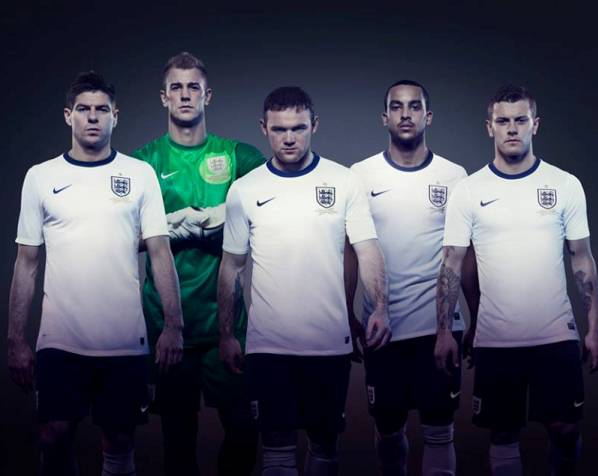
Or, alternatively, you could spend that amount of money on a ‘replica’ England World Cup shirt. Largely made of polyester, it’s one of those tops that will need washing after each wear because it creates a horrible smell even after 30 minutes of wear. Although all of the above are completely useless to me, I know which I’d rather spend my money on (except the jacket, it’s hideous!). But is it just a sign of how much of a business the game has become?
You would have thought that, being an exact copy of what the team will wear in Rio, the ‘Match’ shirt would be quite easy to find. In fact, it’s much the opposite. When browsing the internet I have found many retailers selling the ‘Stadium’ shirt which, at £60, is cheaper but still expensive for what is just a glorified sports top. Even on the Nike website, I had to search for a good couple of minutes to find the more expensive top, whilst the ‘Stadium’ one was first on the list. If it was a limited edition item, I could understand if the more expensive top was a bit harder to find; but nowhere have I read that it is and this is what makes the pricing even more preposterous. What was the point of Nike creating the shirt if they’re going to hide it on their own website?
It’s not just England who are selling tops they’re going to wear for just one tournament at such an extortionate price – from what I can find the adult tops for all 32 teams are priced between £55 and £60. It seems ridiculous to be paying so much for a top that may be outdated after just three games if the team are eliminated from the tournament. It may be worth it if you want a tournament keepsake and you won’t buy another top for a while, but not if you’re someone who buys each new kit that comes out. The last England top was only released 10 months ago and has only been used for a handful of games – that item is now completely outdated and many who bought it must be thinking that purchasing it was just a huge waste of money.
It’s not just international teams who do this though – each professional team releases new kit at the start of each season now and I think this is a clever piece of business. There are many fans out there who are want to obtain each new jersey and the clubs have cottoned on to this. Is there a need for a new jersey each season? Of course not, but if it makes money then it makes perfect sense to continue doing what they’re doing. It reflects just how much football has changed since its inception – up until the 1990s kits usually lasted two or three seasons for clubs whilst international teams generally unveiled new strips only for major events. Kits weren’t a profitable tool, they were something the team wore and that the fans could buy to feel a part of the club. Even in the early 2000s some teams only changed their design after a couple of seasons, but now it seems as though the team have only been wearing the kit for a couple of minutes before it changes. Of course, the changes to the home strips are often not that major, but it leaves fans feeling as though their current kit is outdated and they need to get the new one. It’s very simple but extremely effective money-making ploy.
It’s undeniable that football is now driven by business, but do the fans really deserved to be charged so much money to support their favourite team? It’s not just the replica tops that are costly but everything clubs sell. Looking on the website of the team I support, it costs £25 for a pair of pyjamas with the club logo on it. £25? That’s absurd! It’s not just the price of things they sell as well but also what they sell – the list varies from baby clothes to a dog lead to door plaques! Who really needs a pair of boxers to show you support a certain club? Unless you walk around in just your underwear or wear really low-slung jeans, only a few ‘lucky’ people are going to actually see them.
It may seem from what I’ve said above that I am against all merchandise and replica clothing. That, however, couldn’t be further from the truth – being a football supporter myself, I used to have wallpaper with the club’s logo all over it adorning my room. I was also bought a couple of kits when I was younger, but this was more of a one-off than anything else. I, like most other fans, wanted to show my support for the team, but it’s this innocence that is now abused. Clubs take advantage of genuine, unbridled support and charge stupid amounts of money for the club logo on something that you could get much cheaper but still of the same (or better) quality.
However, there is no bigger example of football now being a money-making business than the ticket prices. Match-day prices aren’t actually that bad – Newcastle United’s cheapest single ticket is just £15 with most other clubs not charging much more. It’s the season tickets that are unreasonable – Chelsea, Spurs and Arsenal all charge over £1000 for a season ticket, an average of £53 per league game. The chances are that most fans won’t be able to go to at least one of the games, meaning they’ve spent a lot of money on something they can’t even go to. It could be argued that Arsenal’s high prices are because they’re still paying off their debts for the new stadium, but Manchester City’s season ticket is only £299 and they have also recently moved to a new stadium. Although many clubs have started dropping their ticket prices, they are still charging people a lot of money to watch a game of football lasting an hour and a half.
Football isn’t the only sport to charge too much money for replica kits, tickets and so on – there are many, such as cricket and tennis, that are also very expensive. The problem I have is that football is supposed to be the ‘game of the people’ – it was initially created as something for the working class, yet with the rising prices it seems only the middle and upper classes will be able to access it before long. It’s such a shame that the national sport is no longer just a game; it’s now an entertainment product where businesses can make lot of money by taking advantage of fan loyalty.
New era, new technology, new challengers
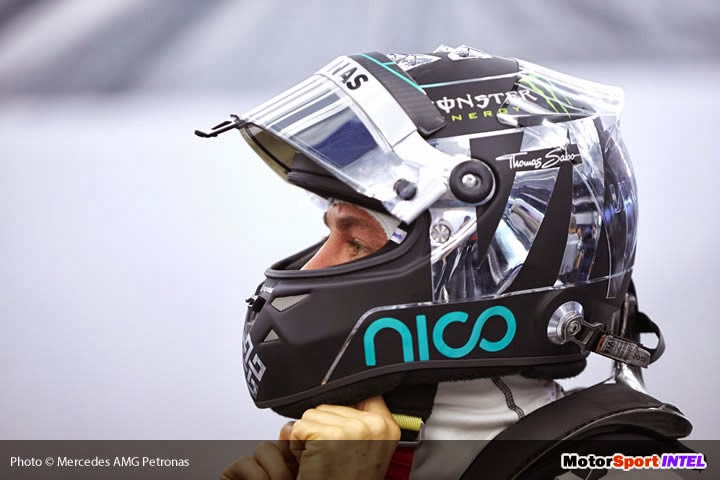
As many regular readers will testify, I like making predictions. I was always planning to write a blog about what I would think would happen in the 2014 Formula 1 season, especially as it’s been pretty obvious to guess over the last couple of seasons. However, for the first time in a long time, pre-season testing left me with absolutely no idea of what to expect going into the first race last weekend.
Testing sessions are’t generally a good indicator of what will happen come the first race, although they give a rough outline of who looks good and who doesn’t. A good example comes from 2012 – Ferrari were exceptionally slow all through testing and many experts were suggesting that they had built an awful car. They were proved right, despite Fernando Alonso’s sensational win in Malaysia, but that was more down to the weather and the fact that an exceptional driver was at his absolute best. Going on the data from the three tests, it did look as though both Mercedes and McLaren were the favourites to win in Australia. This wasn’t due to outright speed however; it was more because they were the teams whose cars completed the most laps.
With a whole host of new technology being introduced for 2014, including new engines and energy recovery systems, it was always going to be a challenge for the teams to get their cars up to speed by the start of the first test. However, come the end of the third test, some teams seemed to have made no improvements whatsoever – Red Bull and Lotus barely left the garage, whilst Force India and Toro Rosso caused more stoppages than in a Real Madrid-Barcelona game. Although Mercedes and McLaren were fast, they suffered their fair share of problems, whilst Williams looked good but no-one could really tell how this would transfer into a race scenario. Only one thing was certain – no-one knew what was going to happen come the 16th March.
The race itself was intriguing and, in some ways, it was like F1 had taken a step back in time, especially when Max Chilton stalled on the installation lap and team-mate Jules Bianchi doing the same just a couple of minutes later, leading to an aborted start. This just added to the excitement of the spectacle, although the lack of frantically waving arms was a slight disappointment. This was the signal, however, the Formula 1 was not going to follow the same tedious, Red Bull-dominated pattern of the last few years.
Not only was the sport entering a new era, but drivers were as well. Not only would they have to handle the enormous accelerative power of the new engine, the question marks around reliability and yet another new set of tyres provided by Pirelli, many needed to impose themselves and set a solid platform down. The rookies did this well – Kevin Magnussen showed the maturity and composure well beyond his age and experience to claim a thoroughly deserved podium on debut; Daniil Kvyat proved he is more than just a sponsorship package by becoming the youngest man to ever score point in Formula 1 and Marcus Ericsson showed strongly before being forced into retirement. Valtteri Bottas, in his second season, also put in an extremely strong showing and, if it wasn’t for a puncture caused by him hitting the wall, could have pushed Alonso and Jenson Button ahead of him.
More experienced drivers, however, weren’t so impressive. Kamui Kobayashi’s return to the sport lasted less than 10 seconds after he ploughed into Felipe Massa, perhaps being too keen to re-establish himself as one of the world’s best. Massa, now of Williams, was unlucky to not make it round the first corner as he could have scored decent points, but his petulant reaction to the accident – calling for Kobayashi to be banned – harked back to the days when he seemed to moan about every little incident and won him no fans. Kimi Raikkonen was also disappointing – perhaps being caught up in the Kobayashi-Massa incident damaged his car, but the Finn showed little fight throughout the race and looked content following the Toro Rosso of Jean-Eric Verge for most of it.
But what of the ‘big guns’? Jenson Button, although beaten by his team-mate, overcame a difficult qualifying session on Saturday to finish fourth and further prove that McLaren are back in with a chance of podiums and victories this year. Fernando Alonso finished a place behind him yet was barely noticeable. He showed greater pace than Raikkonen but was nowhere near the front-runners, suggesting Ferrari aren’t quite at the level of their closest rivals. Still, at least they got both drivers into the points, something both Red Bull and Mercedes couldn’t achieve.
There was a startling symmetry with the fortunes of both teams – their supposedly strongest drivers both failed to finish due to engine problems while their less-fancied team-mates dominated at the front. The similarities stop here, though, as it was clear to all that Mercedes are going to be the team to beat, at least at the moment. They carried on their strong showing from testing, with Lewis Hamilton securing pole position on Saturday. The British media have been extremely optimistic about the Hamilton’s chances this year, so his unceremonious retirement after two laps will have dented their flame. It was clear the Brit was struggling as soon as the race began, with team-mate Nico Rosberg and Daniel Ricciardo streaming past him, but it wasn’t until later in the lap when Magnussen easily passed him that it was clear something was up. Mercedes will still be extremely happy with their weekend, though, as Rosberg was unchallenged all race and won by nearly half a minute. Their sponsors may not be as happy due to the limited coverage time as a result of his Vettel-esque dominance, but it was certainly a marker that the German isn’t here to help Hamilton win – he wants to emulate his father and win a World Championship.
Although the new era of Formula 1 may have created a new dominant force in Mercedes, Red Bull should definitely not be discounted. However, it is a surprise that it wasn’t the four-time champion Vettel proving this but his new team-mate Ricciardo. The Australian had a superb weekend, silencing all those who suggested he was only hired to help Vettel win another title. He was faster than him all weekend and coped brilliantly with the difficult qualifying conditions, finishing next to Hamilton on the front row, whilst Vettel didn’t even make the final session. Although he will be disappointed to have let Rosberg past at the start, Ricciardo would have finished second at best anyway as his car just wasn’t as fast. The way in which he coped when Magnussen was chasing him down was exemplary and the complete opposite to the way Vettel coped with Button’s late charge at the 2011 Canadian GP. If Red Bull can get him a quicker car, I firmly believe that Ricciardo can match or even beat his team-mate this season.
That’s what makes his disqualification even more disappointing. He drove his heart out all weekend, being quick whilst also maintaining reliability, yet he seems to have been let down by his team. Although they dispute the claims that they were using more fuel than allowed and that the sensors were dodgy, the current evidence seems pretty damning. This detracts from what was a superb performance from their driver. Still, at least he got to celebrate on the podium in front of his adoring home fans.
Going into the next race I still think it’s impossible to predict what will happen. Will Mercedes and Red Bull have sorted their reliability problems? Are McLaren and Williams both back in contention or was Australia just a one-off? Will Lotus have a fully running car? And, perhaps crucially, what will the weather do? All I know is that, whatever happens, it’s going to be one hell of a race.
Sofas at the ready, the Aussies are back
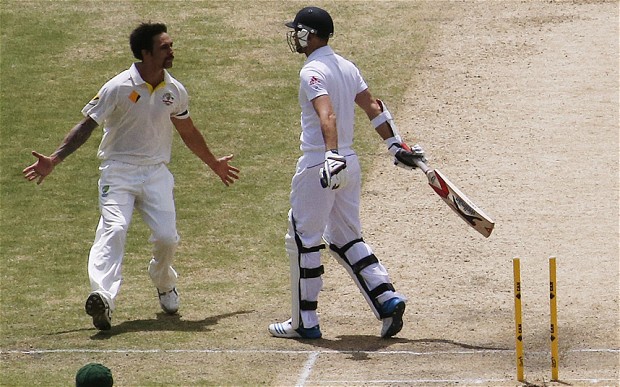
It’s amazing what a bit of confidence does. This time 6 months ago the Australian cricket team was in bits, having lost the Ashes 3-0 against an England team that largely underperformed. Since then, they have exacted ruthless revenge on the Poms, obliterating them 5-0 at home in the Test series, and have now beaten the best side in the world (South Africa) in an extremely exciting series. Is this the revival that was foretold?
The turnaround in fortunes for the Aussies has been extremely sudden. After losing their third consecutive Ashes last summer they did record an ODI series victory against England before heading out to India for an unnecessarily long 50-over tour. Across the seven games their batsmen performed wonderfully, scoring over 300 in five of the games, but the bowlers were woeful. Having seen this, England arrived on Australia’s shores confident that their batsmen would be able to improve on their relatively poor summer and negate the Aussie quicks on fast, bouncy pitches.
Although the bowlers were less than impressive, England’s batsmen looked good in the various warm-up games. However, they were up against relatively weak bowling attacks, something that was overlooked until it was too late. Even as Alastair Cook and Michael Carberry went out to bat for the first time in the series, England were still confident that they could do the business after bowling out the Aussies for 295, a seemingly below-par total. A few hours later all that self-belief had evaporated. Ryan Harris carried on in the same impressive vein that he had shown on English shores just a handful of weeks before but it was Mitchell Johnson who really took the batsmen by surprise.
After bursting onto the international scene in 2007 and being rated the best bowler in the world in late 2008/early 2009, the left-arm quick had seemingly been forgotten by the selectors. His performances against England in 2009 and 2010/11 were, on the whole, absolutely dismal and many English fans thought he was the most overhyped cricketer of the modern era. Ask them whether they still think this now though and they’ll tell you something different. After being left out of the Test side, Johnson featured in both the ODI and T20 series against England last summer. Here we saw the first signs that he was recovering back to his old self – throughout the series he was fast and hostile, if not a little inconsistent. However, his performances in India suggested that this was just a phase – going into the Ashes, the Barmy Army were all ready to sing their now infamous song:
‘He bowls to the left, he bowls to the riiiiiight
Mitchell Johnson, his bowling is s***e!’
It’s fair to say this wasn’t heard much throughout the series. He absolutely destroyed the English batsmen, most of whom looked like tortoises who wanted to retreat into their shells and hibernate until the danger had past. He was rapid, consistently bowling at 90+mph, brutal, unrelenting and downright brilliant. His new ball partnership with Harris had Cook and Carberry very worried and, after winning the first Test by 381, the writing was on the wall!
Many, however, dismissed the series as a one-off – more than Australia being recognised as brilliant, the British media instead turned their focus on how bad the England team were. Whilst this is true, many of the journalists and so-called experts seemed to forget that England weren’t much better when they beat Australia just half a year earlier. Whilst England had got worse, Australia got significantly better.
South Africa have been regarded as the best Test playing nation for the last five or six years. Even with the loss of one of the greatest players of all time (Jacques Kallis), the side still boasted their great captain Graeme Smith; the run machine Hashim Amla; AB de Villiers, who hadn’t posted lower than 50 in a Test since late 2012, and a fearsome pace attack of Dale Steyn (the best bowler in the world), Morne Morkel and Vernon Philander. Many predicted the Aussies had no chance. Yet again, they were proved completely wrong.
After posting an impressive 397 in their first innings of the series, with Shaun Marsh and Steve Smith both hitting hundreds, Johnson (7-68) ripped through arguably the most talented batting line-up in the world in a devastating spell of fast bowling. Only de Villiers (91) provided any form of resistance as the South Africans surrendered a first innings deficit of 191 runs. David Warner and Alex Doolan then hit the pace bowlers to all parts, setting the Wallabies 482 to win. If anyone was going to make that target then it would be the ‘Saffers.’ But they never even came close, with Johnson picking up five more wickets to leave him with match figures of 12-127 and Australia with a 281 run victory.
The second Test was the reversal, as South Africa’s batsmen took charge and their pacemen carved their way through the Aussies. However, this respite in Australian dominance wasn’t to last long as they won the final game to wrap up a series victory in the most dramatic of fashions. Brave final day rearguards from Faf du Plessis, JP Duminy and Philander looked to have secured South Africa the most astonishing of draws but Harris picked up the final two wickets to win the game and series with just 4.3 overs left on the final day. An exciting way to end an enthralling series.
So, the main question is this – have Australia rediscovered their ‘aura’? For the moment it seems they have and it looks set to continue – Chris Rogers and Warner have formed a solid opening partnership, with the latter in imperious form, whilst they have arguably the best batsman in the world in Michael Clarke. Shane Watson is a brutal middle-order player and more-than-useful seam bowler whilst Steve Smith finally looks at home on the international stage. Brad Haddin, despite being 36, is ‘keeping better than he has done before and his batting is still vicious. Johnson and Harris are the two most in-form seamers in the world currently, with Peter Siddle providing superb back-up. Finally, Nathan Lyon has become a massively improved cricketer since being re-introduced into the side last summer and has made many top batsmen look foolish.
I suppose one of the main concerns the Aussies have is that their squad is ageing. Rogers, Clarke, Watson, Haddin, Johnson and Harris are all in their 30s and, with the lack of first class domestic Australian cricket, if they all retire within a small space of time this could leave Australia looking very inexperienced. However, with Doolan performing well in his first series and the plethera of quick bowlers they seem to have at their disposal (James Pattinson, Pat Cummins, Mitchell Starc et al.), it seems as though Australian cricket is in a healthy place at the moment.
Are they as good as the invincibles of the late ‘90s/early ‘00s? Nope, but they could be. With the World T20 championship later this month and then the World Cup being played on their home turf next year, it isn’t inconceivable that the Aussies could hold all of the most important trophies in cricket this time next year. The stage is set for another decade of pain and suffering for all the cricketing world, especially England if they don’t get their act together!
Guide to Sochi 2014 – the short version!
After some very useful feedback, I decided to considerably shorten my Winter Olympic guide so it suits everyone and not just people like me! I get so caught up in things I often forget that 99% of the population don’t have the same interest in sport as I do! I hope this is more suited to you and I hope you find it useful.
Alpine skiing:
- This sport compromises of five separate events (downhill, super-G, giant slalom, slalom and the super combined), all with varying degrees of emphasis on technique and speed, where the basic aim is to get from the top of a hill to the bottom as quickly as possible. Norway’s Aksel Lund Svindal and Austria’s Marcel Hirscher are the clear male favourites for medals, although France’s Alexis Pinturault and Germany’s Felix Neureuther shouldn’t be discounted. On the women’s side, Maria Höfl-Riesch (Germany) is the stand-out candidate now that legendary skiier Lindsey Vonn cannot take part through injury, with Liechtenstein’s Tina Weirather looking set to end her country’s long drought of Olympic medals. British hopes rest on Dave Ryding and Chemmy Alcott but don’t expect anything much, with the former just aiming for a top 10 spot whilst the latter has only just recovered from injury.
Biathlon:
- A combination of speed, stamina, precision and a steady hands, the biathlon event compromises of cross-country skiing and rifle shooting. Whilst being first to finish is crucial, each target missed in the rifle ranges adds a minute to your overall time and could be the difference between gold and nothing. Martin Foucarde (France) seems to be in with a good shout of bettering his silver from Vancouver whilst Emil Hegle Svendsen (Norway) will be hoping to emulate his 2 golds and 1 silver from the same Games. The Czech Republic’s Gabriela Soukalová has been in scintillating form throughout the 2013/14 season whilst veteran Belarussian Darya Domracheva will be pushing her all the way. France, Germany and Sweden all look in top shape to pick up the first mixed relay biathlon gold, although Norway should never be discounted. Team GB have again sent two athletes – Mike Dixon and Amanda Lightfoot – but medal finishes are extremely unlikely.
Bobsleigh:
- One of the most-loved sports on the Winter Olympic programme, this event has featured at every Games bar California 1960, where there wasn’t enough money to build a track. Now cushioned nicely in their very safe sleds, teams fly down an extremely quick track that can expose them to speeds of above 75pmh as well as 5g forces. The USA’s Steve Holcomb (4-man gold medallist four years ago) looks set to win both the men’s 2- and 4-man events and don’t be surprised if it’s an American 1-2 in the former. Switzerland’s Beat Hefti and Alex Baumann seem to be their only real challengers in the event, whilst Latvia have looked strong in the 4-man but still trail the Americans in the World Cup standings. Canada’s Kailie Humphries and Heather Moyse have won the most World Cup women’s races in 2013/14 but Elana Meyers and Aja Evans (America) have been much more consistent over the course of the season. Britain have sent sleds to all of the events but only look real medal contenders in the 4-man event, having picked up a World Cup and European Championship silver earlier this year.
Cross-country skiing
- A real test of endurance, cross-country (or XC) skiing uses two different techniques – the ‘classical’ technique involves moving in a motion that looks similar to running whilst ‘freestyle’ is similar to the technique that ice skaters use. There are eight individual and four team events. Earlier this morning Norway’s Marit Bjørgen won the 15km skiathlon event (her fourth Olympic gold) and has shown such good form so far this season that it’s hard to imagine anyone beating her. Her team-mates Therese Johaug, Heidi Weng and Astrid Uhrendholdt Jacobsen have also been impressive in 2013/14 whilst the Norwegian males Martin Johnsrud Sundby and Chris Jespersen are also favourites for golds, as are Norway’s teams in the relay and team sprint. Andrew Musgrave carries a small chance of a British medal, having won the very prestigious Norwegian national sprint not so long ago, but it’s hard to tell whether this was just a one-off or a sign of things to come.
Curling:
- Essentially bowls on ice, the aim is to get as many of your large granite stones as close to the centre mark as possible whilst knocking the opposition’s out of the way. An extremely tactical game, curling also has sweepers who have to guide the stone into place – precision is key here. It was surprising to me that curling has only been an Olympic event since the 1990s, although that may be because I was only born in that same decade so haven’t known any different. At last year’s World Championships, Sweden’s men won their sixth title but the previous winners – Canada – have won 34 of the events, as well as the last two Olympic golds, so go in to Sochi as the ones to beat. Their women, however, haven’t won an Olympic gold since 1998 and have been less than impressive in recent World Championships. Sweden are the ones to watch out for, whilst both Great Britain (2002 Olympic victors) and Switzerland (winners of the 2013 World Championships) will both be hoping for at least a medal. Britain’s men will also be hoping for a similar result, having medalled (albeit as Scotland) at every World Champs since 2007.
Figure skating:
- The Winter Games version of the dressage, figure skating attracts a lot of criticism for being boring in between Olympic years but everyone becomes fascinated by it when there are medals at stake. The sport has actually conjured up some of the most exciting, dramatic and controversial moments the Winter Olympics have ever seen – Torvill and Dean in 1984, Kerrigan and Harding in 1994 and the Salt Lake judging scandal eight years later. 2014 sees the introduction of a team trophy event, compromising of a single skate for men and women, a pairs event and ice dancing, each of which are also their own outright Olympic events. Spain’s Javier Fernández could cause a small upset in the men’s single skate, although Russia’s Julia Lipnitskaia looks set to continue Russia’s general dominance of the sport alongside the pair skaters Tatiana Volosozhar and Maxim Trankov, whilst Americans Meryl Davies and Charlie White are widely considered favourites for the ice dancing. The team trophy is a tough one to call but expect Russia, America and Japan to be fighting all the way to the death.
Freestyle skiing:
- Arguably the most technically demanding discipline there is at the Winter Games, freestyle skiing compromises of the aerials, halfpipe, moguls, ski cross (the only direct race) and slopestyle. Four of the events are entirely based around the tricks the skiiers can perform at high speeds so expect a lot of crashes! Canadians Michael Kingsbury (current World Champion) and Alexandre Bioldeau (current Olympic champion) have dominated the moguls so far this season, with the other four events looking seemingly much harder to pick based on the 2013/14 World Cup. Fellow countrywoman Justine Dufour-Lapointe and America’s Hannah Kearney are favourites for the women’s moguls but Dufour-Lapointe also has two sisters competing in the event – could they make it a family 1-2-3? What a fairytale that would be! As with the men, the rest of the events have been very tightly contested, although I feel relatively certain that one of China’s Xin Zhang and Li Nina will win the women’s aerials. James Woods carries Britain’s best chance of a medal in the slopestyle event.
Ice hockey:
- Although it is one of the most brutal sports, I was surprised to read the other day that fighting is technically banned in the sport! I know, I couldn’t believe it either… This is one of the few events (figure skating being another) that has featured at a Summer Games (Antwerp 1920) and has been an ever-present since the inception of the Winter version. Canada and America will surely battle it out for both the men’s and women’s titles, although Russia’s men have improved year on year and hope to cause a mini upset. Finland looks favourites to win the women’s bronze, although it will be a close battle between them, Sweden, Russia and Switzerland.
Luge:
- Although very similar to both bobsleigh and the skeleton in many aspects, the main differences are that luge athletes start lying on their equipment (the others include a sprint start before jumping onto their sleds) and that they are facing towards the sky. Seemingly less dangerous than the skeleton (you go feet first rather than head), the luge actually has the highest number of Olympic deaths (two, the latest being in 2010) and Indian athlete Shiva Keshavan was extremely lucky not to join them the other day. Germany’s Felix Loch looks set to defend his Olympic title, with Italy’s Armin Zöggeler hoping to win his sixth Olympic medal in six Games. Germany also look dominant in the men’s doubles, with Tobias Wendi and Tobias Arlt being the pair to beat, whilst the Natalie Geisenberger and Tatjana Hūfner (the current Olympic champion) look to be the ones to beat in the women’s event. It’s a similar story in the team relay, with Germany having dominated all season, although Russia were very impressive at the last World Cup event.
Nordic Combined:
- A combination of XC skiing and ski jumping, this event really does test athletes to the maximum. The jump is the first event, where the difference in points after the jump is converted to a time. The further behind the leader you are after the jump, the longer you have to wait to start your XC run, with the best jumper being the first to set off. It’s also the last Olympic sport that doesn’t have a competition for women, something which will hopefully be sorted out by 2018. Germany’s Eric Frentzel is the current World Cup leader, having 7 victories across various jump heights so far this season, whilst 2010 normal hill champion Jason Lamy Chappuls had an impressive season so far. The team event seems destined to be with either Norway or Germany, with no other nations having had a look in so far this season.
Short track speed skating:
- It’s fast, frenetic and quite often dangerous. Short track speed skating involves four to six athletes racing each other round a rather small track with the first over the line being the winner. The relay events are the most entertaining as you’ve not only got the athletes on the track but also their team-mates skating around inside it, waiting to have their turn. South Korea have been by far the best nation at the sport but double Olympic champion Charles Hamelin (Canada) is the man in form. South Korean-turned-Russian legend Victor An (formerly Ahn Hyun-Soo) is his biggest rival, with the man many see as the greatest short track skater of all time hoping to regain the titles he lost in 2010. Compatriot Shim Suk-Hee is the leading lady so far this season, having won six events in 2013/14. Keep an eye out for the Chinese pair of Wang Fen and Wang Mang as well, whilst the Americans currently look favourites to win one if not both of the relay events. Elise Christie and Jon Eley are Britain’s leading skaters but neither are really expected to medal in Sochi.
Skeleton:
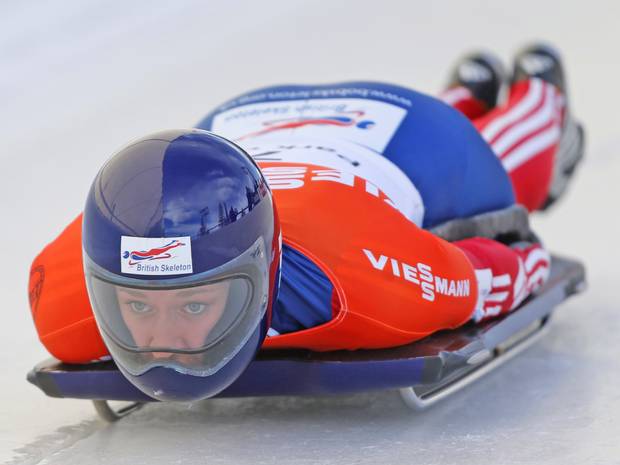
- This is basically the same as the luge except that the athletes taken a run-up before flopping onto the sled belly-down and head first. Apart from both the St. Moritz Games in 1928 and 1946, the skeleton was only introduced on a permanent basis in 2002, this time for both men and women. Brits Lizzy Yarnold and Shelley Rudman have both been in superb form over the last couple of years, with Rudman looking to repeat her silver from Turin 2006 at the very least. Their only real threat for the gold medal is the American Noelle Pikus-Place but it’s almost inconceivable that they won’t pick up at least one medal between them. In the men’s event, Latvians Martins and Tomass Dukurs currently lead the 2013/14 World Cup standings, although the latter is yet to win a race. 2013 World Champion Alexander Tretiakov could also be in with a shout, while Brits Kristan Bromley and Dominic Parsons will be aiming to reach the final, something they should both do with relative ease.
Ski jumping:
- If there was ever a sport that made you feel as though you could fly (aside from handgliding, parachuting etc.) then it would be ski jumping. Athletes ski down a steep hill before launching themselves off the ‘jump’ point. It’s not just about who goes the furthest however – points are awarded both for distance and style, so if the landing is poor it could really ruin a performer’s medal chances. Kamil Stoch of Poland has been extremely impressive in recent times, whilst Slovenia’s Peter Prevc is looking to exact revenge on the man who beat him to the large hill World Championship gold last year. Switzerland’s Simon Ammann, double Olympic champion in Vancouver, should not be discounted but his form this year has been patchy at best. Sara Takanashi (Japan) will be aiming to pick up both golds at the Games, with Germany’s Carino Vogt being the only woman who could realistically stop her. Finally, Slovenia have been by far the best men’s team so far this season and look set to knock defending champions Germany off top spot.
Snowboarding:
- A mixture of events from the alpine (slalom and giant slalom, although two racers go at a time here) and freestyle skiing (halfpipe, snowboard cross and slopestyle), snowboarding is a sport that requires extreme skill, speed and courage all at the same time. Earlier this morning America’s Sage Kotsenburg won the slopestyle gold, with Brits Jamie Nicholls (6th) and Billy Morgan (10th) doing well but not quite well enough, although they may not have been there if heavy favourites Shaun White (USA) and Torgeir Bergrem (Norway) hadn’t pulled out. Expect the rest of the men’s events to be very close affairs, whilst British athletes Jenny Jones and Aimee Fuller are looking for medals in the women’s slopestyle. Finally, it will be interesting to see whether America’s Lindsey Jacobellis has recovered from her hugely embarrassing finish at the 2010 snowboard cross event – find it on YouTube.
Speed skating:
- This is basically the same as the aforementioned short track skating except that the track is 400m in circumference and only two competitors are on track at a time, racing against the clock and not each other. Events include 500m, 1000m, 1500m, 3000m (women only), 5000m, 10,000m (men only) and the team pursuit (very similar to the team pursuit from track cycling). The Netherlands have dominated the sport over the years and current 5000m Olympic champ (amongst a host of other medals) Sven Kramer and the legendary Ireen Wūst should continue this as they attempt to bag another large haul of medals between them. South Korea’s Mo Tae-Bum is the hot favourite to retain his 500m title whilst the Czech Republic’s Martina Sábliková won both the 3000m and 5000m titles at the World Championships last year, events she also won four years ago.
 The 52 Blog