My Top 10 Sporting Moments – 2017 (Part II)
As another year draws to a close it’s once again time for me to reflect on my favourite memories from the previous 12 months.
This year’s list features game changing moments, unadulterated chaos, new faces rising to the top and old ones setting yet more records. So sit back and relax as I take you through the first half of my top ten moments of 2017 (you can see my first five picks here).
*Disclaimer: This is entirely my opinion and not a statement of fact! There are so many incredible athletes who could quite easily have been on this list (e.g. Adam Peaty, Hannah Cockroft, Kay Wilson), but these are the ones that resonate with me the most.*
5) Walk-ing into the history books
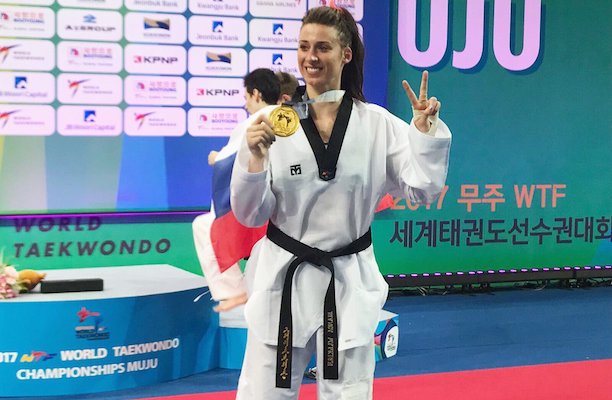
What a year Bianca Walkden has had. Six world titles, a SPOTY nomination and a whole host of new faces all went her way as the smiley Liverpudlian dominated the world of taekwondo.
The disappointment of a bronze in Rio has clearly had a huge impact on the Liverpudlian who has been without fault all year, bulldozing her way through all those who tried to get in her way.
Any of her four Grand Prix victories or the recent World Grand Slam victory could easily have made this list but it was the defence of her World Championship title that really stood out. She beat long-term rival Jackie Galloway 14-4 that day, becoming the first British woman to defend a World title in the process.
Aged just 26, it’s frightening just how good Walkden could become.
4) Leading from the front
Following on from Great Britain’s sensational gold in Rio, the spotlight has been on England Hockey this year to see whether they can replicate that success.
Several new faces have come into the squad this year but coach Danny Kerry has been lucky to have kept a solid core from that special August night, including the legendary Alex Danson.
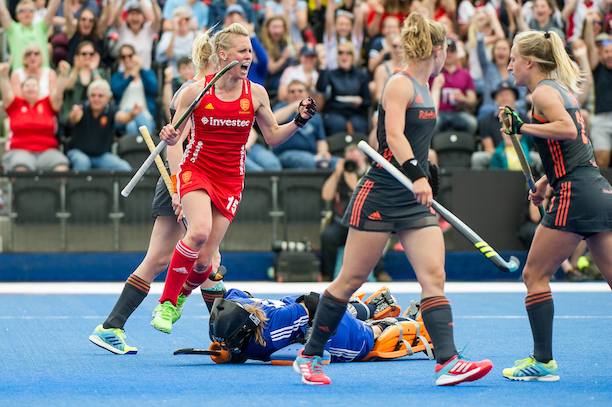
The new captain has led her new charges superbly this year and nowhere was this better emphasised in July as her 100th international goal sparked a superb comeback from her side to draw against current world champions The Netherlands in front of a packed house at Lee Valley.
With a home World Cup coming next summer, expect Danson to once again show why she is regarded as one of the finest players hockey has ever seen.
3) The perception changer
This was the year the British public finally started taking women’s rugby seriously.
While much was initially made of England’s 2014 World Cup triumph, this was quickly pushed to one side. But this year there was no ignoring the outstanding feats of the Red Roses, who swept to a Six Nations Grand Slam, beat New Zealand in their backyard and reached the World Cup final.
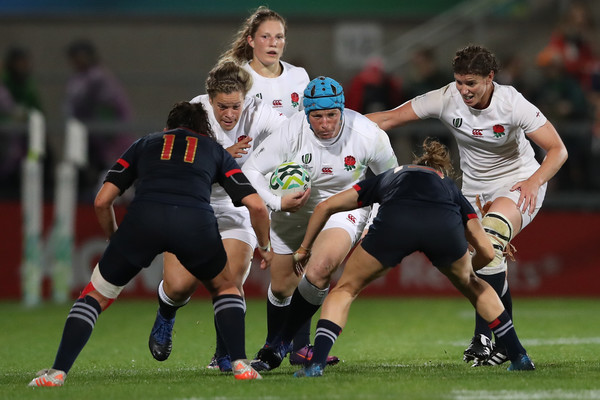
While the scoring feats of Kay Wilson and Jess Breach could have made this list, World Cup semi-final against France was the moment perceptions of the game changed for me.
While many fixtures throughout the tournament were rather one-sided, this certainly wasn’t as France threw everything at England but ultimately couldn’t break through their incredible defence.
It was tense, exciting, brutal and utterly brilliant to watch. This was the game that showed just how entertaining women’s rugby is.
2) C-Anya believe it?
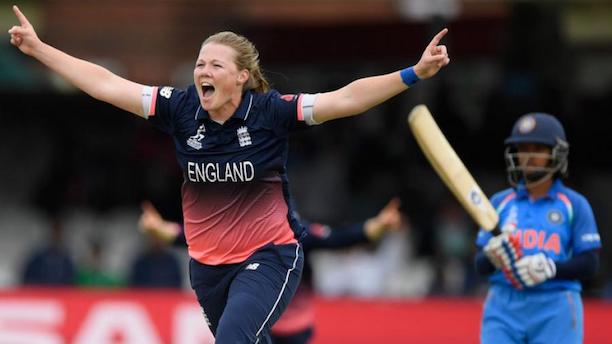
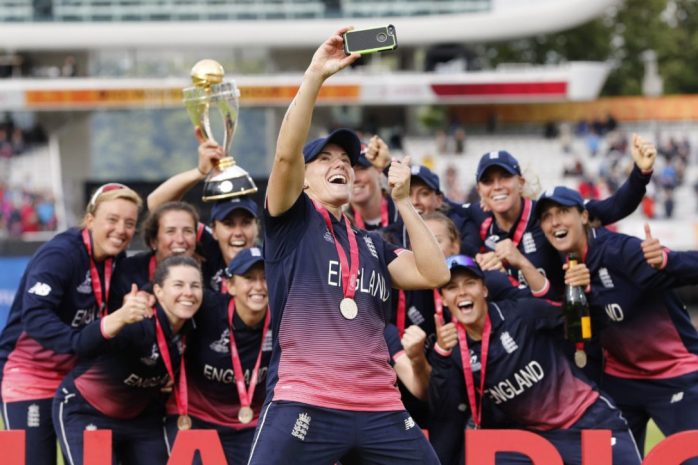
23 July 2017. Lord’s. 24,000 fans. Nat Sciver – 51. Anya Shrubsole – 6-46. History made.
One of the greatest sporting moments our country has witnessed, this was one of those occasions where people will always remember they you were the moment Shrubsole bowled India’s Rajeshwari Gayakwad to claim the most remarkable of victories.
I was working at my desk, with Dad doing likewise in his study while Mum cleaned the bathroom. All three of us were listening on the radio but had largely given up hope with India needing 38 runs with seven wickets left.
But by the end we’d stopping in our tracks, hanging off every word of the TMS commentary as Shrubsole produced one of cricket’s finest ever spells.
Much like the aforementioned rugby game, this was the moment everyone took notice of women’s cricket. I would go so far as to compare it to the 2005 Ashes, it was that special for me.
1) King of the world
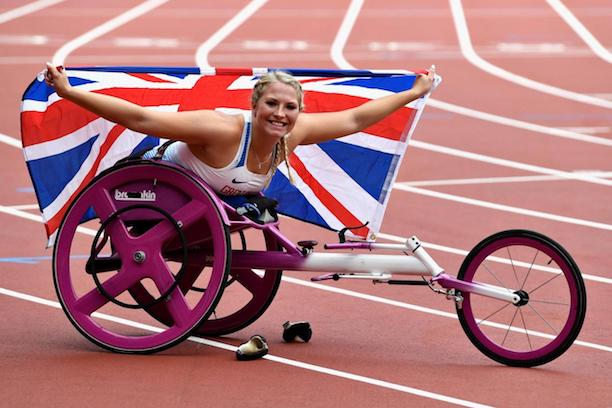
While it may have not grabbed as many headlines as others on this list, seeing Sammi Kinghorn win her maiden world title was hands down my favourite moment of the year.
I was lucky enough to chat to Sammi for SportSpiel shortly before London 2017 and immediately I became one of her biggest fans. Not only is she a supremely talented athlete, she’s also such a lovely person to speak to, really polite and eloquent.
Most of all though, she’s inspirational. Listening to her describe her accident and the way she’s turned her life around for the best was an incredible privilege.
Sitting in the crowd ahead of her T53 200m final, I couldn’t believe how nervous I was. There was no need to be though as she stormed to victory, leading to me to rather unexpectedly let out an almighty scream – my celebrations are normally much more reserved!
As a journalist there’s always one story that you really connect with and Sammi’s was certainly mine. I feel very lucky to have been able to chat to her and am so excited to see what she does going forward in her career.

2017 has also been an incredible year for me personally, with two highlights in particular:
1) Landing my dream job
It’s fair to say I’ve become rather hockey obsessed since Rio 2016, although having little cartilage left in one knee means I can never take it up!
But if you’d told me then I would be working with some of my heroes from that night I probably would’ve told you where to go!
I am under no illusions; I’ve a very lucky guy. Who else can say they get to work with the finest athletes this country has to offer?
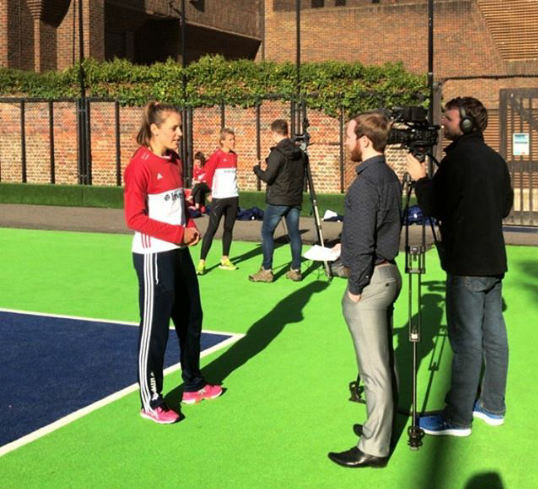
My first three months have certainly been a challenge and I’ve already made plenty of mistakes but it’s been so worth it. I’ve been fortunate to have already interviewed many legends of the game – including Danson and Barry Middleton – and was lucky to get the opportunity to work with Olympic champion Shona McCallin and help produce a video for her blog, which can be seen here.
With new camera equipment having arrived and two World Cups next year – one in London – I could not be more excited for the next 12 months. It’s going to be epic!
2) SportSpiel
Who knew chatting on the Tube could actually lead to such good ideas?
I remember the moment fellow trainee and now good friend Alasdair Hooper asked if I wanted to set up a podcast with him and I immediately jumped at the chance. As an aspiring commentator and having shadowed Alison Mitchell shortly before, I knew this would be the perfect opportunity for me to get on the bandwagon and have some fun along the way.
I can’t lie, it’s not been the easiest of rides – some episodes have not picked up as we hoped, interviews have been hard to track down and it’s not always easy to find time to record.
But seeing the recent love for our work on social media – in particular from the Women’s Sport Trust – and the enjoyment I’ve had speaking to each of our guests has made it certainly worthwhile.
I’m so grateful to Alasdair for suggesting this to me and I can’t wait for next year. We’ve got big plans for 2018 so make sure you stay tuned for what we assure you will be another barnstorming year for SportSpiel!
My Top 10 Sporting Moments – 2017 (Part I)

As another year draws to a close it’s once again time for me to reflect on my favourite memories from the previous 12 months.
This year’s list features game changing moments, unadulterated chaos, new faces rising to the top and old ones setting yet more records. So sit back and relax as I take you through the first half of my top ten moments of 2017.
*Disclaimer: This is entirely my opinion and not a statement of fact! There are so many incredible athletes who could quite easily have been on this list (e.g. Adam Peaty, Hannah Cockroft, Kay Wilson), but these are the ones that resonate with me the most.*
10) Clarke refuses to fall at the first hurdle
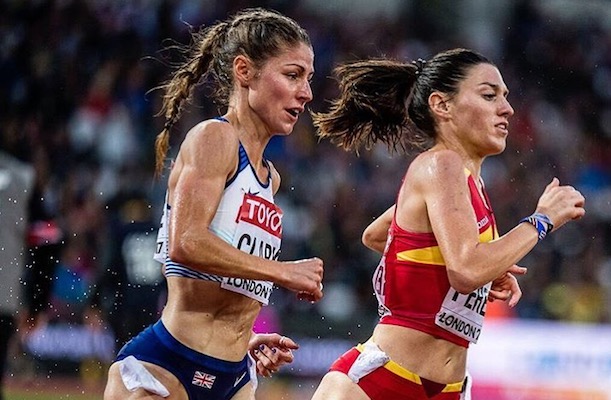
This first entry is certainly left-field but nonetheless it’s one that stuck in my mind. Many new faces rose to prominence at London 2017 but one who might have wanted to slightly differently was Rosie Clarke, the steeplechaser who unfortunately fell twice in her heat.
But rather than give up Clarke continued to fight to try and make the final, showing incredible spirit and determination. That resonated both with me watching at home and the crowd in the stadium, who roared on the gritty runner up to and beyond the finishing line.
The way in which Clarke has responded to that fall is remarkable – she now uses it as a motivator to spur her on – and I’m excited to see just how good she can get.
9) Far from Cook-ed
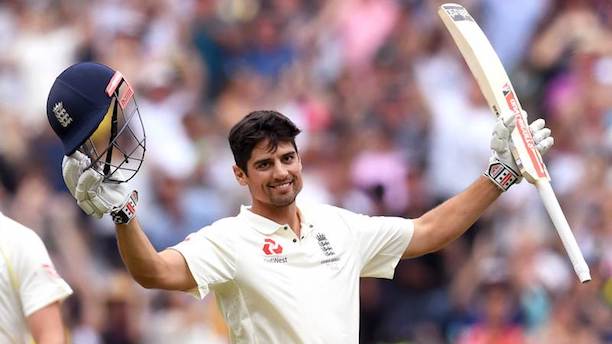
While Danni Wyatt’s staggering century against Australia may have been my favourite cricketing innings of 2017, there was none more satisfying than Alastair Cook’s magnificent double ton just a few days ago.
The Ashes may have been lost but many felt this was arguably the former captain’s most important knock, with many questioning how long he would want to continue playing.
But in a mammoth 409-minute vigil England’s leading Test run scorer showed there is still so much cricket left in him as he drove, pulled and nudged his way to an incredible 244*.
Ready to retire? I think Cook has just shown he plans to stick around for a little while yet.
8) Absolutely electrifying
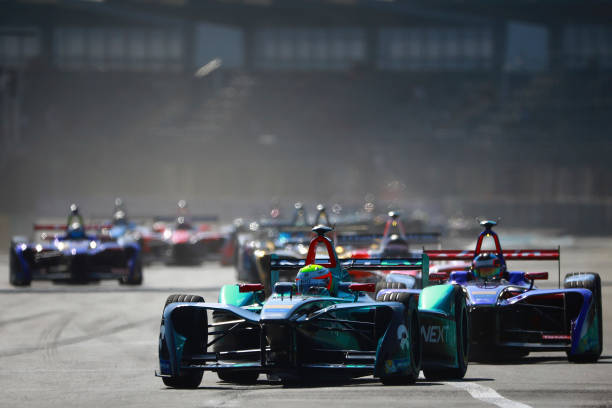
Formula E is just brilliant. It may not have the glitz, glamour and noise of its motorsport counterparts but my word does it produce some incredible racing.
Nowhere was this exemplified better than at the Mexico City ePrix back in April. There were overtakes aplenty, crashes galore, three Safety Car periods, drivers spinning out of the lead and unsafe pit releases. Trying to live tweet this race was almost impossible.
The eventual race winner was Lucas di Grassi, who started in 15th and had to pit early on to replace a damaged rear wing, leaving him at the back of the field. It really was a story you just couldn’t make up and I bloody loved it.
7) Three is a magic number
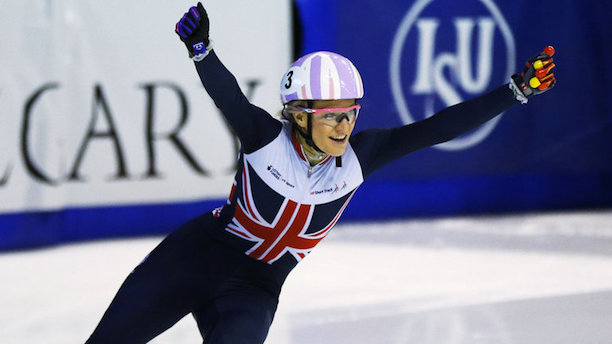
If Sochi 2014 is an event Elise Christie wants to forget then Rotterdam 2017 will be a competition the speed skater will cherish forever.
The Scottish athlete first came to mainstream public attention when she was controversially disqualified from all three of her races at the last Winter Olympics, leading to many unfair and horrible comments on social media.
Since then Christie has quietly gone about her business rebuilding her career – claiming SEVEN European titles between 2015-16 – before bursting back onto the scene by winning a sensational three golds at the World Championships in March.
The strength that the Sunday Times Sportswoman of the Year has shown to come back from such disappointment is frankly unbelievable and certainly inspires me to want to do the same. I can’t wait to see her atop the medal podium in Pyeongchang.
6) Jonnie waltzes to another title
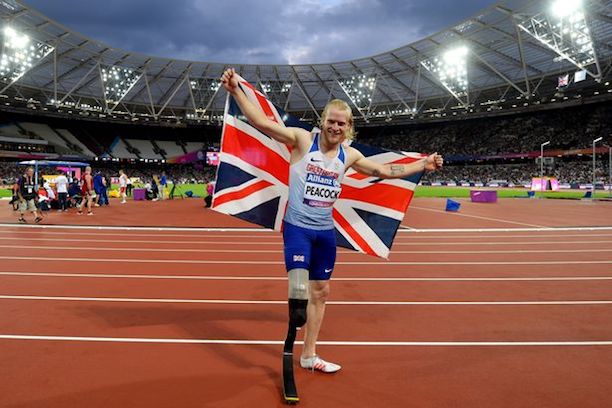
Ever since he stormed to 100m T44 gold at London 2012, Jonnie Peacock has been a pin-up of British athletics.
With that comes the pressure and expectation of everyone assuming you’re going to win and nowhere was this more prevalent than this summer as the sprinter returned to the scene of that incredible moment to defend his World title.
I was lucky enough to attend four days of the World Para-athletics Championships and experience the moment Peacock wrote yet more history for himself with a gutsy performance to take the title, overcoming cramps and fierce competition.
The collective relief and joy as he crossed the line first was something special to be a part of and is certainly a moment I will never forget.
The second instalment of my list will be uploaded tomorrow so make sure you stick around for that!
Why Movember Is So Important To Me

And there we have it, the beloved beard has been sheared off once again.
The temptation to leave it as a whopping great ‘Walrus’ ‘tache – à la Merv Hughes circa 1993 Ashes – was very high but that would be cheating.
Every year I ask myself why I do this. It always shocks and disappoints me how young and immature I look after removing my facial fuzz, while my head also gets colder a lot quicker without it.
But an incident just three weeks ago provided a stark reminder as to why Movember is so important to me.
Having successfully come through CBT at uni and made huge improvements in my mental health over the last two years, I suffered my biggest knock back yet as I fell victim to my first panic attack since November 2015.
It came shortly after I had started a new job that involved very, very early mornings and a lot of commuting (six hours a day). All of these alone would have been enough to set me off in the past, but I have come on so far that none of them even elicited a shred of worry beyond what any normal person would experience.
So what was it then?
Honestly? It was nothing more than an unsettled stomach.
It sounds pathetic but there we go. I guess the travelling had started to get the better of me and really knackered me out and when the anxiety started coming on due to the dicky tummy making me feel different to normal I just didn’t have enough in me to fight it off.
It lasted just over an hour and I can safely say it was one of the longest sixty minutes of my life. What made it even worse was that I was on the train home, surrounded my grumpy commuters whose sole objectives were to get a seat and get home before everyone else.
I had the works – sweats, shakes, the lot. But worst of all was the gripping fear. It’s really hard to describe it but the best way I can put it is that you cannot think of anything else except what you fear is going to happen to you. All other thoughts go out of your head – you’re just worrying, panicking and wanting to do anything to make it stop.
And I mean literally anything.
It’s no surprise that anxiety and depression are so closely linked. When you’re going through three, four, five of these attacks of varying degrees per day and spending the rest of the time worrying about when the next one will begin, it gets you down.
You start by feeling desperate for it to stop and wanting to get back to normal but when it becomes a daily routine all you want to do is just give up. All rationale and thoughts of others go out of the window – you just want it to end. It’s horrible but it’s true.
Fortunately this is now very much a rarity for me and I was able to spot what was happening and able to control the fear thanks to my treatment, as well as being able to tell myself that it was going to end and I would be fine within a couple of days.
But I’m in the minority – so many people still don’t understand what a panic attack is or how to spot one. That’s why Movember is so important to me. Earlier this year I wrote a piece in which I urged for more education in relation to mental health and I believe this campaign plays a pioneering role in helping to produce this, alongside their incredible work for men’s testicular and prostate cancer.
Unlike the way in which they are often depicted on TV, severe anxiety and panic attacks aren’t always easy to spot. Of course if someone is having their first and they are unaware of what is going on then they definitely can be, but there are also so many people who like myself who are used to them and will do anything to hide what is happening.
But the signs are still there – sweating, shaking, desperation to go somewhere cold, agitation – it’s just they can be much harder to spot if the knowledge isn’t there, which for many it isn’t yet.
Don’t get me wrong, things have already improved and there are many people out there who could and would help if needed. Yet still we choose to hide the fact we are suffering, but why?
Simple – it’s embarrassing. As much as I want comforting, I also don’t want to make a scene and ruin everyone else’s day by having to look after a stranger who is ‘just having a panic attack’.
This is another area that also needs to change. Not only do we need to be made more aware of the signs and symptoms of potentially mental illnesses, we also need to make it something we accept is a problem and are comfortable to talk about as a society.
I don’t want to feel embarrassed asking to open the window because I am suffering a panic attack. I don’t want to feel embarrassed asking if I can work from home in order to recover from an episode (note my boss was fantastic and had no issue with it, I was just scared to ask). I don’t want to feel embarrassed that I have an illness.
Getting people to grow a hideous piece of facial decoration is a perfect example of what I believe can be done to encourage people to talk about mental health. It may be fun and silly but it also removes inhibitions and makes individuals more open to both teach and learn things they may not have otherwise done.
So when I’m looking in the mirror, grimacing at my face, I always remind myself that is important for me to do so in order to help people like myself who have a mental illness get the help and understanding they need and deserve.
Join the cause, ‘Grow a Mo’ and help the millions of men (and women) around the world – you’ll never know how much it means!
You can visit my Movember page here – https://mobro.co/willmoulton?mc=1
After an incredible summer, it’s time to ensure female athletes get the equality they deserve
Just like that, the summer has ended. All of a sudden the days are now duller than watching England at Wembley, the nights longer than Fernando Alonso’s wait to be given a decent car, the suburban streets sparser than the crowd at a county championship match.
It’s pathetic fallacy perfectly personified. The frivolities and frolicking of those glorious months have been brought to an abrupt end by the need to return to the day-to-day monotony of learning and earning, which is now casting its shadow upon us.
But let’s not forget what a exceptional summer it was, especially for women’s sport.
For so long female athletes have been unfairly stigmatised as unexciting and inferior to men, with many only choosing to watch them if they just happened to possess attractive physical characteristics that were frequently on show. Their events were often seen as little more than a sideshow, a warm-up or a distraction from the ‘real’ sport.
However, the last six months have proven those views to be entirely incorrect and shown that women’s sport is every bit just as entertaining than anything the men produce, often more so. Furthermore, our girls are also good. No, not just good; they are exceptional. This was the summer they proved they are at least equal to the men.
Don’t believe me? I think you might after looking at this list of achievements between April and early September:
Athletics
- World Para-athletics Championships: 14 golds and 24 medals in total for Great Britain’s women; includes triple gold for Hannah Cockroft and two titles apiece for Georgie Hermitage, Sophie Hahn and Sammi Kinghorn
- World Athletics Championships: Silver medals for the 4x100m and 4x400m relay outfits
Badminton
- World Badminton Championships: Bronze for Gabby Adcock in the mixed doubles
- European Badminton Championships: Silver for Kirsty Gilmour in the singles and bronze for Lauren Smith and Sarah Walker in the women’s doubles
Boxing
- Natasha Jonas wins her first professional bout in 92 seconds
Cricket
- Women’s Cricket World Cup: England win third ODI title with sensational comeback against India in front of a sold-out Lord’s
Diving
- World Aquatics Championships: Silvers for Lois Toulson and Grace Reid in the mixed 10m synchronised platform and mixed 3m synchronised springboard respectively
Equestrian
- European Eventing Championships: Great Britain win their first European team eventing gold since 2009 with riders including Kristina Cook, Gemma Tattersall and Nicola Wilson (who also won individual bronze)
- Para-dressage European Championships: Great Britain claim six golds, with three each for Suzanna Hext and Julie Payne
Football
- Women’s Euros: England reach the semi-finals with ease before being knocked out by eventual champions The Netherlands; rise up to third in world rankings shortly after
Hockey
- Hockey World League Semi-Final: England finish third by beating Argentina in bronze medal match and qualify for December’s final
- EuroHockey Nations Championship: Bronze medal for England and Hollie Webb named ‘Player of the Tournament’
Judo
- World Judo Championships: Bronze for Nekoda Smythe-Davis and Natalie Powell, Britain’s first world medals since 2010
Lacrosse
- Women’s Lacrosse World Cup: England secure their first bronze since 2005 with a dramatic last-second winner against Australia
Rugby
- International Series: England beat Canada, Australia and New Zealand to top the world rankings for the first time in their history
- Women’s Rugby World Cup: England lose final 32-41 to New Zealand in game broadcast by ITV in prime time slot; watched by 2.6 million people
Shooting
- European Shooting Championships: Three golds for Great Britain all won by women, with Jennifer McIntosh and sister Seonaid claiming an individual title each as well as the 50m Rifle Team event alongside Katie Gleeson
Taekwondo
- World Taekwondo Championships: Bianca Walkden becomes first Brit to retain a world title while Jade Jones also picks up a bronze
- World Taekwondo Grand Prix: Walkden wins her first ever Grand Prix title in August
Tennis
- Wimbledon: Jo Konta becomes Britain’s first semi-finalist at home event since 1978 and rose to fourth in world rankings shortly after; Jordanne Whiley picks up fourth consecutive women’s doubles title while pregnant
That makes great reading doesn’t it. The likelihood is that this isn’t a complete list either; there have been so many different events across the last few months it’s been hard to keep track of them all. Not only that, I haven’t taken into account the achievements completed earlier in the year, including England’s first Six Nations ‘Grand Slam’ since 2012 and Elise Christie winning three world speed skating titles in March.
They say titles are the only things that make people sit up and take notice and it seems that this saturation of medals has finally brought women’s sport to the attention of the masses. The media in particular have cottoned on and there have been a number of articles in recent times just like this one, celebrating what has been a summer almost impossible to describe using any superlatives currently in existence, which is fantastic to see.
Despite their differences, many of these pieces share one common theme; 2017 now has to be built on. This isn’t the pinnacle for female athletes, this is just the start. If we want to make this equal status permanent, now is the time to put measures in place to ensure it happens.
Let’s force more governing bodies to give females full-time, professional status with year-long access to top training facilities. Let’s create more opportunities for them to sign lucrative sponsorship deals. Let’s encourage the athletes to make more TV and radio appearances. Let’s convince the media we’d rather read a story about a woman winning a gold medal than what Neymar had for breakfast.
The interest is there. The fact that England’s cricketers played in front of a sold out Lord’s and the Rugby World Cup final was put on a mainstream channel at peak time on a Saturday evening proves that. Not only that, but just listening people on the street it’s clear to see they are taking more notice. It has been wonderful to hear others eulogising Anya Shrubsole, fretting about whether or not Cockroft was well enough to race, planning their day around watching Emily Scarratt tear opposition teams apart. Now the challenge is to make sure this becomes the norm, not the exception.
Unfortunately barriers have already been put up which could halt this wave in its tracks. Prior to the World Cup the RFU announced they were not going to renew the full-time contracts of the XV-a-side players, although they must surely be reconsidering that now. The Eni Aluko/Mark Sampson case is threatening to derail the optimism surrounding women’s football. Sports like badminton have received controversial funding cuts that could severely impact on future success.
But the whole point of barriers is that they are there to be overcome and with the momentum women’s sport currently has propelling it forward, they will surely be knocked down.
2017 has been incredible for women’s sport and now it’s time to make sure females athletes are given the status they deserve: equality.
Women’s Rugby World Cup 2017: The Beginner’s Guide
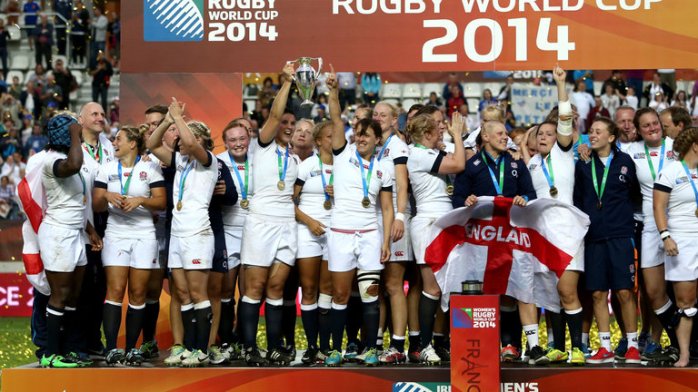
In just a few days’ time 12 teams will lock horns, scrum down and kick for glory as they battle to win the eighth Women’s Rugby World Cup in Ireland.
With England (also known as the Red Roses) looking to retain the tournament they won in 2014, here is my guide as to why you should follow the latest instalment in the Emerald Isle between 9-26 August.
So, why should I be interested?
Two reasons:
1) England have a superb chance of winning
2) It’s bloody brilliant to watch
You say it’s brilliant to watch, but surely it’s not going to be as good as seeing the men play?
We really need to stop comparing men and women when it comes to team sports. They are two completely different entities. The tactics, the style, the players, they’re all different. Of course there are going to be many things that are relevant for both genders but there’s no reason to compare them; they are different games.
Anyone who has spent time watching women’s rugby knows it’s fascinating, something this year’s Six Nations proved in abundance. It had literally everything, from routs to stunning comebacks to dramatic last-gasp victories with a host of superb attacking and defensive play in between.
And if you really do want to compare the two then, statistically, you are actually likely to see more tries scored in a game of women’s rugby. For example, at the last World Cup in 2014 there were 176 tries scored across 30 fixtures at an average of 5.87 per game. In comparison, the male event a year later saw 271 tries in 48 games at 5.65 per game. So there.
Ok ok, you made your point! But can England really win?
Yes. The Red Roses emphatically won their first Six Nations ‘Grand Slam’ since 2012 back in March before defeating Australia, Canada and New Zealand in June to move to the top of the world rankings for the first time. The squad has never looked stronger, their attacking threat never greater, their confidence never higher.
That’s all well and good but can they perform under pressure when it really counts?
A very good point – we’ll just have to wait and see until the tournament kicks off. But there’s no reason why they can’t. They have certainly proved in the last few months that they can cope when under the cosh.
In the opening game of this year’s Six Nations they found themselves trailing 13-0 at half-time against France but came back to win 26-13. They also managed to beat New Zealand – long revered as the world’s best team – in sopping wet conditions in front of a pretty boisterous Rotorua crowd.
What’s more, this is the best prepared an England XV-a-side squad have ever been, having trained full-time since January this year. They know their game inside-out and will undoubtedly have prepared for every eventuality.
Which players should I look out for then?
I spoke to flanker Marlie Packer a few weeks ago and she said each member of the 28-strong squad is world-class; I couldn’t agree more. Has there ever been a more complete England team in any sport? I don’t think so. There are no weak links – every position has at least two players who could easily make the starting XV.
The forward pack has been very dominant recently, tearing many sides apart, and they are marshalled superbly by captain Sarah Hunter. A key member of the 2014 squad, Hunter has won 93 caps, scored 19 international tries and was named the 2016 World Rugby Women’s Player of the Year.
And if they aren’t quite fully functioning then England also boast the most threatening backline in the game. Fly-half Katy McLean is a legend of the sport, Amy Wilson-Hardy is one of the most exciting new talents around and the back three of Lydia Thompson, Danielle Waterman and the superb Kay Wilson are fearsome.
But there is one person who makes them all tick and that’s Emily Scarratt. The hero of the 2014 final, the centre is a class above anyone else in the game. Her passing is exceptional and her kicking fantastic but – most importantly – she is incredibly intelligent, setting up and controlling every attacking move. If England retain their title, expect Scarratt to be the main reason for it.
What about the other teams and players?
New Zealand will be the main threat. They will be keen to exact revenge on England following their recent loss to the Red Roses and will look to the speedy Portia Woodman to lead their charge for a fifth World Cup success and their first since 2010.
Canada are also set to challenge and will certainly be using the pain of losing the 2014 final to spur them on to a first World Cup win. Winger Magali Harvey was their star of that tournament – scoring an outrageous 87m try against France before being subsequently named World Player of the Year – and will be a huge threat once again this time round.
It’s probably worth keeping an eye on 2016 Six Nations champions France as well. It’s always been a case of so-near-yet-so-far for them at the World Cup, having finished third on five separate occasions. Jade Le Pesq and Christelle Le Duff form one of the most impressive halfback combinations in the game and can pull any defence to pieces on their day.
That’s it, you’ve converted me! But where do I watch it?
Every single game is being broadcast live on ITV, with England’s first Pool B fixture against Spain starting at 14:00 on Wednesday 9 August. They then face Italy on Sunday 13 August at 14:30 and the USA on Thursday 17 August at 14:30, while the final will be on Saturday 26 August at 19:45.
Awesome! I’m so excited, can’t wait for it to get underway!
Me too!
When the Superhumans became Super-Athletes
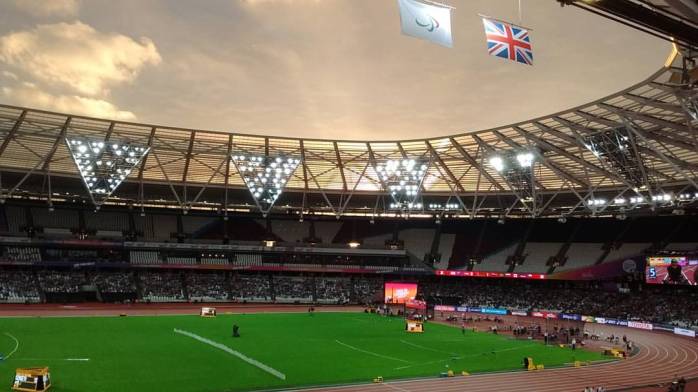
10 days, 213 events, 32 world records, 60 championship records, 39 medals for Team GB and a third-placed finish in the medal table.
It’s fair to say that the 2017 World Para-athletics Championships was a resounding success.
The big names all rose to the challenge. Jonnie Peacock overcame crippling cramps to take the most cheered victory of the meet. Hannah Cockroft dominated the T34 class despite suffering from food poisoning. Georgie Hermitage and Kadeena Cox re-wrote the history books in their 400m events. Richard Whitehead and Hollie Arnold sent the crowd into delirium by claiming golds within 30 seconds of each other on ‘Super Saturday’ after Stef Reid delivered in the morning session. Aled Davies once again proved he can compete with able-bodied counterparts with scintillating efforts in the shot and discus.
Furthermore, a host of new talent was also unleashed. Sammi Kinghorn captured hearts across the nation with her inspirational story, incredible talent and infectious smile. The two Sophies (Hahn and Kamlish) established themselves as stars of the future on the track, Olivia Breen and Polly Maton in the sandpit and Kyron Duke in the cage.
That’s not even to mention the plethora of world-class talent on show from the other nations, of which Jason Smyth, Marlou van Rhijn, Akeem Stewart and Tatyana McFadden are to name but a few.
The off-field stats weren’t bad either. More than 80,000 people attended, a third of those creating an electric buzz as they watched Peacock win the T44 100m final. Medallists repeatedly found themselves on the back pages of newspapers and at the forefront of news websites. Millions worldwide tuned in on TV or followed across social media.
Such numbers and figures are certainly impressive but it’s actually a smaller, subtle, cultural shift that marks out just how successful London 2017 was.
It’s the fact that this championship was the one where competitors were recognised as athletes. Not athletes with a disability; just athletes.
It was London 2012 where this transformation began. For the first time, the British public had almost no choice but to take notice of our para-athletes. The exposure those Paralympics received was huge and it opened up minds that had previously shut out any notion of para-sport. No longer was it considered a side-show, an after-event, a fun exhibition. That summer taught us that not only did they take their sport as seriously as their able-bodied counterparts, they were also just as talented.
However, as is always the case, memories of those Games soon faded into the deep depths of the hippocampus as the ‘real sports’ made their return following their summer break. But come Rio 2016, they were soon resurrected as once again we fell in love with our Paralympians.
This time it was different though. Whereas before we were watching many of the athletes for the first time, they now had the pressure of an expectant audience. If they didn’t win people would stop caring, claiming that any success from 2012 was just down to the ‘home advantage’ and, actually, they weren’t very good.
Not only did they silence the doubters, Team GB smashed even their own expectations. They claimed 147 medals in total – 27 more than in London – with 64 of those being gold. That’s nearly double their tally from four years previous. They had done everything they needed to do, answered all the questions put to them and once again won over the British fans.
Yet still some cynics persisted. Rather than focusing on the incredible feats of those who won multiple titles – including triple golds for Cockroft, Sophie Christiansen, Natasha Baker and Bethany Firth – it was claimed that they were only successful because of a lack of competition; it was nothing to do with their skill. The legitimacy of letting athletes with non-visible impairments compete was questioned. There were still some patronising comments about how it was nice to see disabled athletes being allowed to ‘have a go’.
Progress had been made, but there was still a way to go to ensure complete acceptance of para-sport. They still weren’t being taken as seriously by some as they should have been.
In that sense, the timing and setting of the latest Worlds could not have been better. There is no city more willing to accommodate para-athletes than London, few fans more enthusiastic about para-sport than the Brits and certainly no media outlet keener to promote it than Channel 4.
But, even after the first day of action, some were still not convinced. ‘Hurricane Hannah’ stormed to her first gold of the meet in the 100m T34 final, setting a new world record in the process, but comments were still appearing questioning how valid it was due to ‘poor’ opposition.
I was fortunate enough to be in the stadium for the second evening and the atmosphere in the opening stages was slightly strange, bordering on tentative, almost as though those watching didn’t quite know how to react to what they were seeing. A world record from Malaysia’s Muhammad Zolkefli in the F20 shot was greeted with muted applause.
But just an hour and a half later that suddenly changed as Whitehead and Arnold secured victories in the T42 200m and F42 javelin respectively just moments apart. It was as though a switch had been flicked, as though the crowd had suddenly understood that what they were watching was special and realised they were lucky enough to be there to witness it.
That exultation quickly snowballed throughout the nation and didn’t diminish until the championships ended as competitors across the board continued to produce awe-inspiring performances. Fans poured into the Olympic Stadium every session, eclipsing the projected attendance figures. Those who couldn’t attend followed on TV and social media in their masses, relentlessly liking, sharing and commenting on photos and videos, praising the athletes and London for being such fantastic hosts. For once, Twitter was a nice place to be.
Furthermore, the negative comments seemed to completely cease. After that opening day I personally was not privy to anything other than praise and admiration from a number of sources. That’s not to say the critics had been converted though; it’s more likely that they now felt like they should keep their thoughts to themselves for fear of a severe backlash. They knew they were now the minority.
It was this that convinced me change had occurred. Such was the respect and adulation for Cockroft, Peacock, Whitehead etc. that it is now seen as unfathomable that anyone would dare criticise them. They are now held on as high a pedestal than the likes of Jess Ennis-Hill, Greg Rutherford and Eilidh Doyle, people we would not even think of saying a bad word against. They are now seen as their equal.
Whether this becomes a permanent shift or not, only time will tell, but one thing is for certain: London 2017 was the week the Superhumans became the Super-Athletes.
If you want more para-athletics chat then head over to listen to our podcast (link below), where you can hear our interview with wheelchair racing sensation Sammi Kinghorn (Ep 6) or listen to our debate on classifications within the sport (Ep 7)
First England goal for Surbiton’s Hannah Martin as she strikes against Argentina at Olympic Park

Surbiton Hockey Club’s Hannah Martin fulfilled a lifetime ambition by scoring on her home international debut in front of a boisterous home crowd last Saturday (June 10).
Appearing on the internationals stage for just the fifth time, Martin converted a clever penalty corner routine to score her first goal for England and level the game at 1-1 against Argentina at the Lee Valley Hockey and Tennis Centre.
England would go on to lose 5-1 to their ruthless South American opponents but even that could not would wipe the beaming grin off her face after the game.
“It felt unbelievable to score,” the former Ipswich and University of Birmingham midfielder said.
“It overrode the disappointment a tiny bit because the result wasn’t great but obviously we’re still in a development phase.
“I just had such a big smile on my face – it was really cool to score my first goal.”
The strike was yet another high point for Martin in a fabulous few months that has seen her selected as part of the England and Great Britain squad ahead of Tokyo 2020 and make her international debut against South Africa in February.
She has also acquired many fans with her consistently impressive performances for Surbiton this year and was a key figure in their league and cup double as well as a historic fourth-placed finish at the EuroHockey Club Champions Cup earlier this month.
But for Martin nothing will beat opening her international scoring account on home soil in front of some very vociferous support.
“It’s absolutely a dream come true,” the 22-year-old said.
“This is what I’ve been hoping for throughout my whole career. I’ve gone through the England Hockey pathway and this is the pinnacle.
“It’s just fantastic to show what I can do.”
The fixture against Argentina may have ended in disappointment for England but there was much more to cheer about following the match against The Netherlands the next day.
The hotly anticipated clash against the world number one outfit was deemed by many to be a rematch of August’s Olympic final and it certainly lived up to expectations.
Having trailed 2-0 at half-time, England hit back hard in the second half with Alex Danson’s 100th international goal halving the deficit before Sophie Bray converted an outrageous cross from Susannah Townsend to take the game to a penalty shootout.
While this time it was the Dutch who would emerge victorious – winning the shootout 4-3 – Martin believed putting in an impressive performance just 24 hours after such a heavy defeat was much more important than the overall result.
She said: “It was a massive feat to get ourselves up for this game.
“Argentina are third in the world and suffering a 5-1 defeat wasn’t great.
“But we really picked ourselves up – we knew that if we came together as a team and we put fight in then we’d come out with a result and I think we really showed that out there today.
“It was really good to come back from 2-0 down to get to 2-2.
“The crowd was absolutely amazing, they really were our 12th man. The atmosphere was just amazing and I really, really enjoyed the opportunity.”
What A Difference Two Days Make

It’s always so hard starting one of these posts. I may have just undertaken an entire year’s training that focused on how to write an effective piece that grabs the attention, but not one in the first person. How do you do it? To be honest I don’t really know, but here goes nothing.
I can scarcely believe that it’s nearly two entire years since first made being made aware that I was suffering from severe GAD (generalised anxiety disorder) and depression.
Looking back at it now, it seems like yesterday. But, then again, so much has changed in that period of time that I see that version of me as a long lost friend whom I haven’t kept in touch with.
And with good reason.
That Will was constantly exhausted from worrying all day, every day about anything and everything.
That Will found it hard to make friends because he couldn’t trust anyone.
That Will spent most of his time wishing he was someone else, someone better.
That Will was fuelled with self-hatred and anger and believed he was terrible at everything.
A lot of the time, that Will didn’t want to be around.
Yet he thought that was entirely normal. He’d been feeling that way for going on nine years, the anxiety even longer. He wasn’t aware anything was wrong.
It took two of his close friends to sit him down and point out that this was definitely not how most people felt. Ironically, both of them had actually gone to him for advice as they were having relationship issues, yet they were the ones dishing it out.
I’m so grateful that they did though.
Back then, I often didn’t listen to people when they were trying to give me advice. I was always so self-critical that I thought there was nothing people could tell me that I hadn’t already told myself. But I’d never contemplated I was mentally ill. The fact they suggested so made me sit up and listen for once.
Why, though, was it only these two people who were able to spot that all was not well? Well, I think that comes down to two factors. Firstly, I was quite good at hiding it and carrying on as normal. My sister may be the far superior actor in the family but I seemed to have inherited enough of that talent to keep my internal struggles hidden from most.
And secondly, it was because they had seen it before. They knew how to spot the signs and they knew exactly how to deal with me. I remember that one of them in particular actually elicited a change of thinking there and then – she got me talking about why I didn’t like myself before listing off all the things I could actually do and the fact that people actually like me.
She made me think about the positives for the first time in a long time. If it wasn’t for her and that chat, I don’t think I would have ever sought help.
For me, this is exactly that reason why events such as ‘Mental Health Awareness Week’ are so important. I’m certain there are so many people out there like the old Will who are struggling mentally without realising that they are. As a population, it is up to us to help them out and the only way we can do this is by becoming more aware of mental health ourselves.
Specifically, we need to learn to look beneath the surface, beyond the outer layer of personality, and to the little things as, most of the time, it’s the subtle nuances which are the tell-tale signs of an issue, not the more obvious changes. Even something as small as developing a routine of going to bed earlier and/or waking up later than normal for no reason can suggest all is not quite right.
Don’t get me wrong, mental health is a massively complex issue. Everyone is different; no two cases are the same. There are millions upon millions of combinations that could indicate a mental health problem – it would be impossible to uncover, remember and understand all of them.
But if we can learn how to spot some of the more common ones, that could start a huge chain reaction. Not only would people be able to diagnose themselves, they could also point out potential problems to others. At the moment, it is the minority who are mentally aware and who can spot signs of internal struggle. We need to make this a majority.
How? More professional education is certainly needed, whether this comes through workshops in schools or the workplace, night classes and so on. But it also needs to come from the people who have been ill. As is the case with most things, experience is key – only those who have been there themselves can really understand what happens and convey it effectively.
That approach should be taken with caution though – not everyone who has suffered an illness will want to talk about it. If they don’t, that’s fine. Everyone has the right to share as much or as little personal information as they want – it’s their life after all, no-one else’s.
But, for those of us willing to talk, we need to help increase awareness of mental health to ensure it is the majority, not the minority, who understand some aspect of it. We are the ones who are going to make the real difference.
As for me, things are pretty damn good right now. I can’t lie, it hasn’t been easy – those first few months after my initial diagnosis were incredibly difficult and there were some very, very low moments for a multitude of reasons.
But, serious knee injury aside, the last year or so has been absolutely fantastic. I’ve had some incredible opportunities, met some absolutely fabulous people and developed a passion for hockey, something I never thought would happen!
Furthermore, I feel good about myself. I enjoy waking up everyday. I enjoy looking in myself in the mirror. I am even starting to take pride in the person I am developing into.
Don’t get me wrong, I’m under no illusions – I am very far from the finished article. Having had an adolescence stunted by such serious mental problems means I am still very immature in certain areas. But I now know where I need to improve and develop and am looking forward to the challenges doing so will throw up.
The changes I’ve undergone in just two years astound even me – I look back at the old Will and struggle to fathom just how we could even be related.
And all because two people recognised something was up and sat me down to talk to me about it.
Now, it’s my turn to help. Whether that be through writing, talking or something else, I want to help not only those who are suffering, but also help the general population become more aware. Together, we can combat mental health.
Masters 2017 – Roses in a game of thorns
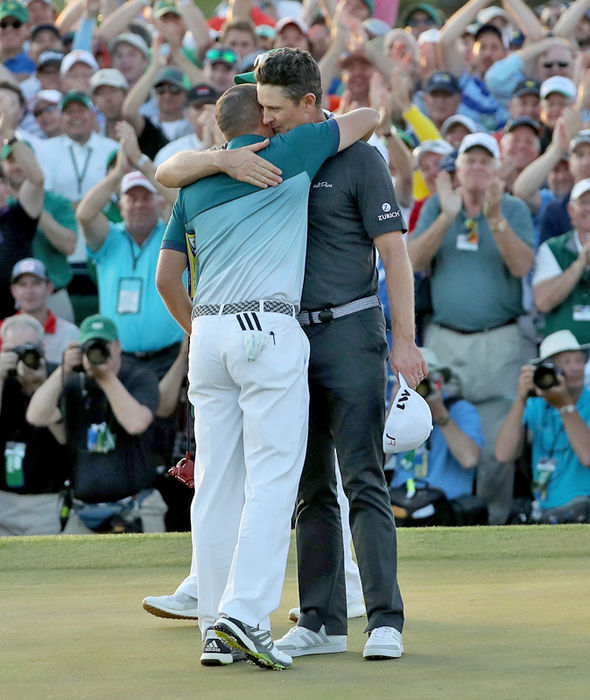
After an epic battle played out under idyllic blue skies on one of sport’s grandest stages, Sergio Garcia and Justin Rose have re-written the cliché book and proved that nice guys can win.
Watching them on Sunday without knowing the context of the three previous days’ action at Augusta, one would not have guessed they were in direct competition with each other to win golf’s most prestigious title, the Masters.
For the most part, they just looked like two mates playing a round on their day off from their real job – there were frequent spoken exchanges, high-fives and jokes between the two, with no suggestion either was feeling the immense pressure.
It was refreshing to see such a showing of camaraderie and sportsmanship in one of the most individualistic sports in the world.
That makes golf sound as though it is full of selfish, obnoxious players who will do whatever it takes in order to win but, for most, that could not be further from the truth.
Take Matt Kuchar for example – after nailing a superb hole-in-one at the 16th on the final day, he decided to sign to ball and give it to a young fan, oozing class as he did so.
Indeed, most golfers in the modern game come across as decent blokes that would not look out of place if you sat next to them in a Nando’s. It is just the case that they are very, very good at their sport.
But it is those who do not come across so well on camera that tend to dominate.
Tiger Woods is a prime example. There is no questioning that he was an absolute genius with club in hand but his unwavering arrogance and numerous temper tantrums divided fans and pundits alike for much of his career.
In the modern game, Jordan Spieth carries himself in much the same vain as Wood and even Rory McIlroy comes across as ego-driven and churlish at times. But it’s exactly this that makes them so successful.
Whenever all three enter a tournament, not only do we expect them to win, they believe they will as well. They have that incredible level of self-belief in their own ability that many of us can only dream of.
That’s what makes Garcia’s win even more special. For so long he’s been golf’s nearly man, often performing well across the first few days before throwing it away in the final round. Many fans thought it would never happen and I wouldn’t be surprised if he doubted it as well.
Indeed, despite Rose giving him chance after chance to take the lead during the final few holes on Sunday, the Spaniard just could not take them, almost out of sympathy. With the chance to win at the final hole in regulation play after Rose’s putt agonisingly missed, Garcia had what looked like a simple effort to win his first major after 74 attempts, yet slid it wide of the hole.
It was interesting to see how social media reacted on the final day, with a lot of British fans rooting for Garcia over Rose, many stating he deserved to emerge victorious because he seemed genuine. Going by their reaction, there may not have been a more popular winner of any golf tournament in recent years.
Even if this is Garcia’s only major win, it is one that we will remember forever. The story could be a perfect script for a Hollywood film – a nice guy finally getting the reward he deserves after years of trying – and it will live longer in the memory than most of Woods’ wins, despite his legendary status.
If the 2017 Masters taught us anything, it’s that niceness prospers.
Confident Cougars ready to shine at Nottingham
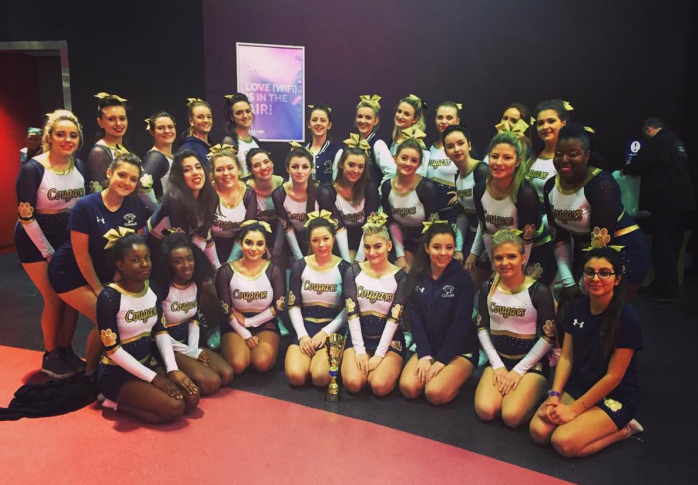
Kingston University’s cheerleading captain is confident her squad can build on solid performances from their first competition of the season and reach even greater heights this weekend.
The squad – known as the Kingston Cougars – came away satisfied from last month’s Future Cheer University Nationals, their Level Three team finishing fourth while the Level One outfit narrowly missed out on a top three result by just 2% in a very competitive division.
Each team is required to perform at two-and-a-half minute routine and is judged on their stunting, dancing, jumping and tumbling abilities, the difficulty of which increases significantly between each category up to Level Six, which is the elite.
While the results did not quite match last year’s double victory from the meet, Sophia Nasif-Whitestone believed they achieved highly respectable finishes but also recognised the need for improvement ahead of the ICC University Nationals in Nottingham.
She said: “I thought Future Cheer went ok, although it was a bit disappointing for Level One as they had a couple of illegalities where we weren’t aware the rules had changed this year.
“So it was quite disappointing because if they hadn’t had those deductions they would have probably come out second, they were that good.
“The Level Three team did really well, although we would have done even better if we’d had more tumbling scores. It is really hard as a university team, especially with our facilities, to learn tumbling and we were up against teams like the Cardiff Snakecharmers and Queen Mary Angels, who all have sprung floors.
“But the stunts were really, really good – I think we had one wobble but we didn’t get a deduction for it. I personally felt my stunt team did really well and our pyramid was really good.
“I think Level Three was a really hard division this year and I’ve seen a lot of comments on forums saying that it was a really difficult competition and all the teams were really good.”
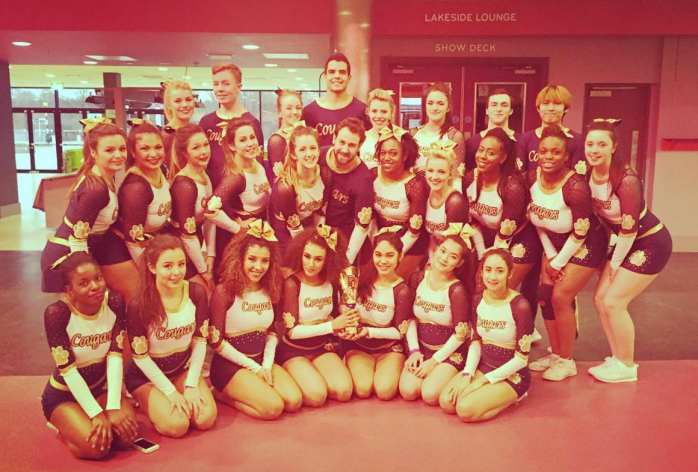
While she may be used to the pressure of competing, having done so for a few years now, it was Nasif-Whitestone’s first experience of being in charge of the Cougars for a competition, something she admitted she found nerve-wracking in the weeks before.
However, everything ran smoothly and it was an enjoyable day for all associated with the Cougars, even if there was a rush to get ready soon after arriving in the morning.
“Running the team went ok but it was quite stressful, I’m not going to lie,” the 23-year-old explained.
“We were telling our Level One team to get ready on the coach because they had to go straight to the warm-up mat as soon as we arrived but, because they hadn’t done a competition before, they didn’t really get that you literally have to do just that.
“So that was quite stressful but after that it was fine, it went quite smoothly really and I think everyone enjoyed their day.
“We had a few on that team who got really, really nervous in the warm-up but now they’ve got that first comp out of the way I think it will be easier for them to understand and cope with the nerves next time round.”
The Cougars have worked hard ahead of this weekend’s event in Nottingham, utilising the training facilities of the Surrey Starlets, who they share a coach with, to ensure they are as prepared as they possibly can be.
Both teams will take part at the competition and Nasif-Whitestone is looking forward to watching some of her former university team-mates performing for one of the best teams in the country, while also targeting a strong finish from her own squad.
“We want to get in the top three, although last time we did ICC we did win that,” she said.
“I’m quite excited – we didn’t do it last year because it clashed with our Easter break and everyone had gone home for the holidays.
“And it will be really nice as well because we will get to see all our alumni who are on Surrey Starlets as there are quite a lot of them and we’ll get to see them compete as well, which is exciting.”
 The 52 Blog